
Why a 12V Compressor Fridge Draws More Than Its Spec Sheet Says
The listing says 45 watts. The battery monitor says the fridge has taken 60 amp-hours overnight. Neither number is wrong, and the gap between them is where most off-grid power budgets fail.
The confusion comes from what the two figures describe. A 12V compressor fridge quotes its running draw — what it pulls while the compressor is actually turning. Your battery sees average consumption, which is the running draw multiplied by how much of the day the compressor runs. That duty cycle is not a property of the fridge. It is a property of your ambient temperature, your insulation, how often the lid opens, and what you put inside.
This guide separates the two numbers, shows what moves the duty cycle, and gives an honest way to budget for a real installation rather than a catalog one.
Running Draw and Average Consumption Are Different Numbers
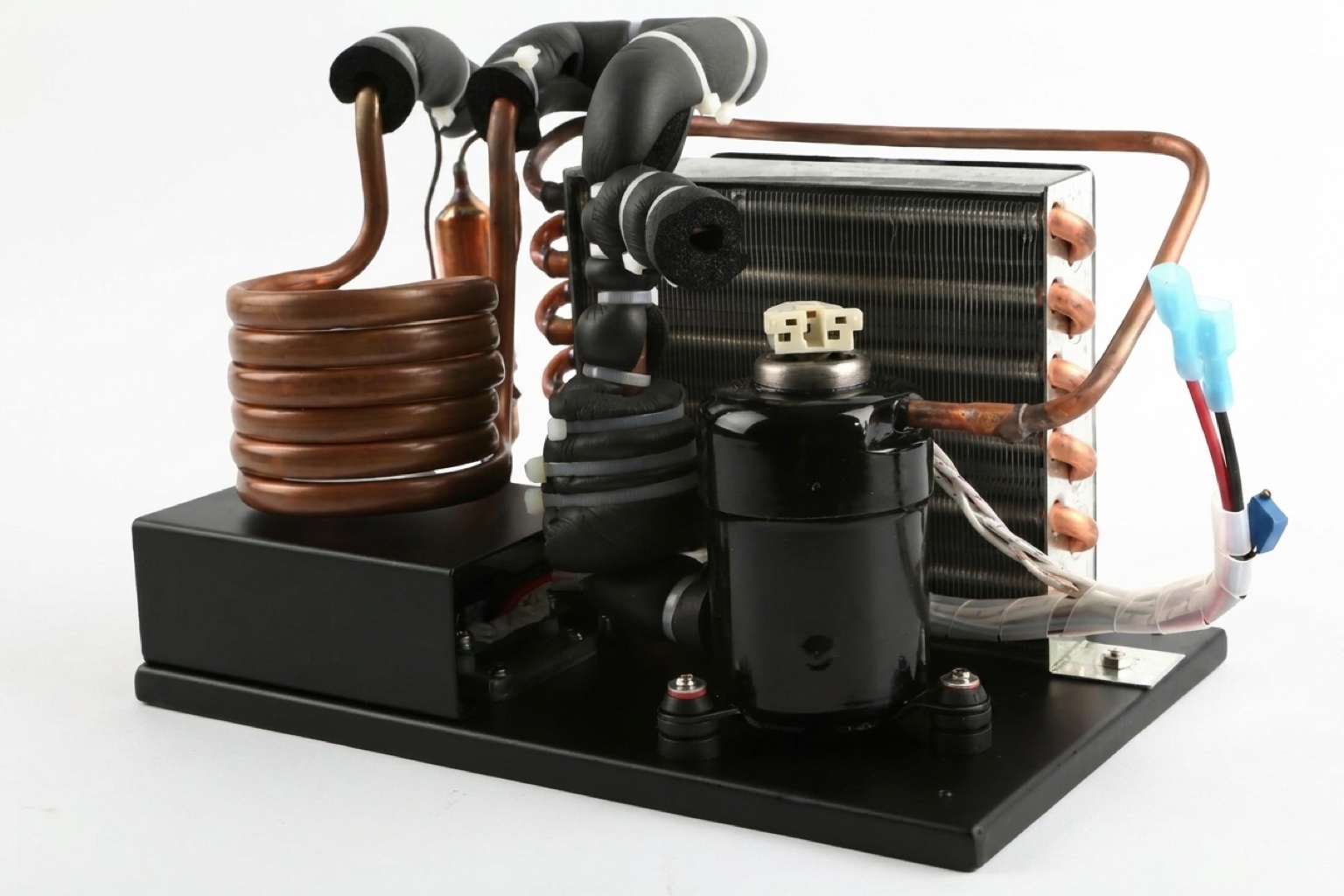
Start with the compressor. A miniature variable-speed unit such as the QX1901VDL(H) is rated 100–455 W of cooling (360–1,550 Btu) at 12 V DC on R134a, with a speed range of 2,000–6,000 rpm. The wide speed range matters here: the same compressor draws very different current at the bottom and top of it.
So a fridge quoting “45 W” is describing one operating point. The number that determines your battery bank is:
Average consumption (Ah/day) = running current (A) × 24 × duty cycle
At 4 A running current and a 35% duty cycle, that is 4 × 24 × 0.35 ≈ 34 Ah/day. Push the duty cycle to 60% — a hot week, a full fridge, frequent opening — and the same appliance takes 58 Ah/day. Nothing about the fridge changed.
This is why two people with identical units report consumption that differs by a factor of two, and why both of them are telling the truth.
What Actually Moves the Duty Cycle
| Factor | Effect on daily consumption | Why |
|---|---|---|
| Ambient temperature | Large | The compressor works against the difference between inside and outside; a 10 °C hotter day is a much bigger job |
| Insulation thickness | Large | Permanent multiplier on heat entering the box |
| Setpoint | Large | Every degree colder widens the same difference |
| Lid or door openings | Moderate to large | Cold air is dense and falls out of a chest lid; a front door dumps it faster |
| What is inside | Moderate | Warm goods must be pulled down; a full cold fridge then holds temperature better than an empty one |
| Ventilation around the condenser | Moderate | A crowded condenser raises head pressure and lengthens every run |
| Cable voltage drop | Small but real | Lower voltage at the unit means higher current for the same power |
Notice what is missing: brand. Within a class, the box and the installation dominate. A well-insulated fridge in the shade with a clean condenser will beat a nominally more efficient unit sitting in the sun against a bulkhead.
If the underlying cycle is unfamiliar, the walk-through of how a 12V compressor fridge works covers what the compressor is doing between those two numbers.
The Chest-Versus-Upright Question, in Energy Terms
Cold air is denser than warm air. Open a chest lid and the cold air mostly stays where it is; open an upright door and it pours out at floor level and is replaced by warm room air.
The practical consequence for a 12V compressor fridge is that a chest configuration usually runs a lower duty cycle for the same insulation and setpoint, purely because of what happens during openings. On an installation with frequent access — a work vehicle, a busy galley — the difference is not marginal.
Uprights win on access and on floor area, which are real considerations. The point is to know that the convenience is being paid for in amp-hours rather than to discover it later.
Measuring Your Own Duty Cycle
Estimates are guesses. Two hours of observation replaces them.
The simple method. Watch the fridge for an hour in conditions that resemble a normal day and time how long the compressor runs. Twenty minutes of running in an hour is a 33% duty cycle.
The better method. A shunt-based battery monitor reports amp-hours consumed. Read it at the same time on two consecutive days with the fridge as the only significant load, and the difference is your real daily figure — duty cycle already included.
What to do with the number. Compare it against the worst case you expect, not the day you measured. If you measured in spring, assume the summer figure is meaningfully higher.
The same arithmetic applied to a specific bank size is worked through in the notes on 100Ah runtime.
Sizing the Battery Honestly
Once you have real amp-hours per day from your own 12v compressor fridge, the chemistry decides the bank.
- Lead-acid or AGM: plan to use about half the nominal capacity. A 40 Ah/day fridge with two days of autonomy needs roughly 160 Ah nominal — before anything else on the system.
- LiFePO₄: 80–90% is usable. The same duty needs about 90–100 Ah nominal.
Two adjustments worth more than extra capacity. Pre-cool on shore power before a trip, so the fridge starts already at temperature instead of pulling down on the battery. And check the voltage at the fridge under load — a long, thin cable run drops enough voltage to trip the low-voltage cut-out while the battery monitor still reads healthy. That failure looks like a faulty appliance and is entirely a wiring problem.
Reducing Consumption Without Buying Anything
Most 12v compressor fridge installations have several free improvements available. In rough order of effect per unit of effort:
Shade the box and the condenser. Direct sun on a fridge, or on the vehicle panel it is bolted to, is a load you can remove for free.
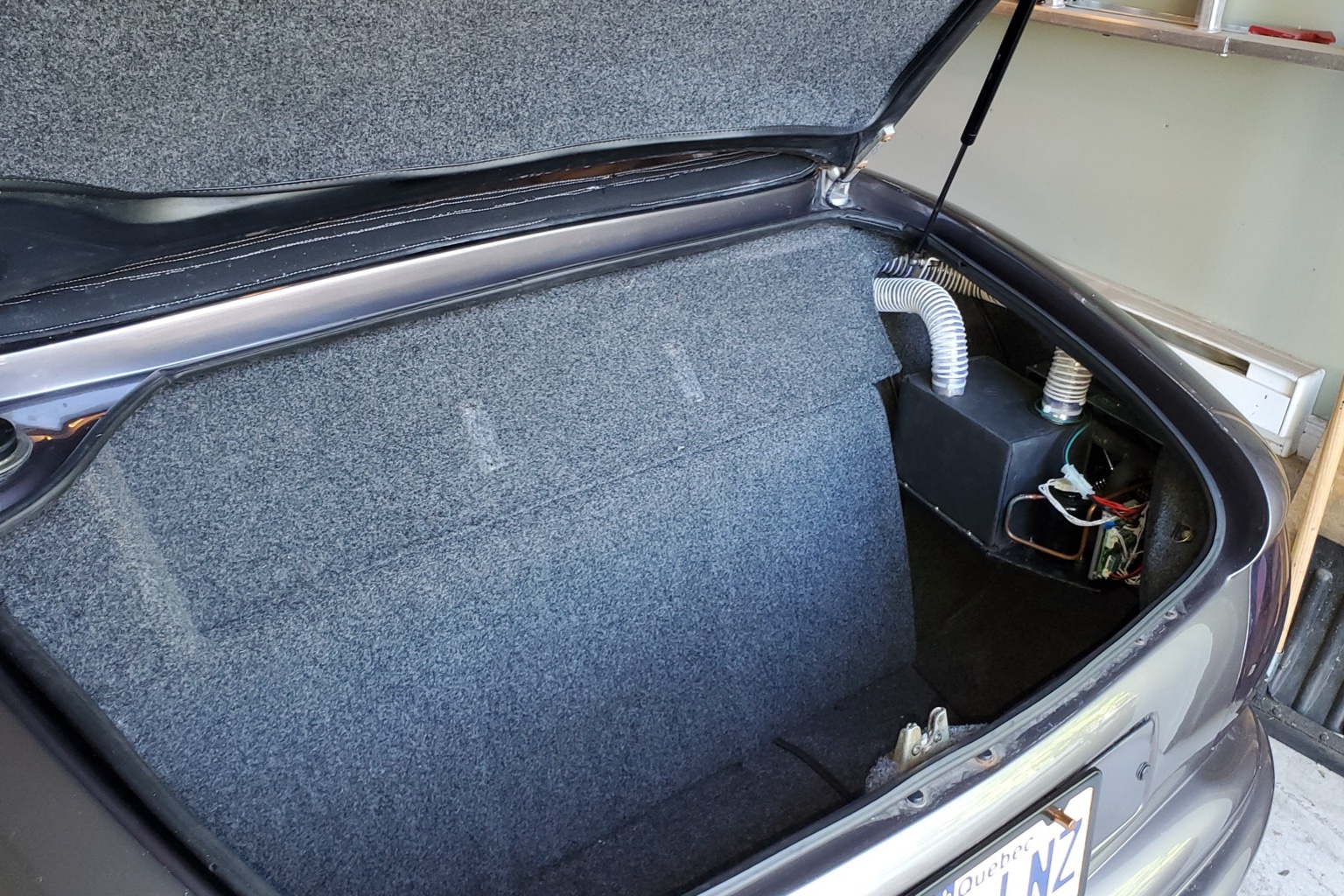
Give the condenser air. Most built-in installations strangle it. A vent path in and a separate one out, so the discharge cannot be drawn back into the intake, restores capacity that was already paid for.
Raise the setpoint to what you actually need. Many fridges are run several degrees colder than the contents require. Each degree is permanent.
Keep it full. Cold mass buffers temperature between compressor runs. Water bottles work.
Check the seal. A lid gasket that has taken a set leaks continuously, and it does not announce itself.
When the Compressor Is Actually the Problem
Most excess consumption on a 12v compressor fridge is installation, not hardware. A few symptoms point at the machine or the circuit instead.
Runs continuously and never reaches setpoint. Either the load genuinely exceeds capacity, or the refrigeration circuit has a fault. Check ambient, seal, and condenser first — those explain it more often.
Short cycles every few minutes. A control differential set too tight, or a sensor reading a spot that recovers quickly. Starts are the hardest thing a compressor does, and frequent ones cost both energy and life.
Draws far more than the rated maximum. Measure with a clamp meter and compare against the model’s stated figure. A reading well above it points at a mechanical or electrical fault rather than a hot day.
For anyone specifying rather than buying complete, the 12V DC fridge compressor selection guide and the notes on custom fridge builds cover the parts list this article assumes.
A Worked Power Budget
Putting the pieces together for a realistic installation: a 50-liter chest fridge in a van, held at 4 °C, in a summer week where the vehicle interior reaches 35 °C during the day and falls to 20 °C overnight.
Running current. Measured with a clamp meter at 3.8 A on 12 V while the compressor turns.
Duty cycle, day. Observed at roughly 55% through the afternoon — high ambient, several openings, and the box parked in sun for part of it.
Duty cycle, night. Around 25% once the interior cools and nobody opens it.
Daily total. Ten hot hours at 55% plus fourteen cooler hours at 25% gives 3.8 × (10 × 0.55 + 14 × 0.25) ≈ 34 Ah per day.
Bank required. With two days of autonomy and lithium’s usable fraction, that is roughly 80–85 Ah nominal dedicated to the fridge. On lead-acid it would be closer to 140 Ah.
Now the interesting part. Park the same van in shade and the afternoon duty cycle falls toward 35%, taking the daily figure to about 26 Ah — a 24% reduction from a decision that costs nothing. Raise the setpoint from 4 °C to 6 °C and it falls further. Neither change involves buying anything, and together they are worth more than a step up in bank size.
Where the Compressor Choice Comes In
Two things about the compressor genuinely affect consumption rather than just capacity.
Variable speed. A compressor with a wide speed range — the QX1901VDL(H)’s 2,000–6,000 rpm, for instance — can slow down to match a small load instead of cycling on and off. Continuous running at low speed is both quieter and cheaper in amp-hours than repeated full-power starts.
Matching capacity to the box. A compressor far larger than the box needs will pull down quickly and then cycle, which is the inefficient mode. The 100–455 W range on a miniature unit covers most portable and built-in fridge duties; the 850 W XB075Z-12 belongs to a larger box or a freezer application.
The 12V miniature DC compressor range covers this band with matched driver boards, which is what makes the variable-speed behavior available in the first place.
If your measured consumption is far above what the installation seems to justify, the fastest way to settle it is to send the numbers rather than guess. Contact the RIGID engineering team with the compressor model, the measured running current, the ambient, and your setpoint, and you will get a straight answer about whether the figure is normal for that duty.
One caution about solar. A roof panel sized against the daily amp-hour figure looks adequate on paper and disappoints in practice, because the day the fridge works hardest is often the day the vehicle is parked in shade — which is exactly where you wanted it for thermal reasons. Size the panel against a cloudy day and keep an alternator charging path, or accept that the bank carries the difference.
Frequently Asked Questions
Why does my fridge use more power than the specification says?
Because the specification is running draw and your battery sees average consumption. Multiply running current by the duty cycle, and remember the duty cycle is set by ambient, insulation, setpoint, and how often you open it — not by the appliance.
How many amp-hours per day should I budget?
Measure rather than assume: run the fridge for a day with a battery monitor and read the difference. Then add margin for a hotter week than the one you measured in.
Is a chest fridge really more efficient than an upright?
Usually, and the reason is openings rather than construction. Cold air is dense, so it stays in a chest and falls out of an upright. With frequent access the difference is significant.
Does a variable-speed compressor save energy?
Yes, mainly by avoiding cycling. Running continuously at low speed against a small load uses less than repeatedly starting at full power, and it holds a steadier temperature.
My fridge cuts out but the battery looks fine. Why?
Voltage drop in the supply cable. Measure at the fridge’s terminals while the compressor runs; if it is far below the battery reading, the cable is undersized and lowering the cut-out setting only hides the problem.
Summary
A 12V compressor fridge is quoted on running draw and paid for in average consumption, and the multiplier between them is your installation rather than the appliance. Ambient, insulation, setpoint, and openings move it more than brand does. Measure your own duty cycle over a full day instead of trusting a catalog figure, size the bank from that number with the usable fraction of your chemistry, and check the voltage at the unit under load before blaming anything else. Then take the free improvements first: shade, condenser airflow, an honest setpoint, and a seal that still seals.