
12V Portable Air Conditioner Runtime Calculator: Start with the Right Numbers
When buyers ask how long a 12v portable air conditioner will run on battery power, they usually expect a simple answer. In practice, battery runtime is a sizing question, not a brochure question. The right estimate depends on the battery bank, the enclosure, the weather, the set temperature, and how often the system has to work hard instead of cruising at a lower load.
That is why many runtime estimates fail in the field. People often grab one published spec, multiply or divide a few numbers, and assume the result will hold in a van, trailer, equipment box, pet compartment, or compact off-grid cabin. A more reliable method is to build a calculator framework around usable battery energy, measured or quoted system draw, and real operating conditions. For compact battery-powered cooling, the Micro DC Aircon lineup is useful as a reference because it includes DC-native 12V, 24V, and 48V options built for small spaces.
This article focuses on that framework. It does not guess official electrical draw from cooling specs, and it does not treat all portable DC air conditioners as interchangeable. The goal is a practical way to think about runtime before you buy, build, or quote a system.
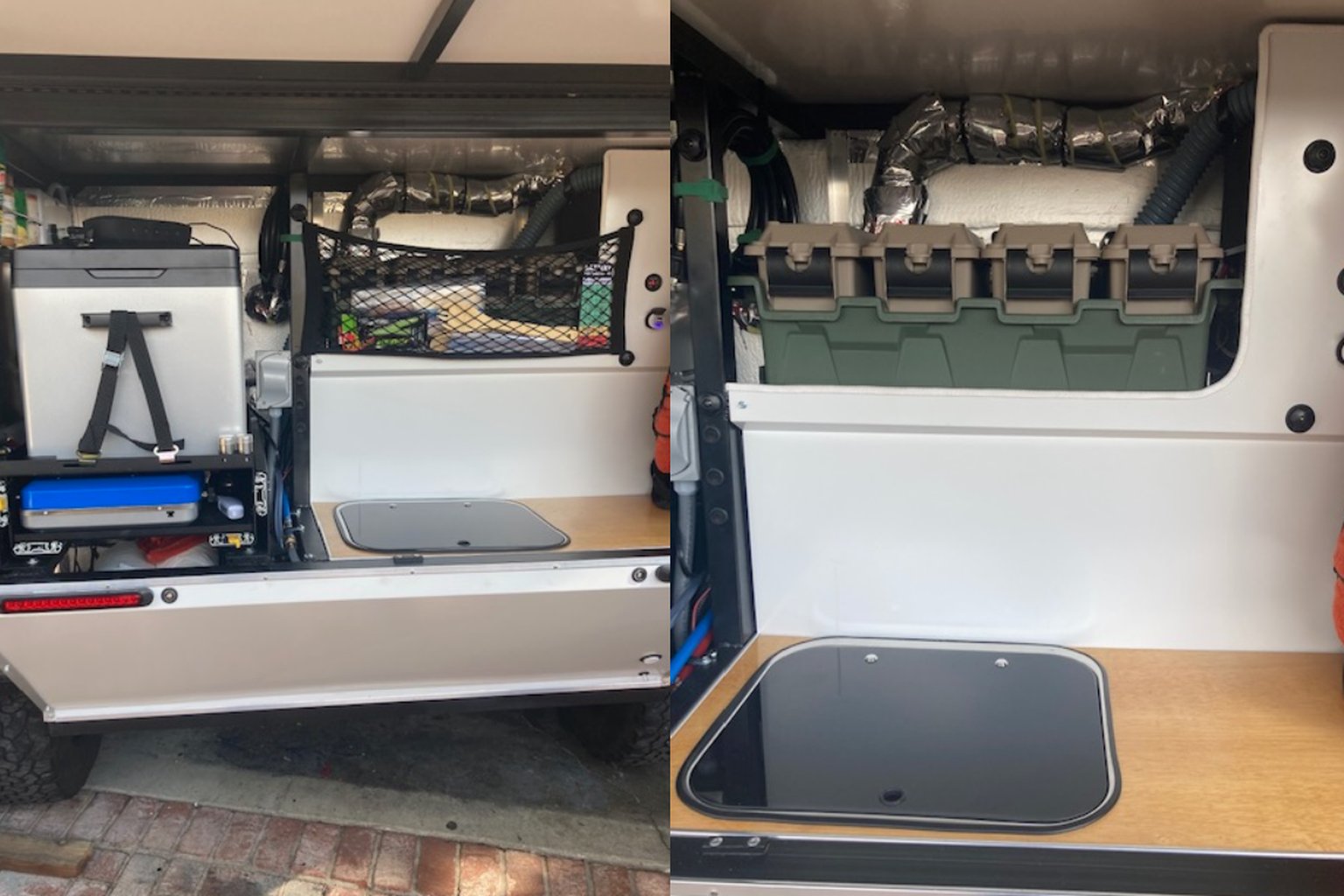
Why So Many Battery Runtime Estimates Are Wrong
The most common mistake is confusing cooling capacity is not electrical input. That point matters so much that it should be the first line in any runtime calculator. If a product page lists DV1910E-AC as a 12V model with 450W (1,535 BTU) cooling capacity, that 450W figure describes heat removal capacity. It does not automatically tell you the unit’s electrical power draw. The same warning applies to the 24V and 48V versions in the same family, and to larger models such as 550W, 700W, and 900W cooling-capacity variants. You cannot reverse-calculate battery life by pretending the cooling-capacity number is the same as the electrical input number.
The second mistake is using nominal battery size instead of energy you can actually take out of the battery. Runtime estimates based on battery label numbers alone ignore depth of discharge limits, battery management settings, voltage sag, wiring losses, temperature effects, and any losses in supporting electronics. A 12V battery bank may look large on paper, but the relevant question is how many watt-hours are really available to the cooling system during the part of the day that matters.
The third mistake is assuming the air conditioner runs at one fixed load all day. A DC-native variable-speed system does not behave that way. It may work harder during pull-down, then settle into lighter cycling or lower-speed operation once the enclosed space reaches the target range. That is why average system power draw is the number you need for a runtime estimate, not a guessed peak figure and not a cooling-capacity number copied from a spec sheet.
The fourth mistake is ignoring the difference between direct-DC and inverter-based setups. If someone powers a conventional AC portable unit from batteries through an inverter, system losses increase and runtime usually gets shorter. A DC-native platform can reduce those conversion penalties, but you still need to count every part of the actual electrical path in your own installation.
Runtime Calculator Framework: Battery Wh, Conversion Losses, Duty Cycle, and Ambient Load
A practical runtime framework starts with one simple equation:
Battery runtime ≈ usable battery energy (Wh) / average system power draw (W)
That formula is only useful when both sides of the equation are honest. Start with battery energy in watt-hours rather than only quoting amp-hours. Then reduce that nominal energy to reflect what is actually available in your application. Depending on chemistry and system design, usable energy may be affected by allowed depth of discharge, cold-weather performance, protective cutoffs, cable losses, controller losses, and any DC-DC or inverter stage between the battery and the air conditioner.
Next, determine the average draw of the cooling system as it operates in the real enclosure. That means using measured data from your own prototype, supplier-confirmed electrical data, or a monitored field test. It does not mean guessing from cooling capacity. It also does not mean assuming the system will stay at start-up load forever. What matters is the average over the time period you care about: overnight sleeping, daytime holding, or a full 24-hour cycle.
Then account for duty cycle. In the simplest terms, duty cycle describes how often and how hard the air conditioner needs to run to maintain the target temperature. A unit may run nearly continuously in a hot, poorly insulated enclosure under direct sun, yet run much less once the same enclosure is shaded, pre-cooled, and sealed well. That difference can change runtime dramatically even when the hardware stays the same.
Solar input changes the calculation again. Solar does not magically extend battery runtime by itself; instead, it reduces the net daily energy deficit. If your array replaces part of the energy the cooling system consumes during daylight hours, the battery has less work to do. In practical planning, that means you should model day and night separately rather than assuming one flat runtime number covers everything.
A safe way to build early estimates is to keep the draw variable symbolic until you have real test data. For example, if your battery system provides 1,200Wh of usable energy and your observed average draw over a defined test period is Pavg, runtime is 1,200 / Pavg hours. That keeps the framework honest while you compare insulation upgrades, solar contribution, shading, and setpoint changes.
Five Variables That Change Runtime More Than Most Buyers Expect
Ambient temperature is the first big variable. Hotter outside air raises condenser load and increases the amount of heat entering the space. The gap between outdoor temperature and your target setpoint matters. Trying to hold a low temperature on a very hot day usually shortens runtime fast.
The second variable is enclosure quality. Wall thickness, insulation value, window area, air leakage, and thermal bridges all shape how hard the system has to work. A compact insulated compartment can be much easier to cool than a larger shell with thin walls and multiple leak paths.
The third variable is usage pattern. Frequent door opening, loading cycles, people entering and exiting, or warm items being placed into the cooled space add heat every time they happen. In many mobile and service applications, this is the hidden reason field runtime ends up shorter than spreadsheet runtime.
The fourth variable is direct solar load and general airflow around the installation. Full sun can add a surprising amount of heat to a vehicle, trailer, tented enclosure, or small box. Poor condenser airflow can worsen the problem. Shade, ventilation, and smart mounting often improve runtime more than people expect.
The fifth variable is target temperature and start condition. Pulling a hot enclosure down from a high starting temperature requires more work than maintaining a moderate setpoint after the space is already stabilized. Small changes in thermostat setting can have a noticeable effect on runtime, especially in compact systems where every watt-hour matters.
These five variables explain why runtime usually ends up shorter than expected in high ambient heat, frequent door-opening service cycles, poor insulation, and exposed sun. They also explain why a battery-powered cooling setup that works well overnight in a shaded compact compartment may disappoint when moved into an all-day roadside or desert use case without any changes to the enclosure.
When a 12V Solution Makes Sense, and When 24V, 48V, or a Larger System Is the Better Call
A 12V approach is often sensible when the space is small, the battery system is already 12V, and the cooling job is focused on a contained zone instead of a large open cabin. That can fit overnight comfort in a tightly managed sleeper nook, small equipment protection, compact mobile compartments, or specialty enclosures where size and weight matter as much as cooling.
It is also a reasonable starting point when you can control the load around the air conditioner: better insulation, reduced air leakage, limited solar gain, and realistic setpoints. In those cases, compact, enclosed spaces can be cooled more predictably and the runtime model becomes much easier to trust.
Moving to 24V or 48V often makes more sense when the project needs longer cable runs, higher system power levels, cleaner integration with an existing vehicle or battery architecture, or better efficiency across the full electrical system. For integrators and procurement teams, the voltage decision is not only about the air conditioner itself. It affects wiring, protection hardware, charging strategy, and how well the cooling package fits the rest of the platform.
There are also clear cases where a 12V portable solution is the wrong tool. It is not a strong fit for applications that need heavy cooling around the clock, long-haul large vehicle cabins, large trailers with substantial heat infiltration, or poorly insulated spaces that constantly absorb outdoor heat. In those cases, the honest answer may be a 24V or 48V platform, more battery energy, more solar, or a physically larger cooling system.
That distinction matters because buyers often try to solve an enclosure problem with a product swap alone. In reality, battery life gets easier when the whole thermal system is sized correctly. Sometimes the best runtime improvement is not a different unit. It is more insulation, better sealing, a higher-voltage electrical architecture, or accepting that the required cooling load is beyond what a compact portable format should handle.
Using Micro DC Aircon for Compact Battery-Powered Cooling Scenarios
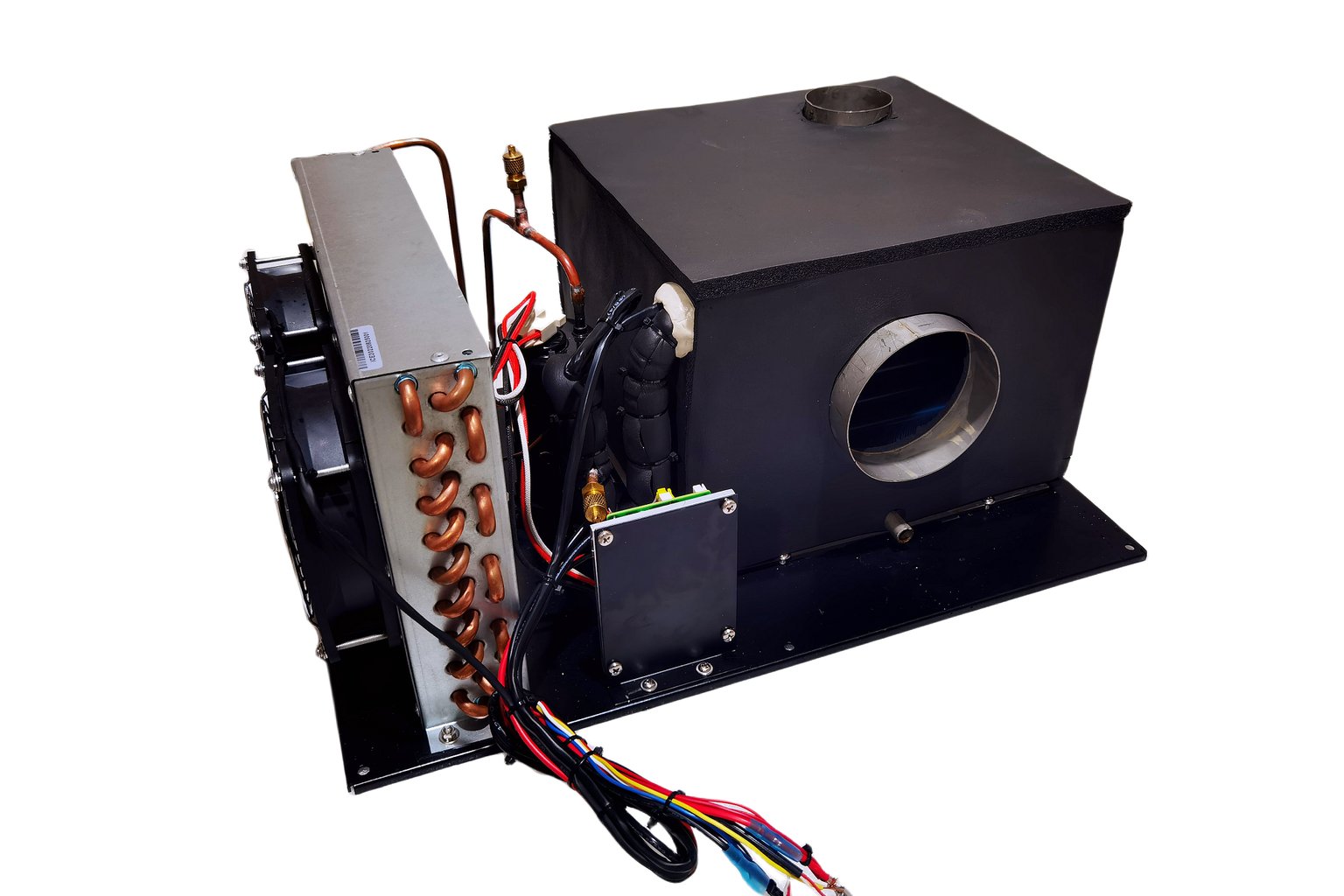
RIGID’s public Micro DC Aircon product range is useful for runtime planning because it shows how compact DC-native cooling can be matched to different system voltages without pretending every job belongs on one platform. The published lineup includes DV1910E-AC at 12V with 450W (1,535 BTU) cooling capacity, DV1920E-AC at 24V with the same 450W capacity, and DV1930E-AC at 48V with the same 450W capacity. Above that are DV3220E-AC at 24V and 550W (1,876 BTU), DV2820E-AC and DV2820E-AC-T at 24V and 700W (2,387 BTU), plus DV3820E-AC at 24V and DV3830E-AC at 48V, both at 900W (3,069 BTU).
Across the range, the public page also highlights a cooling temperature range of 5°C to 30°C, approximate weight around 5kg or 11 lbs, and a BLDC sine-wave inverter drive with variable-speed, DC-native operation. For buyers, those points matter because they describe a class of equipment designed for mobile and confined-space integration rather than a household plug-in portable unit adapted through an inverter.
Just keep the runtime logic disciplined. Those published 450W, 550W, 700W, and 900W values are cooling capacities. They tell you about the scale of heat removal, not the electrical draw you should place in a battery-life calculator. The right path is to shortlist the cooling-capacity class that matches the enclosure, then ask for or measure the electrical behavior under your own expected conditions.
For support teams and specifiers, that approach makes quoting cleaner. Instead of promising one generic runtime number, you can explain that the same compact aircon may behave very differently in a shaded insulated service body versus a sun-exposed thin-wall trailer. That is a more professional way to set expectations and it reduces the risk of overselling a small-format battery cooling package.
A Practical Checklist Before You Trust Any Runtime Number
- Define the enclosure clearly: internal volume, insulation level, leak points, window area, and whether the space is shaded or sun-exposed.
- Convert battery capacity into usable watt-hours, not just labeled amp-hours.
- Include losses from any inverter, converter, controller, or wiring path in the energy budget.
- Use measured or supplier-confirmed electrical draw data. Do not substitute cooling-capacity numbers for electrical input.
- Separate pull-down conditions from steady holding conditions. They are not the same load case.
- Estimate the effect of door openings, warm product loading, passengers, or heat-generating electronics.
- Model daytime solar contribution separately from nighttime battery-only operation.
- Check whether a 12V platform still makes sense after honest load assumptions, or whether 24V, 48V, more battery, or a larger system is the better answer.
A reliable runtime calculator is less about one magic formula and more about using the right variables in the right order. When you respect the difference between cooling capacity and electrical draw, account for real battery energy, and model actual operating conditions, battery-life estimates become far more useful for end users, builders, and buyers alike.