
A 24V electrical system is the professional standard. Marine vessels, commercial vehicles, solar installations, telecommunications equipment, and heavy machinery all operate on 24V DC buses. When these systems need refrigeration — cooling a cabin, chilling a process, preserving cargo, or managing battery temperature — they need a compressor that speaks 24V natively without conversion losses.
This guide maps 24V compressor options to specific application categories, helping you select the right model based on your cooling capacity, physical constraints, and operating environment.
Why 24V Compressor Systems Dominate Professional Applications
The 24V voltage level exists at a practical sweet spot for DC refrigeration:
- Half the current of 12V for the same power. A 400W cooling load through a 12V compressor draws 33A+. At 24V, the same load draws approximately 17A. Lower current means thinner cables, smaller fuses, reduced voltage drop over distance, and less heat generation in wiring — all critical for installations with long cable runs (marine, vehicles, remote solar).
- Standard battery configurations. Two 12V batteries in series, or a native 24V lithium pack (7S-8S LiFePO4), provide the power bus. This is standard for commercial trucks, boats, forklifts, and telecom backup power. No additional voltage conversion needed.
- Safety margin below touch-voltage thresholds. At 24V DC, shock hazard is minimal under most regulatory frameworks. This simplifies wiring practices, connector requirements, and installation safety compared to 48V systems where arc-flash and touch-voltage considerations apply.
- Wide component availability. Pumps, fans, controllers, sensors, and actuators in 24V DC are abundantly available from multiple manufacturers. Your system design is not constrained to a single vendor’s ecosystem.
24V Compressor Options by Cooling Capacity
RIGID’s 24V DC compressor lineup covers the full range of professional cooling requirements:
| Model | Type | Cooling Capacity | Refrigerant | Price | Best For |
|---|---|---|---|---|---|
| QX1902VDL | Single rotary | 125-400W | R134a | $220 | Small enclosures, portable coolers, single-zone |
| QX1902VDL-T | Single rotary (tropical) | 125-400W | R134a | $250 | High-ambient environments (45°C+) |
| QX3202VDL | Single rotary | 550W | R134a | $290 | Medium enclosures, equipment cooling |
| QX3002VDL | Single rotary | 530W | R134a/R513A | $290 | Regulatory-compliant low-GWP applications |
| QX2802VDL | Twin-cylinder | 550W | R134a | $290 | Low-vibration, noise-sensitive applications |
| QX2802VDL-T | Twin-cylinder | 550W | R290 | $320 | Eco-friendly, high-efficiency applications |
The capacity range from 125W to 550W covers the majority of 24V applications. For higher capacity at 24V, multiple modules can be used in parallel on shared fluid circuits, or step up to 48V for single-compressor solutions above 550W.
Marine Applications: Salt, Vibration, and Voltage Variation
Marine 24V systems present specific challenges that affect compressor selection:
Voltage variation: A 24V marine battery bank ranges from 22V (deeply discharged) to 29.2V (bulk charging, LiFePO4) or 28.8V (absorption charging, lead-acid). The compressor controller must operate across this full range without performance degradation or shutdown. RIGID 24V compressors typically accept 18-32V input range, accommodating the full marine charging cycle.
Vibration: Engine vibration, wave impact, and hull flexing create a harsh mechanical environment. Twin-cylinder compressors (QX2802VDL) tolerate vibration better because their balanced design generates less internal vibration to begin with. All refrigerant line connections must use vibration-resistant techniques (flexible sections, spring hangers, or loop stress relief).
Corrosion: Salt atmosphere corrodes exposed metals aggressively. The compressor itself is sealed, but electrical connections, mounting hardware, and condenser fins require marine-grade materials or coatings. Specify stainless steel fasteners, tinned copper wiring, and coated condenser coils for any installation exposed to salt air.
Typical marine cooling applications:
- Cabin air conditioning for sailboats and small powerboats (300-550W cooling)
- Refrigeration for fish holds and bait wells (200-400W per compartment)
- Electronics cooling for navigation equipment enclosures (100-200W)
- Battery thermal management for lithium marine packs (200-500W)
Solar-Powered Systems: Efficiency Is Everything
In solar installations, every watt consumed by the compressor comes from panels that cost money per watt of capacity. The variable-speed capability of BLDC 24V compressors provides critical advantages:
Maximum Power Point Tracking (MPPT) compatibility: Solar charge controllers output regulated 24V (or battery voltage) regardless of panel output. The compressor runs from the battery bus, which the MPPT controller keeps charged. However, during periods of low solar input (cloudy days, morning/evening), the available power may not support full-speed compressor operation. Variable speed allows the compressor to reduce capacity gracefully rather than shutting down entirely.
Duty cycle optimization: A solar-powered system with limited battery capacity benefits from running the compressor during peak solar hours (when excess power is available) and reducing or stopping during low-production periods. Thermal storage (cooling the space or contents below setpoint during sunshine) carries the system through non-production hours.
Sizing example: A 400W solar array in good conditions produces approximately 2,000Wh per day (5 peak sun hours). A QX1902VDL compressor at 50% average load draws approximately 80W average = 1,920Wh/day. This is a tight balance — a 600W array provides comfortable margin for cloudy days and seasonal variation.
Common solar cooling applications with 24V compressors:
- Off-grid cabin refrigeration (continuous, 200-300W capacity)
- Remote telecom site cooling (continuous, 300-550W capacity)
- Solar-powered vaccine refrigerators (WHO-specified, -20°C to +8°C)
- Agricultural produce cooling (seasonal, 400-550W capacity)
Heavy Equipment: Forklifts, Excavators, and Construction
Heavy equipment operates 24V electrical systems under extreme conditions: high ambient temperature, heavy vibration, dust, and limited space. 24V compressor installations on heavy equipment require:
High-ambient rated models: The tropical variant (QX1902VDL-T) is specifically designed for operation when condensing temperatures exceed standard ratings. In an excavator cab where the condenser is exposed to 50°C ambient from engine heat radiation, standard models may exceed their operating envelope. The tropical variant maintains capacity at these elevated conditions.
 Vibration tolerance: Construction equipment vibration levels far exceed marine or vehicle standards. Mount compressors on high-deflection rubber isolators (15-20mm deflection). Use flexible refrigerant lines (at least 300mm of rubber hose between rigid pipes and the compressor). Secure all wiring against chafing from relative motion.
Dust protection: Condenser fins clog rapidly in dusty construction environments. Use larger fin spacing (8-10 FPI instead of 14-16 FPI) and plan for frequent cleaning access. Some installations use pre-filters or cyclonic separators on condenser air intake.
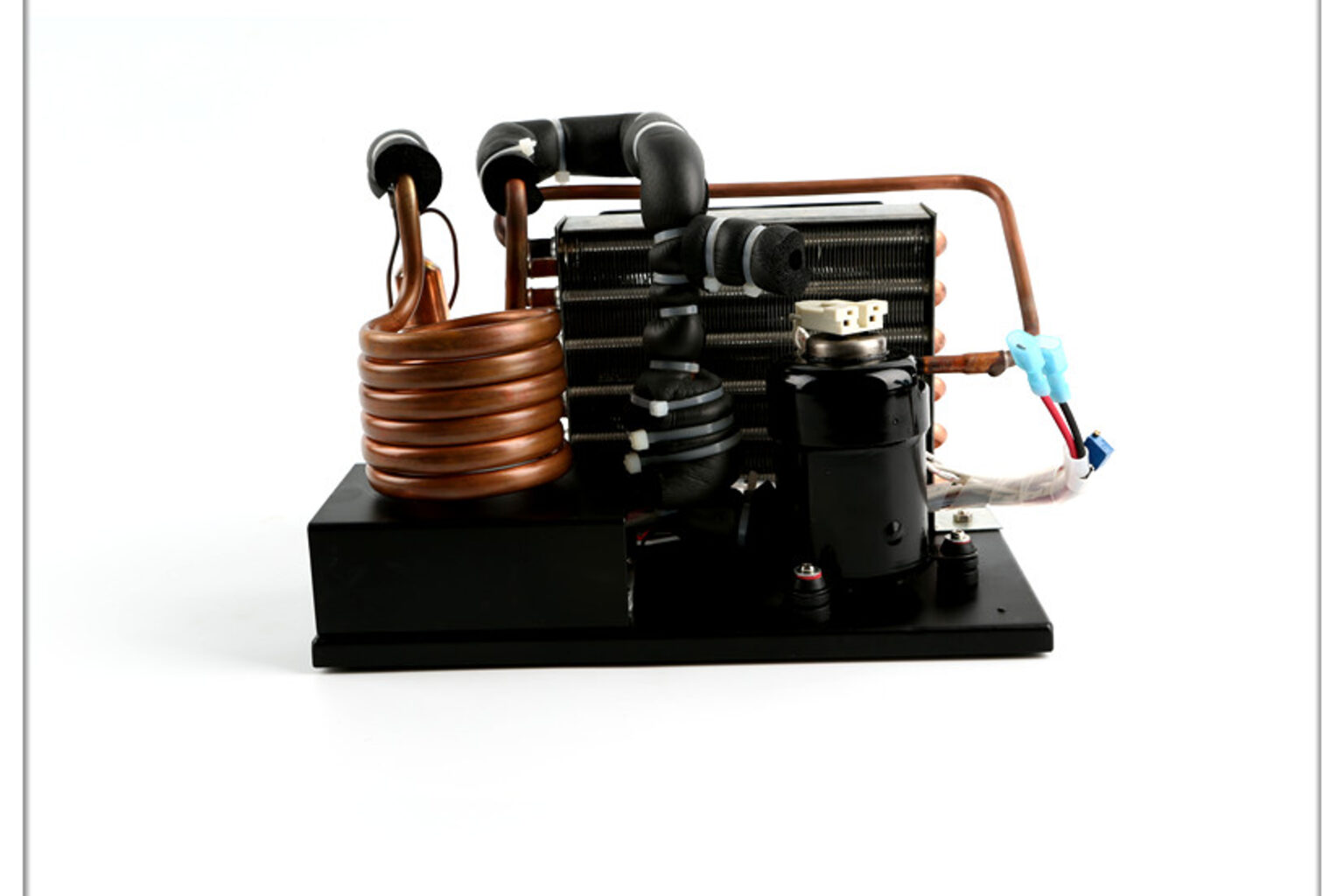
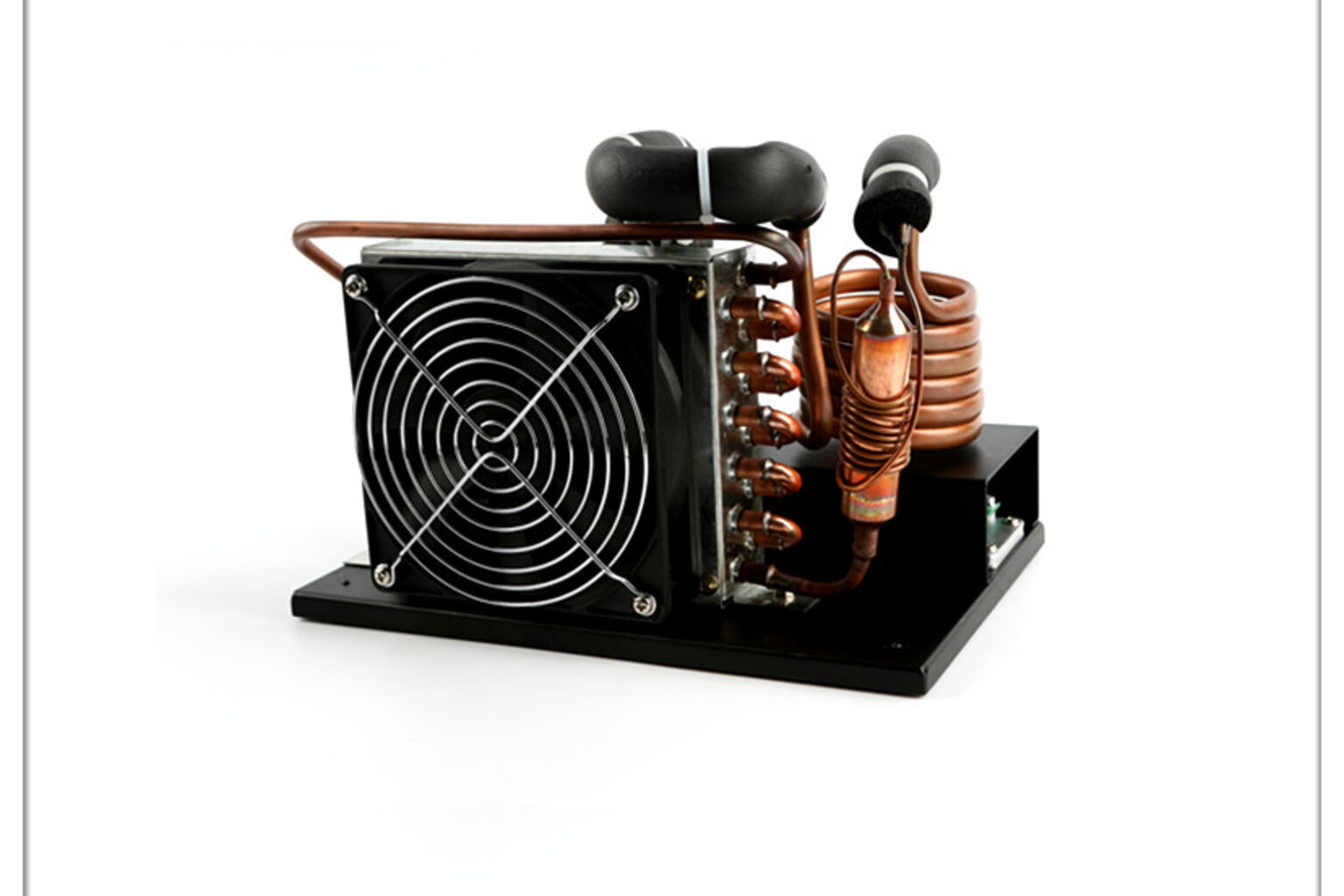
Space constraints: Equipment cabs have minimal available volume. The compact dimensions of RIGID 24V compressors (89mm diameter × 158mm length for single-cylinder models) allow installation in spaces impossible for conventional compressor systems. The entire AC system (compressor, evaporator, condenser) fits within the structural framework of most modern cab designs.
Voltage Tolerance and Battery Protection
A critical specification for any 24V compressor installation: what happens when voltage goes outside normal range?
Low voltage (below 18V): The controller should shut down gracefully to prevent the compressor from stalling under load (which can damage windings). Most RIGID controllers include low-voltage cutoff at approximately 18V with automatic restart when voltage recovers above 20V. This protects the battery from over-discharge while ensuring the compressor restarts without intervention once charging resumes.
High voltage (above 30V): During active charging, especially with solar MPPT controllers or alternator-based charging, voltage can spike above nominal. The controller should tolerate brief overvoltage (to 32V typically) without damage. Sustained overvoltage above rated maximum requires a voltage regulator in the supply line.
Transients: Load dumps (in vehicle systems when large loads disconnect suddenly), alternator voltage regulation failures, and lightning-induced surges can produce brief high-voltage spikes. A TVS (transient voltage suppressor) diode at the compressor power input protects against these events. Cost: $2-5. Insurance value: priceless.
For the complete 24V DC compressor range with specifications, performance curves, and dimensional drawings, see the RIGID 24V Compressor product page.
Integration Tips: Getting the Installation Right
Regardless of application category, 24V compressor installations share common best practices:
Wire sizing: Calculate voltage drop at maximum current over your cable run length. For a 20A compressor with 5-meter cable run: use 4mm² (12 AWG) minimum. Voltage drop at 20A over 5m with 4mm² copper = approximately 0.9V (total, including return). This keeps voltage drop under 4% — acceptable for most controllers. Longer runs or higher currents demand heavier gauge.
Fusing: Install an inline fuse rated at 1.5× the compressor’s maximum steady-state current, located within 300mm of the battery positive terminal. For a compressor with 20A maximum: use a 30A fuse. This protects against short circuits without nuisance trips during normal operation. Use slow-blow (time-delay) fuses to accommodate brief inrush at startup.
Grounding: In marine and vehicle installations, ensure the compressor controller ground connects to the same ground bus as the battery negative. Ground loops (multiple ground paths with different potentials) cause controller malfunction, EMI issues, and corrosion. Use a single-point grounding scheme for the compressor circuit.
EMI filtering: The BLDC motor controller generates switching noise on the DC bus. For systems with sensitive electronics (navigation equipment, radios, medical devices) on the same bus, install a ferrite choke or LC filter on the compressor power leads. This prevents conducted interference from reaching sensitive equipment.
Condensate management: In humid environments (marine, tropical), the evaporator produces condensate water. Route drain lines to overboard (marine), exterior (vehicle), or collection tray. Ensure drains cannot become blocked by debris — a blocked drain leads to water damage inside the cooled space.
24V System Integration with Solar Charge Controllers
For solar-powered installations, the interaction between solar charge controller, battery, and compressor requires attention:
Load disconnect threshold: Most solar charge controllers have a low-voltage disconnect (LVD) function to protect batteries from over-discharge. Set the LVD above the compressor’s own low-voltage cutoff to prevent the compressor from draining batteries below safe levels. Typical settings: LVD at 22V (lead-acid) or 21V (LiFePO4), compressor cutoff at 18V. The charge controller disconnects first, protecting both battery and compressor.
 Absorption and float charging: During the absorption phase of lead-acid charging, voltage may reach 28.8-29.2V. During equalization, it may briefly hit 30V+. Confirm your compressor controller tolerates these voltages (most RIGID 24V controllers accept up to 32V). For LiFePO4, maximum charge voltage is typically 29.2V — within normal operating range.
Direct solar connection (without battery): Not recommended for compressor operation. Solar panel output is too variable — cloud passage causes rapid voltage fluctuation that can stall and restart the compressor repeatedly, damaging it over time. Always buffer through a battery for stable voltage supply.
Comparing 24V vs 12V vs 48V for Your Application
When you have flexibility in system voltage, consider these trade-offs:
| Factor | 12V | 24V | 48V |
|---|---|---|---|
| Current for 500W | 42A | 21A | 10.4A |
| Wire size (5m run) | 10mm² min | 4mm² typical | 2.5mm² typical |
| Component availability | Excellent (automotive) | Very good (commercial) | Good (industrial/EV) |
| Battery options | Abundant, cheap | Good selection | EV-grade, premium |
| Safety considerations | Minimal | Minimal | Arc-flash potential |
| Max single-compressor capacity | 360W | 550W | 1,067W |
For professional applications with cooling loads of 300-550W, 24V is the optimal choice. It balances practical wire sizing with adequate component selection and single-compressor capacity for most requirements. Only choose 48V if your cooling load exceeds 550W from a single compressor, or if your existing system voltage is already 48V.
For the complete 24V DC compressor range including regular, tropical, twin-cylinder, and R290 variants, see the RIGID 24V Compressor product page.
Maintenance Schedule for 24V Compressor Systems
Proactive maintenance prevents the majority of field failures. A schedule appropriate for professional 24V installations:
Weekly (operator level):
- Visual inspection: check for unusual vibration, leaks (oil stains indicate refrigerant leak), or abnormal sounds
- Temperature verification: confirm cooling output meets expectations (thermometer check on cooled space or fluid)
- Condenser inspection: visible fin blockage from debris, leaves, or dust
Monthly:
- Clean condenser fins with compressed air or soft brush (critical in dusty/marine environments)
- Check condensate drain for blockage
- Verify fan operation (spin freely, no bearing noise)
- Check electrical connections for corrosion (especially in marine environments)
- Monitor battery voltage during compressor operation — declining voltage may indicate battery aging
Annually:
- Check refrigerant charge (manifold gauge reading compared to nameplate specification)
- Inspect wiring for chafe damage (vibration environments)
- Replace air filters if installed
- Verify safety interlock operation (high-pressure cutout, low-pressure cutout, over-temperature)
- Clean evaporator if accessible (dust and biological growth reduce performance)
Every 3-5 years:
- Replace vibration isolation mounts (rubber degrades over time)
- Inspect and potentially replace flexible refrigerant hoses (if used)
- Consider condenser replacement in aggressive corrosion environments
A maintained 24V compressor system reliably provides 50,000+ hours of operation — over 10 years at 12 hours per day, 365 days per year. The compressor module is by far the most reliable component; fans, pumps, and electrical connections require more frequent attention.
Case Study: 24V Compressor in a Remote Solar Telecom Tower
A telecommunications company deploys remote cell towers in off-grid locations powered by solar + battery (24V bank). Equipment cabinets containing radio electronics generate 350W of heat continuously. Ambient temperature reaches 48°C in summer. Without cooling, internal cabinet temperature exceeds 65°C — above the 55°C maximum rated temperature of the electronics.
System specification:
- Compressor: QX3202VDL (24V, 550W cooling capacity)
- Target internal temperature: below 45°C at 48°C ambient (only 3°C below ambient during worst case — but the system needs to handle internal heat generation on top of ambient conduction)
- Power budget: 200W maximum from solar/battery (daytime average availability)
- Reliability requirement: 5-year unattended operation with annual preventive maintenance visits
Design decisions:
- Variable-speed operation: compressor runs at 40-60% capacity during normal conditions (35°C ambient), ramping to maximum only during peak summer heat. Average power consumption: 120W — within the 200W budget.
- Oversized condenser: rated for 800W at 50°C ambient, providing comfortable margin at worst-case conditions
- Sealed cabinet: IP55 rated. Condenser on exterior of cabinet, evaporator on interior. No outside air enters the electronics space.
- Redundancy: two independent cooling circuits per cabinet. Either alone can maintain temperature below critical threshold. Both operating provides comfortable margin and load-sharing extends individual compressor life.
Result after 3 years deployment: Zero cooling-related equipment failures across 47 towers using this design. Compressor replacements: zero. Condenser cleaning (annual service visits): only maintenance required. Actual average power consumption: 95W — below budget, validating the variable-speed efficiency advantage in real field conditions.