
3D Printer Enclosure Cooling Is About Precision, Not Just Temperature
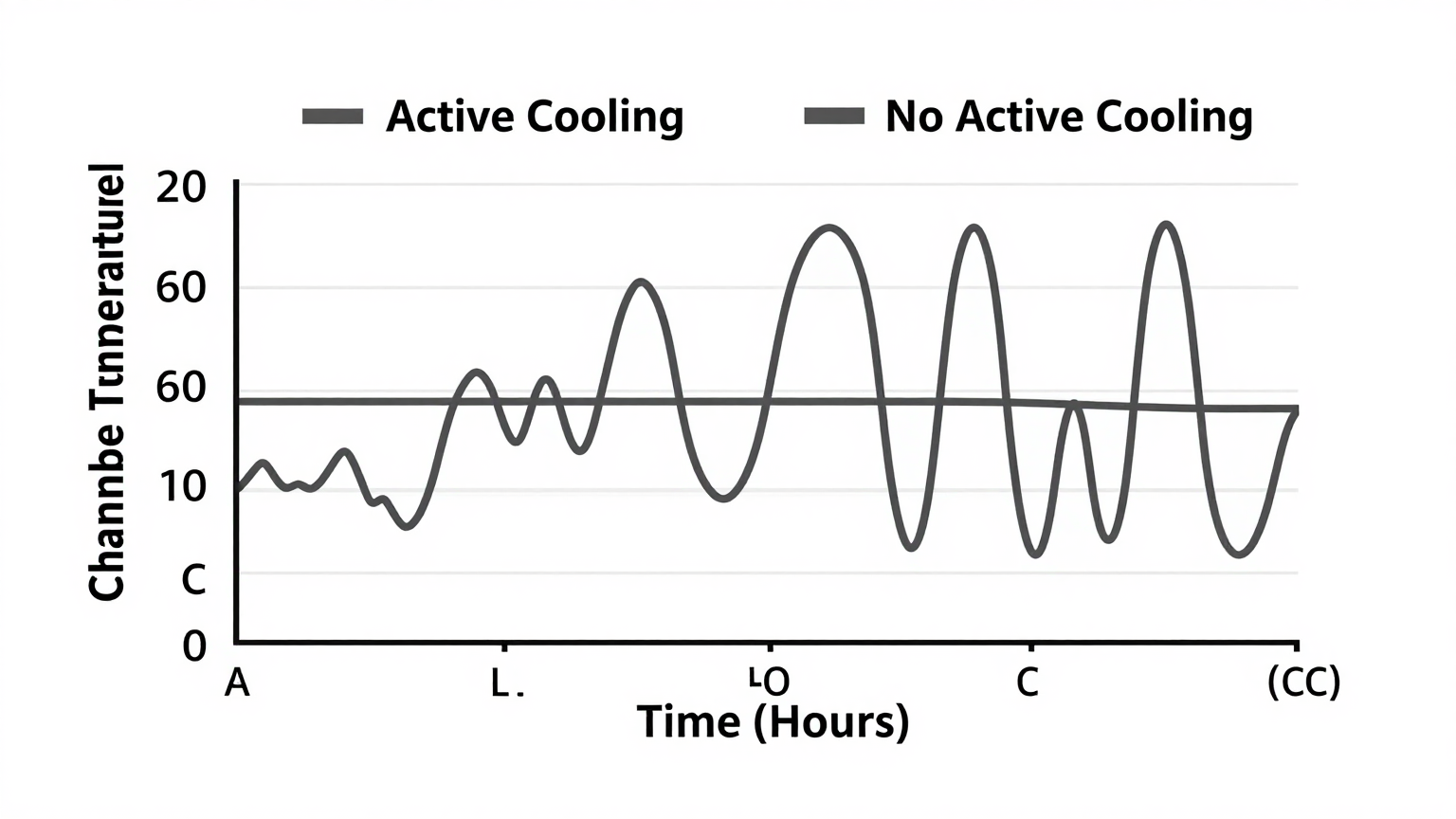
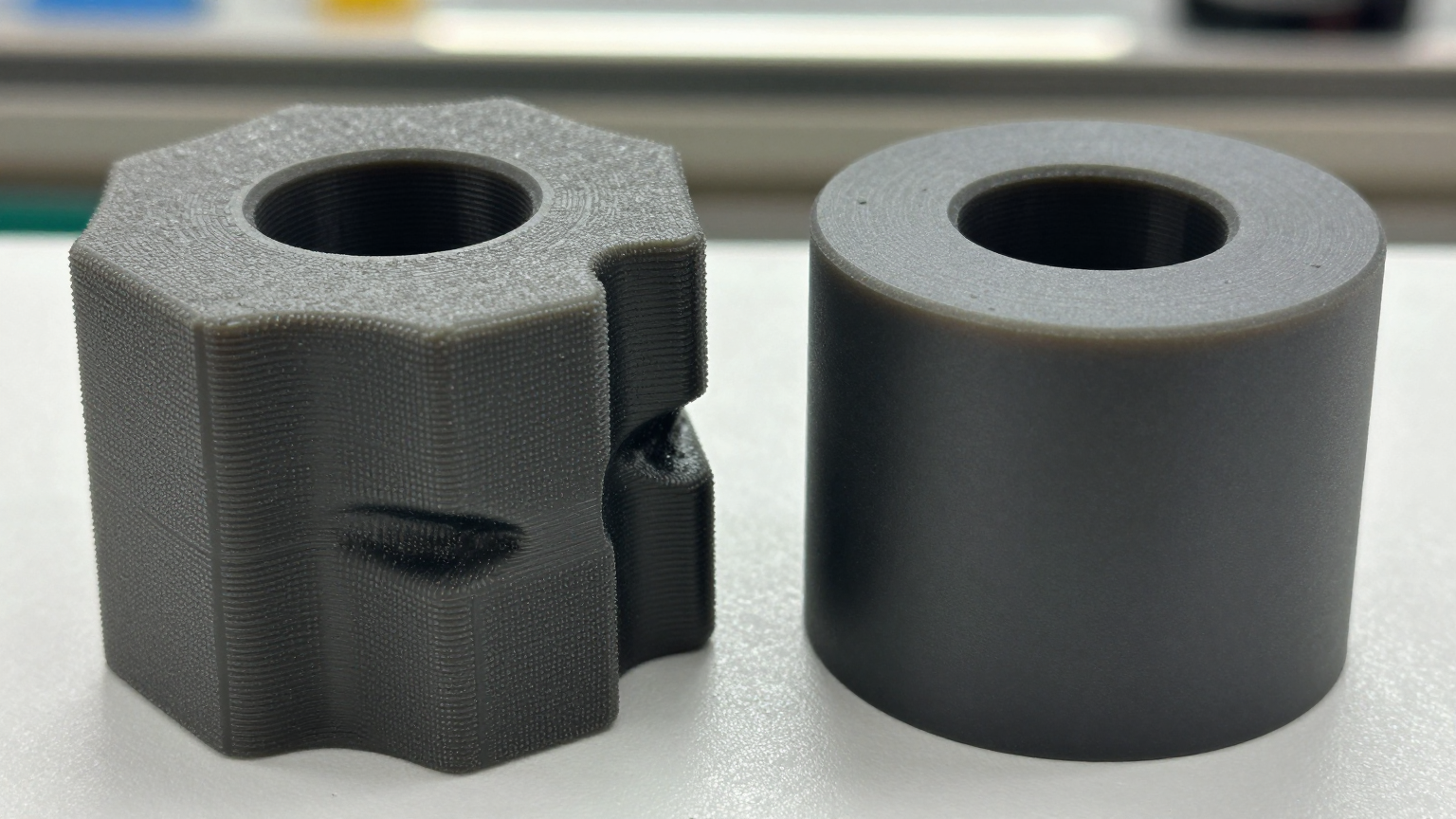
Industrial 3D printers — FDM, SLA, SLS, and MJF systems — operate within narrow thermal windows. The print chamber temperature, the ambient temperature around the build plate, and the temperature gradient between layers all affect the mechanical properties, dimensional accuracy, and surface quality of the printed part. When the chamber temperature drifts outside the target window, the result is warping, delamination, stringing, dimensional inaccuracy, or outright print failure.
The problem is not that industrial printers lack heating — most enclosed printers include chamber heaters to maintain elevated temperatures during printing. The problem is that many printers lack active cooling to prevent the chamber from overheating during long prints, to control the cooling rate after printing, and to maintain stable ambient conditions around the printer’s electronics and motion systems. An enclosed 3D printer generating 500 to 2,000 W of waste heat from its extruder, heated bed, stepper motors, and power electronics can overshoot its target chamber temperature within hours of continuous operation — particularly in non-climate-controlled production environments.
This guide covers the thermal challenges specific to industrial 3D printer enclosures and the role of active cooling in maintaining the precision thermal environment that print quality demands.
The Thermal Challenge: Too Hot Is as Bad as Too Cold
Each printing technology has a specific thermal operating window:
| Technology | Typical Chamber Temp | Tolerance | Overheat Consequence |
|---|---|---|---|
| FDM (ABS, ASA) | 50-70 C | +/- 5 C | Stringing, oozing, dimensional loss |
| FDM (PEEK, PEI) | 120-160 C | +/- 5-10 C | Crystallization defects, warping |
| SLA (resin) | 25-35 C | +/- 2-3 C | Viscosity change, cure inconsistency |
| SLS (nylon) | 170-180 C | +/- 2 C | Powder degradation, cake formation |
The chamber heater handles the “too cold” side. Active cooling handles the “too hot” side. Without active cooling, the chamber temperature is controlled only by the rate of passive heat loss through the enclosure walls — which is uncontrolled, variable (it depends on ambient temperature and airflow around the printer), and insufficient when the total heat input exceeds the passive dissipation rate.
Where Excess Heat Comes From
In an enclosed printer, heat accumulates from multiple sources:
- Heated bed: the largest single heat source, continuously radiating 200 to 1,000 W into the chamber depending on bed size and temperature setpoint
- Extruder/hot end: 40 to 100 W per extruder, with additional radiant heat from the nozzle and heat block
- Stepper motors: 20 to 80 W total across all axes, increasing with print speed and acceleration
- Power electronics: 50 to 200 W from stepper drivers, control boards, and power supplies
- UV cure source (SLA): 50 to 150 W from the laser or projector
The total heat input ranges from 300 W for a small desktop enclosed printer to over 2,000 W for a large industrial FDM or SLS system. During multi-hour or multi-day prints, this continuous heat input drives the chamber temperature above the target unless actively removed.
Precision Control: Not Just On/Off
Industrial print quality requires temperature control, not just temperature reduction. The cooling system must work in coordination with the chamber heater to maintain a stable setpoint — adding cooling when the temperature rises above setpoint and allowing the heater to add heat when it drops below. This coordinated control requires:
- Variable-speed cooling output — the cooling module must modulate its capacity rather than cycling on and off, which would cause temperature oscillation
- Integration with the printer’s temperature controller — the cooling module should accept a control signal (0-5V, PWM, or serial command) from the printer’s main controller
- Response time matching — the cooling module must respond to temperature changes fast enough to prevent overshoot, but not so aggressively that it causes undershoot and hunting
A DC compressor with variable-speed control via potentiometer, 0 to 5V input, or PWM signal provides the proportional cooling output that precision temperature control requires. Fixed-speed compressors with on-off cycling are unsuitable for this application — the temperature oscillation they create defeats the purpose of active thermal management.
Electronics Cooling Within the Enclosure
While the print chamber operates at elevated temperatures, the printer’s electronics — control boards, stepper drivers, power supplies — prefer temperatures below 40 to 50 degrees. In an enclosed printer with a heated chamber, these electronics are subjected to the same elevated temperature unless thermally isolated or actively cooled.
Strategies for managing this thermal conflict include:
- Mounting electronics outside the heated chamber in a separate compartment with dedicated cooling
- Creating a thermal barrier between the print chamber and the electronics bay
- Using the cooling module to maintain the electronics compartment at a lower temperature than the print chamber
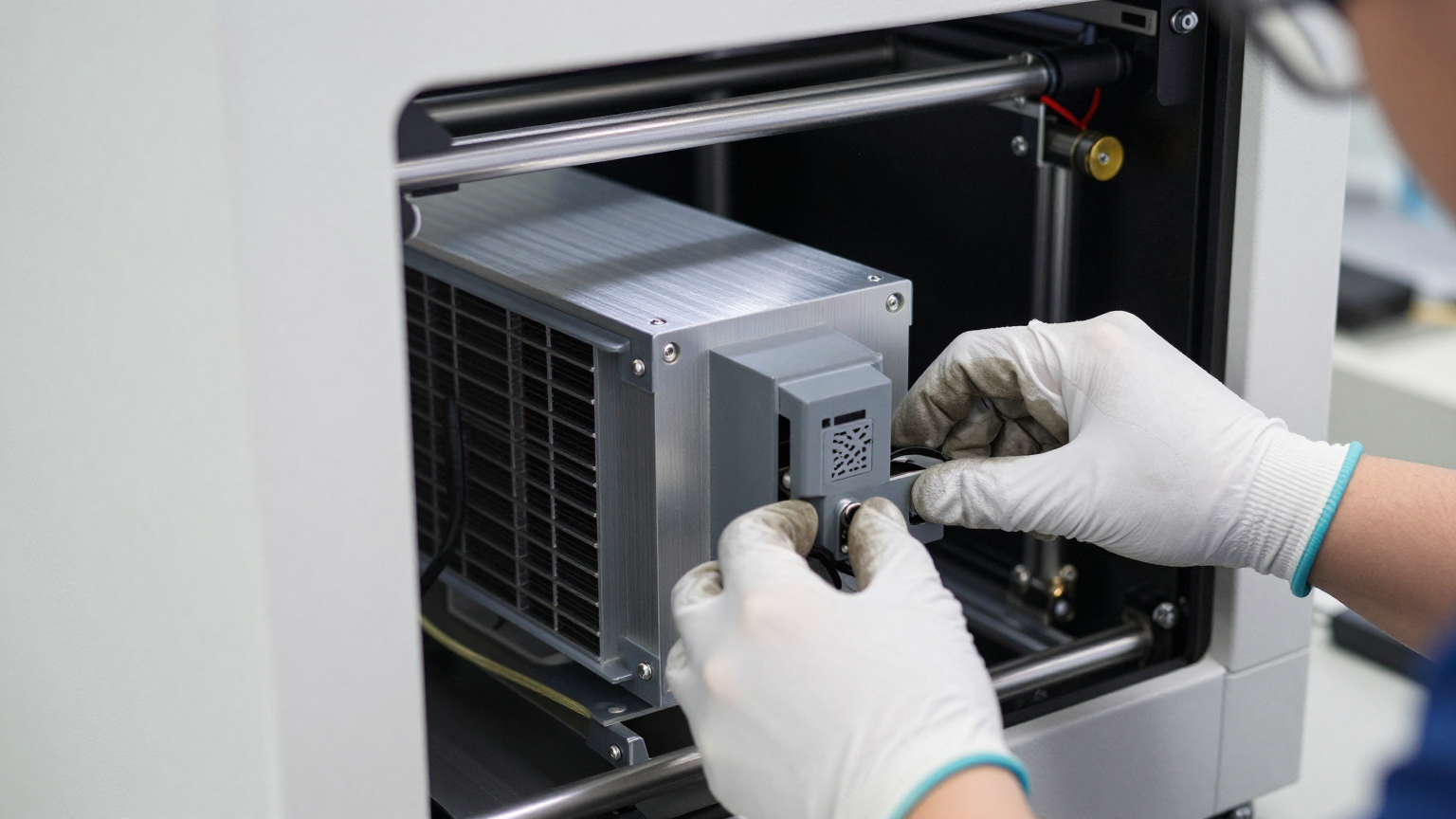
A split approach — where the micro DC aircon module cools the electronics compartment while the chamber maintains its elevated temperature through the heater — is common in industrial systems. The cooling module keeps the sensitive electronics within their rated temperature range without interfering with the chamber’s thermal profile.
Post-Print Controlled Cooling
For many materials (particularly ABS, nylon, and PEEK), the cooling rate after printing is as important as the printing temperature itself. Rapid cooling causes internal stress, warping, and cracking. Controlled slow cooling — ramping the chamber temperature down over hours rather than opening the door and exposing the part to room temperature — produces parts with lower residual stress and better dimensional accuracy.
Active cooling enables controlled cooling rate profiles that passive cooling cannot achieve. The cooling module can be programmed (through the printer’s controller) to lower the chamber temperature at a specified rate — for example, 2 degrees per hour — providing a predictable and repeatable post-print thermal protocol that improves part quality consistency.
Material-Specific Thermal Protocols
Different printing materials require different thermal management strategies, and the cooling module must be capable of supporting the specific protocol for each material type.
ABS and ASA require a heated chamber at 50 to 70 degrees during printing to prevent warping, followed by a controlled slow cool-down at 1 to 3 degrees per hour. The cooling module provides the controlled descent — without it, the chamber cools at whatever rate the enclosure walls allow, which is typically too fast and too uneven.
PEEK and PEI (high-performance polymers) require chamber temperatures of 120 to 160 degrees during printing. The cooling module does not operate during printing at these temperatures but is essential for the controlled post-print cooling phase and for cooling the electronics compartment that must remain below 50 degrees while the print chamber operates at 160 degrees. The thermal isolation between these two zones, with active cooling on the electronics side, is a critical design element.
SLA resins require much tighter temperature control — typically 25 to 35 degrees with plus or minus 2 degree stability. Resin viscosity changes with temperature, affecting layer adhesion, feature resolution, and cure depth. The cooling module maintains this narrow window by removing excess heat from the UV cure source and the build platform while preventing the resin temperature from dropping below the minimum threshold.
Nylon (SLS) requires the powder bed temperature to be held just below the sintering point — typically within 2 degrees of the target. This is the tightest thermal control requirement in additive manufacturing, and it demands a cooling module with variable-speed control, fast response time, and integration with the printer’s PID temperature controller.
Enclosure Design Considerations
The enclosure design significantly affects the cooling module’s effectiveness. Key considerations include insulation thickness and material (which determines the rate of passive heat loss), enclosure volume (larger volumes have more thermal mass and slower temperature response), door sealing quality (air leaks around doors are the primary source of temperature disturbance), and the location of the cooling module’s air inlet and outlet relative to the build chamber and electronics bay.
A well-insulated enclosure requires less cooling capacity to maintain temperature but also traps heat more effectively — making the cooling module more important for preventing overshoot. A poorly insulated enclosure loses heat rapidly, reducing the risk of overshoot but requiring more heating energy and making precise temperature control more difficult due to environmental sensitivity. The optimal balance depends on the target temperature range and the ambient environment.
Common Field Questions
Does active cooling reduce print time?
Not directly — print time is determined by the toolpath and print speed. However, active cooling eliminates thermal pauses (where the printer must wait for the chamber to cool before proceeding) and reduces the risk of print failures from thermal overshoot, both of which improve effective throughput.
Can I use a standard room air conditioner for printer enclosure cooling?
A room AC provides cooling but not precision control. It cannot modulate its output to maintain a specific chamber temperature setpoint, and it cannot be integrated with the printer’s temperature controller. For hobby printers, it may be adequate. For industrial production requiring consistent part quality, a controllable DC cooling module is the appropriate solution.
What about filtration — do I need to filter the chamber air?
Active cooling modules that recirculate internal air (rather than introducing outside air) do not affect the chamber’s particulate environment. For printers that emit ultrafine particles (particularly FDM with ABS and SLS with nylon), filtration should be addressed separately — typically with a HEPA or activated carbon filter in the chamber’s recirculation path. The cooling module and the filtration system serve different functions and should be designed independently.
How do I control the cooling module from my printer firmware?
Most printer firmware supports auxiliary output channels (typically 0-5V analog, PWM, or GPIO). A DC cooling module with 0-5V or PWM speed control input connects to one of these channels, allowing the firmware to modulate cooling output as part of its temperature control loop. This requires a few lines of configuration in the printer firmware — not a fundamental redesign.

Integration Support
3D printer thermal management is process-specific — the cooling requirements for an SLA resin printer differ fundamentally from those of an SLS nylon system. If your printer encounters thermal drift during long prints, electronics overheating in enclosed environments, or inconsistent part quality related to temperature control, the Rigid engineering team can evaluate the application. The Rigid Micro DC Aircon module supports variable-speed control via potentiometer, 0-5V, PWM, or TTL communication — enabling integration with industrial printer controllers for precision thermal management.
Print quality is thermal quality. The printer that holds its chamber temperature within plus or minus 2 degrees throughout a 48-hour print produces consistent parts. The printer that drifts 10 degrees over the same period produces scrap. Active cooling is not an add-on — it is a quality control system. The manufacturers who achieve repeatable, production-grade part quality across thousands of prints understand this: the thermal environment is not a background condition that takes care of itself. It is a controlled process variable that demands the same engineering attention as motion accuracy, material formulation, and layer adhesion. Treat temperature control as an afterthought, and part quality will reflect that choice.