
Abbe Refractometer Circulating Bath: Select the Cooling Side
An Abbe refractometer circulating bath must deliver the prism conditions required by the instrument. This guide selects only the external loop’s cooling side; a DV refrigeration module is not automatically a complete bath with a pump, reservoir, controls, or heating. First identify the required prism temperature, approved jacket routing, and coolant supply conditions. Consider a compact module only when its cooling duty and the remaining circulation equipment are confirmed.
The task is active temperature control of a benchtop optical instrument. A handheld coolant refractometer used to estimate glycol concentration is a different application. Specify the prism-temperature objective before choosing the external bath. That objective determines whether the installation needs cooling, heating, or a combination supported by the instrument.
| Required arrangement | Equipment to specify | Role of a compact cooling module |
|---|---|---|
| The instrument requires both heating and cooling | A complete circulator or engineered system supporting both duties | Refrigeration alone does not satisfy the heating requirement |
| The instrument needs an external cooling circuit and circulation is already provided | A refrigeration section matched to the approved supply conditions | A DV module may enter review within its published −20 to +20°C coolant range |
| The instrument uses integrated temperature control without an approved external jacket interface | The instrument’s supported configuration | Do not add an external bath merely because the prism needs temperature control |
A laboratory replacing a ready-to-connect bath should compare complete delivered systems. An integrator adding refrigeration to an existing loop should compare modules. Neither decision is complete until the prism requirement is translated into the actual coolant-interface conditions.
Identify the Instrument’s Temperature-Control Arrangement
Check the exact refractometer and its external connections. A water-jacketed Abbe instrument, an instrument with integrated thermoelectric temperature control, and a handheld concentration meter do not share the same external-circulator requirement. Obtain the connection drawing and instructions for the model being installed.
The VEE GEE C10 product description provides a specific example: both primary and secondary prisms have circulator connections, and prism temperature is displayed on the instrument. Its stated effective prism-temperature range is 0–70°C. This demonstrates an external-bath application; it does not establish that a RIGID cooler can cover the full instrument range.
Confirm whether an external bath is already supplied or recommended for the ordered configuration. If replacing an existing bath, retain its approved interface requirements as part of the replacement assessment. A new cooler should not be selected simply because its hose can be attached to a visible nozzle.
Separate Prism Temperature from Circulator Supply
The circulating liquid transfers heat through the instrument’s prism housings. Its supply temperature therefore belongs to the liquid circuit, while the prism-temperature reading belongs to the instrument’s temperature measurement. Define both locations when writing the equipment specification.
For an Abbe refractometer, ask the supplier which reading establishes the required condition for measurement and what procedure establishes readiness. A bath reaching its displayed target does not, by itself, confirm that the prism has reached the required condition. Avoid assigning a universal delay or temperature offset without instrument-specific information.
A bath setpoint is not proof of prism equilibration. If an application requires a stated prism temperature, define the acceptable instrument reading and the conditions under which it is checked. Keep the external supply setting as a separate part of the agreed setup.
Route the Primary and Secondary Prism Connections Correctly
Where an instrument provides more than one prism jacket, obtain the manufacturer’s routing instructions. Do not infer a series or parallel connection from the number of nozzles. The approved arrangement should identify the inlet, outlet, connecting hoses, and any relationship between the two prism circuits.
Document that routing before comparing pumps. Different arrangements create different hydraulic paths and can affect how flow reaches each jacket. If a replacement circulator uses different fittings or hoses, include those changes in the interface assessment rather than treating them as insignificant accessories.
Prepare a simple written connection schedule naming each manufacturer-designated port and the approved destination. Use the supplier’s connection drawing as the reference. This schedule is an installation aid, not permission to redesign the instrument’s cooling passage or change an internal flow path.
Decide Whether the Application Needs Cooling or Heating
Identify the required prism conditions and the expected laboratory environment. Some applications call for removal of heat; others require a temperature above the surrounding room. A cooling-only product should not be presented as an alternative to a heating circulator when heating is part of the requirement.
Also describe how measurements are organized. A single fixed condition and a sequence of different conditions create different equipment questions. Ask whether the instrument supplier requires a particular external-bath control arrangement for the intended sequence. Do not assume an external refrigeration module provides programmed heating or temperature ramps.
The instrument’s range is not the external cooler’s range. The C10 example extends above the published RIGID compact liquid chiller temperature boundary. This article assesses only a potentially matching cooling segment. It does not propose using one small refrigeration module throughout the instrument’s full measurement-temperature range.
Compare the Interface Requirements Before Comparing Products
Use a worksheet that connects each requirement to the relevant measurement location. The entries below are selection questions, not manufacturer specifications or a recommended operating recipe.
| Decision | Required information | Evidence to retain |
|---|---|---|
| Instrument configuration | Exact Abbe model and external-circulator arrangement | Current manual and connection drawing |
| Prism condition | Required temperature and instrument readiness criteria | Approved measurement procedure |
| Supply condition | Permitted liquid temperature at the specified interface | Instrument supplier’s cooling requirement |
| Hydraulic arrangement | Jacket routing, required flow, pressure limits, fittings | Loop drawing and pump assessment |
| Fluid | Approved liquid and wetted-material compatibility | Instrument and cooler compatibility information |
| Equipment scope | Refrigeration, pump, reservoir, sensing, and controls | Quotation and integration agreement |
| Acceptance | Prism and liquid readings under the intended condition | Configuration-specific commissioning record |
If the application supplies only a desired prism temperature, ask for the coolant-interface conditions. If the cooler quotation supplies only an outlet-temperature range, ask how that configuration meets the required circuit. These requests address separate sides of the interface.
Match Flow Without Overstating the Pump Specification
Obtain the flow requirement and permitted pressure for the refractometer’s approved routing. Then assess the complete circuit, including hoses, fittings, jacket passages, and the external cooler. The relevant flow is the delivered flow in the connected arrangement, not the pump’s unrestricted maximum.
Ask for information applicable to the intended coolant and operating temperature. If pump performance is unavailable, keep that requirement unresolved. Do not turn a product-family photograph or a pump label into evidence of flow through the Abbe refractometer.
Specify how the circuit can be inspected and serviced without disturbing the optical setup unnecessarily. Identify fittings and connection hardware in the supply scope. For broader hydraulic context, the RIGID water-cooling systems guide provides supporting background; it does not define the requirements of this instrument.
Agree on the Fluid and the Laboratory Conditions
Confirm the circulating liquid with the instrument supplier and cooling supplier together. Include the actual liquid designation and additives where permitted. Do not assume that a coolant used in another laboratory instrument is approved for the prism jackets and the external cooler.
Record the expected room conditions and any environmental restrictions specified for the instrument. If chilled lines or fittings need insulation or condensation management, include those provisions in the installation assessment. Such provisions do not extend a product’s published temperature range or override the instrument’s requirements.
Maintenance also needs an agreed fluid specification. Identify who is responsible for replenishment, cleaning, and preserving the approved liquid condition. Changing the fluid changes part of the installation that was originally reviewed; it should not occur as an undocumented substitution.
Assess the RIGID Compact Cooling Family as a Candidate
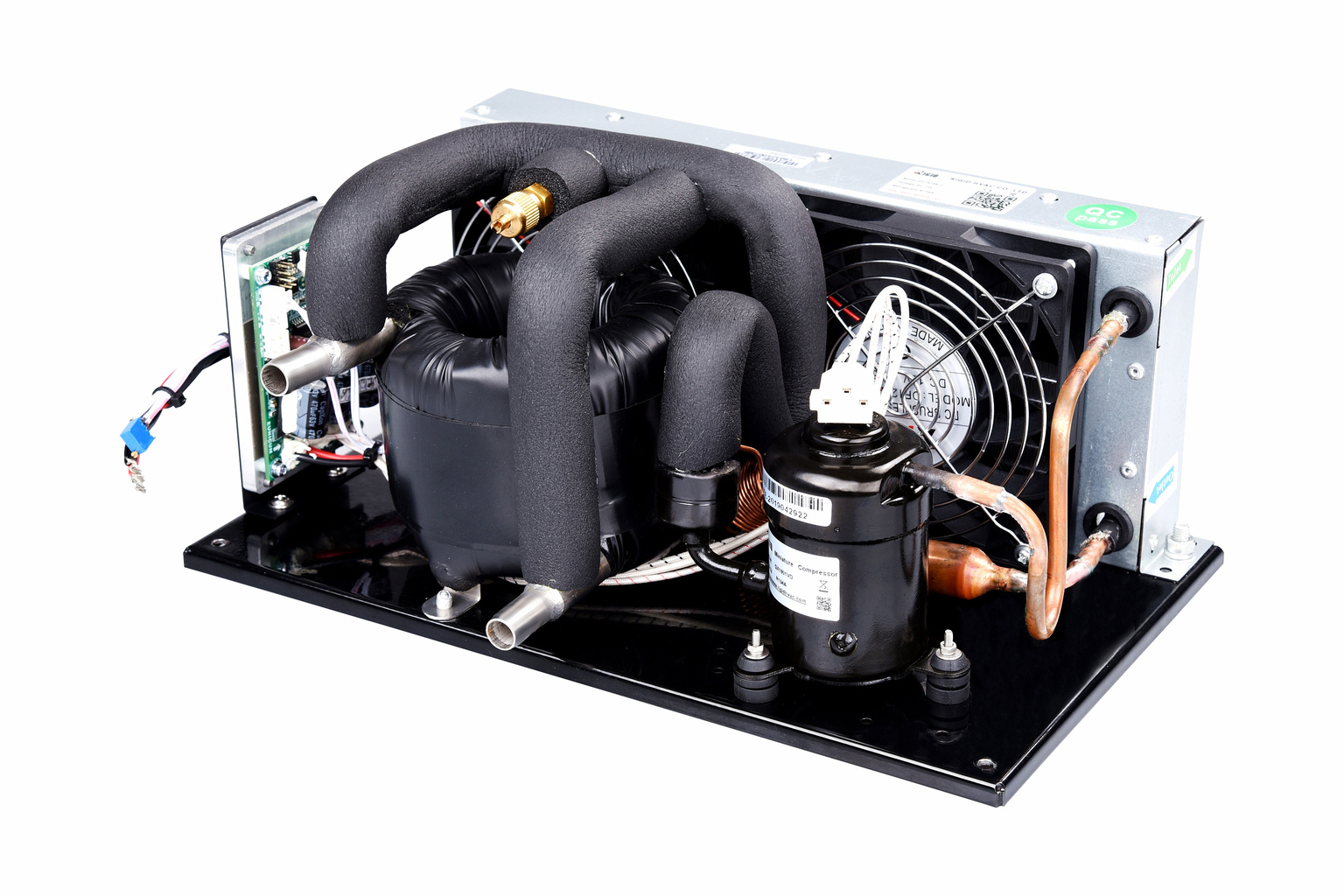
The RIGID compact liquid chiller family publishes a −20 to +20°C coolant range and a series capacity range of 100–550 W. Coaxial models include DV1910E-C, DV1920E-C, and DV1930E-C. These are catalogue identifiers for possible cooling configurations, not an Abbe compatibility list.
For a candidate such as DV1920E-C, confirm the ordered heat-exchanger arrangement, duty performance, pump and reservoir scope, liquid compatibility, and control arrangement. The public series information does not state all the hydraulic and capacity conditions required to complete that comparison.
Only the confirmed cooling segment belongs in the recommendation. A prism target does not establish that its corresponding liquid supply is inside the cooler’s published range. A configuration needing supply conditions outside that range needs a different or specifically confirmed solution.
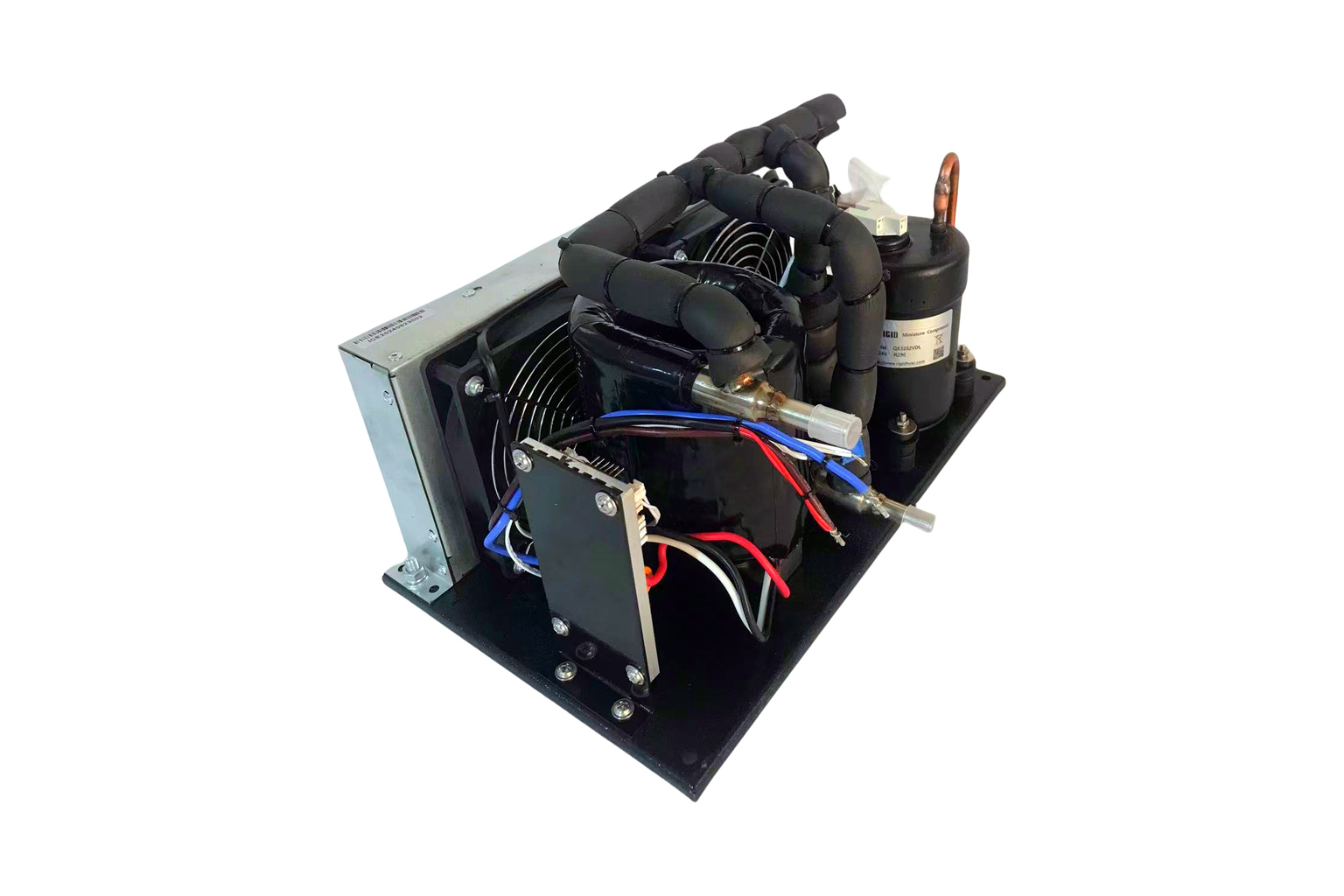
Representative coaxial-module photos show the product form, including its heat exchanger and refrigeration components. They do not demonstrate a connection to an Abbe refractometer, optical accuracy, or the performance of the exact configuration being considered.
Distinguish an Integrated Bath from a Refrigeration Module
A laboratory user looking for an Abbe refractometer circulating bath may expect an assembled unit with circulation, a reservoir, and temperature control. An equipment integrator may already have those functions and need a refrigeration module. Clarify which delivery is being requested before assessing quoted equipment.
Assign responsibility for the circulating pump, fluid volume, temperature sensing, controls, connecting hoses, and external power supply. Identify which parts are included, separately supplied, or designed by the integrator. The product category name alone does not establish a complete ready-to-connect laboratory installation.
Ask how the external circuit’s control will interact with the instrument’s own temperature indication. Do not assume the refractometer can command the cooling module or that the cooling module accepts the prism sensor. Any required signal interface needs explicit equipment support and an agreed integration design.
Compare Quotes Against the Same Measurement Condition
Before comparing prices, make sure each quote addresses the same Abbe refractometer configuration and cooling duty. One quote may include an assembled loop while another covers only refrigeration hardware. A lower figure is not a like-for-like comparison when essential circulation or controls remain outside its scope.
Likewise, do not compare nominal wattage as if it were performance at the proposed coolant temperature. Ask for the applicable duty point and what remains to be confirmed. The useful purchasing comparison connects capacity, hydraulic delivery, control scope, and installation requirements to the same intended measurement condition.
Keep the acceptance plan with the quotation. This makes a supplier’s confirmed scope distinguishable from a buyer’s planned integration work. It also identifies whether additional equipment is needed before a laboratory can commission the external prism circuit.
Verify the Prism Circuit as Installed
Commission the installation using the instrument’s approved procedure. Record the actual jacket routing, fluid, hose arrangement, room conditions, and the readings at the agreed locations. Establish the required prism condition through the instrument’s applicable measurement and readiness criteria.
The comparison between the bath and prism readings is useful only when their locations and timing are known. Do not adjust the instrument procedure to compensate for an unexplained difference between displays. Clarify the cooling-interface behavior with the suppliers and the laboratory function responsible for measurement.
External cooling does not replace instrument calibration. Cooling-interface acceptance establishes the supplied thermal service. Calibration and measurement validity remain subject to the refractometer’s requirements and the laboratory’s procedure.
Frequently Asked Questions
Does every Abbe refractometer need an external bath?
No. Confirm the temperature-control arrangement for the exact instrument. Water-jacketed models with approved external connections differ from instruments with integrated temperature control.
Can the two prism jackets be connected in any convenient order?
No. Use the manufacturer’s approved connection arrangement. The number of nozzles does not establish permission to choose a series or parallel routing.
Is the bath display the prism temperature?
No. The displays refer to different measurement locations. Establish prism conditions using the instrument’s approved procedure and treat the circulating-liquid supply as a separate interface requirement.
Can a compact DV cooler cover the C10’s full stated range?
No. The published compact liquid chiller range ends at +20°C. Only a cooling segment with confirmed supply conditions inside that range can be considered; the full instrument range is not covered.
Does a module include the complete external circulating bath?
Not automatically. Confirm the pump, reservoir, temperature measurement, controls, power supply, and hose connections in the delivered configuration.
Request a Prism-Cooling Configuration Review
Provide the Abbe model, prism-temperature requirement, approved routing, coolant conditions, and desired equipment scope when you request a RIGID cooling assessment. Those details define the cooling segment that can be evaluated and the remaining functions required for the complete circulating loop.