
Air-Cooled vs Water-Cooled Chiller: Pros, Cons, and How to Choose for Your Lab
When you start shopping for a laboratory chiller, you hit a fundamental decision almost immediately: should you choose an air-cooled or a water-cooled design? This choice shapes everything that follows — your installation timeline, ongoing maintenance burden, operating costs, and even the temperature of the room where the chiller sits.
The air-cooled vs water-cooled chiller decision is not about one being universally better than the other. It is about matching the condenser type to your lab’s infrastructure, cooling load, space constraints, and budget. This guide walks you through how each type works, compares them side by side, and gives you a clear framework for making the right call.
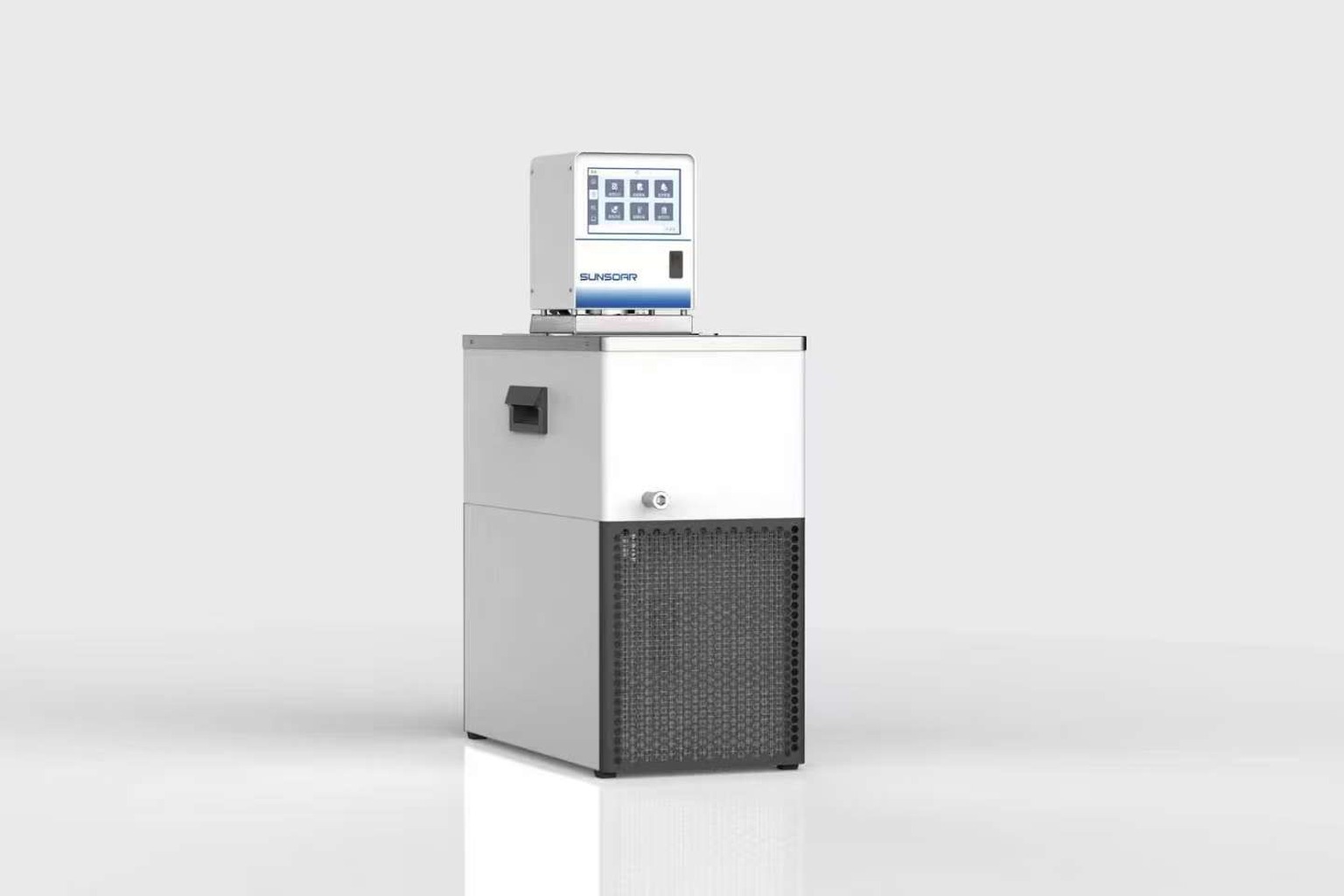
Understanding the Air-Cooled vs Water-Cooled Chiller Difference
Both air-cooled and water-cooled chillers use the same vapor-compression refrigeration cycle to remove heat from your process fluid. The difference lies in how they reject that collected heat to the environment — specifically, what happens at the condenser.
The condenser is where the hot, high-pressure refrigerant gas releases its heat and condenses back into a liquid. In an air-cooled chiller, that heat goes into the surrounding air. In a water-cooled chiller, it goes into a separate stream of cooling water. That single distinction drives most of the practical differences between the two types.
How Air-Cooled Chillers Work
An air-cooled chiller rejects heat through a condenser coil equipped with aluminum or copper fins. One or more fans blow ambient room air across these fins, carrying the heat away from the refrigerant and exhausting it into the surrounding space.
Key characteristics of air-cooled chillers:
- Self-contained operation: The entire refrigeration system — compressor, condenser, evaporator, and expansion device — lives in one enclosure. You plug it in, connect your process lines, and it runs.
- No external water supply needed: The condenser requires only electricity and adequate airflow. No plumbing connections to a cooling tower or building water loop.
- Dominant in lab settings: The vast majority of laboratory chillers rated under 10kW cooling capacity use air-cooled condensers. They are the standard for benchtop, under-bench, and portable lab cooling units.
- Simple installation: Position the unit with adequate clearance around the condenser (typically 15-30 cm on the air intake and exhaust sides), connect process tubing, fill with coolant, and power on.
Air-cooled chillers work best when room ambient temperature stays below about 35°C. Above that threshold, the temperature difference between the refrigerant and the cooling air narrows, which reduces the condenser’s ability to reject heat efficiently.
How Water-Cooled Chillers Work
A water-cooled chiller rejects condenser heat into a stream of facility cooling water rather than room air. This cooling water typically comes from a cooling tower on the roof, a central chilled water plant, or another dedicated water source.
Key characteristics of water-cooled chillers:
- Requires facility water infrastructure: You need an available supply of cooling water at an appropriate temperature and flow rate. This means piping, valves, and often water treatment systems.
- Shell-and-tube or plate condensers: Instead of finned coils with fans, water-cooled units use compact heat exchangers where refrigerant and cooling water flow in close proximity.
- Common in large installations: Central plant chillers serving entire buildings or industrial processes above 50kW are frequently water-cooled. They are less common for individual lab instruments.
- Heat leaves the room: Because the cooling water carries the rejected heat away through pipes to a remote cooling tower or heat exchanger, the chiller does not warm up the room it sits in.
Water-cooled condensers can maintain consistent performance regardless of room temperature because the cooling water temperature is controlled by the facility system, not by ambient air conditions.
Side-by-Side Comparison
The following table summarizes the practical differences that matter most when choosing between air-cooled and water-cooled chillers for lab applications:
| Feature | Air-Cooled | Water-Cooled |
|---|---|---|
| Installation | Plug and play — connect power and process lines | Needs facility water connection, plumbing, and often permits |
| Maintenance | Clean condenser fins periodically (compressed air or brush) | Water treatment, valve maintenance, cooling tower upkeep |
| Noise level | Moderate fan noise from condenser | Quieter at the unit (water flow is nearly silent) |
| Heat rejection location | Adds heat directly to the room | Removes heat from the room via water piping |
| Efficiency at high ambient temps | Performance drops when room exceeds 35°C | Stable — facility water temperature is independently controlled |
| Space requirement | Needs clearance around unit for airflow | Compact unit footprint but requires plumbing runs |
| Total cost of ownership | Lower — self-contained, minimal infrastructure | Higher — cooling tower, water treatment, piping |
| Best suited for | Individual labs, small to mid-size operations | Large facilities with existing cooling tower infrastructure |
| Portability | Can be relocated with minimal effort | Fixed installation due to plumbing connections |
| Lead time to operational | Same day in many cases | Weeks to months (infrastructure dependent) |
When to Choose an Air-Cooled Chiller
For most laboratory applications, an air-cooled chiller is the practical choice. Here are the scenarios where it clearly wins:
Your lab lacks central cooling infrastructure
If your building does not have a cooling tower or central chilled water loop — and most standalone research labs, university departments, and small biotech facilities do not — an air-cooled chiller is your only realistic option without major capital investment. You get cooling capability without construction projects.
Your cooling load is under 10kW
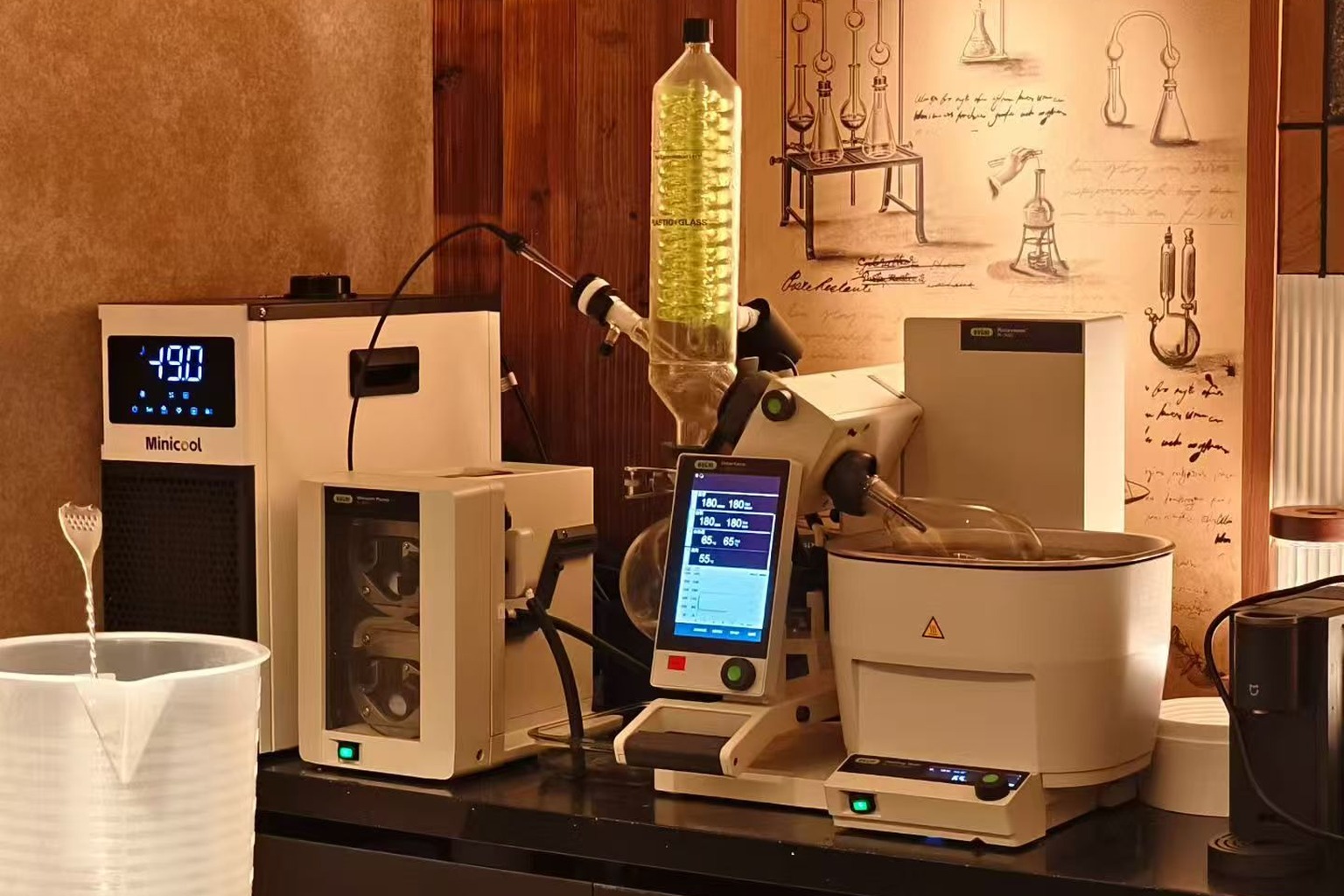
The vast majority of lab instruments — rotary evaporators, laser systems, analytical instruments, small reactors, 3D printers, and electron microscopes — need less than 10kW of cooling. Air-cooled chillers handle this range efficiently, and the infrastructure cost of water cooling simply is not justified for these loads.
You need portability or easy relocation
Labs reconfigure. Instruments move between rooms. Projects end and new ones begin. An air-cooled chiller goes wherever you have a power outlet and adequate ventilation. No plumber required.
Budget is a primary constraint
When you compare total project cost — not just the chiller itself but installation, piping, water treatment, and ongoing maintenance — air-cooled units typically cost significantly less over their service life for sub-10kW applications.
When to Choose a Water-Cooled Chiller
Water-cooled chillers make sense in specific circumstances. If several of the following apply to your situation, water cooling may be the better path:
Your facility already has a cooling tower
If conditioned cooling water is already available in your building — common in large pharmaceutical plants, semiconductor fabs, and hospital complexes — tapping into that supply is straightforward. The infrastructure cost is already sunk, so you get the efficiency benefits without the capital outlay.
Multiple high-heat-load instruments share one room
When a single lab houses several instruments each producing substantial heat, the cumulative thermal load from multiple air-cooled chillers can overwhelm the room’s HVAC system. Water-cooled units export that heat out of the room entirely, keeping the space comfortable for occupants and sensitive instruments.
Ambient temperature regularly exceeds 35°C
In hot climates or poorly ventilated mechanical rooms where ambient temperature frequently rises above 35°C, air-cooled condensers lose effectiveness. Water-cooled systems maintain stable performance because their condenser relies on facility water at a controlled temperature, typically between 20°C and 30°C.
Noise is a critical concern
While modern air-cooled chillers have become quieter, the condenser fans still produce audible noise. In acoustic research labs, recording studios, or any environment where vibration and sound must be minimized, a water-cooled unit eliminates fan noise at the condenser entirely. The cooling tower fans are remote, typically on the roof.
Room Heat: The Factor People Overlook
This point deserves special emphasis because it catches many lab managers by surprise: an air-cooled chiller adds heat to your room equal to the cooling it provides to your process, plus the electrical energy consumed by the compressor and fans.
In practical terms, if your chiller removes 1kW of heat from your process fluid, it will add approximately 1.3 to 1.5kW of heat to the room (the process heat plus the energy the compressor adds). This means your room’s air conditioning system needs to handle not just the normal occupant and equipment loads, but also the full thermal output of every air-cooled chiller in the space.
For a single small chiller in a well-ventilated lab, this is rarely a problem. But stack three or four air-cooled chillers in one room, and you may find the room temperature creeping up, which reduces chiller efficiency, which makes them work harder, which adds more heat — a cycle that can degrade performance for everyone.
Strategies to manage room heat from air-cooled chillers:
- Ensure your room HVAC is sized to handle the chiller heat load in addition to normal loads
- Position chillers near exhaust vents or in areas with good air circulation
- Consider ducting condenser exhaust air out of the room for larger units
- If you have more than three chillers in one room, evaluate whether a single water-cooled unit or a centralized approach might be more practical
Making Your Decision: A Practical Framework
Rather than getting lost in theoretical efficiency comparisons, focus on these four questions:
- Do you have cooling water available? If not, air-cooled wins by default unless you are prepared for a significant infrastructure project.
- What is your total cooling load in the room? Under 10kW combined, air-cooled is almost always the right answer. Above 20kW in a single space, start evaluating water-cooled options.
- How hot does your room get? If ambient temperature stays below 30°C with adequate ventilation, air-cooled performs well. If it regularly exceeds 35°C, investigate water cooling.
- Will you ever need to move the equipment? If lab reconfiguration is likely within the chiller’s lifetime, the portability of air-cooled units has real value.
For the majority of research and analytical labs, the answer will be air-cooled. The technology is mature, reliable, and purpose-built for the scale and infrastructure reality of laboratory environments.
A Practical Example: Choosing for a Typical Research Lab
Consider a molecular biology lab with a rotary evaporator, a recirculating cooler for a laser cutter, and a temperature-controlled sample storage unit. The combined cooling demand is around 2kW. The lab is on the third floor of a university building with standard HVAC but no cooling tower.
In this scenario, a compact air-cooled chiller is the clear choice. Installation takes an hour. No facilities department approvals for plumbing. No water treatment contracts. The room HVAC comfortably absorbs the additional 2-3kW of heat the chiller rejects.
The RIGID MiniCool™ countertop recirculating chiller exemplifies this approach — an air-cooled design in a compact countertop form factor that requires no external water connection and operates straight out of the box. For labs that need larger capacity while keeping the same air-cooled simplicity, the MidiCool™ series extends the range up to 4.6kW of cooling.
Frequently Asked Questions
Can I convert an air-cooled chiller to water-cooled, or vice versa?
Generally, no. The condenser type is integral to the chiller’s design — the compressor, refrigerant charge, expansion device, and control logic are all matched to the condenser. Converting between types would essentially require rebuilding the unit. Choose the right type upfront rather than planning to convert later.
Is a water-cooled chiller always more energy-efficient?
Not necessarily. While water-cooled condensers can achieve better heat transfer efficiency at the unit level, you must account for the energy consumed by the cooling tower fans, pumps, and water treatment systems. For small cooling loads typical in labs, the overall system efficiency of a well-designed air-cooled chiller is often comparable or even favorable when you include all auxiliary equipment.
How much clearance does an air-cooled chiller need?
Most manufacturers recommend 15 to 30 cm of clear space on the air intake and exhaust sides of the condenser. Restricted airflow forces the fans to work harder, increases noise, raises condensing pressure, and reduces cooling capacity. Never install an air-cooled chiller in an enclosed cabinet without dedicated ventilation openings.
What maintenance does each type require?
Air-cooled chillers need periodic cleaning of the condenser fins — monthly in dusty environments, quarterly in clean labs. Use compressed air or a soft brush to remove dust buildup. Water-cooled chillers require regular water quality testing, chemical treatment to prevent scale and biological growth, inspection of water-side heat exchanger surfaces, and maintenance of valves and strainers. Water-cooled maintenance is more complex and often requires specialized technicians.
Conclusion
The air-cooled vs water-cooled chiller decision comes down to matching the condenser type to your real-world constraints. For most laboratory environments — standalone labs, cooling loads under 10kW, facilities without cooling towers, and situations where portability matters — air-cooled chillers deliver reliable performance with minimal infrastructure demands.
Water-cooled chillers earn their place in large facilities with existing cooling water infrastructure, high-ambient environments, and situations where room heat rejection is unacceptable. They are not inherently better — they serve a different set of conditions.
Start with your infrastructure reality, not with theoretical efficiency claims. The chiller that matches your lab’s actual conditions will always outperform the one that requires you to build infrastructure you do not have.