
Best Laboratory Chiller Comparison: What Actually Matters When You Are Choosing
Every lab manager who has tried to purchase a recirculating chiller in the last twelve months has run into the same problem. The established European brands — JULABO, LAUDA, Huber, Thermo Fisher — offer proven performance, but lead times stretch past eight weeks and list prices start north of three thousand dollars for anything that reaches below minus twenty. Meanwhile, budget-friendly units from lesser-known suppliers flood marketplace listings at half the price, but their spec sheets are often vague about actual cooling capacity at low setpoints, and after-sales support can be difficult to reach.
This comparison aims to help lab procurement teams, facility managers, and researchers make a more informed decision. We will look at five categories that consistently determine whether a chiller performs well in practice — not just on paper.
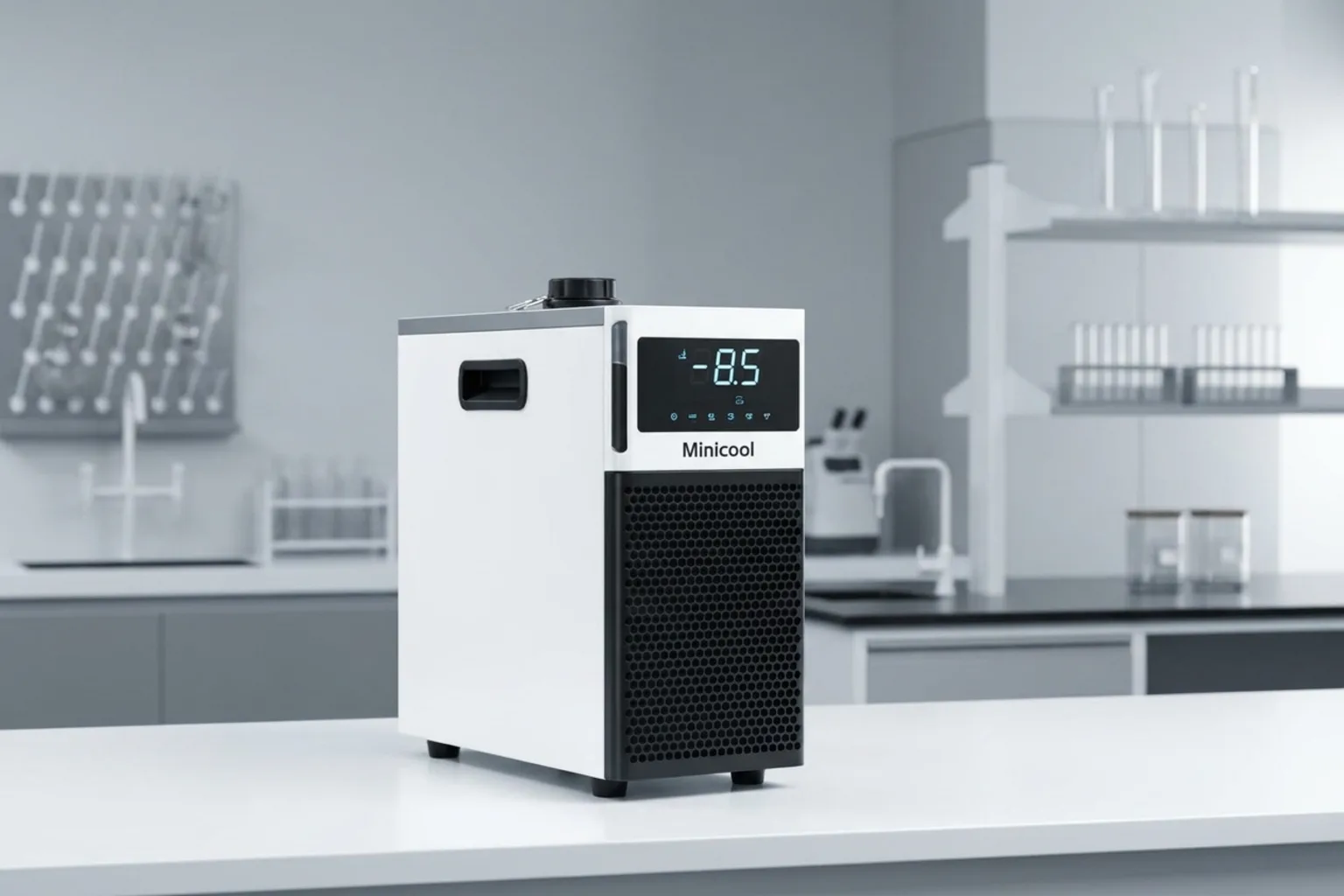
Category One: Temperature Range and Stability
The first question most buyers ask is straightforward: how cold can it go, and how tightly does it hold temperature once it gets there?
Premium European brands typically offer models that reach minus 40 degrees Celsius across their mid-range product lines. JULABO’s CORIO and DYNEO series, LAUDA’s Microcool and Integral T lines, and Huber’s Unichiller range all include models rated for that temperature floor. Stability specifications from these manufacturers usually fall in the range of plus or minus 0.01 to 0.05 degrees Celsius under steady-state conditions — though those numbers are measured at the bath outlet with no external heat load, which is a detail that matters more than most data sheets acknowledge.
The RIGID MiniCool series reaches the same minus 40 degrees Celsius floor with a rated stability of plus or minus 0.1 degrees Celsius. For applications like rotary evaporation, distillation condenser cooling, and analytical instrument support, that level of stability is more than adequate. Where stability below plus or minus 0.05 degrees becomes critical — certain calorimetry or rheometry setups, for example — the premium European brands may still hold an advantage, but those applications represent a small fraction of typical lab chiller purchases.
Budget alternatives often list impressive temperature ranges on paper but rarely publish stability specifications at all. When they do, independent testing frequently shows drift of plus or minus 0.5 degrees or more under load — enough to affect solvent recovery rates in rotary evaporation and introduce measurement uncertainty in temperature-sensitive analytical work.
Category Two: Cooling Capacity at Actual Operating Conditions
Published cooling capacity is the most commonly misunderstood specification in the chiller market. A unit rated at 1,000 watts of cooling capacity at 20 degrees Celsius might deliver only 400 watts at minus 20 degrees — and that derating curve varies dramatically between manufacturers.
Established brands like JULABO and LAUDA publish detailed cooling capacity curves that show performance across the full temperature range. This transparency is genuinely useful and allows engineers to size equipment accurately. Their mid-range laboratory units typically deliver between 350 watts and 2,000 watts at minus 20 degrees Celsius, depending on the model tier.
The MiniCool series offers 450 watts to over 1,000 watts of cooling capacity. The key difference is that MiniCool achieves this in a significantly more compact footprint — a point we will return to shortly. For most benchtop applications where the heat load falls between 200 and 800 watts, a MiniCool unit can handle the job without the physical bulk of a floor-standing European unit.
Budget units frequently publish only the peak cooling capacity at room temperature and omit derating curves entirely. This makes accurate sizing nearly impossible without independent testing, and undersized cooling is the single most common reason laboratory chillers fail to meet user expectations.
One practical sizing consideration that applies across all brands: always size based on the cooling capacity at your actual target setpoint, not at room temperature. A chiller rated at 1,000 watts at 20 degrees Celsius that delivers 450 watts at minus 10 degrees is effectively a 450-watt chiller for any application running at minus 10 degrees. If your rotary evaporator setup generates 300 watts of heat at the condenser and you need coolant at minus 10 degrees, that unit works — but barely. A 20 to 30 percent safety margin above the calculated heat load is standard engineering practice to account for ambient temperature variations and gradual heat exchanger fouling over the unit’s service life.
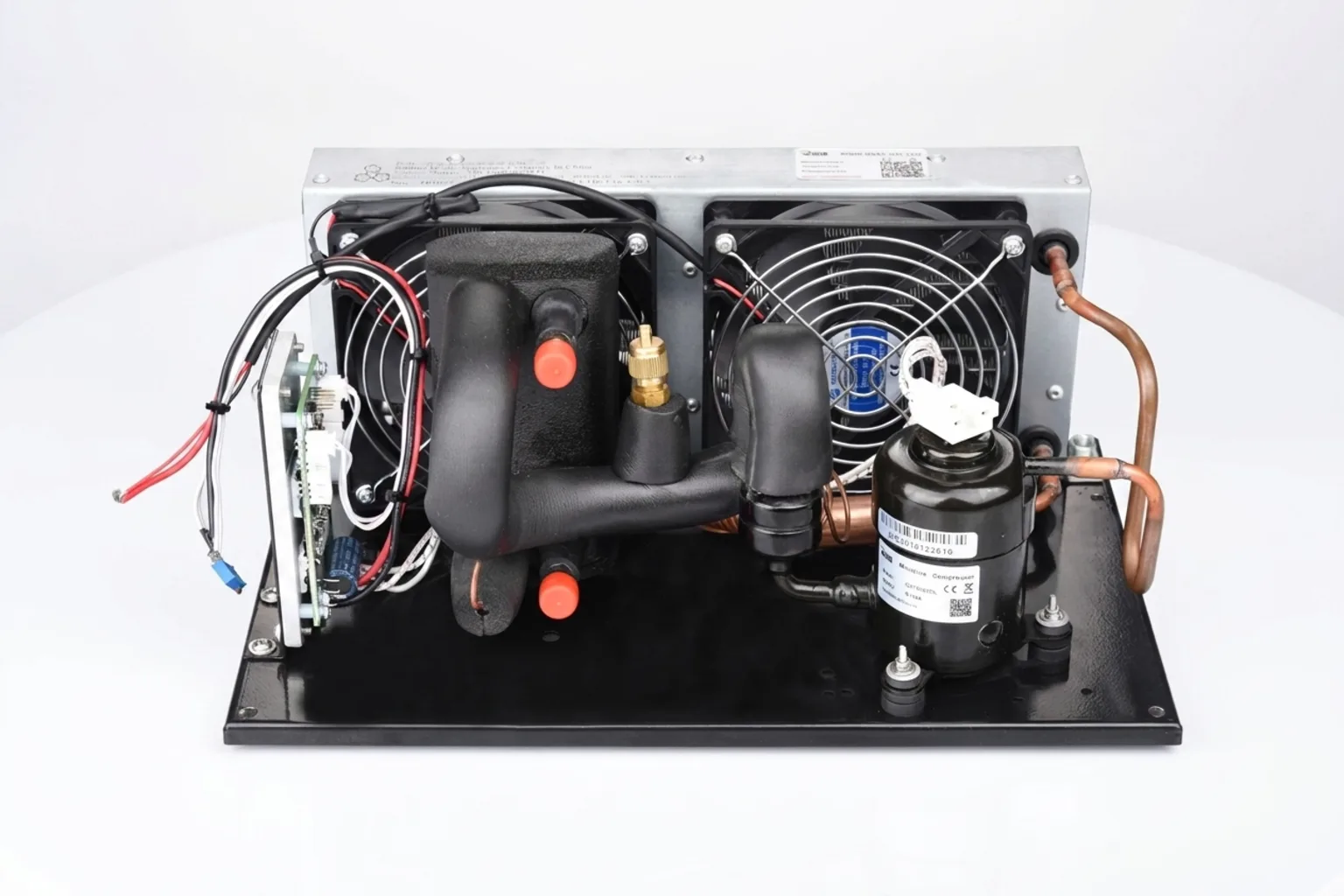
Category Three: Footprint, Weight, and Installation Flexibility
Laboratory real estate is expensive and increasingly scarce. A chiller that works perfectly but occupies half a bench is a problem in a modern lab where every square meter of bench space is allocated.
This is where the MiniCool series stands apart from virtually every competitor in the market. The MiniCool’s vertical, countertop-friendly design allows placement on the bench, under the bench, or inside a fume hood. The unit weighs significantly less than comparable European models — JULABO’s FL series bench-mount units, for example, typically weigh between 25 and 45 kilograms, while LAUDA’s Microcool units fall in a similar range. The MiniCool achieves comparable cooling performance at a fraction of that physical footprint.
For laboratories that operate under space constraints — shared research facilities, teaching labs, or facilities housed in older buildings with limited bench depth — the space savings alone can justify the purchase decision.
Budget units vary widely in form factor. Some are genuinely compact, but build quality often suffers to achieve the smaller size. Thin-gauge housings, undersized condensers, and inadequate vibration isolation are common compromises that show up as excessive noise or shortened service life.
Category Four: Power Compatibility and DC Operation
Most laboratory chillers from European manufacturers operate exclusively on AC mains power — typically 115 or 230 volts AC with country-specific plug options. This works perfectly for fixed lab installations but limits flexibility for mobile laboratories, field research stations, or integration into battery-powered systems.
The MiniCool series supports both AC and DC power inputs. DC compatibility opens applications that AC-only chillers simply cannot serve: portable diagnostic equipment, solar-powered field stations, electric vehicle thermal testing rigs, and off-grid research installations. For OEM integrators building cooling into larger systems, DC input eliminates the need for an inverter — reducing weight, cost, and potential points of failure.
No major European brand currently offers a laboratory-grade recirculating chiller with native DC input in the sub-1-kilowatt range. This is not a criticism of those products — they are designed for established laboratory infrastructure — but it is a meaningful differentiator for buyers whose applications extend beyond the traditional bench.
The practical implications of DC compatibility are worth spelling out. A field research team operating from a vehicle-mounted solar array can run a MiniCool unit directly from their battery bank without carrying an inverter — saving weight, eliminating a potential failure point, and improving overall energy efficiency since inverter conversion losses typically range from 5 to 15 percent depending on load conditions. For OEM integrators embedding cooling into battery-powered medical devices or autonomous monitoring stations, native DC input simplifies the electrical architecture considerably.
Budget units occasionally list DC compatibility but often lack the voltage regulation and thermal protection circuits that prevent damage from unstable DC sources. A chiller connected to a solar charge controller without proper input filtering is a reliability risk.
Category Five: Total Cost of Ownership Over Five Years
Purchase price gets the most attention, but total cost of ownership is what determines value. Five-year TCO includes the purchase price, shipping, installation, annual maintenance, coolant replacement, energy consumption, and — critically — the cost of downtime when a unit fails.
Premium European brands carry list prices that reflect their build quality, brand reputation, and support infrastructure. A JULABO FL or LAUDA Microcool unit suitable for a typical rotary evaporator setup lists between three thousand and six thousand dollars, depending on temperature range and cooling capacity. Spare parts and service are available through established distributor networks, and these units routinely last ten years or more with proper maintenance.
The MiniCool series lists at 1,500 to 1,700 dollars — roughly 40 to 70 percent less than comparable European models. For laboratories running multiple chillers, the savings compound quickly. A teaching lab equipping eight rotary evaporator stations, for example, could save over 15,000 dollars in upfront procurement costs by choosing MiniCool without sacrificing the temperature range or stability needed for standard organic chemistry workflows.
Budget alternatives often list below 1,000 dollars but the hidden costs erode the initial savings. Higher failure rates, shorter compressor life, difficulty sourcing replacement parts, and the absence of technical support all contribute to a higher effective cost per year of service.
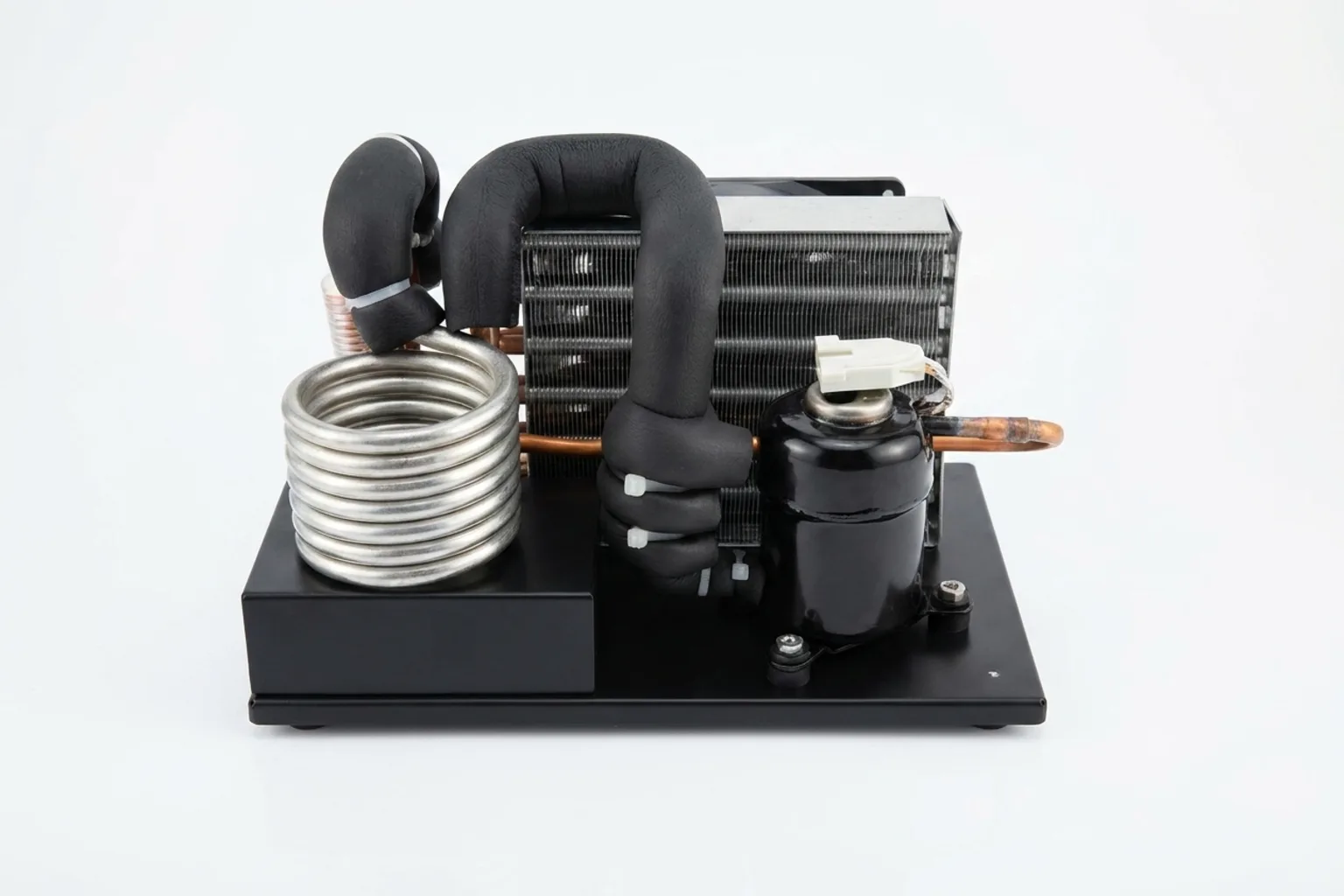
Decision Matrix: Matching Your Application to the Right Tier
Rather than declaring a single winner, the more useful approach is matching the right chiller tier to the application requirements.
| Decision Factor | Premium European Brand | RIGID MiniCool | Budget Alternative |
|---|---|---|---|
| Temperature stability below ±0.05°C needed | Strong fit | Adequate for most workflows | Typically insufficient |
| Space-constrained lab environment | Limited options | Strong fit — compact vertical design | Variable quality |
| DC or off-grid power required | Not available | Native AC/DC support | Rare and unreliable |
| Budget for multiple units | Challenging | Strong fit at $1,500–$1,700 per unit | Lowest upfront cost, higher risk |
| Established distributor network needed | Extensive global coverage | Direct and growing channel | Often limited to marketplace sellers |
| Certified to GLP/GMP lab standards | Typically certified | Confirm with manufacturer | Rarely certified |
What This Comparison Does Not Cover
Every comparison has limits, and transparency about those limits matters more than pretending they do not exist.
We have not conducted independent side-by-side testing of these units under identical heat loads. The specifications cited for European brands come from their published data sheets and product pages — which are generally reliable, but represent ideal conditions. The MiniCool specifications come from RIGID’s published materials. Budget unit claims are drawn from marketplace listings, which are often less rigorously verified.
We also have not compared service response times, warranty claim processes, or long-term reliability data beyond the manufacturer’s own published figures. For buyers in regulated environments — pharmaceutical development, accredited testing labs, or clinical diagnostics — those factors may carry more weight than any specification on this page.
Noise levels deserve mention even though we lack standardized comparative measurements. European brands typically publish noise specifications in their data sheets — often in the 42 to 55 decibel range for benchtop units. The MiniCool series is engineered for low-noise operation, which matters in open laboratory environments where multiple instruments share the same room. Budget units rarely publish noise data, and field reports from users frequently cite excessive compressor and fan noise as a significant drawback — particularly in quiet lab settings where researchers spend extended hours.
Coolant compatibility is another factor that varies between brands. Some units are validated only for water or specific glycol-water ratios, while others support a broader range of heat transfer fluids including silicone oils and fluorinated fluids. If your application requires a specialty coolant — common in low-temperature work below minus 20 degrees — verify compatibility with the manufacturer before purchasing. Using an unsupported fluid can void the warranty and damage seals or pump components.
Where MiniCool Fits in a Mixed-Fleet Strategy
Many well-run laboratories do not standardize on a single chiller brand. Instead, they deploy premium units on critical instruments — high-value analytical equipment, precision calorimeters, long-duration reaction control — and use more cost-effective units on routine applications where the consequences of a brief temperature excursion are manageable.
MiniCool fits naturally into this strategy. Its combination of genuine sub-zero capability, compact footprint, and DC compatibility makes it a practical choice for rotary evaporators, teaching lab stations, portable diagnostic systems, and OEM integration projects where the European premium does not translate into proportional performance gains for the specific application.
A university chemistry department, for instance, might deploy a JULABO or LAUDA unit on the research-grade NMR coolant circuit that runs twenty-four hours a day and requires the tightest possible temperature stability, while equipping its sixteen teaching-lab rotary evaporator stations with MiniCool units that deliver the same temperature range at a price point that makes department-wide procurement feasible. The resulting fleet covers both ends of the performance and budget spectrum without compromising either.
If your cooling requirements extend to higher-capacity systems — above 1 kilowatt — the MiniCool product page also covers the broader RIGID chiller portfolio, including the MidiCool series for mid-range laboratory and process cooling.
For teams evaluating specific integration constraints — power budget, fluid compatibility, or mounting envelope — the engineering team can review your application requirements and confirm whether MiniCool aligns with your workflow before you commit to a purchase.