
Cabinet Climate Control in Extreme Environments: When Fans and Heaters Are Not Enough
An outdoor telecom cabinet in a temperate climate is a manageable thermal problem. The electronics inside generate heat, a filtered fan or heat exchanger removes it, and internal temperatures stay within the operating range of the equipment. But move that same cabinet to a desert site with 50°C daytime peaks and near-freezing nights, or to an arctic location where winter temperatures drop below −30°C, and the thermal management challenge changes fundamentally. The cabinet needs cooling during the day and heating at night — sometimes within the same 24-hour cycle.
This is where single-function thermal solutions break down. A fan can only cool to ambient temperature — useless when ambient is 50°C and the equipment needs to stay below 40°C. A resistive heater can prevent freezing overnight but does nothing about daytime overheating. And running both systems independently — a cooling unit for summer, a heater for winter — doubles the component count, the wiring, the control logic, and the failure surface. In remote, unattended installations where a site visit costs thousands of dollars, every additional component is a potential service call.
Effective cabinet climate control in extreme environments requires a single system that can both cool and heat, transitioning automatically based on internal temperature and ambient conditions, without human intervention and without separate seasonal configurations.
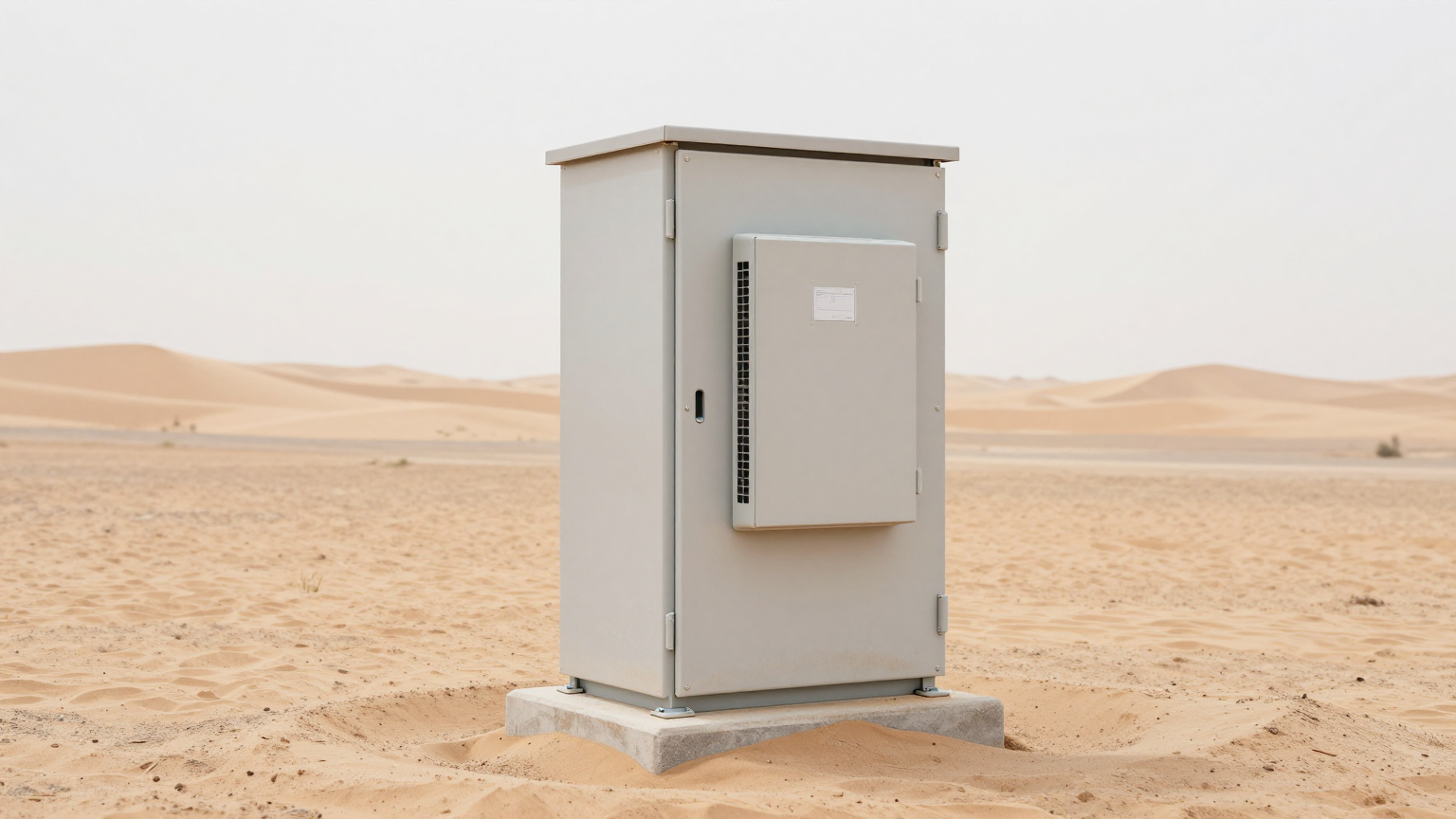
The Diurnal Swing Problem: Why Extreme Sites Destroy Single-Function Systems
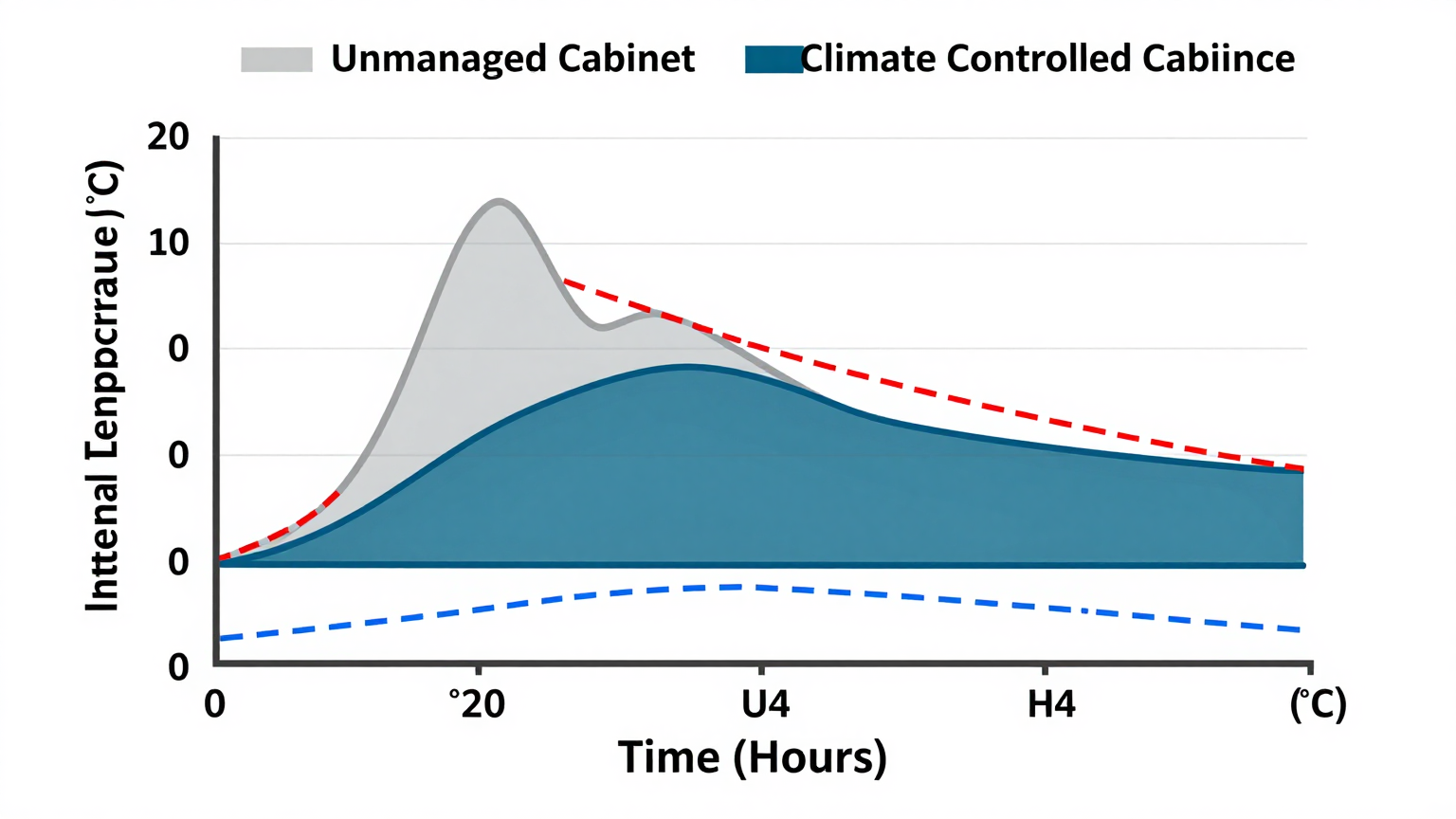
Desert and high-altitude sites share a characteristic that makes thermal management particularly difficult: extreme diurnal temperature swings. A telecom site in the Sahara, the Arabian Peninsula, or the American Southwest can experience a 40–50°C temperature range within a single day. At 3:00 AM, the cabinet exterior may be at 2°C. By 2:00 PM, it reaches 52°C. The electronics inside — base station radios, power supplies, battery banks, fiber-optic terminals — need to stay within a 0–45°C operating window throughout this entire cycle.
At night, the thermal challenge is heat retention. The electronics generate some waste heat, but in a well-ventilated cabinet (designed for daytime cooling), that heat escapes quickly. Internal temperatures drop toward ambient. Batteries lose capacity and may refuse to charge below 0°C. LCD displays slow. Solder joints experience thermal stress from repeated cycling. Condensation forms as humid night air contacts cold metal surfaces, creating corrosion and short-circuit risks.
During the day, the challenge reverses completely. Solar radiation heats the cabinet exterior. Ambient air temperature climbs. The electronics add their own waste heat on top of the environmental load. Internal temperatures can exceed 60°C in an unmanaged cabinet — well above the derating threshold for most telecom equipment and far beyond the safe operating range for lithium batteries.
A fan-based cooling system handles the daytime load only if ambient temperature stays below the equipment’s maximum operating temperature. At 50°C ambient, a fan simply circulates 50°C air through the cabinet — providing no net cooling. A refrigeration-based system is required to cool below ambient, but a cooling-only system leaves the cabinet unprotected during cold nights.
What Happens When Cabinet Climate Control Fails
The consequences of thermal management failure in outdoor cabinets are well documented across the telecom and energy storage industries:
Battery Degradation and Failure
Lithium-ion backup batteries in telecom cabinets are particularly sensitive to temperature extremes. Sustained temperatures above 40°C accelerate calendar aging — the battery loses capacity even when not cycling. Temperatures below 0°C reduce available capacity and can cause lithium plating during charging (the same failure mechanism that affects EV batteries). A cabinet that swings between these extremes daily subjects the battery to the worst of both failure modes simultaneously.
Electronics Derating and Shutdown
Most telecom equipment derates — reduces output power or processing capacity — above 40–45°C to protect internal components. In a cabinet running at 55°C, the base station may reduce transmit power, degrading network coverage for the surrounding area. At 60°C or above, thermal shutdown is common, taking the site offline entirely until temperatures drop. This represents a direct revenue loss for the network operator.
Condensation and Corrosion
Rapid temperature drops — particularly at sunset in humid environments — cause condensation on circuit boards, connectors, and optical interfaces. Over time, this moisture causes corrosion, increases contact resistance, and can lead to intermittent failures that are difficult to diagnose remotely. A cabinet that maintains stable internal temperature above the dew point eliminates this failure mode entirely.
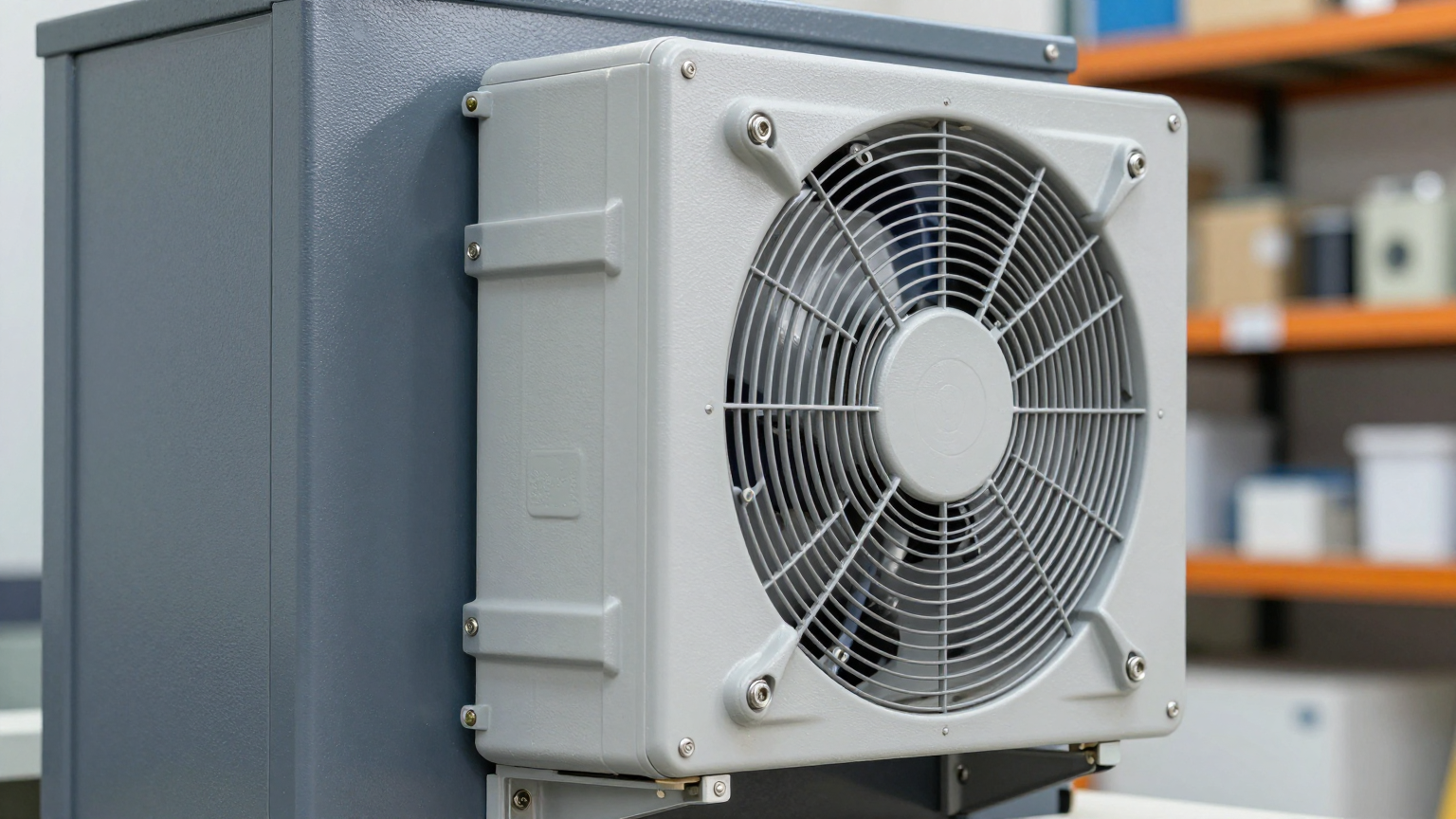
Bidirectional Vapor-Compression: One Module for the Full Cycle
A vapor-compression heat pump addresses the diurnal swing problem with a single refrigeration circuit that operates in two modes:
- Cooling mode (daytime): The compressor drives refrigerant through the cycle, extracting heat from the cabinet interior and rejecting it to ambient air through the external condenser. This provides active cooling below ambient temperature — something no fan or heat exchanger can achieve.
- Heating mode (nighttime): A four-way reversing valve redirects the refrigerant flow. The system now extracts heat from ambient air (even cold air contains usable thermal energy) and delivers it to the cabinet interior. The COP advantage means each watt of electrical input produces 2–3 watts of heating — significantly more efficient than resistive heaters.
The transition between modes is automatic, driven by the internal temperature sensor and a simple setpoint band. When internal temperature drops below the heating threshold (typically 5–10°C), the system switches to heating mode. When it rises above the cooling threshold (typically 30–35°C), it switches to cooling mode. Between these thresholds, the system idles, consuming minimal power.
For remote, unattended sites, this automatic operation is critical. There is no operator to switch seasonal configurations, no maintenance visit required to swap from cooling mode to heating mode. The system adapts to conditions continuously, 24 hours a day, 365 days a year.
DC-Native Operation: Why It Matters for Remote Cabinets
Many outdoor telecom and energy storage cabinets operate on DC power — typically 48V for telecom sites, 24V or 48V for solar-powered installations. The equipment inside runs on DC. The backup batteries store DC. The solar panels generate DC. Introducing an AC-powered climate control unit into this environment requires an inverter, which adds cost, complexity, and a 15–20% power conversion loss.
A DC-native compressor eliminates this mismatch. Running directly on the cabinet’s 48V or 24V DC bus, the compressor draws power from the same source as the equipment it protects — no inverter, no conversion loss, no additional failure point. In solar-powered sites where every watt-hour is precious, this efficiency gain directly extends the available power budget for the primary equipment.
Variable-speed operation adds another efficiency layer. Rather than cycling on and off at full power (which creates temperature oscillations and current spikes on the DC bus), the compressor adjusts its speed to match the thermal load. During mild conditions — overcast days, cool evenings — it runs at minimum speed, drawing minimal power. During peak heat, it ramps to full capacity. The result is smoother temperature control, lower average power consumption, and reduced stress on the DC power system.
Sizing Cabinet Climate Control for Extreme Environments
Proper sizing requires accounting for three heat sources and one heat loss path:
Internal Heat Load
The waste heat generated by the electronics inside the cabinet. A typical telecom base station site generates 200–500W of continuous waste heat from radios, power supplies, and ancillary equipment. This heat must be removed during cooling mode and can partially offset the heating requirement during cold periods.
Solar Heat Gain
Direct solar radiation on the cabinet exterior adds significant thermal load. A dark-colored cabinet in direct sunlight can absorb 500–800W/m² of solar energy. For a standard 600×600×1200mm cabinet, this can add 200–400W of heat gain on the sun-facing surfaces. Light-colored or reflective cabinet finishes reduce this load but do not eliminate it. Proper solar load calculation is essential for accurate sizing.
Ambient Conduction and Convection
Heat transfer through the cabinet walls due to the temperature difference between inside and outside. This works in both directions — adding heat when ambient is hotter than the setpoint, removing heat when ambient is cooler. The magnitude depends on cabinet insulation, surface area, and the temperature differential.
Total Cooling Requirement
The climate control system must handle the sum of internal heat load plus solar gain plus ambient conduction at peak conditions. For a typical outdoor telecom cabinet in a desert environment, this often totals 400–900W of cooling capacity. Undersizing leads to temperature excursions during peak heat; oversizing wastes power and increases cost.
Reliability Considerations for Unattended Installations
Remote cabinet installations may go months or years between maintenance visits. The climate control system must operate reliably without intervention. Key reliability factors include:
Sealed Refrigerant Circuit
A pre-charged, factory-sealed refrigerant circuit eliminates field connections that could develop leaks over time. The refrigerant charge — typically R134a or R290 — lasts the lifetime of the unit under normal conditions. No field brazing, no vacuum procedures, no refrigerant top-ups. This is a significant advantage over larger split-system installations that require field commissioning.
Filtered Air Path
In dusty or sandy environments, the condenser and any external air intake must be protected with appropriate filtration. Dust accumulation on condenser fins reduces heat rejection capacity over time, gradually degrading cooling performance. Washable or replaceable filters with adequate surface area extend the maintenance interval. Some installations in extreme dust environments use sealed condenser designs with no external air exchange.
Condensate Management
In cooling mode, the evaporator generates condensate as it dehumidifies the cabinet air. In remote installations, this condensate must be managed without creating puddles, ice dams, or drainage blockages. A properly designed drain path with an anti-siphon loop prevents issues. In heating mode, condensate forms on the outdoor heat exchanger — the defrost cycle must handle this without allowing ice buildup that blocks airflow.
Continuous Duty Rating
The compressor and associated components must be rated for continuous duty — 24/7 operation, 365 days a year. Consumer-grade cooling components designed for intermittent use (a few hours per day) will fail prematurely in this application. Industrial-grade miniature compressors with metal chassis construction and designed for continuous operation provide the durability that remote installations demand.
Deployment Scenarios Beyond Telecom
While telecom cabinets are the most common application for outdoor cabinet climate control, the same thermal management challenge appears across multiple industries:
Energy Storage Systems
Battery energy storage systems (BESS) deployed at solar farms, microgrids, and grid-edge locations face the same diurnal temperature swings as telecom cabinets — with the added sensitivity of lithium batteries to temperature extremes. A bidirectional climate control module protects both the batteries and the power electronics within the enclosure.
Traffic and Transportation Infrastructure
Traffic signal controllers, variable message signs, and roadside ITS (Intelligent Transportation Systems) cabinets are deployed in exposed locations with no climate control beyond basic ventilation. In extreme climates, active cooling and heating extends equipment life and reduces maintenance frequency.
Remote Monitoring and Instrumentation
Environmental monitoring stations, seismic sensors, weather stations, and pipeline monitoring equipment often operate in remote locations with extreme temperature ranges. The instruments inside require stable operating temperatures for accurate measurements. A compact, DC-powered climate control module fits within the existing enclosure without requiring external infrastructure.
EV Charging Infrastructure
Outdoor EV charging stations contain power electronics that generate significant heat during fast-charging sessions and are exposed to ambient temperature extremes between sessions. Active climate control maintains optimal operating conditions for the power modules, improving charging efficiency and extending equipment life.

Frequently Asked Questions
Can a single compact module handle a full-size telecom cabinet?
For standard outdoor telecom cabinets with moderate internal heat loads (200–500W), a single compact cool-and-heat module with 450–550W cooling capacity is often sufficient. For larger cabinets or higher heat loads, multiple modules can be deployed in parallel, providing both increased capacity and redundancy.
How does the system handle power outages?
During a power outage, the climate control system stops along with the cabinet equipment. When power returns, the system restarts automatically and resumes temperature regulation. The thermal mass of the cabinet and its contents provides a buffer — internal temperatures change slowly, typically allowing 30–60 minutes before reaching critical thresholds. For sites with battery backup, the DC-native compressor can run directly from the backup batteries, extending thermal protection during outages.
What is the expected service life in continuous outdoor operation?
Well-designed miniature DC compressors in industrial applications typically operate for tens of thousands of hours. With proper filtration and condensate management, the overall system can provide years of unattended operation. The sealed refrigerant circuit and brushless DC motor (no brushes to wear) are the primary longevity enablers.
Does the system work in high-humidity coastal environments?
Yes. In cooling mode, the system actively dehumidifies the cabinet air as a byproduct of the refrigeration cycle. This is actually an advantage over fan-based systems, which can introduce humid ambient air into the cabinet. The dehumidification function helps prevent condensation and corrosion on sensitive electronics.
How does this compare to thermoelectric (Peltier) cabinet coolers?
Thermoelectric coolers are common in small enclosures with low heat loads. However, their COP is typically 0.3–0.6, meaning they consume significantly more power per watt of cooling than vapor-compression systems (COP 2.0–3.5). For cabinets with heat loads above 100W or in environments with large temperature differentials, vapor compression delivers substantially better efficiency and higher cooling capacity in a comparable footprint.
Designing for the Full Thermal Envelope
The pattern across extreme-environment cabinet deployments is consistent: single-function thermal solutions — fans for cooling, resistive heaters for heating — work within a narrow ambient range but fail at the extremes that matter most. A bidirectional vapor-compression module built around a DC-native cool-and-heat system addresses the full thermal envelope with one set of components, one control loop, and one maintenance profile.
For cabinet deployments in environments where the diurnal temperature swing exceeds 30°C, where ambient temperatures regularly exceed 45°C or drop below 0°C, or where unattended operation over extended periods is required, active bidirectional climate control is typically the most reliable and cost-effective approach when evaluated over the system’s operational lifetime.
If your cabinet deployment involves specific constraints — unusual enclosure geometry, high dust or salt exposure, limited DC power budget, or integration with existing BMS or SCADA systems — we can review the thermal requirements and align on a configuration that fits your site conditions and operational needs.