
Changing Chiller Coolant Brands Starts With the Formulation
Changing chiller coolant brands requires approval of the proposed fluid for the complete loop and a plan for the old fluid that remains inside it. Matching the base glycol, color or advertised temperature range does not establish compatibility between two formulations. Identify the existing product, the replacement product and the equipment materials before deciding whether topping up, draining or a supplier-approved cleaning process is acceptable. A brand change is a fluid-change decision, even when the reservoir appears clean.
This is different from deciding when an aging fluid needs replacement. An acceptable fluid can become unavailable, a purchasing team can change suppliers, or a facility can standardize its inventory. Each situation can introduce a new inhibitor package or other additive differences without changing the broad label propylene glycol or ethylene glycol. The task is to approve the transition, not merely buy a container with a similar description.
Identify Both Products Before Evaluating Compatibility
Record the full product name, grade, formulation or revision where supplied, dilution status and lot information. Keep the manufacturer’s current technical data and handling information with the change record. For the installed fluid, distinguish what was originally ordered from what is actually in the loop. Previous top-ups, water additions or undocumented substitutions can make the operating fill different from the purchase record.
A shared base glycol is not a complete formulation match. Inhibitors, buffers and other additives contribute to a fluid’s suitability for the system. Different formulations may have different material restrictions and mixing guidance. Color is particularly weak evidence because it does not identify the chemistry, dilution or previous service history of the liquid in the reservoir.
If the old fluid cannot be identified, do not turn a guess into a compatibility statement. Treat the identity as unresolved and ask the fluid and equipment suppliers what information, sampling or changeover process they need. An unidentified fill may require a different transition plan from a documented change between two named products. Preserve that distinction when comparing the cost and downtime of the proposed replacement.
Keep Three Compatibility Questions Separate
First, is the replacement fluid suitable for the equipment? Second, can it contact the remaining old fluid at the anticipated residual level? Third, will the replacement meet the thermal and hydraulic requirements at the operating temperature? Approval of the new fluid alone does not approve mixing it with the old fill. These questions involve different evidence and can receive different answers.
| Question | Evidence to request | What does not answer it |
|---|---|---|
| Equipment compatibility | Approval for the selected fluid and all wetted materials | The same glycol family on the container |
| Residual-fluid compatibility | Guidance for the two exact formulations and permitted carryover | Matching color or a clear appearance |
| Cold operating performance | Properties at the intended concentration and temperature | Room-temperature viscosity or a generic freeze-point label |
| Transition process | Equipment-compatible draining, cleaning and refill requirements | A universal flushing recipe from a different chiller |
Industrial chiller and fluid guidance identifies mixing formulations as a potential problem, including interactions between additive packages. That supports checking the exact products. It does not establish that every pair of brands will react, or that every fluid sold under one brand is mutually compatible. Changing chiller coolant brands should therefore be evaluated from documented product guidance, not a blanket rule based solely on the logo.
Review Every Wetted Component, Including the Connected Equipment
The fluid touches more than the chiller’s heat exchanger. The loop can include pump seals, hose liners, valves, quick-connect seals, a reservoir, sensor fittings and the cooled instrument. A supplier’s fluid approval may cover only its own equipment. Identify the approval boundary and make sure the proposed replacement is acceptable to the other connected components as well.
Ask about compatibility at the intended concentration and temperature. Material compatibility is not simply a yes or no property of the base liquid under all conditions. If an equipment supplier requires a particular formulation, changing to another product with a similar base chemistry still needs review. Likewise, a fluid vendor’s broad materials chart does not by itself establish approval for an assembled instrument.
Document the exact cooling-unit configuration and any replaced components. A pump-seal change or a new hose assembly can alter the system being reviewed. The resulting approval should identify the equipment and fluid sufficiently well that future maintenance staff can distinguish an allowed top-up from another formulation change. This avoids repeating the original uncertainty after the next supply interruption.
Account for Residual Fluid Before Choosing the Transition Method
Draining a reservoir does not demonstrate that the complete circuit is empty. Heat exchangers, low points, instrument passages and connected hoses can retain liquid. Residual fluid is part of the new fill’s initial condition. Ask the equipment supplier to identify retention points and use the fluid suppliers’ guidance to determine what carryover, if any, is acceptable between the exact formulations.
If cleaning or flushing is required, obtain a process compatible with the equipment and replacement fluid. The process should define the cleaning medium, permitted operating conditions, draining requirements and acceptance criterion. Do not assume that the replacement coolant, plain water or a general cleaning chemical is suitable as a universal flushing medium. The correct choice depends on the actual system and the reason for the transition.
Changing chiller coolant brands is therefore not necessarily resolved by choosing between a single drain and a fixed number of rinses. Ask what result must be achieved and how it will be checked. An approved process should address the complete connected circuit rather than only the visible reservoir. Where the system cannot be fully drained, its retained volume needs to be considered explicitly in the changeover decision.
Protect the Final Concentration From Changeover Dilution
A residual cleaning or rinsing liquid can alter the final concentration even when the old coolant has been adequately removed. This is important for subzero service because the final fluid must provide the required freeze protection and remain suitable for circulation. An incoming premix has a defined composition, but that composition is not necessarily preserved after it mixes with liquid retained inside the equipment.
Verify the operating fill, not only the incoming container. Use the selected fluid supplier’s approved measurement method, including the correct scale or calibration where relevant. A measurement intended for one glycol system may not establish the concentration of another formulation. Do not adjust the fill from color, estimated remaining volume or a reading that has not been interpreted for the selected product.
The planned concentration should also meet the equipment’s requirements for corrosion protection and hydraulic operation. A fluid can have sufficient freeze protection yet still be unsuitable for other reasons. Avoid making a concentration change merely to compensate for an uncertain residual volume. Resolve the transition method and final composition together, with documented acceptance criteria for the replacement fill.
Recheck Flow and Cooling Duty at the Cold Operating Point
Two fluids advertised for a similar temperature range can differ in viscosity and heat-transfer properties at the actual operating point. A change can affect the flow available from the installed pump, pressure loss through the instrument and heat transport through the loop. The existing pump setting is not proof that the same operating conditions will be maintained after replacement.
For changing chiller coolant brands in a subzero loop, compare the proposed formulation’s properties at the intended temperature and concentration. Then ask the equipment suppliers whether the original hydraulic and cooling selections remain valid. Room-temperature flow alone does not establish the cold operating flow, and a catalog cooling capacity is not automatically unchanged across all permitted fluids.
The acceptance plan should identify which measurements are needed at the normal operating condition. These might include flow at the instrument interface, supply and return temperatures, and the system’s behavior under the agreed load. Do not create universal pressure, concentration or temperature-difference limits. Use the limits attached to the actual chiller, connected equipment and approved fluid.
Keep MiniCool Within Its Published Temperature and Fluid Scope
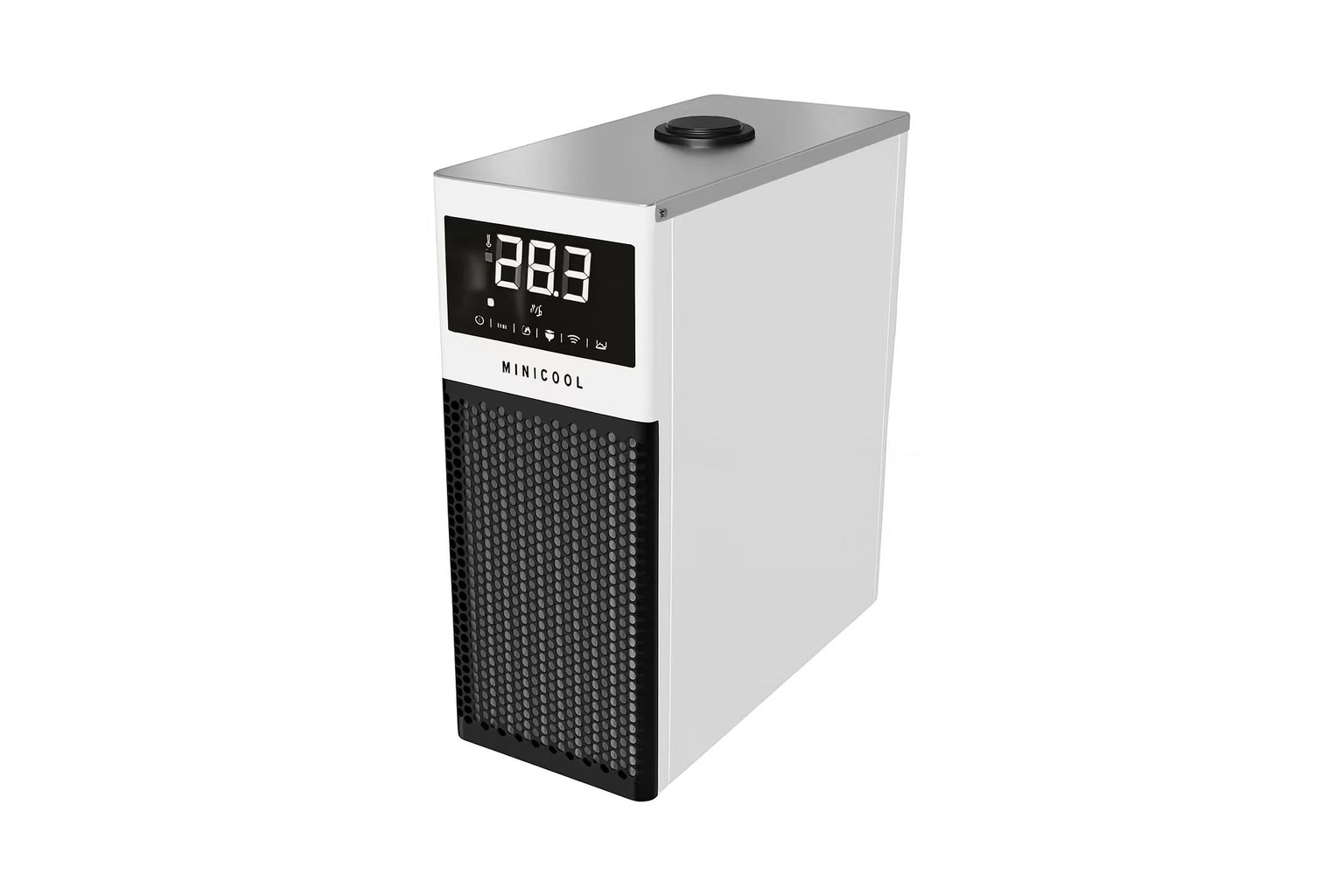
The RIGID MiniCool laboratory chiller family has a published temperature range of −40 to 0°C. That range makes cold-fluid properties relevant to a coolant change, but it does not constitute approval for every fluid marketed for subzero cooling. Obtain confirmation for the exact MiniCool configuration and connected equipment before introducing a replacement formulation.
The public product information does not provide a complete approved-fluid list, an allowable cross-formulation residual limit or a universal changeover procedure. Do not turn a published temperature range into a fluid approval. A fluid supplier’s statement that its product operates below freezing also does not establish that the MiniCool pump and complete loop can circulate it at the required rate.
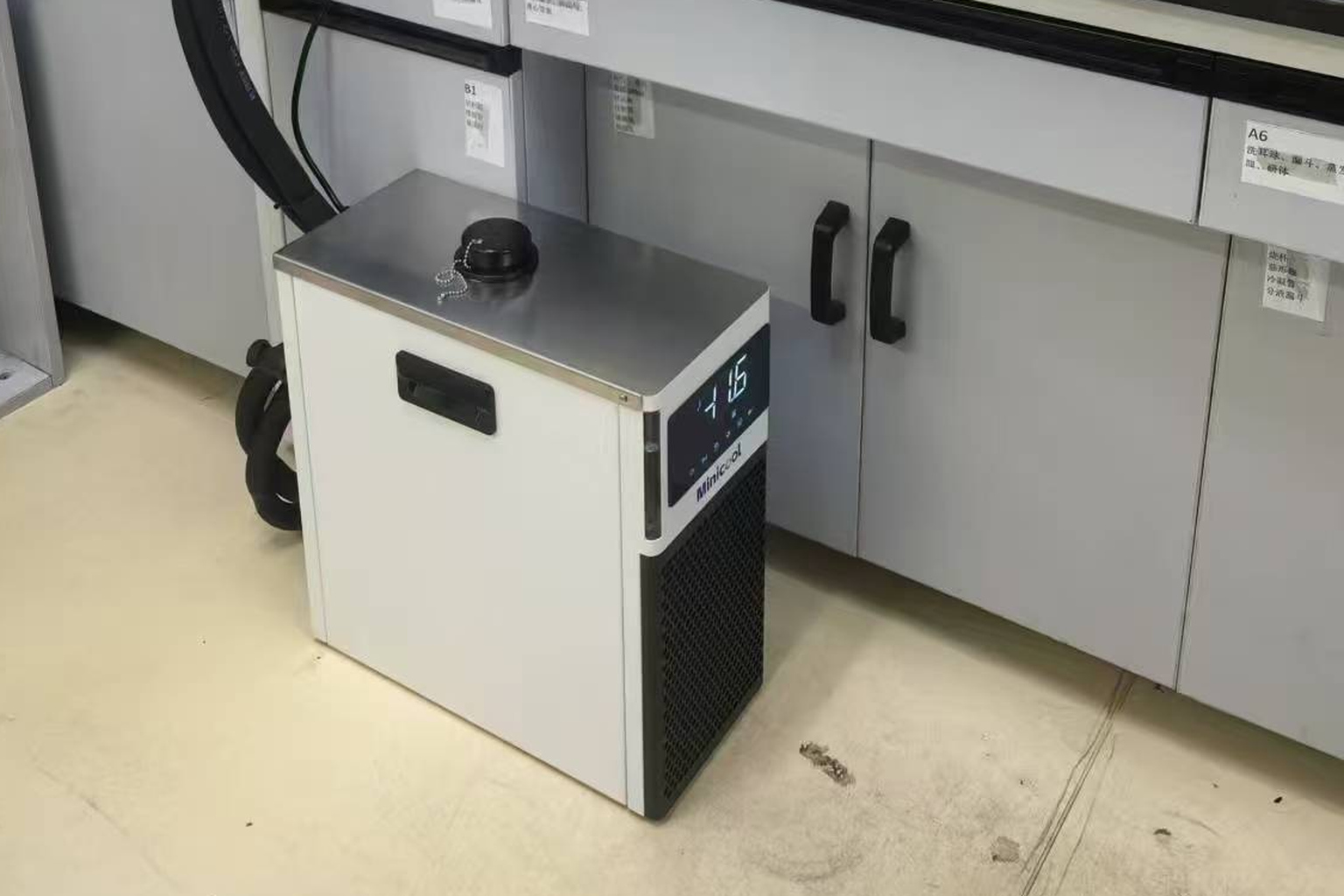
The customer photographs show MiniCool equipment, including a laboratory installation and a standalone cabinet. They do not identify or approve the fluid inside those units. Keep photo descriptions at that visible scope rather than treating an installation photograph or its original display reading as evidence for a replacement coolant’s compatibility or performance.
Separate a Supplier Change From an Aging-Fluid Replacement
If the reason for replacing fluid is degradation, contamination or unexplained deposits, investigate that condition as part of the maintenance work. A new brand does not identify the cause of the old fluid’s deterioration. The heat-transfer fluid aging and replacement guide addresses the decision to retire an operating fill; this article addresses approval of a different formulation and the transition between products.
The distinction matters for purchasing. Changing a fluid that is in acceptable condition because its supplier has changed is a different starting point from changing a contaminated fill after a failure. The latter can require additional investigation and equipment-specific cleaning. Do not allow a routine purchasing substitution to inherit a maintenance process that was designed for another condition, or vice versa.
Before scheduling downtime, collect the supplier responses and identify any unresolved conditions that would prevent release. A replacement product can be approved in principle while the transition process remains incomplete. That is useful information for planning: it explains what must be settled before the new container is opened, rather than discovering the missing requirement with the instrument already out of service.
Release the New Fill With a Traceable Record
A useful change record identifies the old and new formulations, equipment configuration, relevant approvals, transition process and final-fill verification. Add the concentration or other supplier-required measurements and the operating checks used to confirm circulation and cooling. Record the date and the people responsible for accepting the change, so that the next maintenance decision starts from an identified fill.
Keep the approved top-up product available after the transition. Labeling the equipment with the complete fluid identity is more useful than labeling it glycol. Changing chiller coolant brands should end with a clearer service condition than it began with: one identified operating formulation, documented acceptance and a defined response if the specified product becomes unavailable again.
For an equipment-side review, send RIGID the MiniCool configuration and both coolant product details, together with the operating temperature, proposed concentration and connected-loop materials. This supports a specific compatibility discussion without inventing an approved fluid or a generic flushing recipe.
Frequently Asked Questions About Changing Chiller Coolant Brands
Can two coolants be mixed if both use propylene glycol?
A shared base liquid does not establish compatibility of the complete formulations. Obtain guidance for the exact products and the equipment. Additive differences, dilution and service history can matter, even when the base-glycol description matches.
Is draining the reservoir enough before a brand change?
Not necessarily. Other parts of the circuit can retain old fluid. Determine whether that residual is acceptable and use an equipment-compatible transition process approved for the actual products. Do not assume that reservoir drainage empties the complete loop.
Does a premixed replacement guarantee the final concentration?
No. Residual coolant or rinsing liquid can change the final composition. Verify the operating fill using the selected fluid supplier’s approved method and interpret the result for that formulation. The container specification describes the incoming product, not every possible installed mixture.
Does changing chiller coolant brands require a new cooling unit?
Not automatically. The existing unit may remain suitable if the replacement fluid, transition process and operating conditions are approved. Recheck cold-temperature circulation and thermal requirements before deciding. A new brand alone does not prove either compatibility or incompatibility with the equipment.