
Chiller Hose Collapse: Confirm the Suction Section First
Chiller hose collapse on an external pump inlet calls for three checks: whether that section actually experiences sub-atmospheric pressure, whether the hose is rated for the required vacuum at its operating temperature, and whether its installed bend and support match the manufacturer’s requirements. A positive-pressure rating does not establish vacuum resistance. Increasing pump output can worsen an unresolved inlet restriction rather than restore dependable circulation.
This guide addresses a hose that visibly flattens or closes on a confirmed suction section. It is not a general diagnosis for every low-flow chiller, and it does not assume all return hoses operate under vacuum. Start with the real circuit arrangement before choosing a replacement hose or changing a pump setting.
Locate the Pump and Mark the Actual Pressure Boundary
Draw the reservoir, external equipment, pump, chiller heat exchanger, valves, filters, and flexible sections in their installed order. Mark pump flow direction and identify any sealed or pressurized reservoir. The word “return” describes where liquid is going; it does not by itself tell you the pressure inside that hose.
A pump inlet can have pressure above or below ambient depending on the system. Reservoir pressure, elevation, fluid properties, and losses before the pump all contribute. In a pressurized closed loop, a section ahead of the pump is not automatically under vacuum. Likewise, a hose that feeds an external pump may experience conditions that differ from those at the chiller’s own connections.
Diagnose chiller hose collapse against the pressure at that section. Where measurement is necessary, use suitable installed instrumentation or an approved service test. Do not loosen a fitting to infer suction from whether it draws air. Record measurement location and whether pressure is gauge or absolute so the supplier can interpret the evidence correctly.
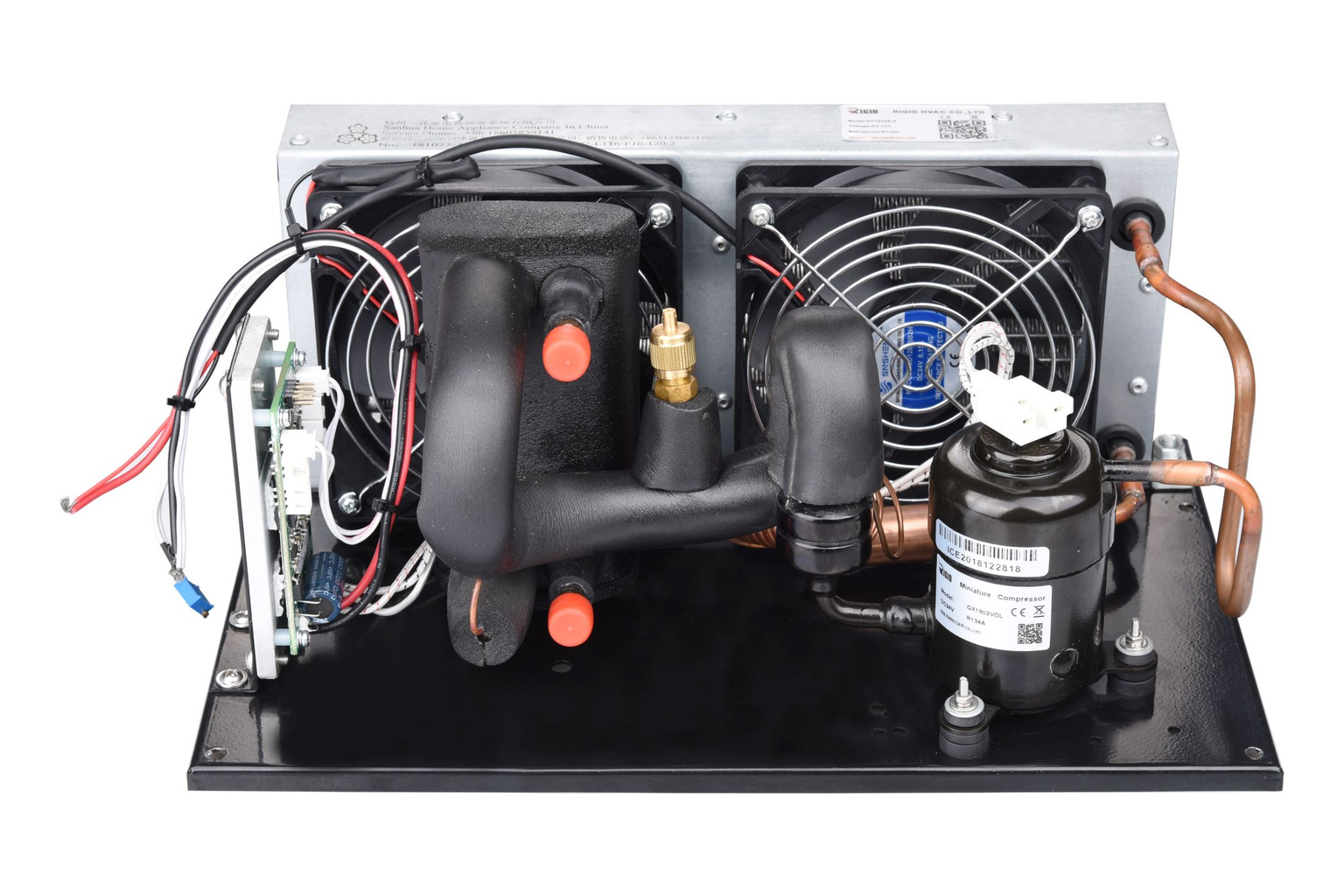
Keep the DV Module Separate From the Pump Specification
The RIGID DV compact liquid chiller family covers a published −20 to +20°C liquid-cooling range. DV1920E-P is a plate-format model in that family. These facts identify a possible cold source; they do not specify the external pump, the pressure in a laboratory loop, or an approved suction-hose assembly.
Ask which components belong to the proposed configuration and who supplies circulation. The external pump might be part of the host machine or a separate assembly. Its inlet requirements and operating conditions must be evaluated alongside the exchanger and connected load. Do not transfer a hose recommendation from a different recirculating appliance to a DV installation without reviewing those differences.
The coolant’s working temperature belongs in the hose specification even when the chiller is correctly selected. Also include filling, standby, and cleaning conditions that the hose actually encounters. The product family’s temperature range is not a compatibility certificate for every tube, fitting, seal, or cleaning method connected to it.
Separate a Flattened Hose From Other Low-Flow Faults
Record the hose’s shape and location without touching moving equipment or manipulating the live circuit. Is the flattening distributed along a section, concentrated at a bend, or located next to a fitting? Is an external object pressing on it? Do not assume that every visible deformation has the same cause.
A kink caused by routing can restrict a hose even without vacuum. A hose may also be damaged or chemically altered. Where the outside remains round, an internal defect or another circuit restriction may still limit flow. A photograph can document visible geometry but cannot certify the inside of a hose.
| Observation | Question to investigate | What the observation does not prove |
|---|---|---|
| Section flattens during operation | Actual pressure difference and hose vacuum suitability | That every return hose in the installation is under vacuum |
| Sharp fold at a bend | Bend radius, routing, support, and prior damage | That a higher-pressure hose alone will solve the problem |
| Damage persists after approved shutdown | Permanent deformation or material damage | That the hose is safe because pumping has stopped |
| Flow is low but hose appears round | Other restrictions, internal damage, and pump conditions | That hose collapse is the cause of the low flow |
Use this distinction to keep the scope of service clear. A confirmed collapse warrants assessment of the affected assembly and its operating conditions; a generic low-flow symptom needs a broader investigation before any hose is blamed.
Read the Vacuum Rating and Its Conditions
A working-pressure rating normally describes the allowed internal pressure under specified conditions. Vacuum service imposes an inward pressure difference that can make a flexible wall lose its shape. Construction that handles internal pressure well is not automatically qualified for this different loading condition.
For chiller hose collapse, request the vacuum rating explicitly. Ask for the applicable hose size, temperature conditions, minimum bend radius, fluid compatibility, and assembly limitations. “Reinforced” or “heavy duty” is not a complete engineering specification. A rating for another bore size or another temperature may not apply.
Keep the hose and assembled end connections together in the review. A suitable hose body does not establish that the fitting method, clamp arrangement, or complete assembly is approved for the service. Conversely, the presence of a spiral or braid visible through a transparent wall is not enough to infer its tested vacuum capability.
Review Temperature, Fluid, and the Installed Bend
Record actual coolant formulation and concentration rather than only “water-based.” Compatibility includes the hose liner, reinforcement system where relevant, and end seals. Swelling, hardening, softening, or other changes require supplier assessment; appearance alone cannot determine the remaining strength or a safe replacement interval.
Check the required bend radius against the installed route, including the area near fittings. A hose may be bent more tightly after a machine is pushed under a bench or when a maintenance panel closes. Supports should prevent unwanted movement without squeezing the flow passage. Twisting during installation can also create a different condition from the one the hose was selected for.
Insulation can hide a deformation or impose local compression if fitted improperly. Inspect it only under the approved maintenance procedure and restore the necessary thermal protection after service. Do not treat an insulated line as mechanically acceptable simply because its outer covering looks smooth.
Temperature changes affect more than the material. Coolant viscosity and resulting inlet losses may differ between a warm commissioning run and the cold operating condition. A hose that remains round during initial filling has not thereby demonstrated suitability for the full operating duty.
Investigate What Is Pulling the Inlet Pressure Down
Replacing an unsuitable hose may address one weakness while leaving the condition that exposed it. Review the path upstream of the pump: permitted reservoir level, valve position, filter or strainer condition, hose bore and length, and other components in that section. Compare these with the documented design and recent changes.
Do not clear a suspected restriction by bypassing a required filter or altering valves without approval. Establish which components the equipment requires and the service method for inspecting them. If a pump or fluid has been changed, the original inlet arrangement may need a fresh engineering check.
Chiller hose collapse and pump cavitation are not interchangeable diagnoses. Collapse is deformation of the hose wall. Cavitation involves local vapor formation associated with pressure conditions in the liquid. They can occur in the same problematic installation, but noise alone does not establish either mechanism. Ask the pump supplier to review inlet conditions when the evidence warrants it.
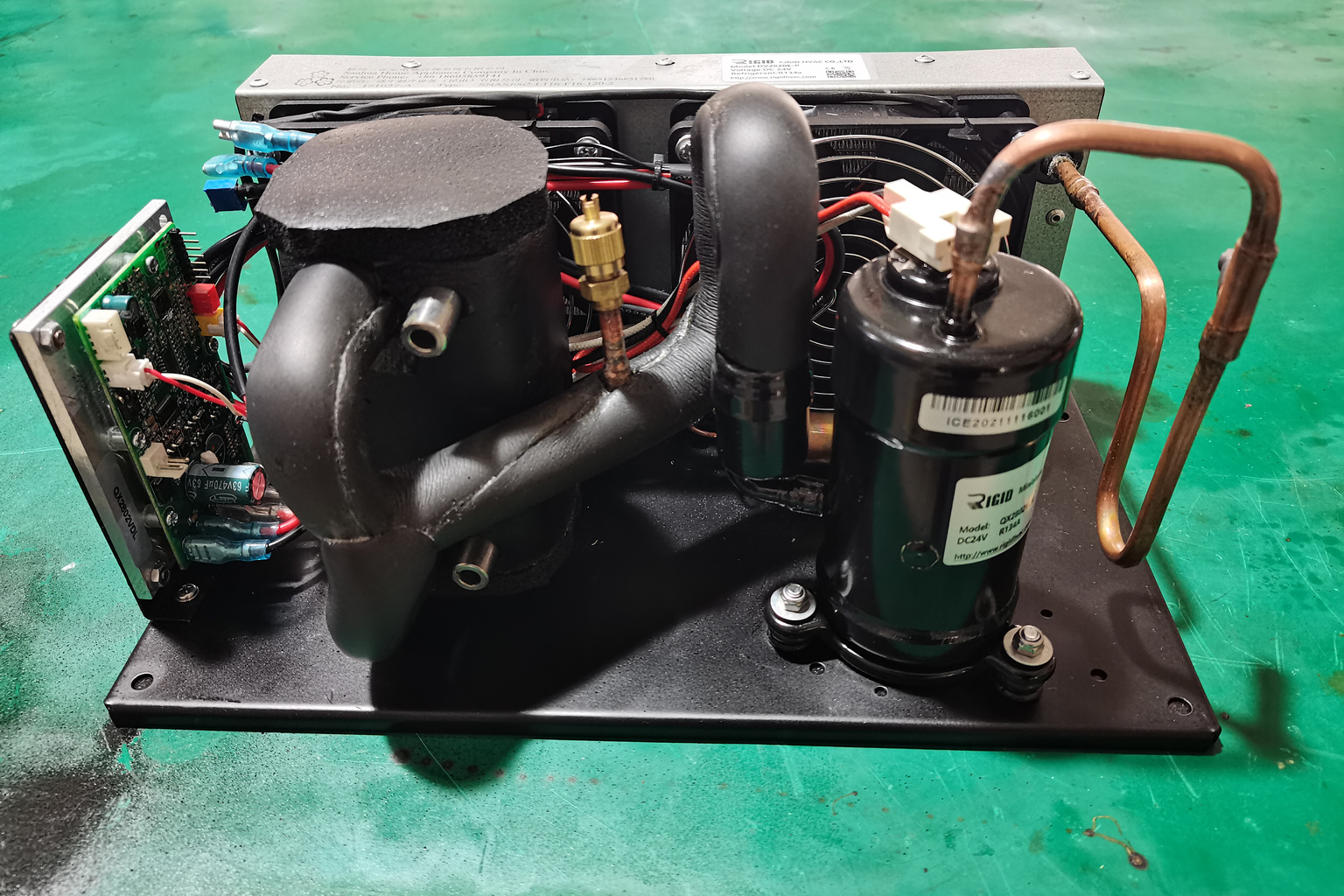
Build a Hose Replacement Approval Sheet
Use the following sheet to compare the failed or questionable assembly with the proposed replacement. The objective is a traceable decision, not a shopping description based on color or apparent wall thickness. Mark missing values as unresolved rather than copying a number from an unrelated catalog example.
| Required evidence | Record for this installation | Release question |
|---|---|---|
| Pressure condition | Location, operating state, pressure reference, and required vacuum duty | Does the rating cover the actual section? |
| Temperature and fluid | Operating and other permitted conditions; complete coolant identity | Are hose and seals approved together? |
| Geometry | Bore, route, minimum installed bend, movement, and support | Can the rated geometry be maintained after installation? |
| Assembly | Hose identification, fittings, and approved attachment method | Is the complete assembly suitable? |
| Upstream cause | Restriction findings, level conditions, and pump changes | Has the condition that caused collapse been addressed? |
| Acceptance | Planned operating states, flow evidence, and inspection method | Can successful service be demonstrated and recorded? |
Have the responsible supplier or engineer approve the unresolved items before ordering. A new part number should be tied to this sheet so a future replacement does not revert to an unqualified general-purpose hose.
Remove Damaged Hose From the Decision Loop
Do not repeatedly restart the pump to show that the flattened section can reopen. A hose that recovers its visible shape may still have been damaged. Follow the hose manufacturer’s replacement criteria and the equipment isolation procedure before removing an assembly. Retain identification and photographs for the service investigation.
Do not insert improvised springs, rods, or other supports into the hose as a repair. Such changes introduce an unreviewed flow path and material into the coolant circuit. If a different construction or routing is needed, specify an approved assembly rather than modifying a questionable one in place.
The installation inventory in the refrigerated bath replacement guide is useful when the cooling equipment itself has changed: record the old and new connections, actual operating conditions, and functions supplied by each arrangement. It does not replace the external pump and hose review needed here.
Verify the Repair Under Representative Conditions
The repair closes when the assembly and operating conditions are both acceptable. Use the approved commissioning procedure with the intended fluid, route, and permitted pump settings. Include the relevant cold operating state rather than relying only on a warm, lightly loaded check.
Record shape, flow evidence, operating temperatures, and any pressure measurements at their actual locations. Check for leakage and unacceptable movement using the approved inspection method. If flow remains inadequate despite a suitable hose staying round, continue the circuit investigation; do not report the broader cooling problem solved by appearance alone.
Store the approved hose specification and routing photographs with the machine record. Note any maintenance action that must preserve the bend and support. This prevents an otherwise correct replacement from being compromised when the equipment is moved or a neighboring component is serviced.
Send the Circuit With the Failure Report
A useful chiller hose collapse report includes the pump position, flow direction, affected section, coolant, operating temperature, hose markings, and photographs before disassembly. Add recent changes and any measured pressure or flow, with the measurement method. Explain which upstream restrictions have been checked.
For a DV1920E-P or another DV-family integration, send the external circuit and hose-duty record to RIGID engineering. Keep the pump and hose suppliers involved where their components determine the inlet condition or replacement specification.
Frequently Asked Questions
Does chiller hose collapse mean the hose has insufficient pressure rating?
Not necessarily. Positive internal pressure and vacuum duty are different ratings. Confirm the actual pressure condition, operating temperature, bend, and hose construction before selecting an approved replacement assembly.
Is every chiller return hose under vacuum?
No. Pressure depends on pump position, reservoir conditions, elevation, and circuit losses. Establish the affected section’s actual duty from the system arrangement and appropriate measurements before applying suction-hose guidance.
Can I fix a flattened hose by increasing pump speed?
Do not use that as an unreviewed remedy. Increasing demand can worsen an inlet problem. Investigate the hose rating, route, upstream restrictions, and pump inlet conditions before changing the operating arrangement.
If the hose becomes round after shutdown, can I reuse it?
Visible recovery does not prove the assembly is undamaged. Follow the hose manufacturer’s inspection and replacement criteria. Do not repeatedly restart the system to test a previously collapsed section.
Does a DV liquid chiller specify the external suction hose?
The family temperature range does not establish a hose specification. The selected configuration, external pump, coolant, pressure duty, and installed geometry must be reviewed together for the actual assembly.