
Coastal Corrosion Works a Fixed Shift, in a Fixed Order
Sea air is not vaguely bad for equipment — it is specifically bad, in a repeatable sequence, at rates set by distance from the water. Salt arrives as an aerosol, settles as a film on every surface, and because the film is hygroscopic it pulls moisture from the air and stays damp long after the day dries out. A damp, conductive, chloride-rich layer on mixed metals is an electrochemical cell running around the clock — and a compact DC air conditioner, whose job is to move large volumes of that air across thin metal fins, is built out of exactly the surfaces the mechanism likes best.
This is a constructed walkthrough — all values assumed for illustration — of two years of coastal duty for a compact DC aircon cooling a cabinet within sight of the water: which parts corrode first and why, why the condensate drain is the first functional casualty, and the defense schedule that genuinely moves the outcome, ranked by what it costs against what it buys.
The Scenario
| Parameter | Value used | Basis |
|---|---|---|
| Unit | Compact DC air conditioner on an equipment cabinet | Assumed, typical of the class |
| Site | 300 m from open sea, prevailing onshore wind | Assumed — the aggressive band |
| Duty | Daily cooling season, humid subtropical coast | Assumed |
| Construction | Copper tube, aluminum fin, steel fasteners, plastic housing | Typical mixed-metal build |
| Maintenance | None — the baseline case | The point of the scenario |
Distance is the strongest single variable in coastal corrosion: the salt aerosol load falls off steeply with the first kilometers inland, so the same unit that struggles at 300 m from the surf lives an ordinary inland life at 5 km. Wind direction modulates it — an onshore prevailing wind delivers the aerosol continuously, while a sheltered lee position at the same distance sees a fraction of the load — and storms punch through every band with direct spray. Knowing which band a site occupies is the first line of the specification, and it costs one look at a map and one conversation about weather.
Two Years, Component by Component
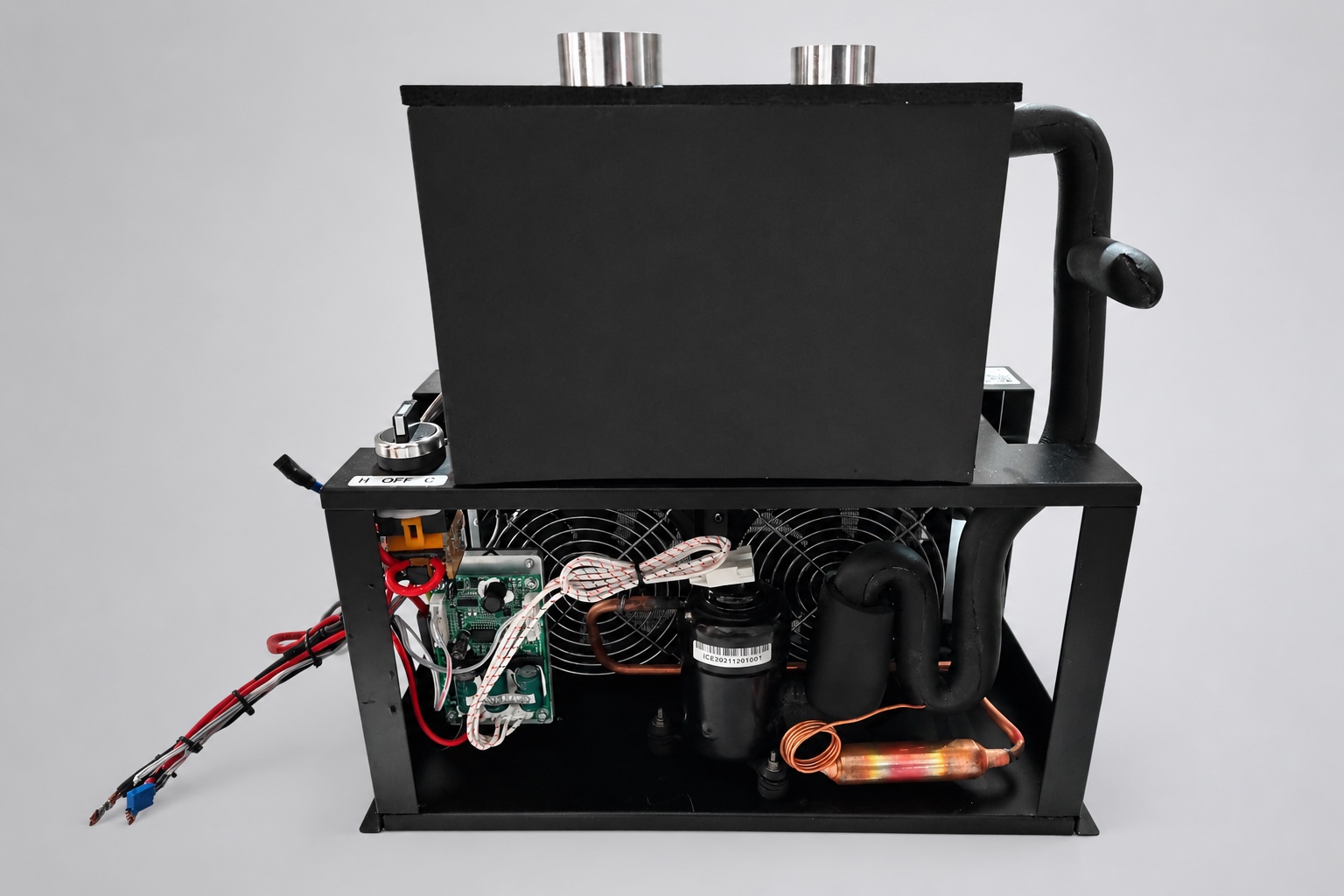 The two-year sequence runs in the order the surfaces are thinnest:
- Months 0–6: the fins. Aluminum fins carry the first visible bloom — white oxidation dust at the leading edges where airflow deposits the most salt. Capacity is untouched; the warning is purely visual, and universally ignored.
- Months 6–12: the drain. Salt, fin oxidation products and airborne dust wash into the condensate pan with every cooling cycle, and the standing film breeds biofilm. The drain path — the smallest passage in the machine — silts and slimes toward closure. First symptom: water where it should not be, on a unit that is otherwise working.
- Months 12–18: the galvanic joints. Wherever dissimilar metals touch — fin-to-tube bonds, steel screws in aluminum, connector shells — the damp salt film completes the circuit and the less noble metal donates. Fin-to-tube contact loosens first, and with it the heat transfer the coil was built for; capacity begins a measurable slide (assume several percent, compounding).
- Months 18–24: the electrics. Connector pins fur with green and white deposits, contact resistance climbs, and the unit develops “electrical gremlins” — intermittent faults that track humid mornings. By now the coil looks frosted with white, the drain has been unblocked twice in anger, and the machine is described as old. It is two.
Nothing in the sequence is exotic. Every mechanism is textbook electrochemistry given warmth, moisture, chloride and time — and every one of them runs faster in exactly the humid onshore weather that also makes the air conditioner necessary. The unit is not unlucky; it is simply the most exposed mixed-metal object on the site, doing a job that maximizes its own exposure by design.
Why the Drain Is the First Functional Failure
The condensate system deserves its own attention because it fails first, annoys most, and is cheapest to prevent. A cooling coil by the coast condenses hard in humid air, so the pan runs wet all season; salt makes the water conductive and nutritious, biofilm follows, and the drain’s narrow bore does the rest. The failure is mundane — water overflowing into the cabinet the unit exists to protect — and its prevention is equally mundane:
- Slope and shortness: a drain line that falls continuously to its outlet, with no bellies to hold standing water, starves the biofilm of the stagnant habitat it needs.
- Serviceability: a pan and drain that can be reached, flushed and brushed in five minutes get maintained; ones that need panel removal do not, and the schedule quietly dies.
- Season-start and season-end flushes — plain water, a soft brush, and a look — bracket the wet months and cost less than one overflow’s cleanup, in money and in the cabinet’s dignity alike.
- Discharge placement: the drain’s outlet belongs where its drip cannot wet the unit’s own fasteners or the cabinet’s base — recycling the condensate over the machine’s own feet is a self-inflicted corrosion accelerant.
Diagnosing a Coastal Unit Honestly
A seaside machine that underperforms deserves a diagnostic order that respects where it lives, because coastal corrosion mimics several ordinary faults:
- Capacity down, current normal-to-high: inspect the coil before the refrigerant — corroded, loosened fin-to-tube contact insulates the coil from its own tubes, and no gauge set sees it. The visual is decisive: white bloom and fin edges that crumble to a fingernail are the finding, and no further instrument is required.
- Water in the cabinet: the drain, always the drain first, before any theory involving the refrigeration circuit earns attention.
- Intermittent electrical behavior tracking humid weather: connectors before boards — pull, inspect, clean, grease, reseat, and most gremlins retire.
- A unit that “aged fast”: compare against its inland twin if the fleet has one. The same model at 5 km inland is the control experiment that separates coastal corrosion from a product problem — and fleets that run both learn their real site bands quickly.
The record-keeping habit transfers unchanged from every other duty: commissioning photos of the coil and connectors give the two-year conversation its baseline, and a dated rinse log is the difference between “we maintained it” and evidence.
The Defense Ranking
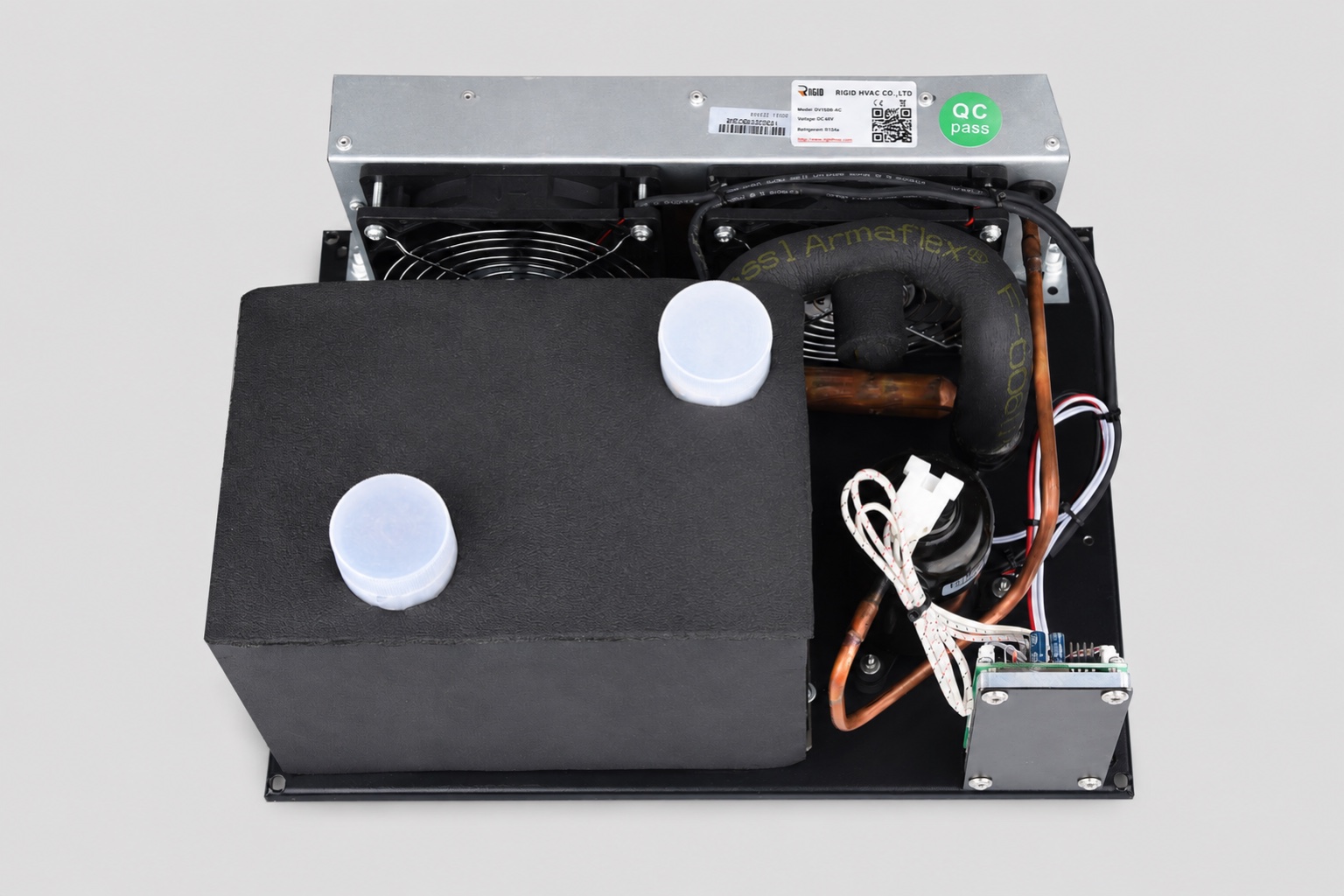 The defense ranking is unglamorous, and the cheap ends of it do most of the work:
| Defense | Cost | What it buys |
|---|---|---|
| Fresh-water rinse of the coil, monthly in season | A hose and ten minutes | Removes the salt film before it works; the single highest-leverage habit |
| Drain flush, twice a season | Minutes | Prevents the first functional failure outright |
| Siting and orientation | Free at installation | Intake away from the prevailing onshore wind; sheltered from direct spray; the difference between bands |
| Coated coils and marine hardware | Specification-time cost | Coil coatings slow the fin and joint chemistry substantially; stainless fasteners retire the screw-in-aluminum cell |
| Connector protection | Dielectric grease and drip loops | Delays the electrics chapter by years |
| Sealed-cabinet architecture | Design-level choice | The structural answer below |
The first row deserves its emphasis: rinsing undoes the mechanism itself — the film that corrosion needs is water-soluble, and a monthly rinse resets the clock in a way no coating matches for the money. It is also the row most reliably skipped, because it looks too simple to matter.
What the Drain Water Is Telling You
One diagnostic freebie coastal duty offers: the condensate itself is a sample of what the coil is collecting. Pan water that dries to a white crust is reporting salt load directly; a slippery film on the pan walls is the biofilm census; rust-colored staining traces which fasteners are donating. A ten-second look at the pan during each rinse turns the maintenance visit into a monitoring program — the corrosion equivalent of reading the fluid in any other loop — and a photographed pan, dated, gives the site file its cheapest trend line.
The Architecture Answer: Cool Without Inhaling
Every defense above accepts the premise that salty air must cross the equipment’s surfaces. The stronger coastal move, where the duty allows it, is to reject the premise for the protected side entirely: seal the cabinet, and cool it with a closed-loop air conditioner whose internal circuit never exchanges air with outside. The cabinet’s electronics then live in their own dry, salt-free atmosphere, and only the unit’s outer loop — one coil, one fan, built for weather — faces the sea air and its coastal corrosion duty.
That is the standing architecture of cabinet cooling in hostile air, and it concentrates the whole maintenance problem onto one rinseable coil while the payload’s environment stays sealed against the sea entirely. The trade is honest: the sealed loop costs more than a fan and a filter, and repays it in every year the cabinet’s contents do not corrode. The closed-loop approach and its sizing are the subject of our EV charger cabinet cooling guide, and the reason sealed boxes cannot simply use bigger fans — the temptation the sealed architecture replaces — is worked through in our sealed enclosure overheating guide. The units themselves are on the Micro DC Aircon page, with the mobile members of the family on the portable DC air conditioner page.
If you are specifying cooling for a coastal or marine site, send the following and our engineers will advise: distance from open water and exposure direction, cabinet or space to be cooled, duty season, the salt-protection level of candidate units, and what maintenance access the site realistically offers. Send your site details to our engineering team.
Frequently Asked Questions
How fast does coastal corrosion damage an air conditioner?
In the aggressive band — roughly the first few hundred meters from open water with onshore wind — visible fin oxidation inside a year and measurable capacity loss by the second year are realistic for an unmaintained unit (assumed scenario). The rate falls steeply with distance inland, which is why the site’s band belongs in the specification before any hardware decision.
Why does the condensate drain clog so often near the sea?
Coastal duty runs the pan wet all season — humid air condenses hard — while salt makes the standing water conductive and biofilm-friendly, and fin oxidation products wash in continuously. The narrowest passage in the machine silts toward closure first. Slope, short runs, reachable pans and twice-a-season flushes prevent it almost entirely.
Does rinsing an air conditioner with fresh water really help?
It is the highest-leverage habit available: the salt film is water-soluble, and a monthly rinse removes the corrosion mechanism itself rather than resisting it. Gentle flow, off-cycle, avoiding the electrics per the unit’s manual — a garden sprayer serves where no hose reaches. Coatings and marine hardware slow the chemistry; the rinse resets it — and the two together, plus a dated log, are how coastal units reach old age.
What should I specify for a marine or coastal DC aircon installation?
In order: the site’s distance band and exposure; a sealed-cabinet closed-loop architecture where the duty is protecting electronics; coated coils and stainless hardware for the weather-facing side; drains with slope and access; connector protection; and a maintenance schedule someone will actually keep. The specification conversation is cheaper than any of its alternatives.
Why do electrical faults near the coast come and go with the weather?
Corroded connector pins carry a deposit whose resistance varies with moisture — humid mornings swell the damp salt film and the fault appears; dry afternoons shrink it and the fault vanishes. Intermittency that tracks humidity is the signature of connector-level coastal corrosion, and dielectric grease at installation is its inexpensive vaccine.
Is a sealed cabinet with closed-loop cooling worth it at the coast?
Where the payload is electronics, usually yes: it moves the entire salt problem from every component in the cabinet onto one weather-built coil designed to be rinsed. The cabinet’s interior becomes climate the sea cannot reach, and the maintenance surface shrinks to a single serviceable loop — the architectural version of all the small defenses combined.