
What Is a DC Air Conditioner and How Does It Work?
A DC air conditioner is a cooling system that runs directly on direct current power, eliminating the need for inverters or grid connections. Unlike conventional AC-powered units that require 110V or 220V mains electricity, a DC air conditioner operates on low-voltage battery power — typically 12V, 24V, or 48V — making it suitable for mobile, off-grid, and battery-dependent applications.
The working principle follows the same vapor compression refrigeration cycle used in household air conditioners, but miniaturized for DC operation. Here is how the cycle works:
- Compression: A brushless direct current (BLDC) compressor pressurizes low-pressure refrigerant gas (R134a) into high-pressure, high-temperature gas.
- Condensation: The hot gas flows through the condenser coil, releasing heat to the outside environment and condensing into a high-pressure liquid.
- Expansion: The liquid refrigerant passes through an expansion valve, dropping in pressure and temperature rapidly.
- Evaporation: The cold, low-pressure refrigerant absorbs heat from the interior air as it evaporates in the evaporator coil, producing the cooling effect.
The key difference from conventional systems is the compressor. DC air conditioners use BLDC compressors that run directly on DC voltage. These compressors feature variable speed control, which means they adjust their output based on cooling demand rather than cycling on and off. This results in more stable temperatures, lower energy consumption, and quieter operation compared to fixed-speed AC compressors.
Because the entire system operates on DC power, there are no conversion losses from DC-to-AC inverters. This direct drive approach typically delivers higher overall system efficiency, which is critical when running on limited battery capacity.
Types of DC Air Conditioners: Split, Portable, and Micro Units
DC air conditioners come in several form factors, each designed for different installation scenarios and cooling requirements. Understanding the differences helps you choose the right type for your specific application.
DC Split Systems
Split-type DC air conditioners separate the condenser (outdoor unit) from the evaporator (indoor unit), connected by refrigerant lines. This design allows the noisy, heat-generating condenser to be mounted externally while the quiet evaporator cools the interior space.
The RIGID HS23P is a representative DC split system. It delivers 2300W of cooling capacity and supports multiple DC voltages including 24V, 48V, 60V, and 72V. The system comes pre-charged with R134a refrigerant, which simplifies installation — no vacuum pump or refrigerant charging equipment is needed on site. This type of unit is designed for truck cabins, crane cabs, heavy equipment, and larger vehicle applications where substantial cooling power is required.
Split systems are appropriate when you need higher cooling capacity (above 1500W), have space to mount separate indoor and outdoor units, and can route refrigerant lines between them. They are not suitable for applications where drilling or permanent mounting is impossible, or where the total cooling load is small enough for a compact unit.
Portable DC Air Conditioners
Portable DC units combine all components into a single housing that can be moved between locations. They typically exhaust hot air through a duct or vent. These units offer flexibility but generally sacrifice some efficiency compared to split systems because the condenser and evaporator share the same enclosure, creating potential heat transfer between the hot and cold sides.
Portable units work well for temporary cooling needs — construction site offices, pop-up shelters, or seasonal camping setups where permanent installation is not practical.
Micro DC Air Conditioners
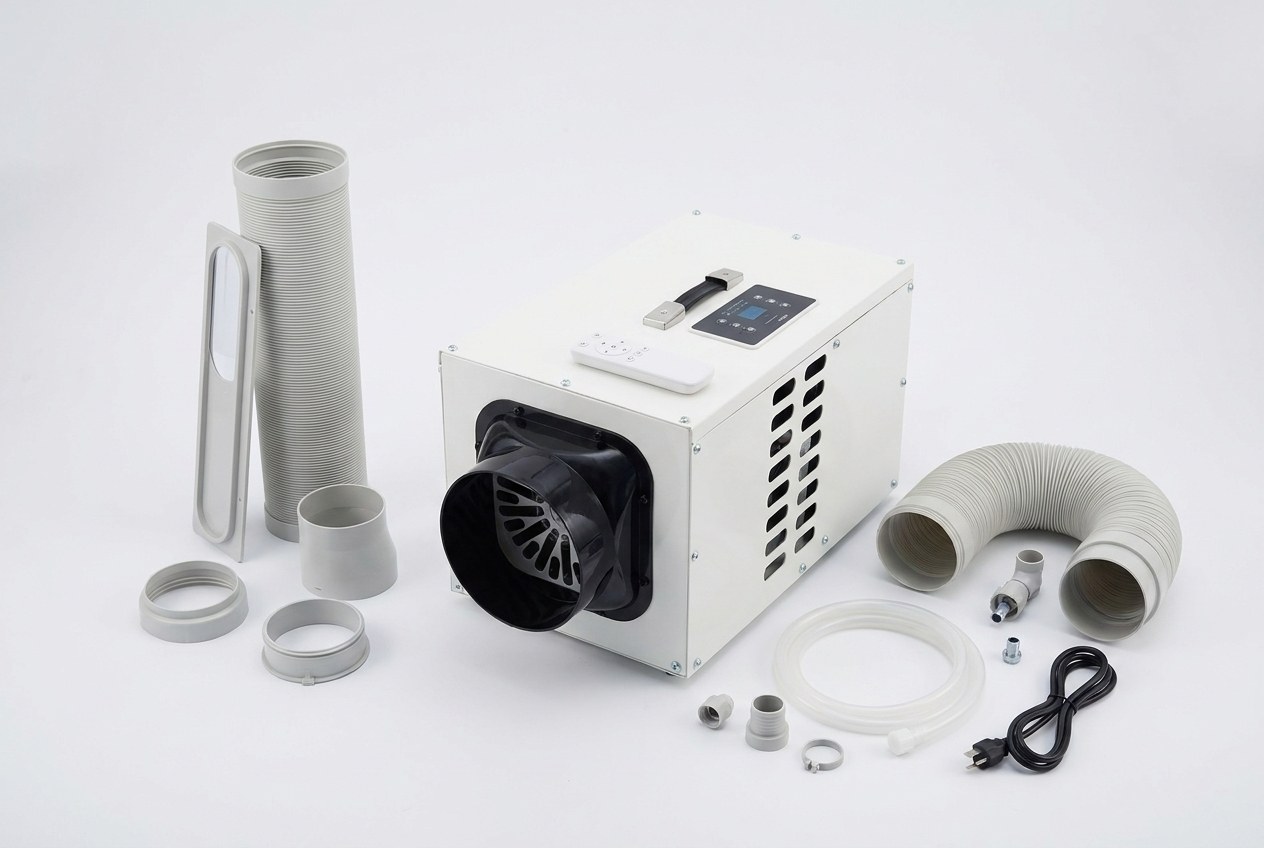
Micro DC air conditioners represent the most compact category, designed specifically for confined spaces where size and weight are primary constraints. The RIGID Micro DC Aircon series weighs approximately 5kg and delivers between 450W and 900W of cooling capacity (roughly 1,535 to 3,069 BTU).
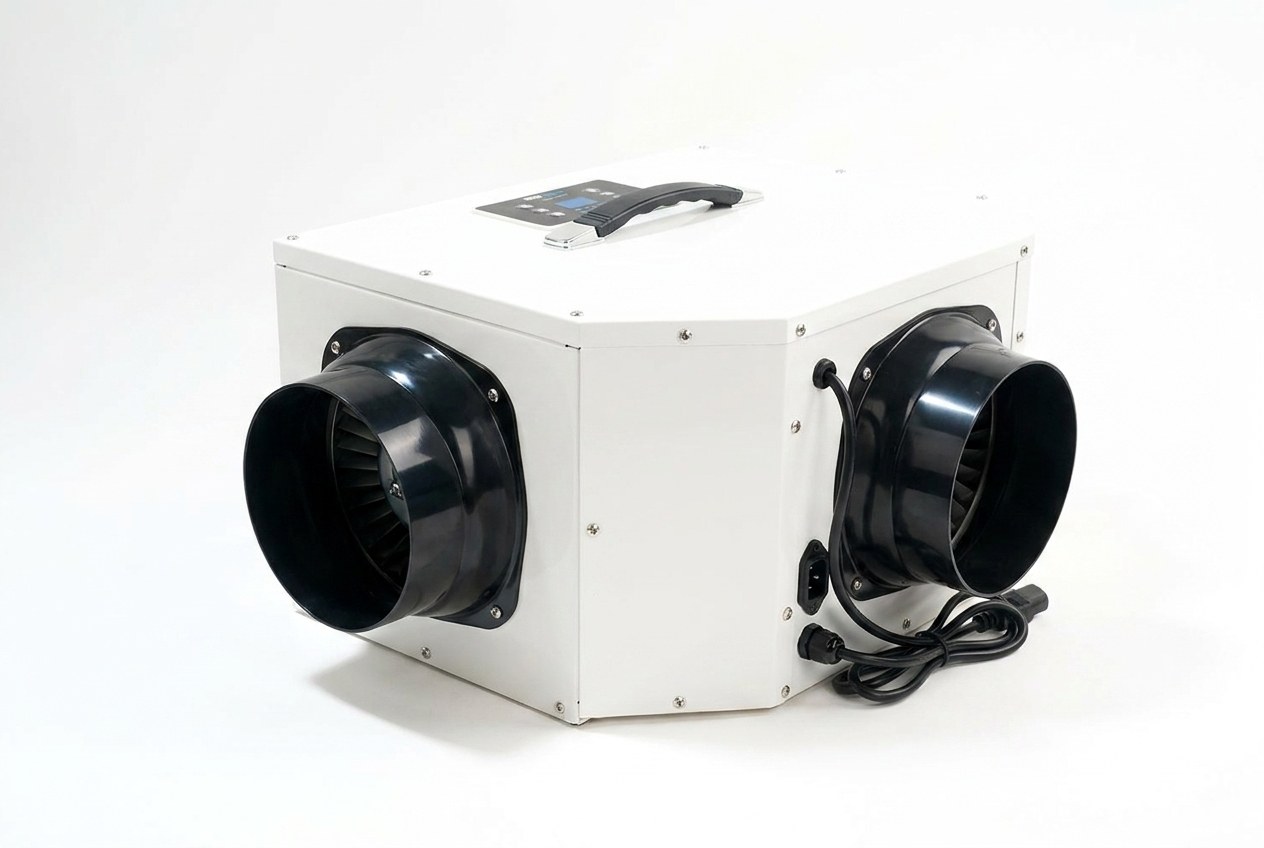 These units use the same vapor compression cycle as larger systems but with miniaturized components. The BLDC compressor, micro-channel condenser, and copper antimicrobial evaporator coils are all engineered to fit within a remarkably small footprint. Available in 12V, 24V, and 48V configurations, the micro units can integrate directly into existing DC power systems without additional conversion hardware.
Micro DC air conditioners are designed for applications such as telecom enclosures, medical equipment cooling, laser systems, electronics cabinets, pet enclosures, and small vehicle cabins. They are not appropriate for cooling large open spaces, rooms larger than a few cubic meters, or applications requiring more than 900W of cooling capacity.
Voltage Options: Choosing Between 12V, 24V, and 48V
The voltage rating of a DC air conditioner determines which power systems it can connect to directly. Each voltage level corresponds to common battery configurations used in different industries.
12V DC Air Conditioners
12V systems align with standard automotive electrical systems. Cars, most vans, and smaller recreational vehicles use 12V battery banks. A 12V DC air conditioner like the RIGID DV1910E-AC can connect directly to the vehicle battery or an auxiliary battery bank without any voltage conversion.
At 12V, the working current for the Micro DC Aircon is approximately 16A. This relatively high current draw means wiring gauge and connection quality become important — undersized cables will create voltage drop and heat buildup. For installations with long cable runs, 12V may not be the most efficient choice.
24V DC Air Conditioners
24V is the standard electrical system voltage for commercial trucks, buses, and many marine vessels. It is also common in solar power installations and telecom backup systems. The RIGID DV1920E-AC operates at 24V with a working current of approximately 8A — half the current of the 12V version for equivalent cooling output.
The lower current at 24V reduces wiring costs and minimizes resistive losses in the cables. For the HS23P split system, 24V is the lowest supported voltage, making it compatible with standard truck electrical systems for parking cooler applications.
48V DC Air Conditioners
48V systems are increasingly common in solar installations, telecom infrastructure, golf carts, and newer electric vehicle auxiliary systems. The RIGID DV1930E-AC operates at 48V with a working current of only 4A, which allows the use of thinner cables and reduces electrical losses to a minimum.
The HS23P split system also supports 48V operation, along with 60V and 72V options for electric vehicles and specialized industrial equipment that use higher voltage battery packs.
How to Choose the Right Voltage
The decision is straightforward: match the air conditioner voltage to your existing DC power system. If your vehicle or installation already has a 24V battery bank, choose a 24V unit. Converting voltages adds cost, complexity, and efficiency losses. Here are general guidelines:
- 12V: Passenger vehicles, small vans, basic camping setups
- 24V: Commercial trucks, buses, marine vessels, solar systems
- 48V: Telecom sites, large solar arrays, golf carts, electric vehicles
- 60V–72V: Electric motorcycles, industrial EVs, specialized equipment (HS23P only)
Application Scenarios for DC Air Conditioners
DC air conditioners serve a wide range of applications where grid power is unavailable, impractical, or undesirable. Here are the primary use cases and what to consider for each.
Fleet and Commercial Vehicles
Long-haul truck drivers need cabin cooling during rest periods without idling the engine. Anti-idling regulations in many regions make this a compliance requirement, not just a comfort preference. The HS23P split system with 2300W cooling capacity is designed specifically for this scenario — it mounts on the truck roof or behind the cabin and runs on the vehicle’s 24V battery system.
For smaller commercial vehicles — delivery vans, service trucks, utility vehicles — the Micro DC Aircon provides adequate cooling for the driver compartment at a fraction of the weight and power consumption of a full split system.
Van Life and Recreational Vehicles
The van life community has driven significant demand for compact DC cooling solutions. Traditional RV air conditioners are large, heavy, and power-hungry. A micro DC unit weighing around 5kg and drawing 8A at 24V can maintain comfortable temperatures in a converted van without overwhelming a modest solar and battery setup.
For van conversions, the key considerations are available roof space for the condenser, battery capacity for runtime duration, and whether the cooling output matches the insulated volume of the vehicle. A 450W unit can handle a well-insulated small van; larger or poorly insulated vehicles may need the 900W twin-cylinder version.
Off-Grid Solar Installations
Telecom towers, remote monitoring stations, and off-grid cabins often rely on solar panels and battery banks for all their power needs. DC air conditioners integrate directly into these 24V or 48V systems without requiring an inverter, which would otherwise consume 10-15% of the available power in conversion losses.
For telecom enclosures and electronics cabinets, the Micro DC Aircon provides precisely controlled cooling to maintain equipment within operating temperature ranges. The variable-speed compressor adjusts output to match the actual heat load, avoiding the temperature swings that fixed-speed systems produce.
Marine and Boating
Boats typically run 12V or 24V DC systems, making DC air conditioners a natural fit for cabin cooling. The compact size and light weight of micro units are particularly valuable on vessels where every kilogram affects performance and fuel consumption. Salt air environments demand corrosion-resistant components, so look for units with appropriate coatings and materials.
Medical and Scientific Equipment
Some medical devices, laser systems, and scientific instruments require precise temperature control within an enclosure. The variable-speed BLDC compressor in DC air conditioners can maintain temperatures between 5°C and 30°C with minimal fluctuation, making them suitable for temperature-sensitive equipment cooling.
Sizing Your DC Air Conditioner: Matching Capacity to Load
Choosing the right cooling capacity requires understanding your heat load. While precise calculations depend on many variables, here are approximate guidelines to help narrow your options.
As a rough estimate, you need approximately 30-40W of cooling capacity per cubic meter of well-insulated enclosed space in moderate climates. Poorly insulated spaces, direct sun exposure, or hot climates can double or triple this requirement. These are approximations — actual requirements vary significantly based on insulation quality, ambient temperature, solar gain, internal heat sources, and desired interior temperature.
Micro DC Aircon Range (450W–900W)
- Small enclosed cabinets and equipment enclosures
- Single-person vehicle cabins (well-insulated)
- Telecom shelters and electronics housings
- Pet enclosures and small portable shelters
- Not suitable for: rooms larger than approximately 8-10 cubic meters, poorly insulated spaces in extreme heat, or applications requiring rapid cooldown of large thermal masses
HS23P Split System (2300W)
- Full-size truck cabins
- Crane operator cabs
- Large RV sleeping areas
- Construction equipment cabins
- Not suitable for: entire residential rooms, large commercial spaces, or applications where split installation (indoor/outdoor units) is not feasible
Installation Considerations and Best Practices
Proper installation directly affects the performance and lifespan of a DC air conditioner. Here are the key factors to address during setup.
Electrical Connections
Use appropriately sized cables for the current draw at your operating voltage. At 12V with 16A draw, you need heavier gauge wire than at 48V with 4A draw. Keep cable runs as short as possible to minimize voltage drop. Include an appropriately rated fuse or circuit breaker near the battery to protect against short circuits.
Airflow and Mounting
The condenser needs adequate airflow to reject heat effectively. Mounting it in a confined space without ventilation will reduce cooling capacity and may cause the system to shut down on high-pressure protection. Ensure at least 100-150mm of clearance around the condenser for air circulation.
The evaporator should be positioned to distribute cooled air evenly throughout the space. Avoid mounting it where the cold air output is immediately blocked or where it will create uncomfortable drafts on occupants.
Condensate Management
Like all air conditioners, DC units produce condensate water as they dehumidify the air. Plan a drainage path that directs water away from electrical components and sensitive equipment. In vehicle installations, ensure the drain exits to the exterior and cannot back up during movement or when parked on an incline.
Battery Capacity Planning
Calculate your required runtime and ensure your battery bank can support it. As an approximate guide, multiply the current draw by the desired hours of operation to get the minimum amp-hour requirement. Add a 20-30% margin because discharging batteries below 70-80% depth of discharge shortens their lifespan significantly. For example, running a 24V Micro DC Aircon at 8A for 8 hours requires roughly 64Ah of usable capacity, suggesting a battery bank of at least 80-100Ah at 24V.
Comparing DC Air Conditioners to Conventional Options
Understanding when a DC air conditioner makes sense — and when it does not — helps avoid costly mistakes.
DC vs. AC with Inverter
Running a conventional AC air conditioner through an inverter is technically possible but introduces several disadvantages. The inverter itself consumes power (typically 10-15% loss), adds weight and complexity, generates heat that must also be managed, and represents an additional point of failure. DC air conditioners eliminate all of these issues by running directly from the battery.
However, if you already have a large inverter installed for other loads and your cooling needs exceed what available DC units can provide, an AC unit through an inverter may be the practical choice for larger spaces.
DC Air Conditioner vs. Evaporative Coolers
Evaporative (swamp) coolers use water evaporation to cool air and consume very little power. They work well in hot, dry climates but are ineffective in humid conditions. DC air conditioners using vapor compression work regardless of humidity levels and can achieve much lower temperatures. In humid coastal or tropical environments, a DC air conditioner is the only viable option for meaningful cooling.
DC Air Conditioner vs. Thermoelectric Coolers
Thermoelectric (Peltier) coolers have no moving parts and are extremely compact, but their efficiency drops dramatically as the temperature difference between hot and cold sides increases. For temperature differentials above 10-15°C, vapor compression DC air conditioners are significantly more efficient. Thermoelectric coolers are better suited for small electronics cooling where the temperature differential is modest and vibration-free operation is critical.
Maintenance and Longevity
DC air conditioners with BLDC compressors have fewer wearing parts than conventional systems, but they still require periodic attention to maintain performance.
- Air filters: Clean or replace every 2-4 weeks in dusty environments. Clogged filters reduce airflow and force the compressor to work harder.
- Condenser coils: Inspect monthly for dust, debris, or insect nests that block airflow. Clean with compressed air or gentle water spray.
- Electrical connections: Check terminals for corrosion or looseness every 3-6 months, especially in marine or high-vibration environments.
- Refrigerant charge: Sealed systems like the HS23P (pre-charged R134a) should not need recharging under normal conditions. A gradual loss of cooling performance may indicate a slow leak requiring professional service.
- Condensate drain: Verify the drain is clear and flowing freely. Blocked drains can cause water damage or ice buildup on the evaporator.
With proper installation and basic maintenance, DC air conditioners typically provide years of reliable service. The BLDC compressor’s variable speed operation means it rarely runs at full load, reducing mechanical stress and extending component life.
Making Your Decision
Choosing the right DC air conditioner comes down to three primary factors: your available voltage, your cooling capacity requirement, and your space constraints.
For compact applications under 900W cooling demand, the RIGID Micro DC Aircon series offers the smallest and lightest solution available in 12V, 24V, and 48V configurations. For larger vehicle cabins requiring up to 2300W of cooling, the HS23P split system handles the job across 24V to 72V power systems.
Start by identifying your power system voltage, estimating your cooling load, and measuring your available installation space. These three data points will narrow your options quickly and lead you to the right unit for your specific situation.