
Disclaimer: This article focuses on thermal management equipment and vehicle safety systems. It is not intended as veterinary medical advice. Always consult with a licensed veterinarian regarding heatstroke protocols for your specific animal.
The Thermal Challenge: Why Passive Ventilation Fails Working Dogs
For police K9 units, search and rescue (SAR) teams, hunting dogs, and competitive show dogs, the vehicle is more than just transport—it is a mobile base of operations. However, it is also the most dangerous place for a dog to be during the summer months. Tragic cases of heat-related incidents in stationary vehicles are reported every year, often due to a fundamental misunderstanding of thermodynamics and canine physiology.
A vehicle parked in direct sunlight acts as a highly efficient solar collector. Solar radiation penetrates the glass and heats the interior surfaces (dashboard, seats, floor), which then radiate heat into the air. Even on a mild 25°C (77°F) day, the interior temperature can rise to 40°C (104°F) in under 30 minutes. On a 35°C (95°F) day, the interior can reach lethal temperatures of 60°C (140°F) within an hour.
Many handlers rely on passive ventilation strategies, such as cracking windows, installing window grilles, or using 12V oscillating fans. While these methods provide airflow, they are fundamentally limited by the ambient air temperature. A fan simply circulates the existing hot air. If the air inside the truck is 40°C, the fan is blowing 40°C air at the dog. It does not remove thermal energy from the environment. To reliably manage the crate’s internal climate and ensure the animal’s safety, professional handlers are turning to dedicated dog crate air conditioners as the most effective solution for stationary vehicle cooling.
The Physiology of Heat Stress: Why Dogs Are Vulnerable
To understand why active refrigeration is necessary, we must examine how dogs regulate their body temperature compared to humans. Humans have sweat glands over most of their body surface, allowing for efficient evaporative cooling through the skin. Dogs, however, only have sweat glands on their paw pads, which is insufficient for thermoregulation.
Dogs cool themselves primarily by panting. Panting moves air over the moist surfaces of the tongue, mouth, and upper respiratory tract, causing evaporation that cools the blood circulating in these areas. This cooled blood then returns to the body core, lowering the overall temperature. However, this system has critical limitations:
- Efficiency Drop: Panting requires muscular effort, which itself generates metabolic heat. If the ambient temperature is too high, the heat generated by panting can exceed the heat lost through evaporation, leading to a dangerous feedback loop known as thermal runaway.
- Humidity Sensitivity: Panting relies entirely on evaporation. As humidity rises, the rate of evaporation decreases. In high humidity environments, a dog can suffer from heatstroke at much lower temperatures than in dry environments.
Why Evaporative Cooling Often Fails (and Can Increase Risk)
A common misconception is that “Swamp Coolers” (evaporative coolers) are a good solution for dog crates. These devices blow air through a wet filter or over ice water. While they can lower air temperature in arid climates, they work by adding significant moisture to the air.
Using a swamp cooler inside a sealed vehicle or a semi-enclosed crate can be dangerous for two reasons:
- The “Sauna Effect”: In a small volume like a crate, a swamp cooler can rapidly raise the relative humidity to near 100% (saturation).
- Physiological Failure: When the air is saturated, the moisture on the dog’s tongue cannot evaporate. The dog continues to pant frantically, generating more heat, but no cooling occurs. This can accelerate the onset of heatstroke.
The Rigid Solution: Vapor Compression
The Rigid DC Air Conditioner uses true vapor compression technology (compressor + refrigerant), identical to the AC in your home or car. This process has two distinct benefits for K9 safety:
- Sensible Cooling: It physically removes heat energy from the air, lowering the dry-bulb temperature.
- Latent Cooling (Dehumidification): As air passes over the sub-zero evaporator coils, moisture condenses out of the air and is drained away. This lowers the relative humidity inside the crate.
By providing **cool, dry air**, the AC maximizes the efficiency of the dog’s natural panting mechanism, offering a far safer recovery environment than humid swamp coolers.
Ductable Performance: Creating a Positive Pressure Zone
Simply placing an AC unit inside the vehicle cabin is often not enough, especially if the dog is in a heavy-duty aluminum crate (like Gunner, Impact, or Ruff Land). These crates are designed for crash safety, which means they have thick walls that insulate the dog from the surrounding air. A crate in the back of an SUV might be 10°C hotter than the front seat area due to poor air circulation.
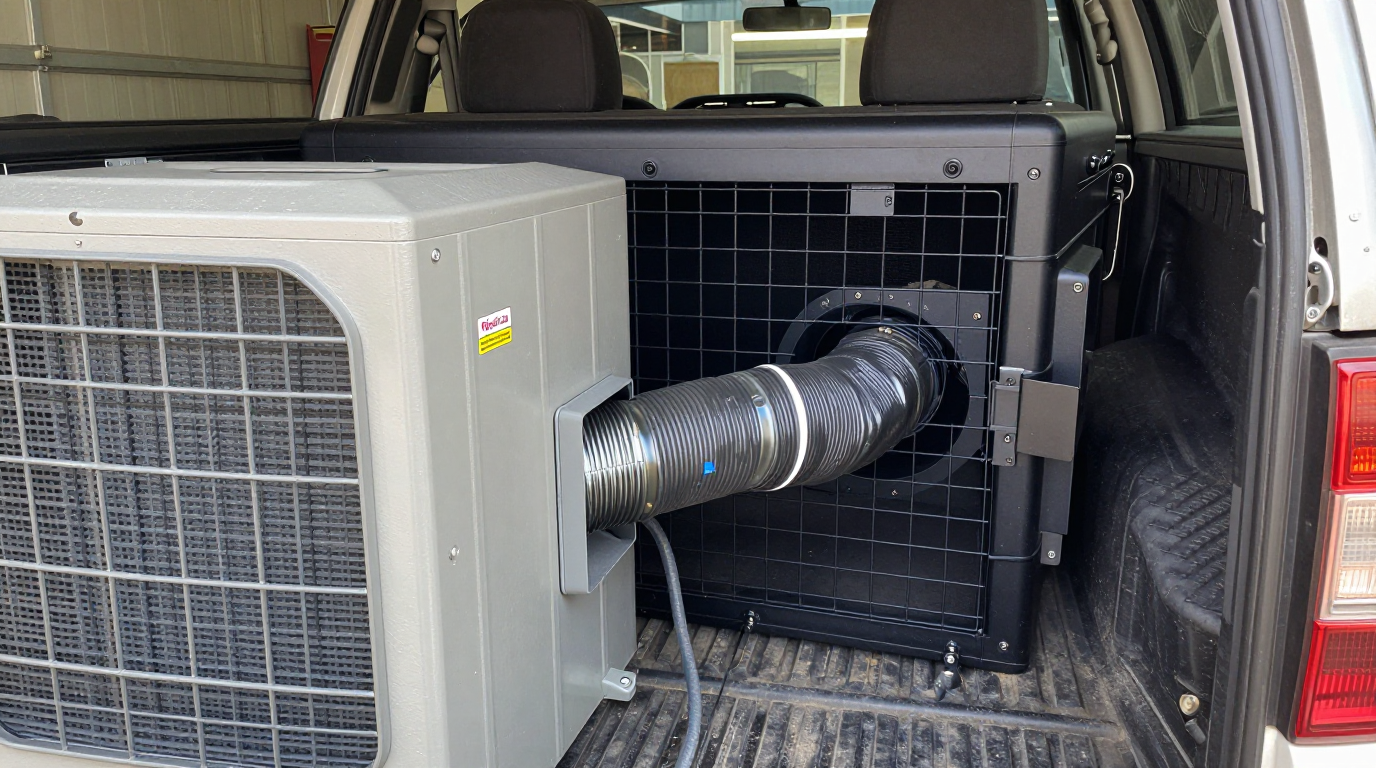
The standard for professional K9 upfitting is **Direct Injection Cooling**. RigidChill portable units feature a standard 4-inch (100mm) output nozzle designed for flexible insulated ducting.
The Setup Strategy
- Exterior Placement: Secure the AC unit outside the crate (e.g., in the cargo area, strapped to the top of the crate, or even outside the vehicle). This ensures the dog cannot chew on power cords, refrigerant lines, or the unit itself, eliminating electrical shock hazards.
- Direct Ducting: Run a short length of heavy-duty insulated ducting from the AC output to a port on the crate door or side wall. Many professional crates now come with optional “AC Port” accessories, or they can be easily retrofitted with a flange.
- Positive Pressure: The AC forces a high volume of cold air (approx. 100-150 CFM) into the crate. This creates “Positive Pressure” inside the enclosure. The cold air fills the crate, displacing the hot, stale, CO2-rich air and pushing it out through the crate’s existing vents and bar gaps.
This method ensures the dog is constantly enveloped in a stream of fresh, conditioned air, regardless of the temperature in the rest of the trunk or cargo area.
Illustrative Scenario: Search & Rescue (SAR) Deployment
Note: This is a typical operational scenario based on customer feedback and thermal modeling, used to illustrate the benefits of active cooling.
Consider a Search and Rescue (SAR) team deployed to a wilderness area in the Nevada desert on a 35°C (95°F) day. The dogs are tasked with searching rough terrain for a missing hiker. They work in high-intensity 20-minute shifts and then must return to the truck for rest and rehydration.
The Passive Recovery Scenario
Without active AC, the dog returns to a crate that is at best the same temperature as the outside air (35°C), or likely hotter due to solar gain on the truck roof. The dog’s core temperature is elevated from exertion (possibly 40°C+). Placing a hot dog in a hot box prevents effective cooling. The dog continues to pant heavily, failing to lower its heart rate or core temp significantly. After a 30-minute “break,” the dog is still thermally stressed and fatigued. Redeploying this dog carries a high risk of heat exhaustion or injury.
The Active Cooling Scenario
With a Rigid Portable AC running off a secondary battery, the crate interior is maintained at a crisp 20°C (68°F). When the dog enters the crate, the steep temperature gradient (40°C dog vs 20°C air) facilitates rapid heat transfer away from the animal’s body. The dry air aids evaporation from the tongue. Within 15 minutes, the dog’s respiration rate slows, heart rate normalizes, and core temperature returns to baseline. The dog is physically and mentally refreshed, ready for a safe and effective second deployment.
Quiet Operation for Reduced Stress
Recovery is not just about temperature; it is also about mental rest. Working dogs are high-drive animals that need to “switch off” between tasks. Loud noise from gas generators or industrial blowers can induce stress (cortisol spikes), keeping the dog in a state of hyper-arousal. Stress raises metabolic heat production, counteracting the cooling effort.
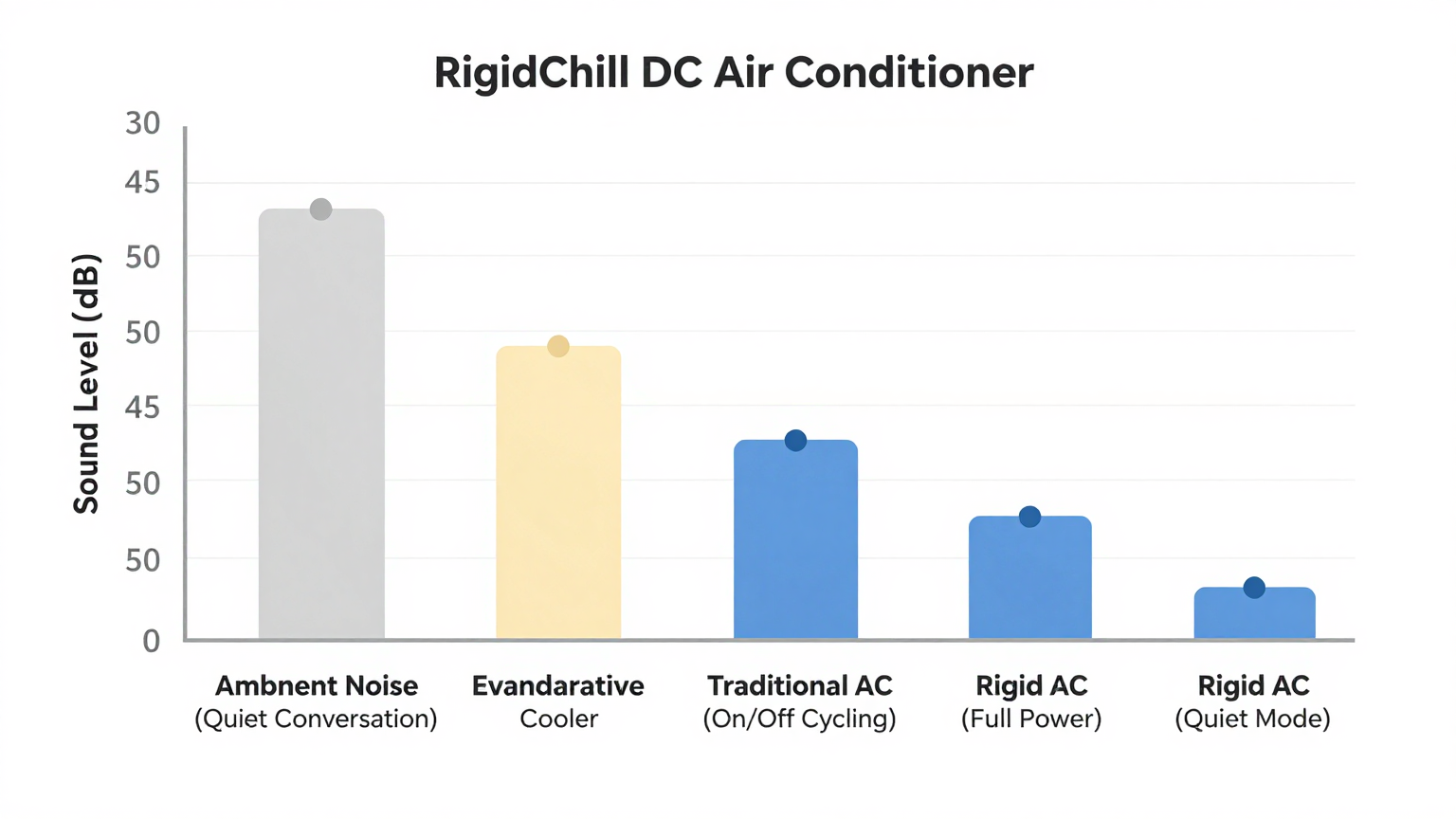
Rigid’s BLDC inverter compressor technology features “Soft Start” algorithms and variable speed operation. Unlike traditional compressors that “clunk” on and off, the Rigid unit ramps up smoothly. Once the target temperature is reached, the unit slows down to maintenance mode, operating at a low hum (approx. 45-50 dB). This is comparable to a quiet conversation or a refrigerator hum. This quieter acoustic environment supports better sleep and psychological recovery for the animal.
Installation & Integration Support
RigidChill understands that every K9 vehicle setup is unique. Whether you are upfitting a police Tahoe, a SAR pickup truck, or a minivan for dog shows, we have integration solutions to match.
K9 Safety Kit Components
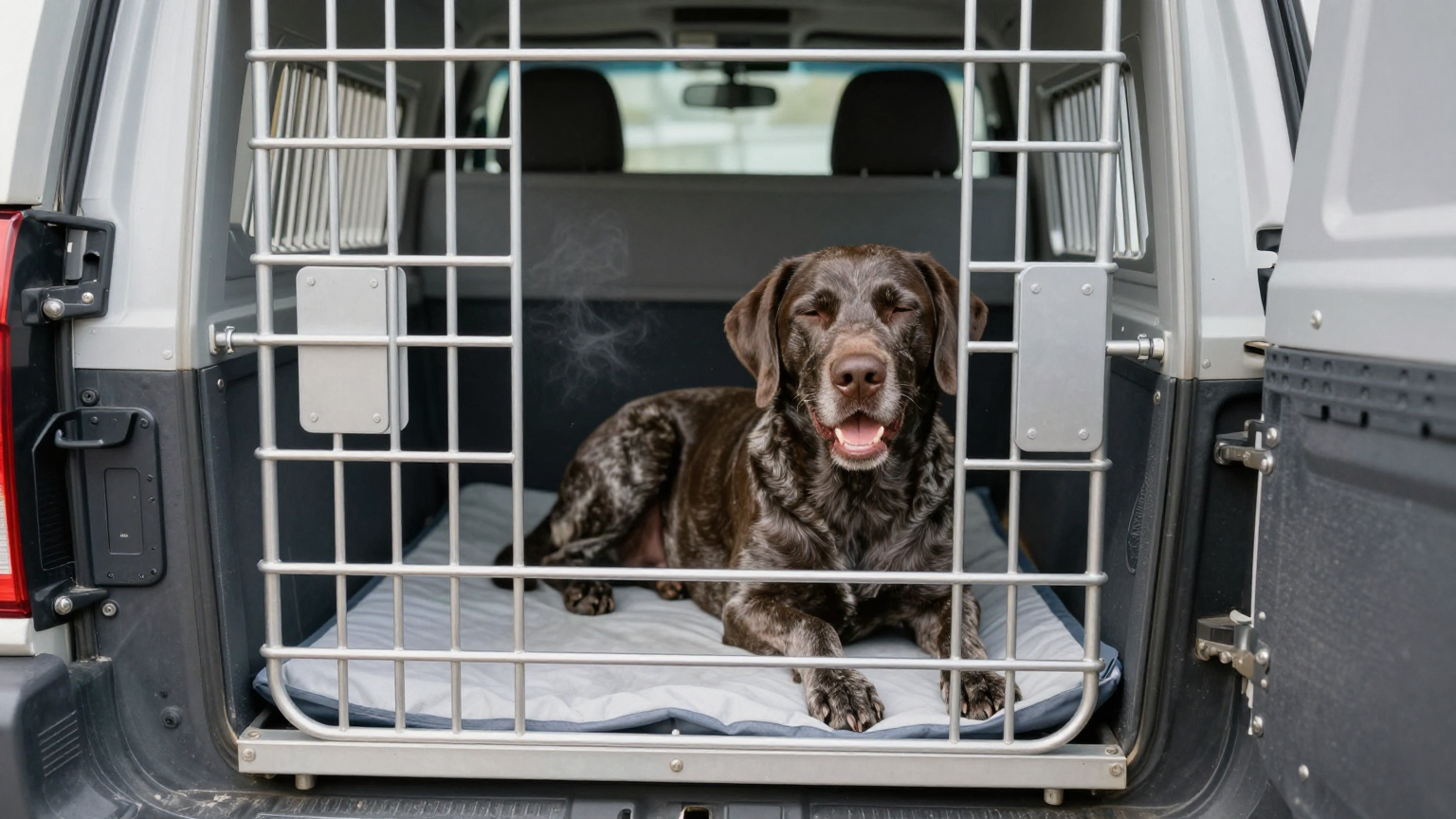
We offer specialized “K9 Safety Kits” designed for popular crate brands like Gunner, Ruff Land, Impact, and Variocage. A typical kit includes:
- Rigid LC2810E AC Unit: The core cooling engine, compact enough to fit alongside the crate.
- Duct Adapter Flange: A laser-cut or molded adapter that bolts securely to the crate door grid, allowing for a quick-connect hose attachment.
- Remote Thermostat Display: A wired remote that you can mount on your dashboard. This allows the handler to monitor the exact temperature inside the crate while driving, without having to stop and check the back.
- Auxiliary Battery Recommendation: We strongly advise using a separate Deep Cycle (LiFePO4) battery (100Ah or larger) to power the AC. This isolates the cooling load from the vehicle’s starter battery, ensuring that no matter how long you run the AC, your truck will always start when it’s time to leave.
Investing in active thermal management is an investment in the longevity, performance, and safety of your working partner. Don’t leave their safety to chance.
View the K9 cooling solution and accessories.
