
EV Charger Cooling Is the Bottleneck Nobody Planned For
The EV charging industry is in a power density race. Charger manufacturers are pushing more kilowatts through smaller enclosures — 120 kW, 180 kW, 360 kW fast chargers packed into cabinets that are expected to sit outdoors, unattended, in direct sunlight, in ambient temperatures that regularly exceed 40 degrees Celsius in summer across large portions of North America, Europe, the Middle East, and Asia.
The power electronics inside these enclosures — IGBTs, MOSFETs, capacitors, rectifiers, communication modules — generate significant waste heat during charging sessions. A 120 kW DC fast charger operating at 95 percent efficiency generates approximately 6 kW of waste heat at full load. A 360 kW charger generates 18 kW. This heat must be removed from the enclosure or the internal temperature will rise until components derate, throttle, or shut down on thermal protection.
Most charging pile manufacturers initially specify fan-based ventilation cooling for cost reasons. This works in temperate climates at moderate power levels. It fails — predictably and reliably — when ambient temperatures exceed 35 degrees, when dust or debris clogs the ventilation filters, or when the charger operates at sustained high power in direct sunlight. The failure mode is thermal throttling: the charger reduces output power to protect its components, turning a 120 kW charger into an 80 kW charger on the hottest days of the year when demand is highest.
Why Ventilation Cooling Fails in Charging Piles
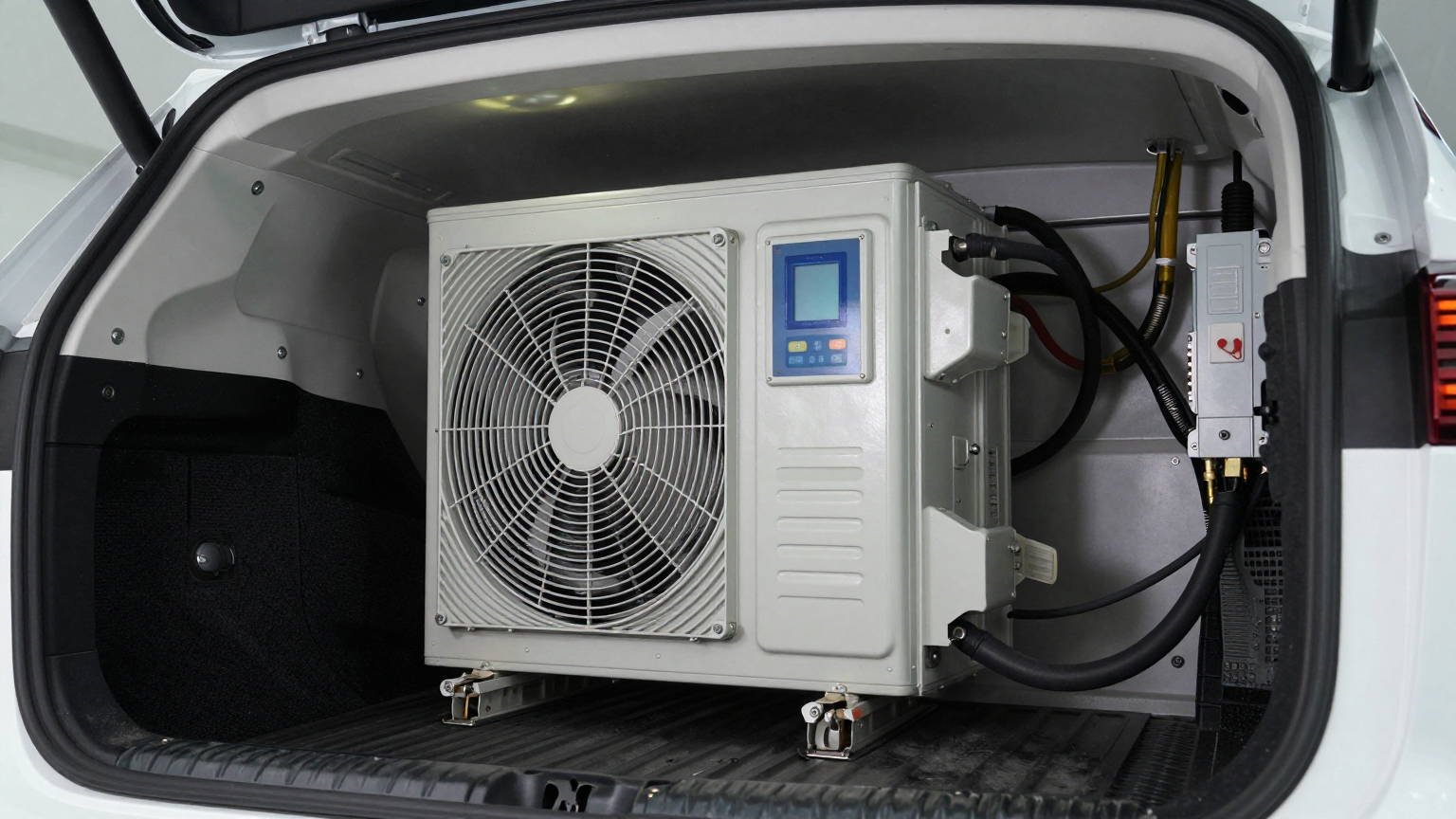
Ventilation cooling pulls ambient air through the enclosure, absorbs heat from the components, and exhausts the warmed air. The limitations are the same as any air-cooling system: it cannot cool below ambient temperature, and it introduces contaminants.
The Ambient Temperature Problem
When ambient air is 42 degrees (common in desert regions, the US Southwest, the Middle East, and parts of Southern Europe and Asia during summer), the air entering the enclosure is already 42 degrees. After absorbing 6 kW of waste heat in a compact enclosure, the internal air temperature may reach 55 to 65 degrees — well above the rated operating temperature of most power electronic components (typically 85 degrees junction, which requires case temperatures below 60 to 70 degrees depending on the component and thermal path).
Add direct solar radiation heating the enclosure walls, and the internal temperature can exceed component ratings even at moderate charging loads. The charger’s thermal management controller responds by reducing output power — the operator sees a charger that cannot deliver its rated speed on the days when fast charging matters most.
The Contamination Problem
Ventilation requires openings. Openings admit dust, moisture, insects, and corrosive pollutants. Charging piles installed along highways, in parking garages, at fleet depots, or in industrial areas encounter particulate loads that foul ventilation filters within weeks. A clogged filter restricts airflow, which raises internal temperature, which triggers thermal throttling — the same failure mode as high ambient temperature, but caused by maintenance neglect rather than weather.
Sealed enclosure cooling — using a micro DC aircon module with no ventilation openings — eliminates the contamination pathway entirely. The enclosure remains sealed to IP55 or IP65 standards. No filters to clog. No dust on components. No moisture-induced corrosion on circuit boards.
Micro DC Aircon Integration for Charging Piles
A micro DC aircon module designed for enclosure cooling is a self-contained, refrigerant-pre-charged sub-system that mounts inside or on the wall of the charging pile enclosure. The evaporator side cools the internal air; the condenser side rejects heat to the external environment. The enclosure remains sealed.
Sizing the Cooling Module
The cooling capacity must match the total thermal load:
- Power electronics waste heat: charger rated power multiplied by (1 minus efficiency). A 120 kW charger at 95 percent efficiency generates 6 kW of waste heat at full load.
- Solar heat gain: depends on enclosure color, surface area, and solar exposure. For a dark-colored outdoor enclosure in direct sun, add 200 to 500 W of solar gain.
- Target internal temperature: typically 35 to 40 degrees maximum to maintain component ratings with margin.
- Maximum ambient temperature: the worst-case design condition for the deployment location.
For a 120 kW charger in a hot climate (45 degree ambient), the total cooling requirement is approximately 6.5 to 7 kW — requiring either a single larger cooling module or multiple smaller modules. For a 60 kW charger (3 kW waste heat plus solar gain), a single compact module in the 3.5 to 4 kW cooling range is typically sufficient.
Mounting and Airflow Design
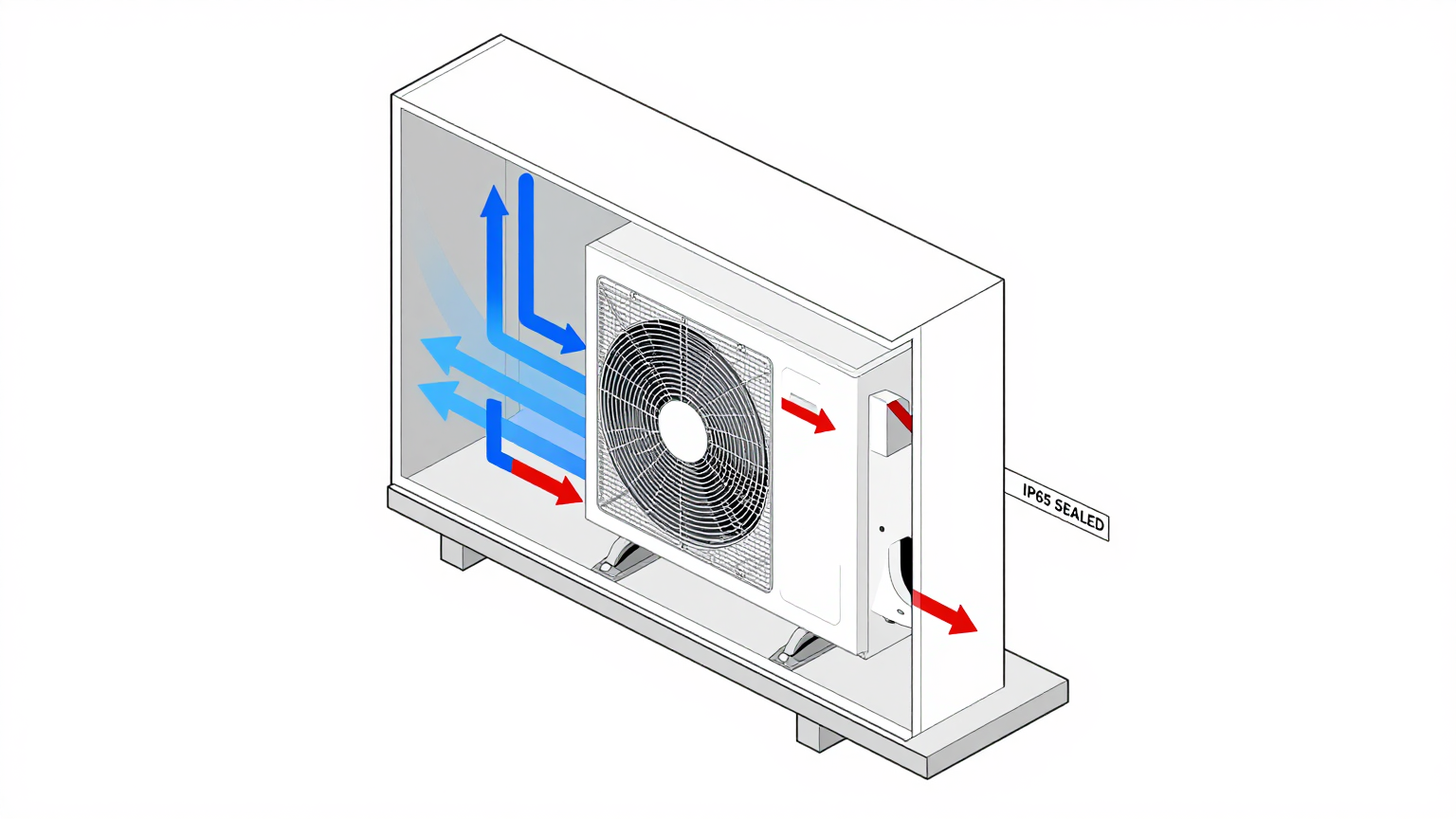
The evaporator’s cold air output should be directed toward the hottest components — typically the power module heatsinks and the DC bus capacitors. The return air path should draw from the opposite side of the enclosure to create circulation across all heat-generating components. Avoid dead zones where air stagnates and local hot spots develop.
The condenser must have access to ambient air for heat rejection — typically mounted on an external wall of the enclosure with a weather-protected intake and exhaust. The condenser should face away from direct afternoon sun if possible, and should be positioned to avoid recirculating its own exhaust air.
Condensate and Humidity Management
When a cooling module operates below the dew point of the internal air, condensation forms on the evaporator coil. In a sealed electronics enclosure, unmanaged condensate is a direct path to corrosion, short circuits, and component failure. The cooling module must include a sealed condensate collection and drain system that routes all moisture out of the enclosure without compromising the IP rating.
In humid climates — Southeast Asia, the US Gulf Coast, tropical regions — the dehumidification function of the cooling module is as important as the temperature reduction itself. By continuously removing moisture from the internal air, the cooling module prevents condensation on cold surfaces during temperature cycling, particularly during early morning hours when enclosure surfaces are cold from overnight cooling but the air warms rapidly with sunrise. Without dehumidification, condensation on circuit boards accelerates electrochemical migration between traces, leading to intermittent faults and eventual short circuits that are notoriously difficult to diagnose.
For installations in freezing climates, the condensate drain must be designed to prevent ice blockage. A heated drain line or a gravity-fed drain with a complete emptying path prevents ice from forming in the drain tube and backing water into the enclosure. This detail is frequently overlooked in charger designs intended for northern climates where summer cooling and winter freezing coexist in the same installation.
Charger Uptime Economics
The economic impact of thermal throttling extends beyond the immediate power reduction. When a charger throttles from 120 kW to 80 kW, the charging session takes 50 percent longer. During that extended session, other vehicles queue. Customer satisfaction drops. Utilization revenue per charger per day decreases. For a fleet depot charging 20 vehicles per day, thermal throttling during summer months can reduce effective charging capacity by 20 to 30 percent — the equivalent of losing 4 to 6 charging sessions per day.
The cost of a micro DC aircon module is typically recovered within the first summer through avoided throttling losses alone — before accounting for reduced component replacement costs, lower maintenance burden from sealed enclosures, and extended equipment life from stable operating temperatures.
Power Supply Integration
Charging piles contain DC power buses at various voltages — the high-voltage DC bus (200 to 1,000 V) for charging, and auxiliary low-voltage buses (12V, 24V, 48V) for control electronics, communication, and cooling fans. A micro DC aircon module connects to the auxiliary DC bus, drawing power directly from the charger’s existing power supply without requiring a separate AC connection.
The cooling module’s power consumption (typically 200 to 800 W depending on cooling capacity and operating conditions) represents a small fraction of the charger’s total power throughput. On a 120 kW charger, a 500 W cooling module consumes 0.4 percent of the charger’s capacity — a negligible efficiency impact that prevents the far larger efficiency loss caused by thermal throttling.
Sealed Enclosure Benefits Beyond Cooling
The shift from ventilated to sealed enclosure cooling delivers benefits beyond thermal management:
- IP rating improvement: sealed enclosures can achieve IP55 or IP65, protecting against water jets and dust ingress — critical for outdoor and coastal installations
- Reduced maintenance: no ventilation filters to replace, no dust accumulation on components, no insect intrusion
- Component longevity: lower and more stable operating temperatures extend the life of capacitors (which degrade exponentially with temperature) and semiconductor junctions
- Humidity control: the cooling module’s evaporator dehumidifies the internal air, reducing condensation risk on cold startup mornings
- Acoustic isolation: sealed enclosures attenuate internal noise, reducing the charger’s acoustic footprint in noise-sensitive locations like residential areas and hospitals
Common Field Questions
Is the cooling module running all the time or only during charging?
The cooling module should run whenever the internal temperature exceeds the setpoint — which may be during charging sessions, during standby in hot weather (solar gain heats the enclosure even with no charging load), or during pre-cooling before an anticipated high-demand period. A thermostat or the charger’s thermal management controller triggers the cooling module as needed.
What happens if the cooling module fails?
The charger’s existing thermal protection logic handles this scenario: when internal temperature exceeds the derate threshold, the charger reduces output power. When it exceeds the shutdown threshold, the charger shuts down. The cooling module failure degrades performance but does not create a safety hazard — the charger’s built-in protection takes over.
Can I retrofit cooling into an existing ventilated charging pile?
Yes, in most cases. The ventilation openings can be sealed and a wall-mounted cooling module installed. The retrofit requires sealing all existing air pathways, mounting the cooling module, connecting it to the auxiliary DC bus, and verifying that the internal airflow pattern adequately reaches all heat-generating components.
How does sealed cooling affect the charger’s IP rating certification?
Sealing the enclosure and adding a properly integrated cooling module typically improves the IP rating. However, any modification to a certified enclosure requires re-evaluation against the relevant IP standard. The cooling module’s external condenser penetration must be designed to maintain the enclosure’s ingress protection rating.
Deployment Considerations by Climate Zone
| Climate Zone | Peak Ambient | Cooling Requirement | Notes |
|---|---|---|---|
| Temperate (Northern EU, PNW US) | 28-32 C | Low to moderate | Fan cooling may suffice for lower-power chargers; sealed cooling recommended for 100kW+ |
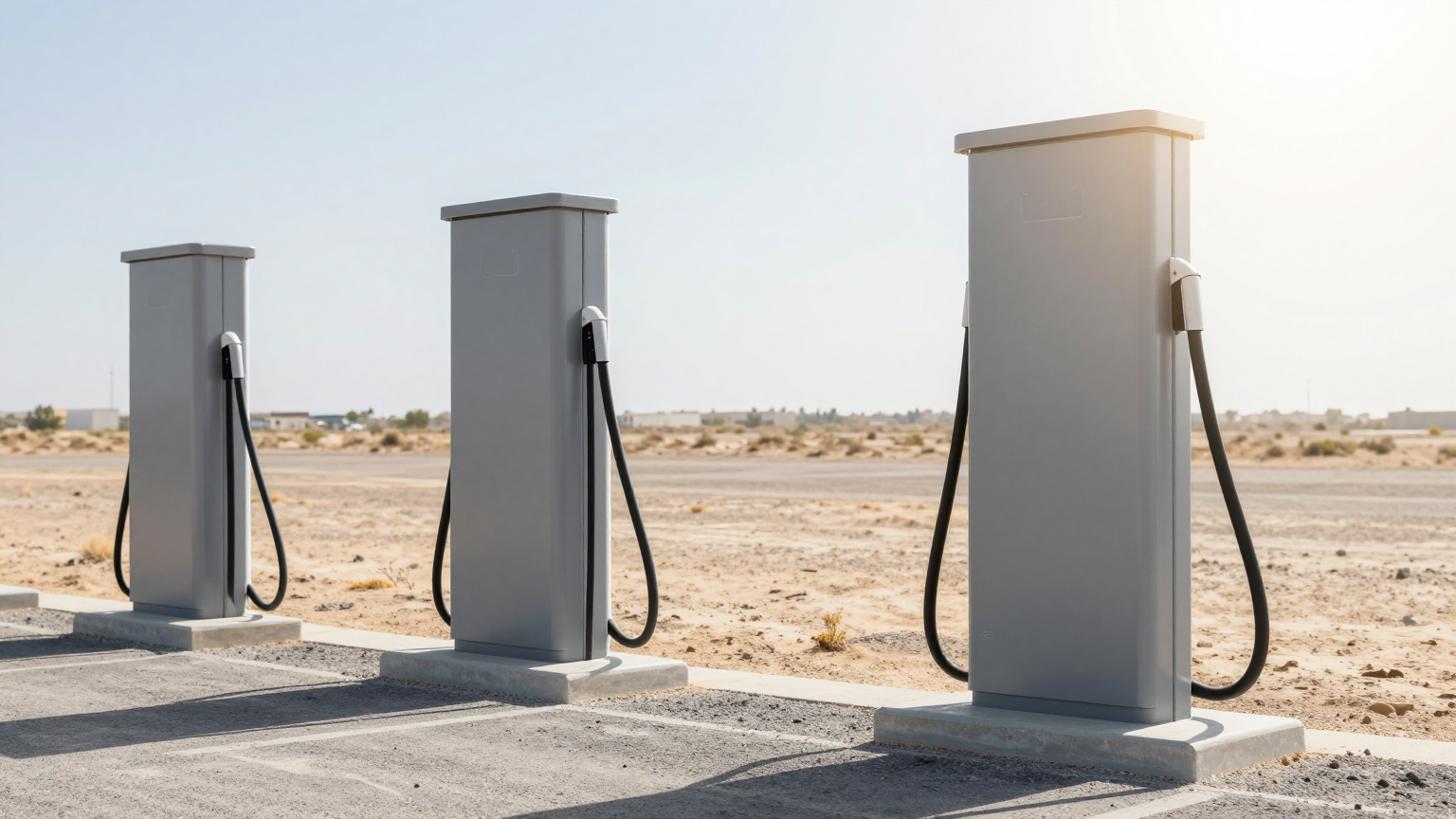
| Hot-dry (US Southwest, Middle East) | 45-50 C | High | Compressor cooling mandatory; size for worst-case with solar gain |
| Hot-humid (Southeast Asia, Gulf Coast US) | 38-42 C + high humidity | High + dehumidification | Sealed cooling critical to prevent condensation and corrosion |
| Cold (Scandinavia, Canada) | -20 to -40 C winter | Heating in winter, cooling in summer | Cooling module may include heating function for cold-start scenarios |
Integration Support
Charging pile thermal design depends on charger power level, enclosure geometry, deployment climate, and duty cycle profile. If your charging pile encounters thermal throttling in hot weather or if you are designing a new charger platform for outdoor deployment, the Rigid engineering team can evaluate the application. The Rigid Micro DC Aircon module is a compact, DC-powered, refrigerant-pre-charged cooling sub-system designed for sealed enclosure integration — providing active cooling, dehumidification, and IP-rating-compatible thermal management for EV charging infrastructure.
Thermal throttling is a design problem, not a weather problem. The charger that delivers its rated power on the hottest day of the year is the charger that was designed with active cooling from the start — not the one that had cooling added after the first summer of field complaints.