
What Kills an Excavator AC Kit Before the First Service Interval
Ask any fleet mechanic who services excavators in mining, demolition, or heavy civil work about cab air conditioning, and the conversation turns dark quickly. The compressor that cracked its mounting ear after four months. The condenser that plugged solid withite dust in six weeks. The refrigerant fitting that vibrated loose and dumped the entire charge overnight, leaving the operator in a glass oven at 7 AM on a 40 °C day.
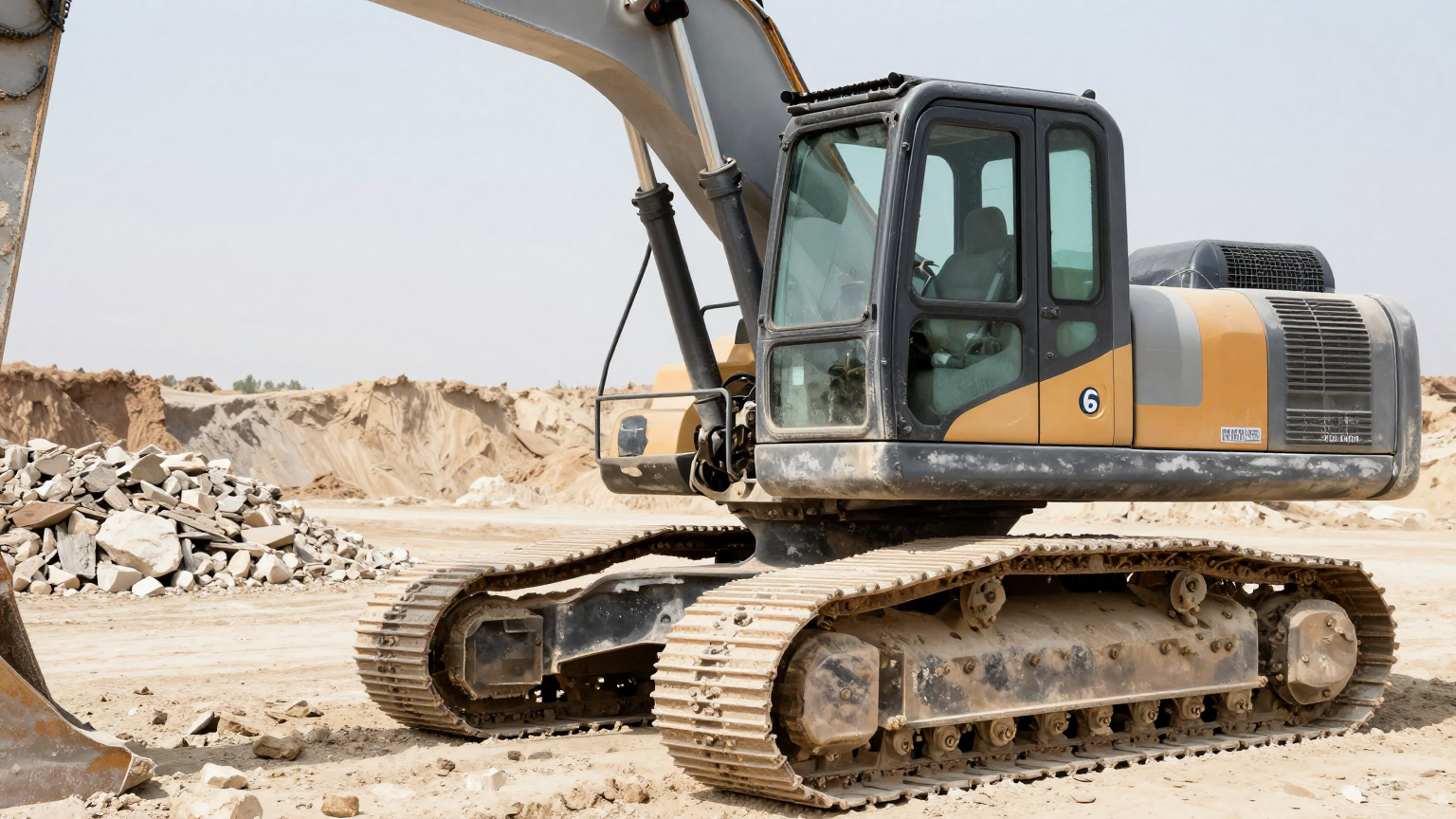
These are not edge cases. They are the predictable outcome of installing hardware designed for on-road trucks into a machine that generates sustained multi-axis vibration, operates in particulate loads that would choke a household filter in hours, and subjects every brazed joint to repeated shock from bucket strikes and boom cycling. The excavator cab is arguably the harshest enclosed workspace for HVAC equipment in any mobile application, and most aftermarket cooling systems are not engineered for it.
This guide is for fleet managers, equipment coordinators, and upfitters who have already lost money on at least one failed cab cooling attempt — or who want to avoid that lesson. We will walk through the specific failure modes, the environmental loads that cause them, and the decision framework for selecting an excavator ac kit that actually survives in the field.
The Three Forces That Destroy Cab Cooling Systems
Excavator AC failures do not happen randomly. They cluster around three environmental forces that act simultaneously and compound each other’s damage. Understanding these forces is the starting point for any durable specification.
Force 1: Multi-Axis Vibration
An excavator does not vibrate like a truck. A truck transmits vibration primarily through the vertical axis at frequencies that are relatively predictable. An excavator generates vibration in all three axes — vertical from track travel, lateral from swing operations, and longitudinal from boom and bucket cycling. The frequency spectrum includes both low-frequency whole-body vibration (2–20 Hz from track travel) and high-frequency transient shocks (impact from bucket strikes and hard stops during swing deceleration).
For an AC compressor, this means every internal component — pistons, reed valves, scroll elements, bearings, and oil passages — is subject to forces that standard automotive compressor validation does not test for. Belt-driven compressors face an additional challenge: the belt tension and alignment must accommodate the relative motion between the engine (often rubber-mounted) and the compressor bracket, which may be attached to the cab or frame structure. Misalignment under vibration leads to belt wear, bearing side-loading, and premature seal failure.
DC-driven compressors eliminate the belt entirely, removing one of the most common vibration-related failure paths in excavator AC installations. The compressor mounts directly to the frame or cab structure with vibration-isolating hardware, and the only connection to the power source is electrical — a wire, not a mechanical linkage.
Force 2: Airborne Particulates
Construction sites generate dust loads that would be considered hazardous in an indoor occupational setting. Demolition sites add concrete dust, silica particles, and fibrous debris. Mining operations contribute fine rock dust with abrasive mineral content.
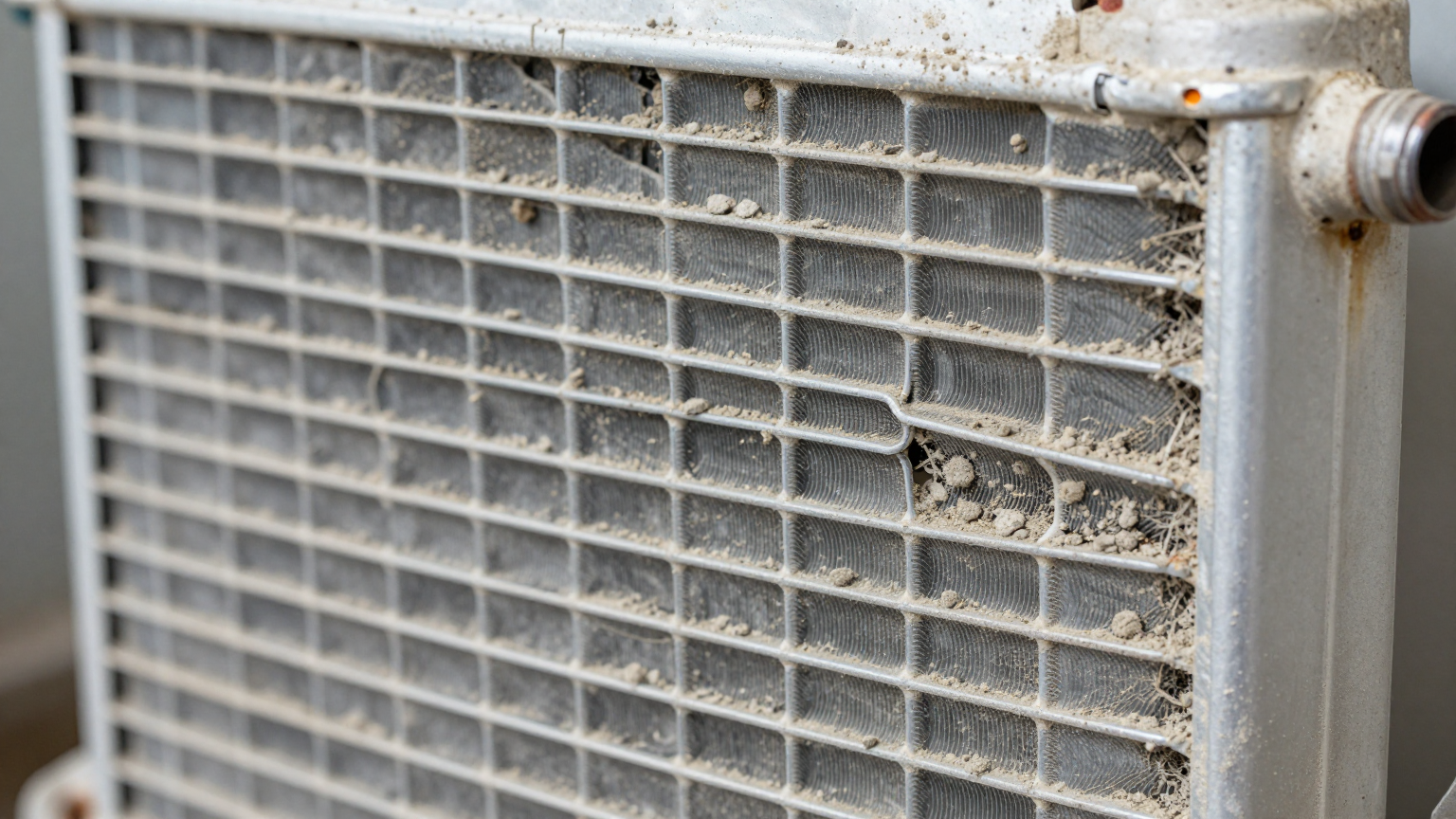
All of this material is drawn through the condenser coil by the condenser fan. Within weeks on an active site, the condenser fins — typically spaced at 1.5–2.0 mm — begin to clog. As the fins plug, airflow drops, head pressure rises, and the compressor works harder to maintain the same cooling output. Eventually the system either trips on high pressure, runs continuously without reaching setpoint, or the compressor overheats and fails.
The evaporator side faces a similar challenge if the cab is not adequately sealed or the cabin air filter is undersized. Dust that reaches the evaporator coil combines with condensate moisture to form a paste far more difficult to remove than dry dust on the condenser. This paste reduces heat transfer, restricts airflow, and creates a breeding environment for mold.
Force 3: Thermal Shock and Duty Cycling
Excavators are not air-conditioned 24/7. They start cold in the morning, heat soak during midday shutdown, and restart in the afternoon. Each thermal cycle stresses refrigerant fittings, expands and contracts sealing materials, and generates condensation inside the electrical enclosure. In climates with large diurnal temperature swings — desert sites where daytime exceeds 45 °C and nighttime drops below 15 °C — this cycling is particularly aggressive.
Additionally, the operator often toggles the AC on and off during the workday based on task intensity and cab door status. Short-cycling the compressor (rapid on-off-on sequences) increases wear on start valves, electrical contactors, and motor windings. A well-designed excavator AC kit includes compressor start delay logic or soft-start circuitry to mitigate this damage.
Why Generic Aftermarket Kits Fail the Excavator Test
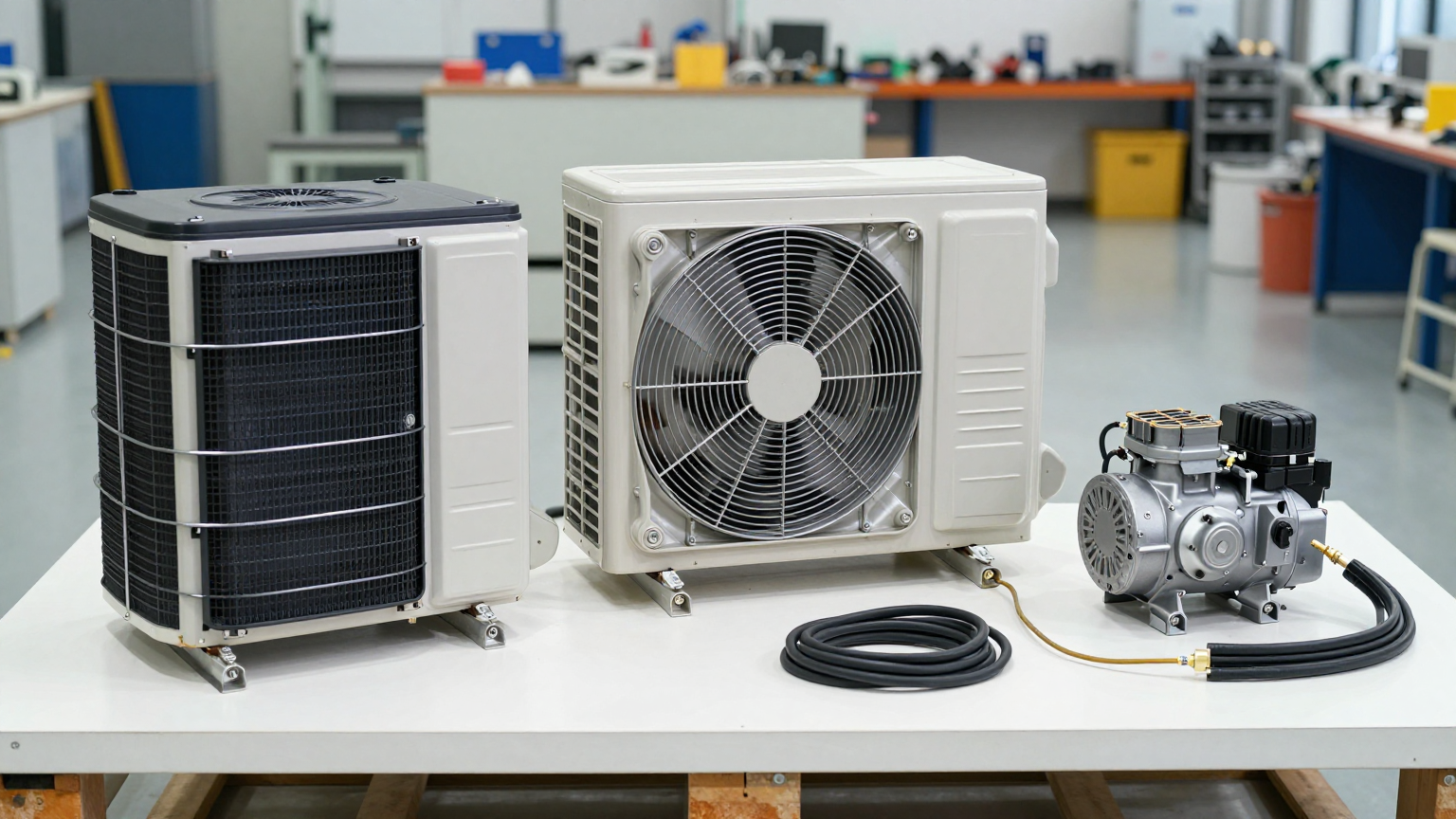
The online marketplace is flooded with universal split AC kits marketed for “trucks, RVs, excavators, tractors” as if these were equivalent applications. They are not. The fundamental problem is that most of these kits were designed for the truck sleeper cab market — a relatively benign environment with smooth road vibration, minimal dust, and a stable electrical system — and then had “excavator” added to the product listing as a search keyword.
Compressor Validation Gap
A truck sleeper AC compressor is typically validated against vibration profiles based on road-surface PSD (power spectral density) data from highway driving. Excavator vibration profiles include impact transients of 5–15 g that simply do not exist in the truck dataset. The compressor may function perfectly on a truck for years and fail on an excavator in months — not because the compressor is defective, but because it was never designed for that loading environment.
Condenser Design Assumptions
Truck condensers assume relatively clean ambient air at highway speeds. The fin spacing, coil depth, and fan sizing are optimized for that condition. On an excavator, the condenser sees near-zero ram air (the machine barely moves during operation), extremely high dust loading, and radiant heat from the engine compartment or exhaust system. A condenser designed for truck applications will clog faster, run hotter, and degrade more quickly in the excavator environment.
Electrical System Mismatch
Many generic kits are designed for 12V or fixed 24V input. Excavators — especially smaller models and electric excavators — may operate at 24V, 48V, or higher system voltages. Installing a 12V AC kit on a 24V machine requires a DC-DC converter, adding cost, weight, heat, and a failure point. Conversely, connecting a 24V-only kit to a machine with voltage fluctuations (common during heavy hydraulic demand) can stress the compressor’s motor controller and lead to premature electrical failure.
Specification Framework for Excavator Cab Cooling
Rather than recommending a specific product and calling it solved, it is more useful to establish the specification criteria that any viable excavator ac kit must meet. This framework applies whether you are evaluating an OEM option, an aftermarket kit, or a custom integration.
Criterion 1: Vibration Rating and Compressor Type
The compressor should be a rotary or scroll type — not a reciprocating piston design. Rotary compressors have fewer parts subject to impact-induced fatigue. DC-driven rotary compressors (such as the SANYO DC compressor used in purpose-built mobile AC systems) are well-suited because they eliminate belt drive entirely and allow variable-speed operation, reducing mechanical stress during startup and partial-load conditions.
Criterion 2: Condenser Serviceability
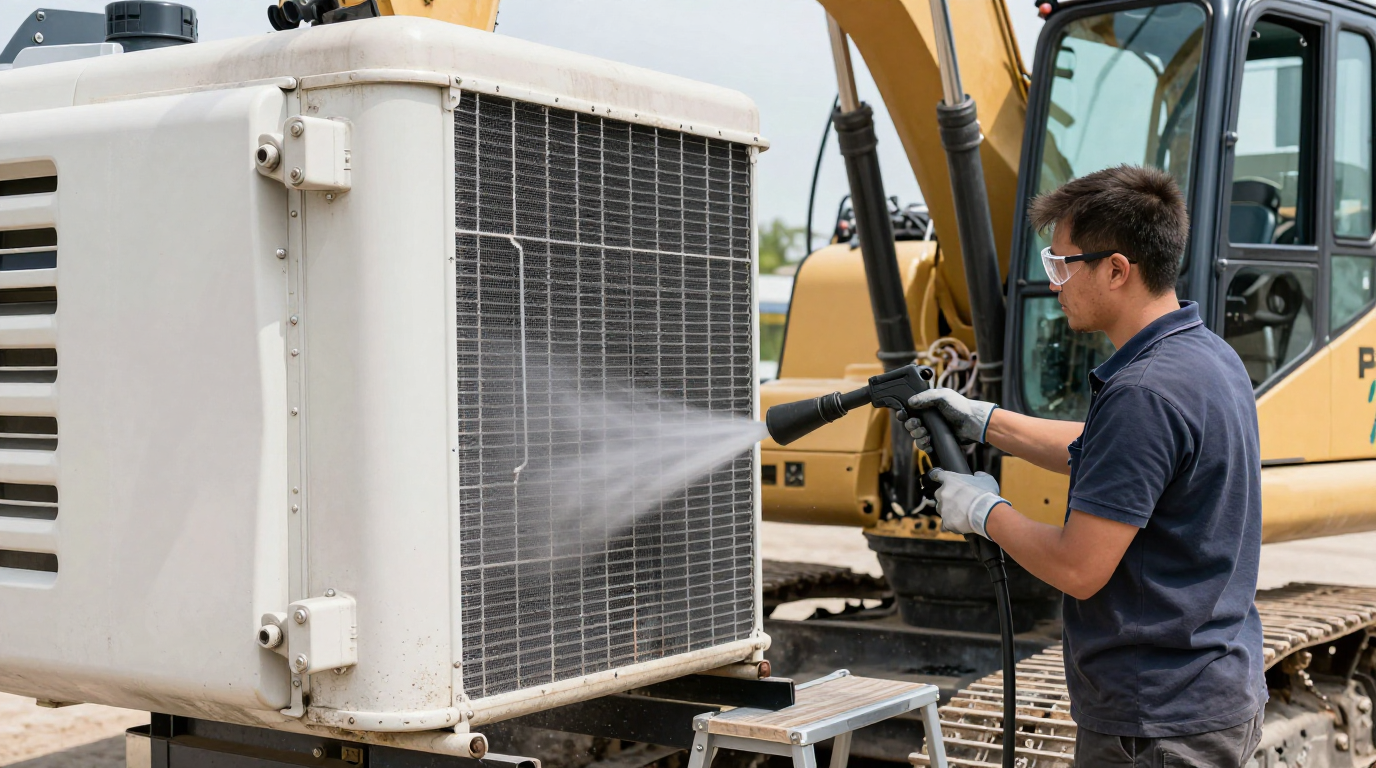
On an excavator, the condenser will need cleaning — frequently. The system design should allow the condenser coil to be accessed, removed, or washed without major disassembly. Ideally, the condenser mounts externally with quick-release brackets and has fin spacing wide enough to tolerate the site’s particulate profile without plugging between service intervals. Some operators adopt a weekly blowdown schedule using compressed air; the condenser location must be accessible for this routine.
Criterion 3: Sealed Electrical Connections
Every electrical connector in the system — compressor power, fan motor, control signals, temperature sensors — should be sealed or potted to prevent dust and moisture ingress. Standard automotive spade connectors will corrode or lose contact within weeks on a dusty site. Sealed or potted electrical connectors — Deutsch-style or equivalent — are the baseline expectation for excavator-grade installations.
Criterion 4: Cooling Capacity Matched to Cab Volume and Thermal Load
Excavator cabs range from roughly 1.5 m³ for mini excavators to 4+ m³ for large hydraulic excavators. The thermal load depends on glass area, insulation quality, engine proximity, and ambient temperature. For small-to-mid-size excavators (the most common candidates for aftermarket AC), a cooling capacity of 2,300 W (7,843 BTU) typically provides adequate margin in ambient temperatures up to 40–45 °C, assuming the cab is reasonably sealed. Under-sizing is the more common error — operators often install a unit rated for a truck sleeper (which has better insulation and less glass area) and find it cannot hold setpoint in an excavator cab under full solar load.
Criterion 5: Voltage Flexibility
A system that accepts a range of DC input voltages (24V, 48V, 60V, 72V) eliminates the need for voltage converters and simplifies deployment across mixed fleets where different excavator models run different electrical systems. This is particularly valuable for rental fleets and contractors who operate multiple brands and generations of equipment.
The Split-Type Advantage in Excavator Installations
Rooftop-mounted monoblock AC units — where the compressor, condenser, and evaporator are all housed in a single enclosure on the cab roof — are common in the aftermarket. They offer easy installation (cut a hole, drop the unit in, wire it up), and several competitors market them heavily for excavators. However, the monoblock approach carries specific drawbacks in the excavator context:
- Weight concentration on the cab roof, which raises the machine’s center of gravity and adds load to the cab mounting structure — a concern on excavators that work on slopes or uneven terrain.
- The compressor, condenser, and evaporator all share the same vibration path through the roof structure, with no isolation between heat-generating and heat-absorbing components.
- Condenser airflow is limited to what the unit’s built-in fans can pull through the rooftop housing, which is often insufficient in low-wind, high-dust conditions.
- Servicing requires climbing on top of the cab — not a trivial matter on a machine that may be 3+ meters tall.
A split-type system separates the evaporator (mounted inside the cab, typically at the headliner or a side panel) from the condenser and compressor (mounted externally on the machine frame, counterweight, or engine compartment area). This separation provides several advantages:
- The condenser can be positioned for optimal airflow and easy cleaning access — often at a lower, more accessible height than the cab roof.
- Weight is distributed across two mounting points rather than concentrated overhead.
- The evaporator unit inside the cab is compact — at dimensions like 440 × 140 × 320 mm, it fits within the cab ceiling or side panel zone without intruding on operator space.
- The compressor benefits from isolation mounting at the frame level, where vibration damping hardware can be optimized for the specific machine’s vibration signature.
The trade-off is that split-type installation requires routing refrigerant lines between the indoor and outdoor units, which adds installation time and introduces potential leak points at the connections. Pre-charged systems with factory-sealed refrigerant circuits (using R134a, for example) mitigate this by minimizing field connections and eliminating the need for evacuation and charging equipment on site.
Installation Realities on Excavators
Even with the right kit, excavator AC installation involves decisions that affect long-term reliability.
Refrigerant Line Routing
The lines must accommodate relative motion between the cab (which may be rubber-mounted to the upper frame) and the lower frame where the condenser sits. On machines with cab-mounted swing drives, this motion can be significant. Rigid copper lines will fatigue and crack. Flexible hose sections with proper bend radius and clamp spacing — leaving slack for full range of motion — are essential at every transition between structures.
Condenser Location Selection
The ideal condenser location provides: (a) ambient airflow not blocked by body panels, (b) distance from engine exhaust, (c) ground-level access for cleaning, and (d) protection from impact by debris. On many mid-size excavators, the area behind the cab and above the counterweight offers a reasonable compromise. On mini excavators, space is tighter, and the condenser may need a fabricated bracket extending from the rear.
Electrical Protection
The power feed should include an appropriately rated fuse or circuit breaker, a disconnect switch accessible to the operator, and wire gauge sufficient for full-load current at the lowest expected voltage. On machines with voltage sag during heavy hydraulic operations, the AC controller should include under-voltage protection to prevent compressor stalls.
Cab Sealing
No air conditioning system — regardless of capacity — will perform well in a cab that leaks like a sieve. Before installing any AC kit, inspect and repair cab door seals, window gaskets, and floor penetrations. Many excavator cabs develop seal degradation from UV exposure, vibration, and repeated door cycling. Replacing worn seals before AC installation is one of the highest-return preparatory steps and is frequently overlooked.
Maintenance Cadence for Excavator AC Systems
Even a well-specified and properly installed excavator ac kit requires a maintenance cadence that is more aggressive than what the same equipment would need in a truck or building application. The dust and vibration environment demands it.
| Task | Typical Interval (Active Site) | What to Check |
|---|---|---|
| Condenser coil blowdown | Weekly (dusty sites) / Biweekly (paved yards) | Fin blockage, bent fins, debris accumulation |
| Cabin air filter | Monthly or per manufacturer schedule | Dust loading, airflow restriction, physical damage |
| Refrigerant line inspection | Monthly | Fittings tight, no oil stains (leak indicators), hose condition |
| Electrical connections | Quarterly | Connector seals intact, no corrosion, wire chafe points |
| Drain line | Monthly | Clear flow, no kinks or blockages, proper routing |
| Compressor mount hardware | Quarterly | Bolts torqued, isolation mounts not cracked or compressed |
The single most impactful maintenance task is condenser cleaning. A condenser that is 30% blocked reduces system efficiency dramatically — the compressor runs longer, draws more power, generates more heat, and wears faster. On active demolition or mining sites, weekly cleaning is not excessive; it is the minimum to maintain rated performance.
Common Field Questions
Can I use a truck sleeper AC kit on my excavator?
Physically, the components may fit. Operationally, the vibration and dust environment will typically degrade a truck-rated system much faster. The compressor bearings, condenser coil, and electrical connections are the first failure points. If budget forces this choice, plan for more frequent maintenance and a shorter system lifespan.
How do I know if my excavator’s electrical system can handle the additional load?
Measure the system voltage under full hydraulic load (the worst-case voltage sag condition). If the voltage remains within the AC unit’s specified input range, the system can likely support the additional draw. For a unit drawing roughly 2,300 W at 24V, the current draw is approximately 96 amps at full load — significant, but within the capacity of most excavator electrical systems designed for 24V operation. On 48V systems, the current drops to roughly 48 amps, reducing wiring requirements and voltage drop concerns.
Is a rooftop monoblock unit or a split-type system better for excavators?
For ease of installation, monoblock wins. For long-term durability, serviceability, and weight distribution, split-type systems generally perform better in the excavator environment. The choice often depends on whether the fleet prioritizes installation speed (rental fleets turning machines quickly) or lifecycle reliability (owner-operators keeping machines for years).
How often will I really need to clean the condenser?
On an active earthmoving site with visible airborne dust, weekly condenser blowdown with compressed air is a reasonable starting point. On a paved industrial yard with minimal dust, biweekly or monthly may suffice. Watch the system’s head pressure or compressor run time as indicators — if the compressor runs continuously without reaching setpoint on a moderately warm day, the condenser is likely restricted.
Does the refrigerant need special handling for excavator vibration?
The refrigerant itself (R134a, for example) is not affected by vibration. The concern is the containment — fittings, brazed joints, and hose connections can loosen or fatigue under vibration. Pre-charged systems with factory-sealed connections reduce field leak risk. After installation, a leak check at each connection point is standard practice, and periodic visual inspection for oil stains (a telltale sign of slow refrigerant leaks) should be part of the maintenance routine.
What about electric excavators — do they have the same AC challenges?
Electric excavators eliminate engine-driven vibration but still generate hydraulic vibration from pump operation and track travel. They also produce waste heat from the drive controller and battery pack, though less than ICE machines. The primary advantage is that electric excavators already have a high-capacity DC electrical system, making DC air conditioning integration straightforward — no alternator loading concerns, and system voltage often aligns directly with DC AC input ranges.
Can the AC system be transferred between machines?
Split-type systems with pre-charged refrigerant circuits are generally transferable. The indoor and outdoor units can be unbolted, refrigerant lines disconnected at quick-connect or flare fittings, and the system remounted on a different machine. Some refrigerant loss during disconnection is typical, so a recharge may be needed. Custom bracketry will likely need refabrication for the new machine’s geometry.
Integration Support
Excavator fleets span a wide range of makes, sizes, cab configurations, and electrical systems. If your specific machine presents constraints not covered here — unusual cab geometry, a voltage outside the 24–72V range, or an extreme dust or temperature profile — the Rigid engineering team can evaluate your configuration and work toward an alignment path. The HS23P split-type DC air conditioner offers the voltage flexibility, compact split-type form factor, and pre-charged refrigerant circuit that address many of the excavator-specific challenges discussed in this guide.
The excavator cab does not have to be the site’s worst workspace. It requires an AC system that respects the machine’s operating reality — the vibration, the dust, the thermal cycling, and the electrical constraints. Spec it correctly, install it carefully, and maintain it on a schedule that matches the site conditions. The alternative — an operator who is too heat-stressed to notice the spotter’s signal — is a risk that no jobsite can afford.