
Firefighter Rehab Cooling Vest System: Why Repeatable Cooling Wins the 10-Minute Window
If you run a rehab station on the fireground, you already know the math. A firefighter comes off the line. You have somewhere between 10 and 15 minutes—sometimes less—to bring their core temperature down before they rotate back in or get transported. That window is non-negotiable. NFPA 1584 sets the framework. Physiology sets the clock.
The problem most departments hit isn’t the first rotation. It’s the third, the fourth, the fifth. Ice melts. Coolers run warm. Somebody forgot to restock the ice chest. By mid-incident, your rehab station is running on lukewarm water and good intentions. The cooling vest still works—but the cold source behind it doesn’t.
That’s the gap a firefighter rehab cooling vest system needs to close: not just cooling, but repeatable cooling. Rotation after rotation, hour after hour, without degradation.
The Rehab Problem Nobody Puts in the Budget Presentation
Fire departments spend serious money on turnout gear, SCBA, apparatus. Rehab equipment often gets the leftovers. A couple of coolers, bags of ice from the nearest gas station, maybe some misting fans. It works—until it doesn’t.
Here’s what breaks down at extended operations:
- Ice supply is finite. A typical rehab setup burns through ice faster than anyone plans for. On a summer structure fire, you can go through 100+ pounds of ice in the first hour. Resupply depends on someone making a run, which pulls resources off the scene.
- Cooling output drops over time. Ice-based systems start cold and get warmer. By the time your fourth or fifth crew member needs cooling, the water circulating through the vest is barely below ambient. You’re circulating tepid water through a vest and calling it rehab.
- Setup and teardown eat into the window. Filling reservoirs, draining melt water, managing ice logistics—all of that eats time that should be spent on actual patient cooling.
- Consistency is impossible to guarantee. The first firefighter gets 40°F water. The sixth gets 55°F. That’s not a system—that’s a lottery.
For a department procurement officer or EMS supervisor writing a spec, the question isn’t “does ice cool people?” Obviously it does. The question is: can you guarantee the same cooling output on rotation number eight as rotation number one?
With ice, the honest answer is no.
What “Repeatable” Actually Means in a Rehab Context
Let’s define the term, because it matters for procurement decisions.
A repeatable cooling system delivers the same thermal output—same water temperature, same flow characteristics, same cooling rate—regardless of:
- How many personnel have cycled through it
- How long the incident has been running
- Ambient temperature conditions
- Whether anyone remembered to buy ice
That last point sounds trivial until you’re three hours into a warehouse fire in August and the rehab officer is radioing for an ice run.
Repeatability is a mechanical property. Either the system can maintain its output indefinitely, or it can’t. Ice-based systems can’t—they’re thermodynamically destined to reach equilibrium with their environment. Compressor-based systems can, because they actively pump heat out of the coolant loop. As long as the system has power, the output stays consistent.
How Compressor-Based Cooling Vest Systems Work in Rehab
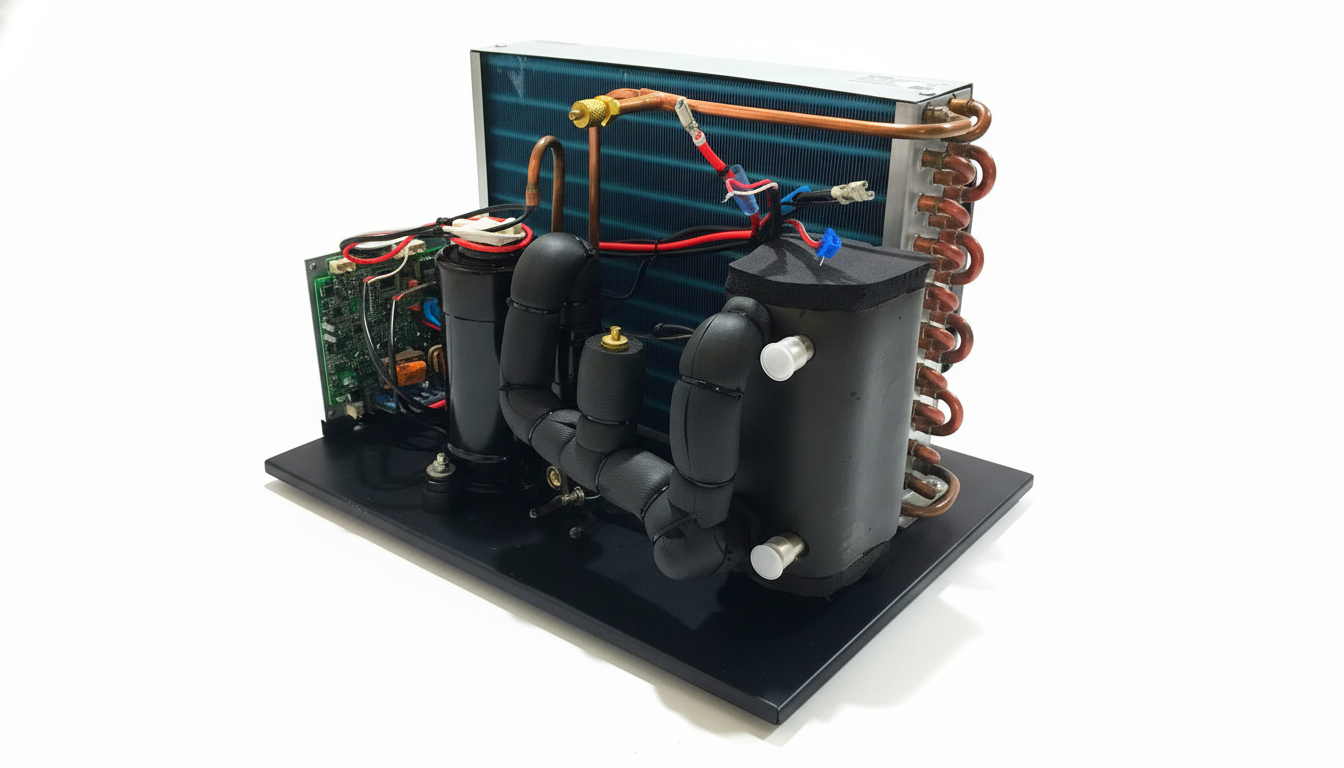
The concept is straightforward. A small refrigeration unit chills water (or a water-glycol mix) and circulates it through a vest worn by the firefighter during their rehab period. The vest makes contact with the torso—the body’s largest surface area with the thinnest tissue between skin and core—and pulls heat out through conduction.
The key difference from ice-based setups: the refrigeration cycle is continuous. The compressor runs, the coolant stays cold, and the output doesn’t degrade. When one firefighter finishes their rehab rotation and the next one sits down, the system is already at operating temperature. No reset. No refill. No waiting.
 For rehab operations, this translates to a simple workflow:
- Firefighter enters rehab, doffs turnout coat
- Vest goes on (or is already integrated under gear for some departments)
- Connect to the cooling unit—plug and play
- 10-15 minutes of consistent, active cooling
- Disconnect, pass the vest to the next person (or swap vests if running multiples)
- Unit is immediately ready for the next rotation
No ice runs. No melt water management. No performance curve that slopes downward through the incident.
The RIGID Micro Cooler: Specs That Matter for Fire Service Procurement
The RIGID Micro Cooler is a portable, ice-free cooling unit built around a miniature vapor-compression refrigeration cycle. Here’s what the spec sheet says, and why each number matters for rehab applications:
Cooling Temperature: Below 35°F
The system can cool water to temperatures lower than 35°F. In practice, most rehab applications won’t run the water that cold—direct skin contact with sub-40°F water can cause vasoconstriction, which actually impedes heat transfer. Many departments (based on field experience) find that running coolant in the 50-60°F range provides the best balance of comfort and cooling rate. The point is that the system has headroom. Even on a 110°F day, it can maintain effective cooling temperatures without strain.
Field note: The optimal vest water temperature for rehab cooling is a function of contact time, skin condition, and individual tolerance. Having a system that can go colder than you need is better than one that can barely reach your target. Departments should establish their own SOPs for temperature settings based on their medical director’s guidance.
Weight: Under 7 kg (15 lbs)
The entire unit weighs less than 15 pounds. That matters because rehab equipment needs to be deployable—someone has to carry it from the apparatus to the rehab sector. A 15-pound unit can be carried one-handed. It fits on a folding table, on the tailboard of a rescue, or on the floor of a rehab tent. No hand truck required.
For departments that stage rehab equipment on specific apparatus (the rehab unit, a squad, or even an engine company), the compact footprint means it doesn’t compete for compartment space with other critical equipment.
No Ice, No Consumables
The refrigeration cycle uses Freon sealed within a rotary micro-compressor system. There’s nothing to refill, replace, or replenish during an incident. The compressor is maintenance-free in normal operation. This eliminates the single biggest logistical failure point in rehab cooling: ice supply chain.
For budget planning, it also eliminates the ongoing consumable cost. Departments that currently budget for ice purchases at every working fire can redirect those funds. Over a fiscal year, those gas-station ice runs add up more than most chiefs realize.
Power Draw: 18-22 Amps Maximum
The system’s maximum amp draw is rated at 18-22 amps, depending on installation and environmental conditions. This means it can run off a standard vehicle power system or a portable generator—both of which are already present at any working fire. No specialty power supply needed.
Field note (experience-based): When planning power, account for the draw alongside other rehab equipment (lighting, fans, medical devices). Most departments find that a dedicated circuit on the rehab unit’s generator or inverter handles the load without issues. Verify your specific setup before deployment.
Remote Control Operation
The unit includes a remote control for temperature adjustment. In a rehab setting, this means the rehab officer or medic can adjust cooling output without leaving the patient assessment area. Small detail, practical impact—especially when you’re monitoring vitals on one firefighter while another is mid-cooling cycle.
Operational Scenarios: Where This System Fits and Where It Doesn’t
No tool solves everything. Understanding the application boundaries helps procurement officers write better specs and set realistic expectations.
Where It Excels
- Structure fires with multiple rotations. The classic use case. Multiple crews cycling through rehab over 2-4+ hours. The system’s repeatability shines here—same output on hour three as hour one.
- Wildland-urban interface (WUI) incidents. Extended operations in extreme heat where ice resupply is difficult or impossible. If you have generator power or vehicle power, you have cooling.
- Planned events with known high-exertion profiles. Large-scale training exercises, HAZMAT operations, or mutual aid events where you know in advance that rehab demand will be sustained.
- Departments in hot climates. If your response area sees 90°F+ days regularly, the ice logistics problem is amplified. A compressor-based system is less affected by ambient temperature than an ice-based one (though ambient temperature does affect efficiency—see limitations below).
- EMS standby at industrial sites. Some departments provide contract EMS at refineries, plants, or construction sites. A portable, self-contained cooling system simplifies the logistics of those deployments.
Application Boundaries
- No power, no cooling. The system requires 12V/24V DC power. In scenarios where you’re operating far from vehicles or generators—deep wildland, for example—this is a constraint. Ice doesn’t need electricity. Plan your power source as part of your rehab deployment SOP.
- Single-user active cooling. Each unit cools one vest at a time. If you need simultaneous cooling for four firefighters, you need four units (or a rotation schedule). For large-scale incidents with high throughput, departments may need to calculate how many units their typical rehab demand requires.
- Ambient temperature affects efficiency. Like any refrigeration system, the Micro Cooler has to reject heat to the surrounding air. In extremely high ambient temperatures (115°F+), the system works harder and the achievable coolant temperature may be higher than in moderate conditions. It still outperforms ice in those conditions—ice melts faster in extreme heat too—but it’s worth noting.
- Not a medical device. The Micro Cooler is a cooling system, not a regulated medical device. It does not replace clinical hypothermia treatment protocols. For suspected heat stroke cases, follow your department’s medical protocols and transport decisions. The cooling vest system is a prevention and mitigation tool for the rehab sector, not a treatment device for the treatment sector.
Building a Rehab Cooling SOP Around the System
Procurement is only half the job. The other half is integration—making the system part of your rehab workflow so it actually gets used. Here’s a framework based on how departments typically deploy cooling vest systems:
Pre-Deployment
- Assign the cooling unit to a specific apparatus (rehab unit, rescue, or designated engine)
- Store it with the vest(s), power cable, and remote control in a single deployment bag or case
- Include it in apparatus check-off procedures—power it up monthly to verify function
- Train all rehab-qualified personnel on setup, operation, and cleaning
On-Scene Deployment
- Rehab officer sets up the cooling station alongside vitals monitoring equipment
- Connect to power source (vehicle auxiliary, generator, or inverter)
- Power on and allow system to reach operating temperature (experience-based: typically a few minutes to reach target coolant temperature)
- Establish a vest rotation: if running one unit, plan for sequential cooling with a brief transition between personnel
During Operations
- Firefighter enters rehab → doff coat → don vest → connect to unit
- Rehab officer monitors vitals per NFPA 1584 / local protocol
- Cooling runs for the duration of the rehab period (typically 10-20 minutes per local SOP)
- At end of rotation: disconnect, swap vest to next person, unit continues without interruption
- Adjust temperature via remote control based on conditions and medical director guidance
Post-Incident
- Power down unit
- Clean vests per manufacturer and infection control guidelines
- Repack all components
- Document usage for maintenance tracking and after-action review
Cost Justification for Department Leadership
For the procurement officer building a budget case, here are the angles that typically resonate with department leadership and municipal budget committees:
Reduced consumable costs. No more ice purchases at every working fire. Over a busy season, departments in warm climates can spend hundreds to thousands on ice alone. That’s money that buys nothing durable.
Reduced logistical burden. Every ice run pulls a vehicle and at least one person off the incident. That’s a resource cost that doesn’t show up in the budget but shows up in operational efficiency.
Consistent thermal dose. From a risk management perspective, a system that delivers consistent cooling is easier to defend than one that varies by incident. If a heat injury occurs, documentation showing the rehab station was providing measurable, consistent cooling output is stronger than “we had ice but it might have melted.”
Multi-use capability. The same unit used for fireground rehab can support HAZMAT operations, training events, community standby events, and mutual aid deployments. One purchase serves multiple operational needs.
Durability and maintenance. A sealed compressor system with no consumable parts has a fundamentally different maintenance profile than coolers, pumps, and ice logistics. Factor in the total cost of ownership, not just the purchase price.
Common Questions from Procurement Teams
“How many units do we need?”
Depends on your typical rehab throughput. A single unit handles sequential cooling—one firefighter at a time, back to back. For departments that regularly run 2-alarm+ incidents with 4-6 crews rotating through rehab simultaneously, multiple units may be warranted. Start with one, track usage, and scale based on data. (Experience-based: many career departments find that one or two units cover the majority of their incidents.)
“What vests are compatible?”
The Micro Cooler connects to standard cooling vests that use water circulation. Compatibility depends on fitting diameters and flow requirements. Contact the manufacturer for specific vest pairing recommendations for your deployment.
“Can it run off our apparatus electrical system?”
With a maximum draw of 18-22 amps, it’s within the range of most apparatus auxiliary power systems and portable generators. Verify your specific vehicle’s available auxiliary output and circuit protection before deployment.
“What about infection control between users?”
The vest is the contact surface, not the cooler itself. Departments typically maintain multiple vests and rotate them through cleaning between uses, similar to how you’d manage any shared patient-contact equipment. Establish your cleaning protocol with your infection control officer.
Integration Support: Getting Started
Deploying a new rehab cooling system isn’t just a purchasing decision—it’s an operational integration. The RIGID team supports departments through the process, from initial spec review to deployment configuration. Whether you’re writing a grant application, building a bid spec, or piloting the system at a training event, technical support is available to help match the system to your specific operational requirements.
If your department is evaluating a firefighter rehab cooling vest system that can deliver consistent, repeatable cooling without the ice logistics chain, the conversation starts with understanding your operational tempo, your typical incident profile, and your existing rehab infrastructure. From there, the right configuration—number of units, vest selection, power integration—follows naturally.
The 10-minute rehab window doesn’t get longer. The question is whether your cooling system performs the same in that window on the fifth rotation as it did on the first. That’s the standard. Build your rehab station around it.