
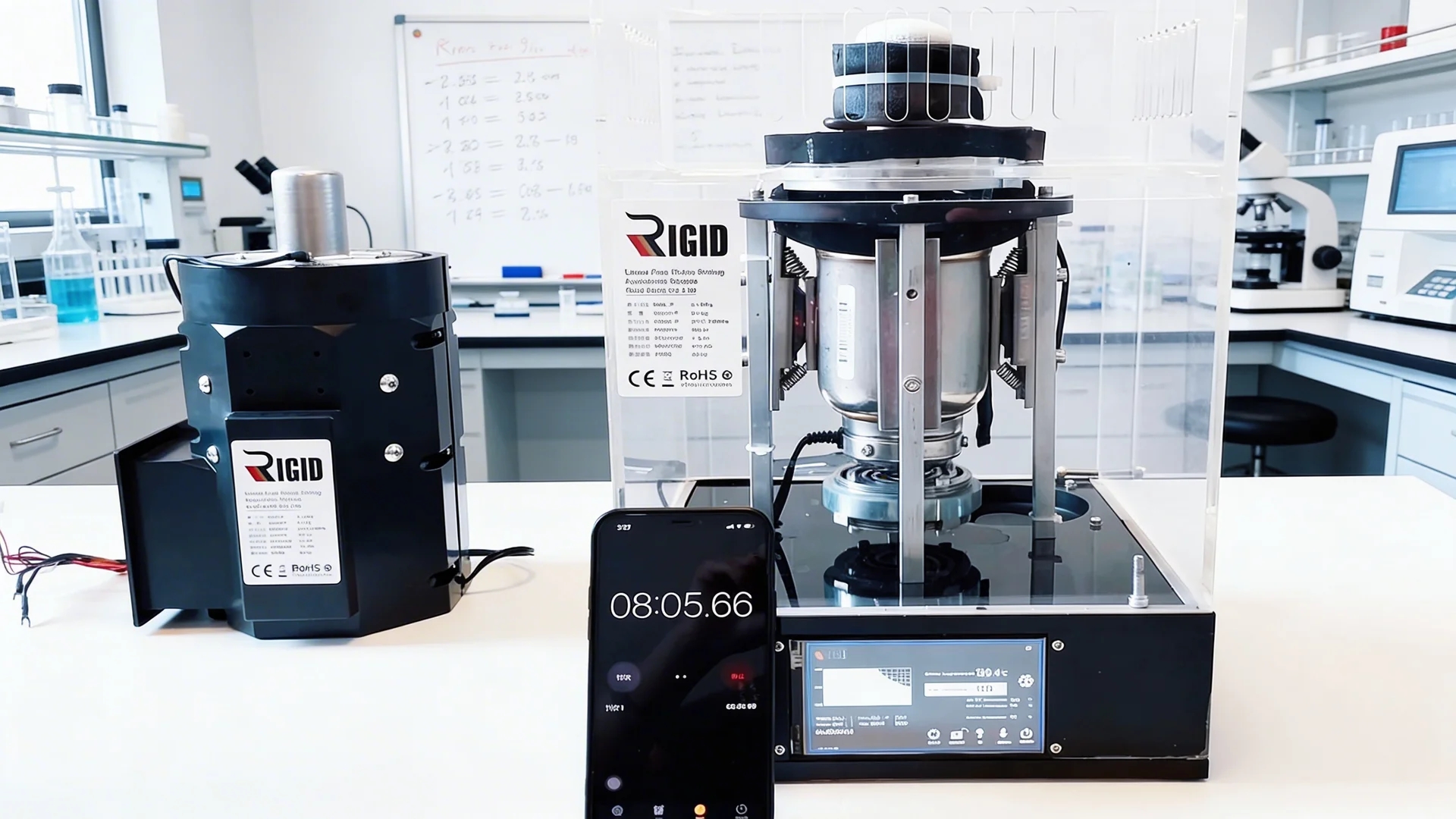
FPSC Stirling Cooler: Stabilizing Infrared Sensor Cryocooling (2026)
When high-precision infrared sensors experience persistent zero-point drift, engineers often suspect a failure of the sensor element itself. In many field deployments, however, the root cause is thermal instability at the cold end. Infrared sensor performance relies on a stable, cryogenic temperature point; even minor oscillations in the thermal background can induce significant signal noise. This guide explores how FPSC Stirling Coolers provide the thermal inertia required to maintain these critical sensor arrays in demanding environments.
For OEM engineers integrating high-resolution IR thermal imaging or spectral analysis systems, the thermal management strategy dictates the sensor’s sensitivity. As ambient temperatures shift, the sensor’s baseline signal drifts, rendering real-time data unreliable. Maintaining a rock-solid temperature point is not just a performance upgrade—it is a mandatory integration requirement for reliable IR sensing.
The Physics of Thermal Drift in IR Sensors
Infrared detectors, particularly cooled photon detectors like Mercury Cadmium Telluride (MCT) or Indium Antimonide (InSb), are fundamentally sensitive to their local thermal environment. The signal-to-noise ratio (SNR) is optimized only when the detector material is cooled to cryogenic temperatures, typically between 77K and 120K.
- Thermal Background Noise: IR sensors detect electromagnetic radiation. If the cold shield or the housing surrounding the sensor fluctuates in temperature, the sensor captures this internal thermal noise as part of the data stream, causing the baseline signal to shift.
- Zero-Point Drift: When the cold-tip temperature drifts even by a few millikelvin, the detector’s dark current changes, leading to an offset in the sensor’s output. In high-stakes applications like remote gas sensing or medical thermography, this offset is interpreted as an incorrect reading, leading to system recalibration requirements or total failure.
- Thermal Inertia: Effective cryocooling requires more than just achieving a low temperature; it requires thermal inertia. The cooling system must dampen the heat transfer from external ambient fluctuations, ensuring the sensor element remains locked at its operational setpoint.
Why Traditional Peltier Cooling Often Fails in Critical IR Arrays
In many compact applications, Peltier (thermoelectric) coolers are the first choice due to their solid-state simplicity. However, they face significant constraints when deployed in high-load or high-ambient infrared cooling environments.
Thermoelectric Limitations:
- Coefficient of Performance (COP) Drop: Peltier devices operate on the Peltier effect, which is inherently inefficient compared to vapor compression or Stirling cycles. As the required temperature difference (ΔT) increases, the COP plummets, and the device generates more heat than it removes.
- Thermal Leakage: Because Peltier modules are solid-state heat exchangers, they exhibit high thermal conductivity. When the power is reduced or the ambient temperature exceeds the heat rejection capability, heat can leak backward through the device, rapidly degrading the cold-tip temperature stability.
- Stability Degradation: Peltier modules are highly sensitive to ripple current. Any instability in the power supply translates directly to oscillations at the cold end. In precision IR sensor applications, this electrical noise is often indistinguishable from the signal noise we are trying to mitigate.
FPSC Stirling Coolers: Delivering Precise Thermal Inertia
Free-Piston Stirling Coolers (FPSC) represent a paradigm shift for cooling sensitive infrared sensors. Unlike Peltier modules, FPSCs utilize a closed-cycle helium gas expansion process to achieve ultra-low temperatures with high efficiency.
Why FPSC Stirling Coolers are the OEM Choice:
- High Efficiency (High COP): FPSCs provide significantly higher thermal efficiency at cryogenic temperatures compared to thermoelectric devices. They maintain a stable cold point even when the external environment is subject to high-temperature gradients.
- Active Vibration Control: Early Stirling designs were plagued by mechanical vibration. Modern FPSC units, however, incorporate active counter-balancing to neutralize the internal piston movement. This is critical for infrared sensors, where mechanical jitter can cause image blurring or sensor signal distortion.
- Long-Term Reliability: With a maintenance-free, free-piston design that uses gas bearings, FPSC units are engineered for continuous 24/7 operation. This reliability makes them ideal for remote infrastructure, medical diagnostic stations, and permanent laboratory installations.
OEM Integration: Thermal and Electrical Constraints
Integrating an FPSC into a compact IR sensor assembly requires careful consideration of the mechanical and electrical environment.
- Vacuum Integrity: The cold finger of an FPSC must operate within a vacuum to prevent condensation and heat transfer from the air. OEM engineers must ensure that the vacuum seal of the sensor housing is robust and does not outgas over time, which would degrade the sensor’s vacuum-sealed environment.
- Thermal Interface Material (TIM): The path from the FPSC cold finger to the sensor must use a high-performance, cryogenically stable TIM. Standard greases may harden or crack at cryogenic temperatures, leading to an increase in thermal resistance over time.
- Electromagnetic Compatibility (EMC): The controller for an FPSC generates high-frequency switching noise. It is common practice to mount the drive electronics away from the sensitive sensor pre-amplifier and ensure adequate shielding on the power and control lines.
Frequently Asked Questions (Integration Insights)
- Q: How do FPSC Stirling Coolers handle power spikes?
A: FPSC controllers are designed with high-bandwidth control loops to adjust input power dynamically. This prevents thermal undershoot and maintains stability even during sensor initialization or data processing bursts. - Q: Are there limits to the ambient temperature for FPSC cooling?
A: FPSC efficiency is tied to the heat rejection temperature (the warm end). While they are robust, ensuring adequate airflow or liquid cooling for the warm-side heat exchanger is essential to maintain performance. - Q: How does FPSC impact sensor signal noise compared to liquid cooling?
A: FPSC systems are often preferred for IR sensors because they avoid the potential noise, vibration, and maintenance risks associated with pump-driven liquid loops in close proximity to the sensor.
Conclusion & Integration Guide
Stabilizing an infrared sensor is an engineering exercise in managing thermal energy flow. For applications where zero-point drift is a failure mode, the FPSC Stirling Cooler provides a level of thermal stability and cryogenic efficiency that solid-state alternatives cannot match. By addressing thermal resistance at the interface and isolating the sensor from ambient thermal fluctuations, FPSCs enable the true performance potential of high-resolution IR arrays.
For more detailed technical data on cryogenic stability for your next sensor integration, explore our FPSC Stirling Cooler solutions designed for OEM deployment.