
Galvanic Corrosion in Chiller Loops Is a Whole-Circuit Question
Galvanic corrosion in chiller loops cannot be assessed by checking the chiller exchanger alone. The assessment must identify dissimilar wetted metals, their electrical connection and the liquid path that acts as an electrolyte. Fittings, instrument passages and an external pump can change the combination. A compatible chiller does not establish compatibility of the assembled loop. Build a complete material and connection record before approving the fluid and hardware together.
This is an OEM integration question rather than a universal coolant recipe. Two assemblies described as “copper and stainless steel” may have different joints, coatings, exposed areas and service conditions. The purpose of the review is to make those differences visible to the responsible component and fluid suppliers, then obtain a documented decision for the actual circuit.
Confirm Both the Liquid Path and the Electrical Path
A galvanic mechanism needs an ionic path through an electrolyte and an electronic connection between the relevant metals. The electronic path may involve direct contact or other conductive hardware. Simply placing two components somewhere in the same circulating fluid does not completely describe that path. Conversely, separated components may still be electrically connected through a conductive mounting arrangement.
Start with a circuit drawing and a mounting drawing. Mark confirmed metallic connections, insulating elements and unknown interfaces. Include any conductive bypass around an apparently insulating connection. Do not assume that changing one hose establishes isolation throughout a mounted instrument.
Electrical safety bonding has a separate purpose. A corrosion concern does not authorize removing a protective earth connection or altering the equipment’s bonding scheme. Have the responsible engineering team evaluate an isolation proposal together with its safety and functional consequences. The procurement task is to request that review, not prescribe a grounding modification.
List Every Wetted Metal, Including Small Parts
Create a bill of wetted materials that extends from the cooling exchanger to the final load and back. Include pump internals, fittings, quick disconnects, reservoir inserts, valve parts and sensor pockets. A small exposed insert may be more relevant than a large external panel that never touches coolant. Separate wetted construction from the appearance of the surrounding enclosure.
Ask for alloys and exposed joint materials where they affect compatibility. “Stainless construction” may describe a housing while a seal carrier, brazed joint or internal connection uses another material. Likewise, the word “plate” or “coaxial” identifies an exchanger arrangement, not a complete wetted alloy specification.
Unknown material is a review item, not a harmless blank. Assign it to the supplier who can resolve it. If a complete internal drawing is proprietary, a written compatibility statement for a specified fluid and operating envelope may help close the procurement question without disclosing the design.
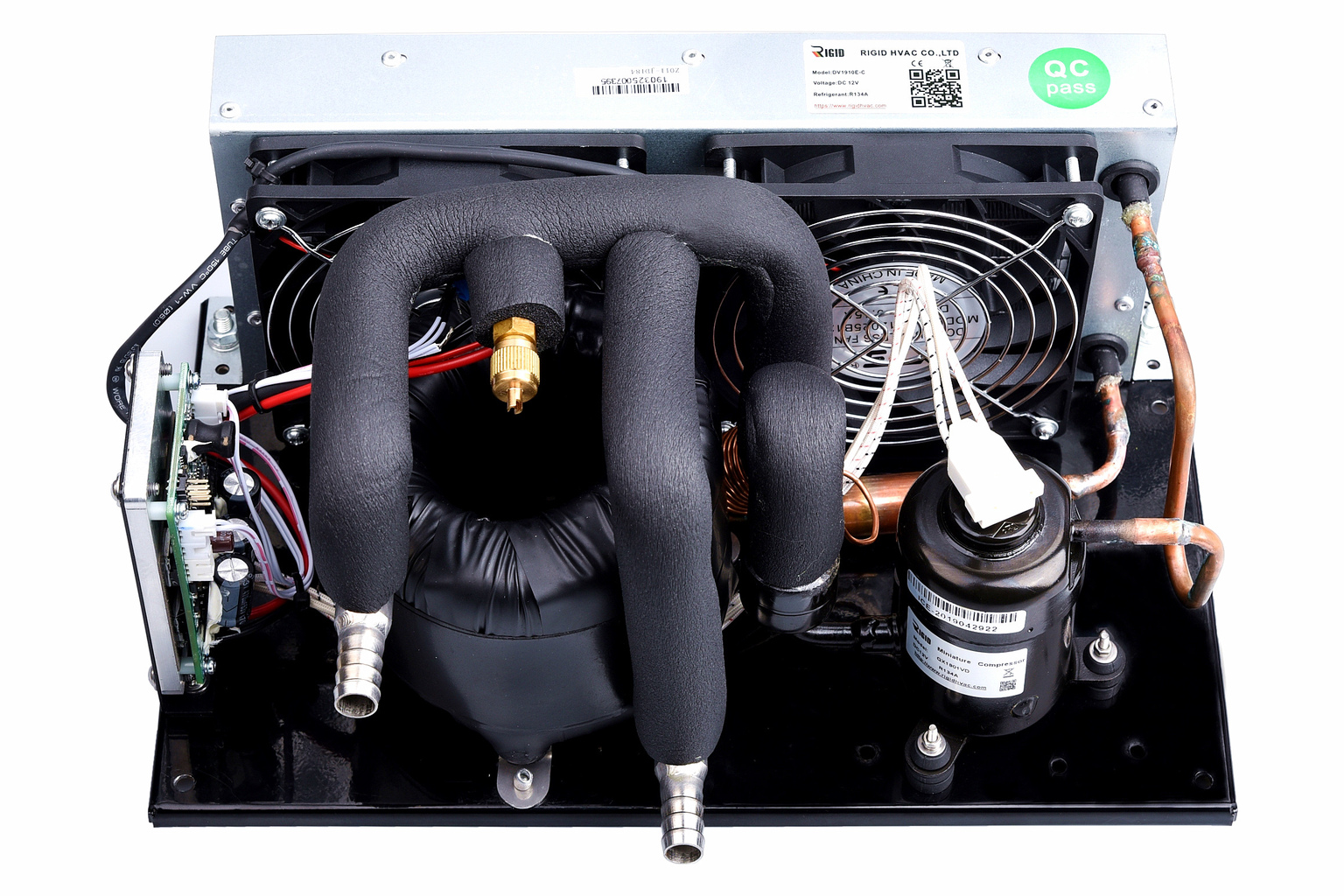
Use a Material and Connection Review Table
The following record keeps galvanic corrosion in chiller loops tied to the actual assembly. It is a proposed engineering handoff format, not a RIGID test certificate or an approved material combination.
| Loop item | Information to confirm | Responsible reviewer |
|---|---|---|
| Cooling exchanger | Wetted alloy, exposed joints and approved fluid envelope | Chiller supplier |
| Instrument or cold plate | Internal metals, coatings and material restrictions | Equipment manufacturer |
| Pump and reservoir | Wetted internals, inserts, seals and permitted coolant | Component supplier |
| Fittings and valves | Alloy, plating, exposed substrate and electrical connections | Loop integrator |
| Coolant formulation | Approved material combinations and monitoring requirements | Fluid supplier with equipment suppliers |
| Installed mounting | Electronic connection paths and any proposed isolation | System engineering team |
Link each answer to a part number or drawing revision. An approval for a prototype fitting does not automatically cover a later substituted fitting with a similar catalog description. This becomes especially important when the loop is reproduced across several production units.
Do Not Treat a Galvanic Series as a Life Prediction
A galvanic series can help identify combinations worth investigating, but it represents materials in stated environmental conditions. It does not, by itself, predict the corrosion rate of an inhibited coolant loop. Actual alloy state, surface condition and the fluid environment remain relevant. Ask whether the reference being used applies to the proposed service rather than borrowing an unrelated chart as an acceptance limit.
Exposed area also matters to the review. A small anodic area coupled to a much larger cathodic area can create a different local concern from the reverse arrangement. A parts list that counts components without considering exposed surfaces may therefore miss a vulnerable joint or damaged coating.
Keep this analysis at the appropriate level. The buyer need not calculate an unsupported service life from a chart. The useful deliverable is a list of identified combinations, unresolved interfaces and the evidence the suppliers require to accept them.
Evaluate the Actual Coolant Formulation
Fluid selection and hardware selection must be reviewed together. Specify the exact coolant product, intended final concentration and temperature envelope. An inhibitor package suitable for one material combination may not be approved for another. The word “glycol” does not identify the additives or establish whether all seals and surfaces are compatible.
Deionized water is not a permanent guarantee against galvanic corrosion in chiller loops. Water can acquire ions from the circuit and contamination during service. Initial low conductivity does not establish its later condition, and conductivity alone does not identify the complete corrosion risk. Use the fluid and equipment suppliers’ defined acceptance and monitoring approach.
Do not add an inhibitor by generic name or guessed dosage. An unapproved additive changes the formulation and may affect seals, heat transfer or service requirements. Ask for a jointly acceptable fluid specification and identify who owns maintaining it. Record how top-ups, sampling and replacement are controlled rather than prescribing one universal interval.
Keep Galvanic Attack Separate From Other Damage
A leak or discolored deposit does not identify its own mechanism. Erosion-corrosion involves flow-related material loss and may require a different investigation. Pitting, crevice conditions, chemical incompatibility and mechanical joint damage also deserve consideration where the evidence points to them. Several mechanisms can affect the same assembly.
Document the location and appearance before cleaning or disassembly under the approved service process. Identify which material is affected, the nearby joint and the operating history. Retain samples or removed parts when the responsible supplier requests them. A photograph can support the investigation but cannot establish a complete electrochemical explanation.
For galvanic corrosion in chiller loops, ask the reviewer to explain how the proposed cause fits both the material combination and the electrical path. This prevents a familiar phrase from becoming a default explanation for every liquid-side failure.
Place the RIGID Coaxial Module at Its Actual Boundary
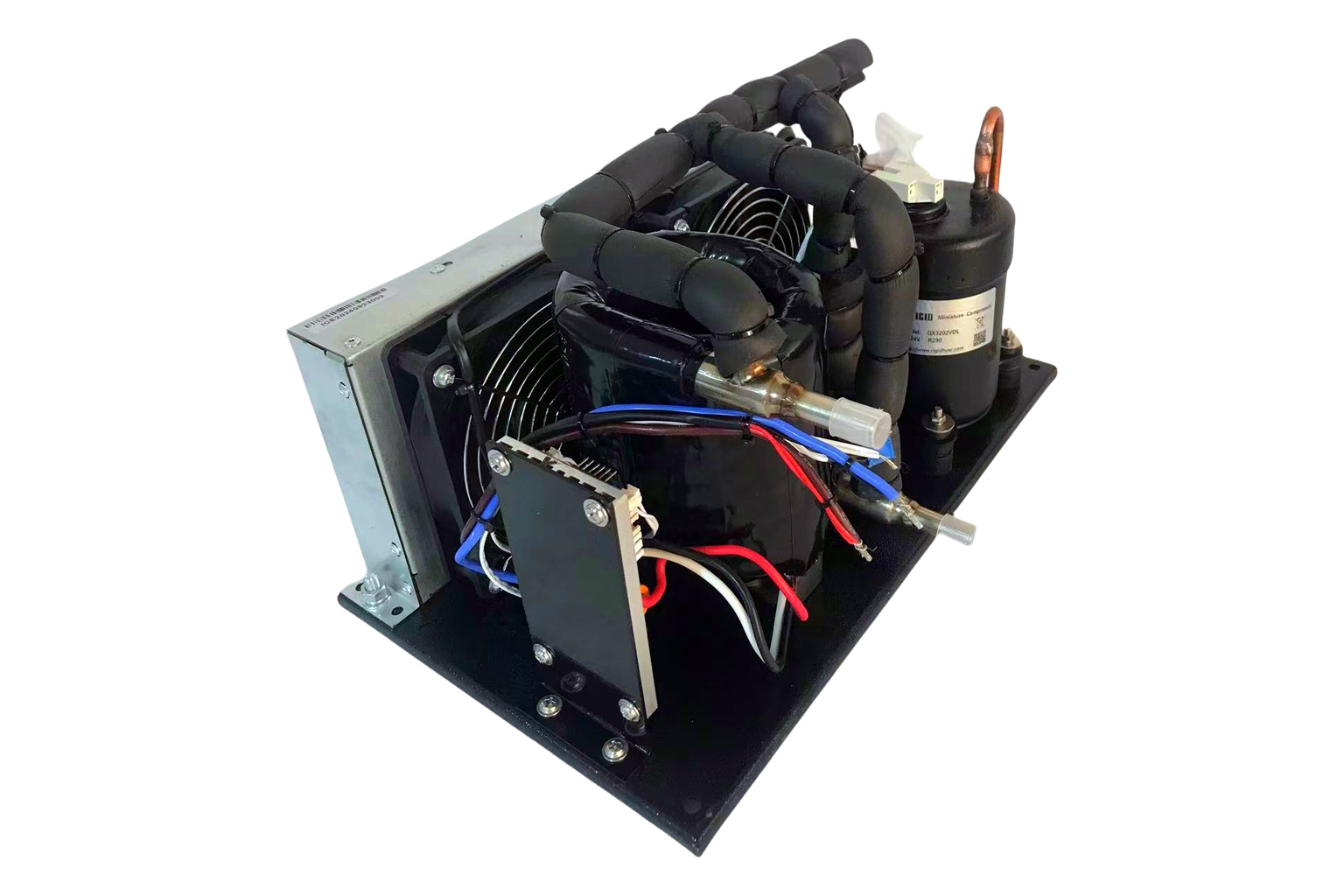
RIGID’s DV compact liquid chiller family includes coaxial models such as DV1920E-C that can be considered as the cold source in an OEM liquid loop. The published series temperature envelope is −20 to +20°C. A family photograph or structural name does not establish the wetted alloy list, exposed joining materials or approval of a particular coolant.
Request those details for the selected configuration alongside the external pump, reservoir and instrument information. Confirm which circulation components are included rather than assuming every item in the completed circuit is supplied with the refrigeration module. This keeps responsibility for each compatibility decision traceable.
The separate liquid chiller loop design guide addresses hydraulic integration. Its flow and pressure questions remain necessary, but a functioning flow rate is not a corrosion qualification. The material review must remain an explicit part of accepting the assembly.
Review Coatings and Isolation as Engineered Features
A coating can change which material is exposed to the coolant, but its effectiveness depends on coverage, integrity and the service conditions. Ports, cut edges and worn regions need consideration. Do not assume an attractive external finish describes the inside of a wetted passage.
Likewise, a nonmetallic connector may interrupt one electrical path while another connection remains. It also introduces its own pressure, temperature, chemical and mechanical requirements. A proposed isolation feature should therefore be reviewed as part of the entire assembly, not approved solely because its body is plastic.
Separate the intended protection mechanism from evidence that it works. A drawing can show the proposed arrangement; a supplier assessment or an agreed qualification establishes whether it is acceptable for the specified duty. Neither a product photo nor a successful first fill replaces that evidence.
Control Changes After the Initial Approval
Galvanic corrosion in chiller loops is also a change-management problem. Replacing a valve, installing a different instrument or changing a quick disconnect can alter the wetted materials and electrical connections. Keep substitutions visible even when the nominal flow and temperature remain unchanged.
Fluid changes deserve the same attention. The existing guide to changing chiller coolant brands explains the separate formulation and transition questions. For corrosion review, identify whether the new product remains approved for every exposed material and whether residual fluid affects the final formulation.
Record the installation’s baseline condition and the observations requested by the suppliers. If a result moves outside an agreed range, preserve the evidence and seek review before adding chemicals or replacing parts. The useful comparison is against a documented specification, not an invented universal pH or conductivity target.
Ask for a Jointly Reviewable Compatibility Decision
Send the wetted material list, connection drawing, exact fluid and operating envelope together. Mark what is confirmed, what is proprietary and what remains unknown. Ask each supplier to state the scope of its approval and any required conditions, then reconcile conflicts before purchasing the final loop.
The final decision belongs to the assembled circuit. To review galvanic corrosion in chiller loops containing a DV module, share the material and fluid record with RIGID. A configuration-specific answer is more useful than a blanket claim that stainless steel, pure water or an inhibitor removes every corrosion concern.
Frequently Asked Questions
Do dissimilar metals always cause galvanic corrosion?
No. The relevant assessment includes the electrolyte and an electrical connection, along with the actual materials and conditions. A list of different metals flags a question; it does not establish a corrosion rate or a complete failure diagnosis.
Does deionized water permanently prevent galvanic corrosion?
No. Its condition can change through material contact and contamination. Galvanic corrosion in chiller loops requires a whole-circuit assessment and an approved fluid-management approach, rather than reliance on the water’s initial purity alone.
Does a coaxial chiller name identify all wetted materials?
No. It describes an exchanger arrangement. Confirm the actual wetted alloys, joints and permitted coolant for the ordered configuration. Include external pumps, fittings and the connected equipment in the same review.
Can I solve the concern by removing an electrical bond?
Do not remove protective bonding as a corrosion remedy. Any proposed isolation must be assessed by the responsible engineering team together with electrical safety and equipment requirements. An alternate conductive path may also remain.
Is a corrosion inhibitor enough to approve the loop?
Not on its own. The exact formulation, concentration, materials and service conditions need supplier approval. Establish the required monitoring and change controls rather than applying a generic additive or assuming permanent protection.