
Glycol Chiller Flow Measurement Starts With the Actual Liquid
Glycol chiller flow measurement is credible only when the meter is suitable for the actual coolant, concentration, temperature, and installation. A water-calibrated scale does not automatically report the correct volume of a colder glycol mixture. Before treating a low number as a cooling fault, establish what the instrument measures and how its calibration applies. Then check whether the instrument itself has changed the circulation that you wanted to measure.
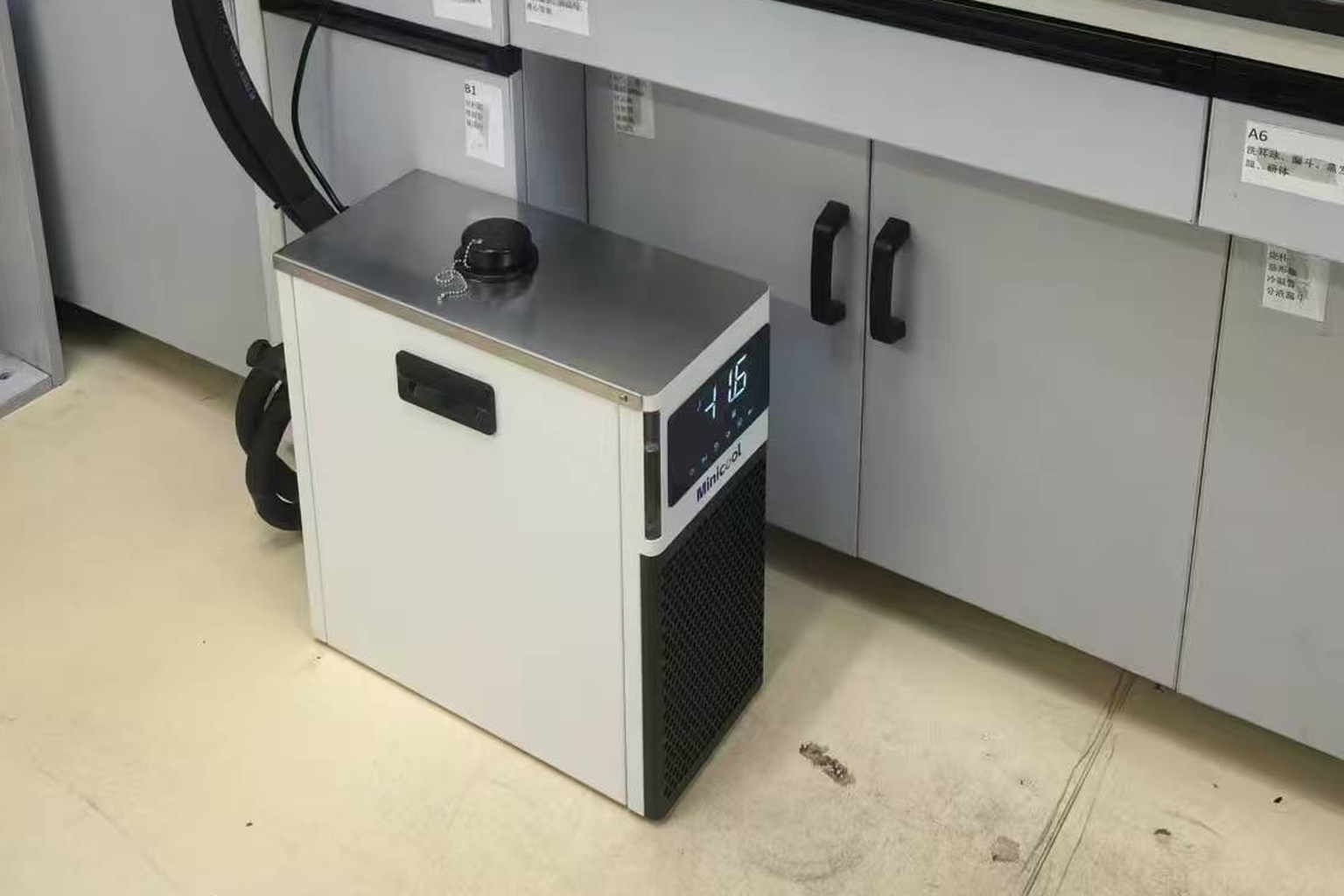 For a laboratory loop, the useful result is an accepted flow reading at the equipment branch under its intended operating conditions. A moving float or a stable display is only an observation. A stable reading can still be biased. This guide develops a measurement acceptance record for a sub-zero loop; equipment flow requirements and protection settings must still come from their respective suppliers.
Identify What the Display Calls Flow
Begin with the meter model, range, serial number, and output units. Record whether it displays actual volumetric flow, mass flow, or a volume calculated from a reference density. These quantities cannot be substituted without documenting the conversion. A controller may also display a scaled electrical signal rather than the meter’s native measurement. Trace the reading through that scaling before evaluating an apparent change.
Write down the location as well. Flow in a common supply line does not establish flow through an instrument when a bypass or second branch is present. Identify the measured pipe on the loop drawing and record relevant valve positions. If the instrument supplier requires branch flow, the acceptance measurement must resolve that branch or provide an independently justified way to infer it. A single total-flow number leaves the split unresolved.
Describe Glycol by Composition and Temperature
Specify the coolant product, glycol type, mixture basis, and concentration. Percent by mass and percent by volume are different descriptions. A premixed inhibited coolant should retain its product identity rather than being reduced to a generic glycol percentage. Obtain applicable fluid property information from the coolant supplier, including the temperature at which each property is stated. Do not substitute room-temperature data for a cold operating point.
Record temperature at the meter during the reading, rather than assuming that the chiller setpoint represents it. Temperature differences can exist along the loop and during cooldown. Keep the mixing and measurement records together so a later replacement coolant can be evaluated against the same basis. If concentration is uncertain, resolve that uncertainty before applying a density or viscosity correction. Otherwise the correction can add apparent precision without establishing accuracy.
Review a Variable-Area Scale Before Correcting It
For a variable-area meter, the scale depends on the particular tube and float arrangement. OMEGA’s industrial rotameter guidance describes density effects and a viscosity immunity ceiling, above which the meter requires recalibration for the conditions. That is a model-dependent limit. Density correction alone is not a universal glycol correction. Ask the selected meter supplier how both properties affect the specific instrument at the intended temperature.
Use the approved correlation table or calibration supplied for that tube, float, and medium. Record its revision and valid range. Do not copy a formula from a different meter construction or apply a gas correction to liquid flow. Also confirm the reading convention on the float, required orientation, and viewing conditions. Frosted insulation, parallax, or an unreadable scale can defeat an otherwise appropriate instrument without changing the liquid circulation.
Ask Other Meter Suppliers Different Questions
Glycol chiller flow measurement should be reviewed according to the selected principle, not one generic accuracy statement. For an electromagnetic meter, obtain the manufacturer’s conductivity requirements for the coolant and installation. For an ultrasonic arrangement, request approval of the pipe material, wall dimensions, coupling arrangement, and fluid configuration. For meters with moving internal elements, ask about the supported viscosity range and calibration at the proposed operating point.
For a mass-flow instrument that also reports volume, identify how density enters the volume result. Ask how temperature, zeroing, entrained gas, and the intended flow range affect the stated performance of that model. These are selection questions rather than claims that every meter of a given principle behaves alike. A supplier’s response should identify the applicable model and configuration; a technology brochure by itself does not close a laboratory measurement requirement.
Read the Calibration Certificate as a Conditions Record
NIST describes liquid-flow calibration services using defined working fluids and reports that include uncertainty associated with the meter factor. Its facility uncertainty is not the uncertainty of your installed loop. A certificate establishes performance under its recorded conditions; evaluating a different coolant and temperature requires additional evidence. Check the calibrated points, working fluid, temperature, output configuration, and stated uncertainty against your intended use.
Distinguish traceability from suitability. A traceable water calibration can be useful evidence while still leaving a cold glycol application unresolved. Request either calibration covering the relevant conditions or a documented supplier method for extending the result. Keep the correction basis with the reading. An undocumented spreadsheet multiplier is difficult to audit, especially after the meter, coolant, or controller scaling has changed. Preserve raw and corrected values separately.
Account for the Meter’s Added Restriction
An inline meter becomes part of the hydraulic circuit. Request its pressure-drop information for the actual coolant and anticipated operating range, including adapters and any required flow-conditioning components. Compare that addition with the pump and load requirements before installation. A meter that is accurate but reduces branch flow below the equipment requirement is not a successful measurement arrangement.
Separate two questions in the test record: did the actual flow change after installing the meter, and does the meter correctly indicate the resulting flow? A lower display can reflect restriction, calibration mismatch, or both. Where broader loop design is needed, the existing liquid chiller loop design guide addresses tubing and fitting losses. This article’s task is to establish confidence in the reading, not to replace that hydraulic design review.
Preserve the Intended Installation During Verification
Follow the meter manufacturer’s installation requirements for direction, orientation, filled-pipe conditions, straight runs, and sensor connections. Photograph or record the arrangement so the acceptance result refers to an identifiable installation. Check that the proposed position can be accessed without removing required insulation or disturbing the instrument branch. Measurement access should be considered before the loop is built, rather than solved by a temporary arrangement that changes its behavior.
Avoid using a warm, open collection arrangement as an unquestioned reference for a closed cold loop. It may change pressure, temperature, and pump operation. If a reference comparison is needed, have the measurement provider define a suitable method and uncertainty. The comparison must represent the operating circuit. Do not disconnect a running pressurized loop or handle an exposed cold liquid simply to obtain a convenient timed-volume result.
Separate Reading Problems From Flow Protection
Compare readings only after recording relevant conditions: coolant identity, measured temperature, pump command, load state, and valve positions. Watch for bubbles, unstable signals, or a value that changes when the measurement electronics are reconfigured. These observations identify investigations; they do not prove that the pump is undersized or the meter is defective. Repeat the comparison under the same documented conditions before assigning a cause.
A flow switch has a different purpose from an accepted quantitative flow measurement. The existing low-flow protection article discusses that protection function. Do not derive a protective trip setting solely from a questionable display, and do not bypass protection to complete a test. Glycol chiller flow measurement supports the commissioning evidence, while the equipment’s required protective behavior remains a separately approved requirement.
Place MiniCool Within the Measurement Review
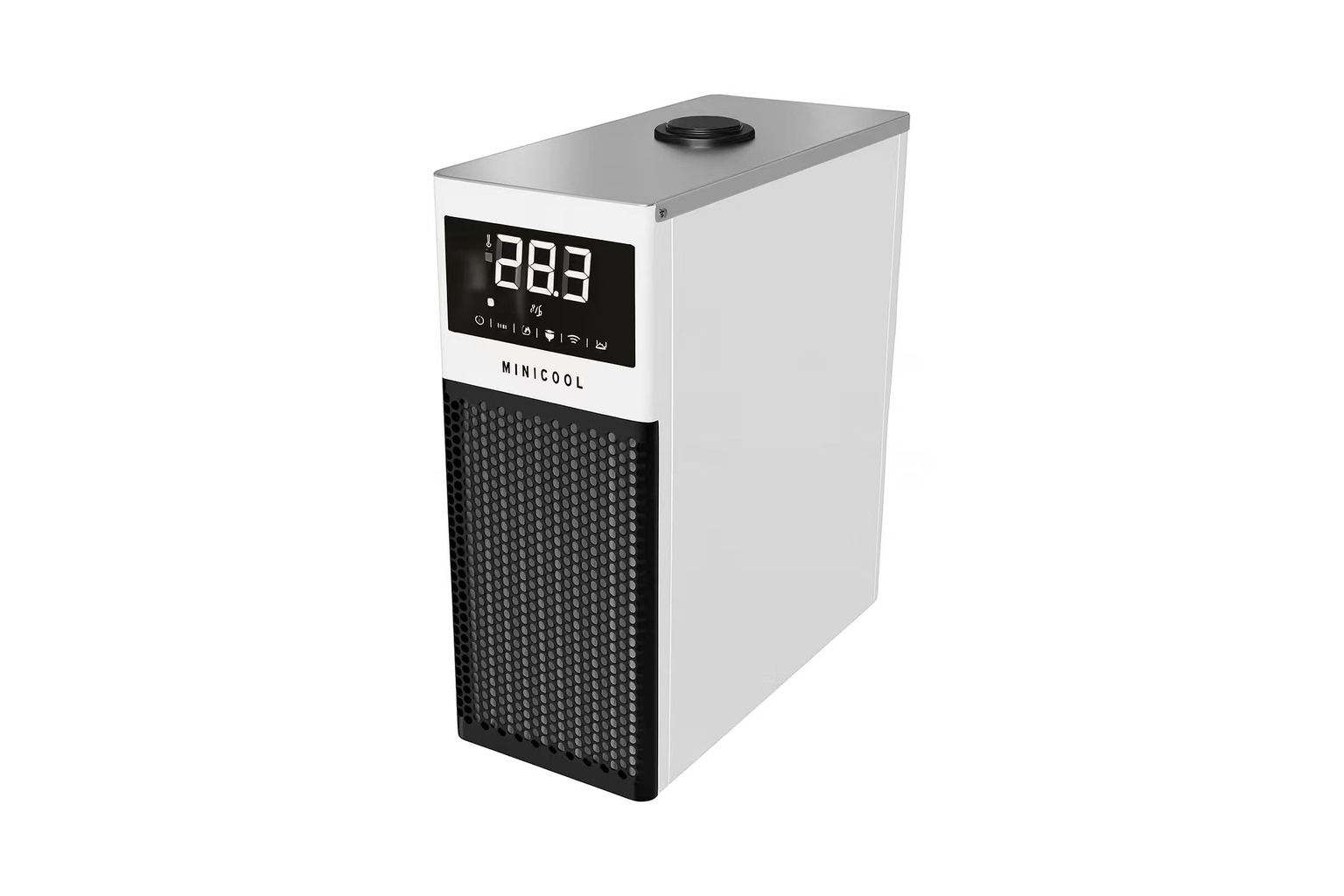
The RIGID MiniCool series is a recirculating laboratory cooling candidate for the published −40°C to 0°C range. That range does not approve every coolant mixture, meter, or external instrument. The public series information does not state a pump curve, available external head, reservoir volume, or the conditions behind its capacity claims. Obtain the selected configuration’s hydraulic data before deciding whether an inline measuring assembly can be accommodated.
MiniCool’s published temperature stability statement also does not establish flow measurement uncertainty or temperature stability at a remote instrument. Its stability test conditions are not stated in the public material reviewed. For glycol chiller flow measurement, request coolant approval, expected branch conditions, and sufficient pump information to evaluate the added restriction. Keep positive-temperature requirements outside this MiniCool selection boundary rather than extrapolating the series into an unverified operating range.
Build a Flow Reading Acceptance Sheet
Use the following fields to connect the indicated value with the conditions and evidence that make it usable. Set acceptance criteria from the instrument requirement and the measurement uncertainty before taking the readings. Do not select a tolerance after seeing the result. When a requirement is not available, mark it unresolved and obtain it from the responsible supplier rather than inventing a laboratory-wide minimum flow.
| Measurement item | Record | Acceptance question |
|---|---|---|
| Coolant | Product, mixture basis, concentration | Is the actual mixture covered? |
| Meter | Model, range, serial number, units | Is the output interpreted correctly? |
| Operating point | Meter temperature, branch, valve state | Does this represent intended use? |
| Calibration | Fluid, temperature, points, uncertainty | Is the extension to glycol justified? |
| Hydraulics | Meter and adapter pressure drop | Can the loop support the addition? |
| Result | Raw value, correction, accepted uncertainty | Does the branch meet its requirement? |
Retain the original calibration report, correction revision, instrument requirement, and configuration record with the acceptance sheet. Record any unresolved uncertainty explicitly. A result near an equipment’s minimum requirement needs review of that uncertainty, not rounding upward. The useful output is a defensible decision about this branch, this liquid, and this operating condition; it is not a transferable promise about every glycol installation.
Define When the Evidence Must Be Revisited
Revisit glycol chiller flow measurement when the coolant formulation, concentration, meter, pump configuration, branch routing, or intended temperature changes. A replacement meter with the same nominal range may use a different calibration or installation requirement. Preserve the previous accepted configuration so the new result can be compared without confusing an instrument change with a real circulation change. The review interval should follow the measurement provider’s guidance and the laboratory’s own quality requirements.
For a cooling configuration review, send RIGID the coolant and meter details together with branch flow requirements, intended temperatures, and the added pressure-drop information. This allows the cooling discussion to start from an identifiable measurement arrangement. If the meter’s cold-liquid suitability remains unresolved, report that limitation alongside the cooling inquiry. A chiller selection cannot supply missing calibration evidence for an external instrument.
Frequently Asked Questions
Can I read a water-calibrated rotameter directly on glycol?
Only when the selected meter supplier confirms that its scale applies to the actual mixture and temperature. Otherwise obtain the appropriate calibration or documented correction. Density alone may not cover viscosity effects, so a generic multiplier is insufficient.
Does colder glycol always mean the displayed flow is wrong?
No. Suitability depends on the meter and its supported conditions. Cold operation creates a reason to check the calibration basis and fluid properties; it does not prove an error. Compare the stated limits with the recorded operating point.
Can adding a meter change the flow I am measuring?
Yes. The meter and its connections add hydraulic resistance. Evaluate that addition for the actual coolant and distinguish a real reduction in circulation from an indication error. Record the final installed arrangement in the acceptance evidence.
Is a NIST-traceable certificate enough for glycol chiller flow measurement?
Traceability is useful, but the certificate’s fluid, temperature, points, and uncertainty must support the intended application. An extension from water to cold glycol needs an applicable supplier basis or additional calibration evidence. Traceability does not establish every installation’s suitability.
What MiniCool data should I request for this review?
Request approved coolant details and the selected configuration’s pump and external hydraulic information. Include the meter’s restriction and the equipment branch requirement. The public MiniCool temperature range alone does not establish that the measuring assembly and load will receive adequate flow.