
The operational reality of heat stress management often diverges sharply from the procurement plan. On paper, a passive cooling strategy—specifically the deployment of phase-change ice vests—appears to be a cost-effective, low-complexity solution for high-heat environments. The initial logic is sound: freeze a pack, insert it into a carrier, and equip the operator. However, field observations in foundries, tarmac operations, and glass manufacturing facilities frequently reveal a different narrative.
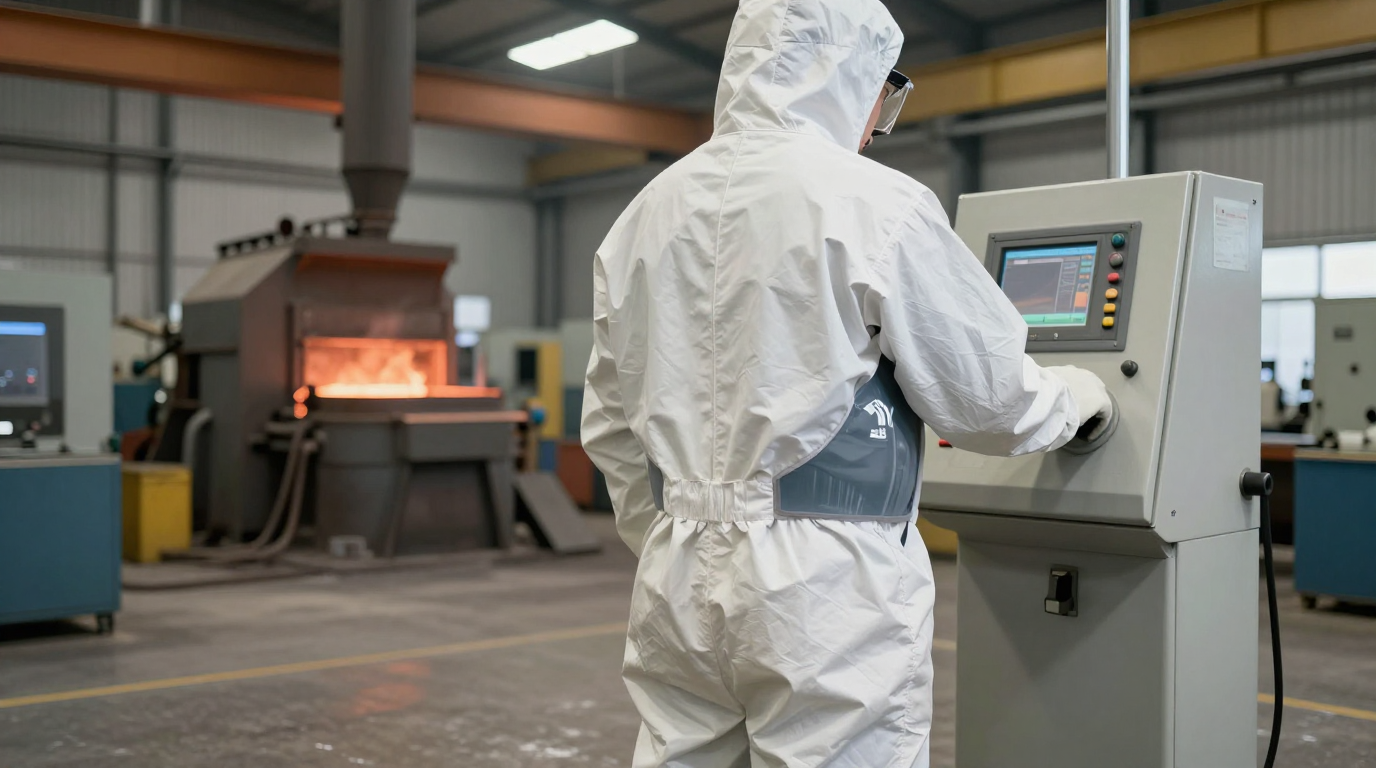
The failure mode is rarely the ice itself, but rather the logistics required to sustain it. We observe a common “micro-scene” in extreme heat deployments: an operator begins a shift with a fresh vest. For the first twenty minutes, the cooling is intense—often too intense—triggering vasoconstriction. As the operator works, the ambient load and metabolic heat degrade the phase-change material rapidly. Within an hour, the vest is dead weight—a heavy, wet thermal insulator trapping body heat rather than rejecting it. The operator is then faced with a choice: continue working with compromised PPE or halt operations to navigate the “freezer loop”—locating a freezer, finding a frozen pack (if inventory management is perfect), and swapping it out. This cycle creates a “sawtooth” cooling profile that fails to protect workers during critical windows of exposure.
This field note explores the engineering and operational distinctions between these two dominant modalities. We analyze the trade-offs in ice vest vs liquid cooling vest deployments, focusing on thermal stability, logistical friction, and duty cycle constraints.
Ice Vest vs Liquid Cooling Vest: The Thermal Stability Problem
The fundamental difference between these technologies lies in how they manage thermal energy over time. Understanding this distinction is critical for safety managers attempting to align cooling capacity with shift duration and metabolic workload.
The Physics of Passive Phase Change
Ice vests rely on the latent heat of fusion. As the solid ice (or phase change material) absorbs heat from the body and the environment, it changes phase to liquid. The cooling effect is driven by the temperature difference (Delta T) between the pack and the wearer’s skin. Initially, this Delta T is high, providing aggressive cooling. However, as the pack melts, the surface area of solid material available to absorb heat diminishes, and the rate of heat transfer slows. Once the phase change is complete, the pack ceases to cool and immediately begins to equilibrate with the high ambient temperature, effectively becoming a heating pad strapped to the worker’s core.
The Physics of Active Circulation
In contrast, a liquid cooling vest functions as a heat exchanger within a closed loop. A circulating fluid (typically water or a glycol mixture) is pumped through tubing integrated into the vest. This fluid absorbs metabolic heat and transports it to an external rejection unit—such as the AlphaCooler system—where the heat is removed via a vapor-compression cycle or thermoelectric module. Because the coolant is continuously re-chilled and circulated, the Delta T remains constant throughout the duty cycle. There is no degradation of performance over time, provided the active unit has power.
The “Sawtooth” Cooling Profile of Passive Phase Change
When plotting worker core temperature against time, ice vest usage typically results in a “sawtooth” graph. The temperature drops sharply after a fresh pack is applied, then rises steadily as the pack melts and the worker exerts effort. If the swap-out interval is missed—common in high-pressure production environments—the worker enters a zone of thermal risk.
This fluctuation presents a physiological challenge. The human body strives for homeostasis. Rapid cooling followed by rapid warming forces the body’s thermoregulatory systems to constantly adjust. Furthermore, the initial “cold shock” of a sub-zero ice pack can cause capillaries in the skin to constrict (vasoconstriction), which paradoxically drives blood—and heat—deeper into the core, reducing the efficiency of heat transfer just when it is needed most. Active liquid systems, which typically operate at user-selectable or thermostatically controlled setpoints, avoid this shock by maintaining a cool, non-freezing temperature that encourages blood flow to the skin surface for optimal heat exchange.
Operational Logistics: The Hidden Cost of the Freezer Loop
While the upfront capital cost of ice vests is low, the operational expenditure (OpEx) associated with the “freezer loop” is often underestimated. For a facility running continuous shifts, the logistics of maintaining a functional ice vest program are non-trivial.
Inventory and Space Constraints
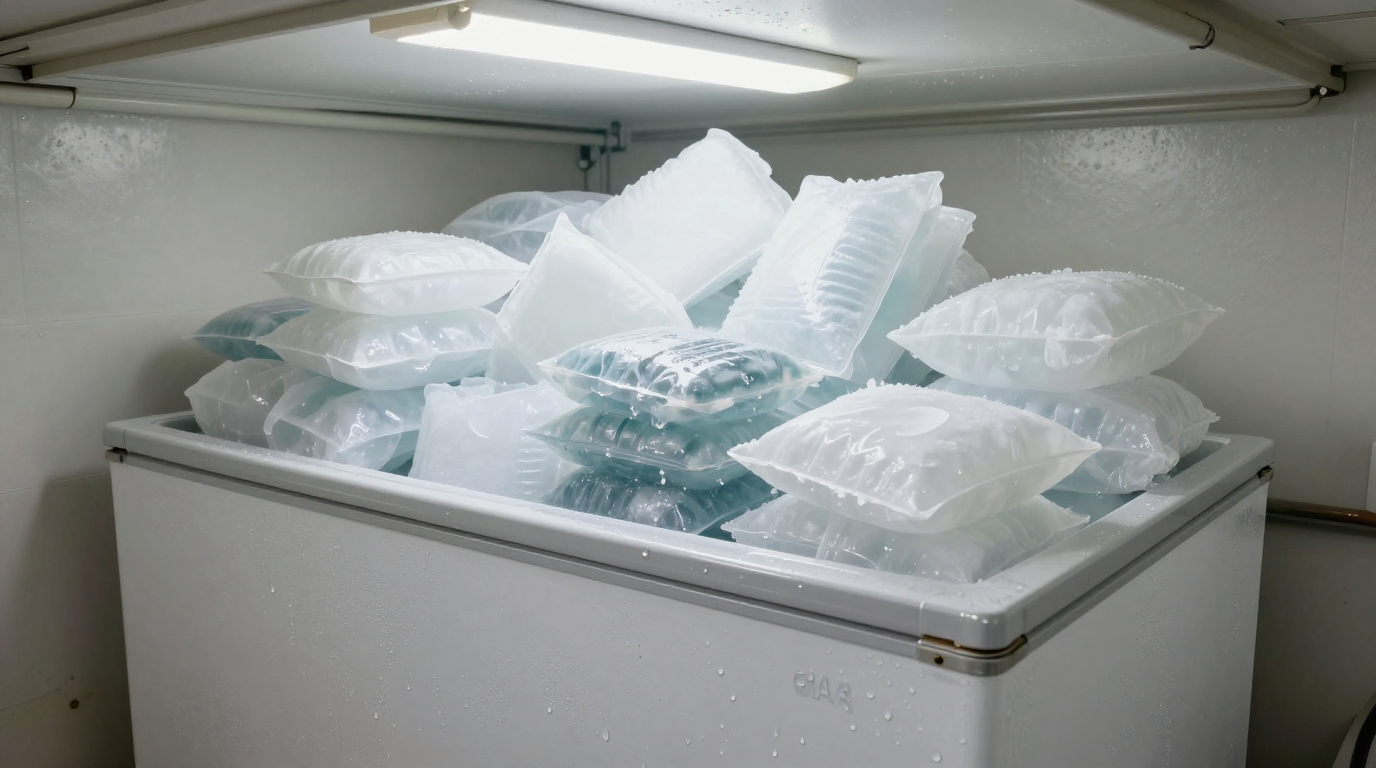
To support a single worker for a full shift, a safety manager must account for multiple pack swaps. If a pack lasts for a short duration in extreme heat, a single worker may require several swaps per shift. This necessitates a large inventory of backup packs and significant freezer capacity. We often see safety rooms crowded with chest freezers, consuming valuable floor space and power.
The Swap-Out Friction
The process of swapping a pack introduces friction into the workflow. The worker must leave the line, doff the vest, access the freezer, exchange the packs, and don the vest again. This downtime accumulates. More critically, if the freezer inventory has not been managed correctly—if packs were not placed in the freezer with sufficient lead time to freeze solid—the system fails entirely. A partially frozen pack offers a fraction of the cooling duration, accelerating the swap cycle and compounding the logistical burden.
Moisture Management and PPE Integration
In many industrial environments, moisture is a hazard. This factor is a key differentiator when evaluating an ice vest vs liquid cooling vest.
Condensation and Wet Bulb Risks
Ice packs operate below the dew point of the surrounding air. In humid environments, this inevitably leads to condensation. Water accumulates on the pack, soaks into the vest material, and transfers to the worker’s base layer. “Wet bulb” conditions inside the PPE can lead to skin maceration, discomfort, and hygiene issues (rash/fungal growth) over consecutive shifts.
Furthermore, in environments with electrical hazards or where molten metal is present, uncontrolled water is a critical safety violation. A dripping vest can introduce moisture into arc flash zones or cause steam explosions if sweat/condensate drips onto molten material.
Closed-Loop Containment
Active liquid cooling vests are designed with these risks in mind. The tubing is often insulated to prevent condensation on the outer surface. Because the fluid temperature is controlled, it can be set above the dew point if necessary to eliminate sweating on the lines. The system is closed; the fluid does not evaporate or drip under normal operation. For applications requiring strict dryness, liquid cooling offers a predictable, contained thermal management path that passive ice simply cannot guarantee.
Active Liquid Cooling Architecture: Continuous Duty Cycles
For operations requiring extended duration cooling without logistical interruption, active systems are the standard engineering choice. These systems decouple the cooling capacity from the mass worn by the worker.
Tethered vs. Portable Configurations
Active liquid cooling typically involves a connection to a chiller unit. This can be configured in two primary ways:
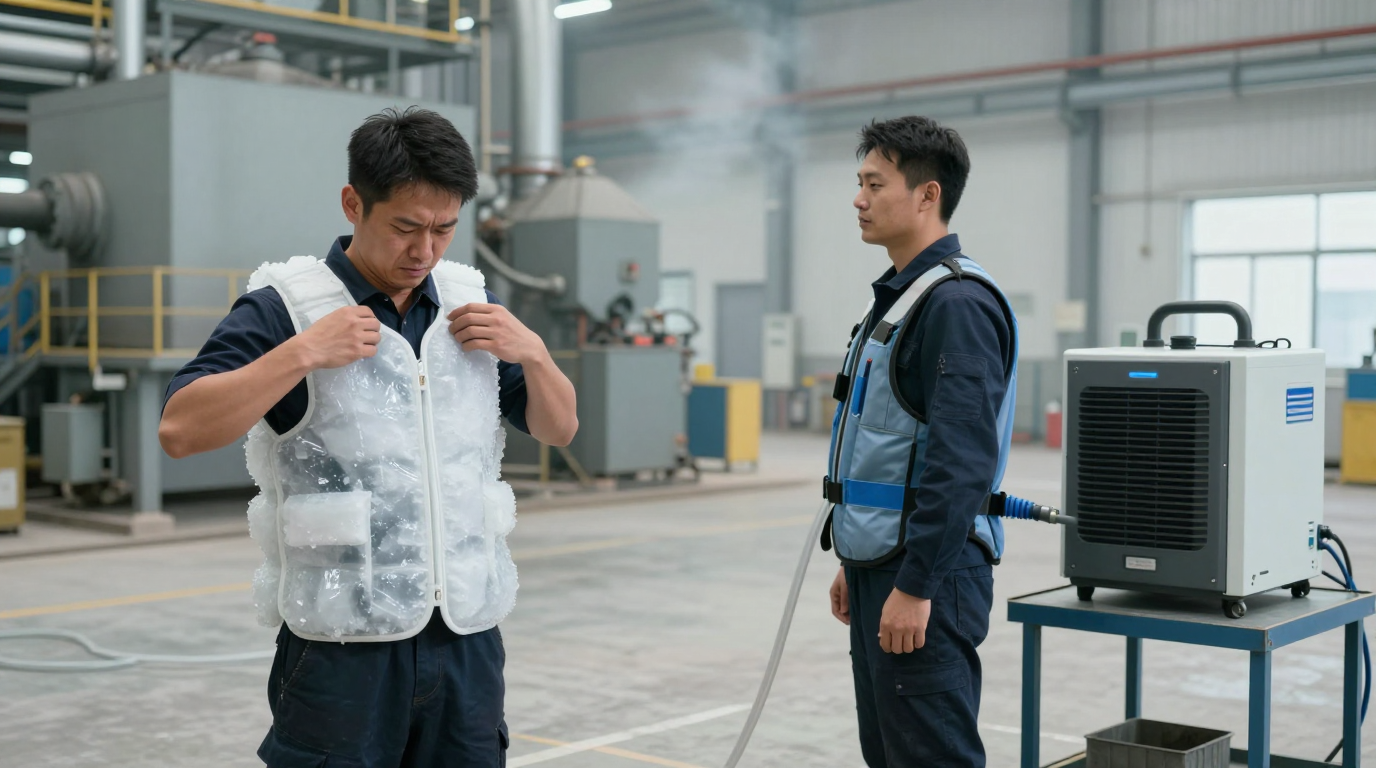
- Tethered Systems: The worker is connected via an umbilical hose to a stationary or vehicle-mounted chiller (such as an AlphaCooler module). This provides infinite run time limited only by the power source of the chiller. It is ideal for operators in fixed positions, such as crane cabs, paint booths, or assembly stations.
- Portable/Backpack Systems: The chiller and battery are worn or carried. While this restores mobility, it reintroduces a weight penalty and a battery duty cycle constraint. However, swapping a battery is typically faster and cleaner than swapping melting ice packs.
Thermostatic Control
A decisive advantage of active systems is the ability to regulate temperature. A “one-temperature-fits-all” approach rarely works in complex safety scenarios. An operator performing high-metabolic tasks may need aggressive cooling, while an operator monitoring a panel may need only mild heat rejection to prevent heat stress accumulation. Active systems allow for this modulation, preventing over-cooling and shivering, which is itself a safety risk.
Failure Modes and Maintenance: Tethers vs. Leaks
No system is immune to failure. When comparing an ice vest vs liquid cooling vest, the maintenance profile shifts from “inventory management” to “mechanical maintenance.”
Ice Vest Failure Modes:
- Rupture: Gel packs can burst, leaking chemical agents onto skin or clothing.
- Loss of Thermal Mass: Packs degrade over time and hold less charge.
- Logistics Failure: No frozen packs available when needed.
Liquid Cooling Failure Modes:
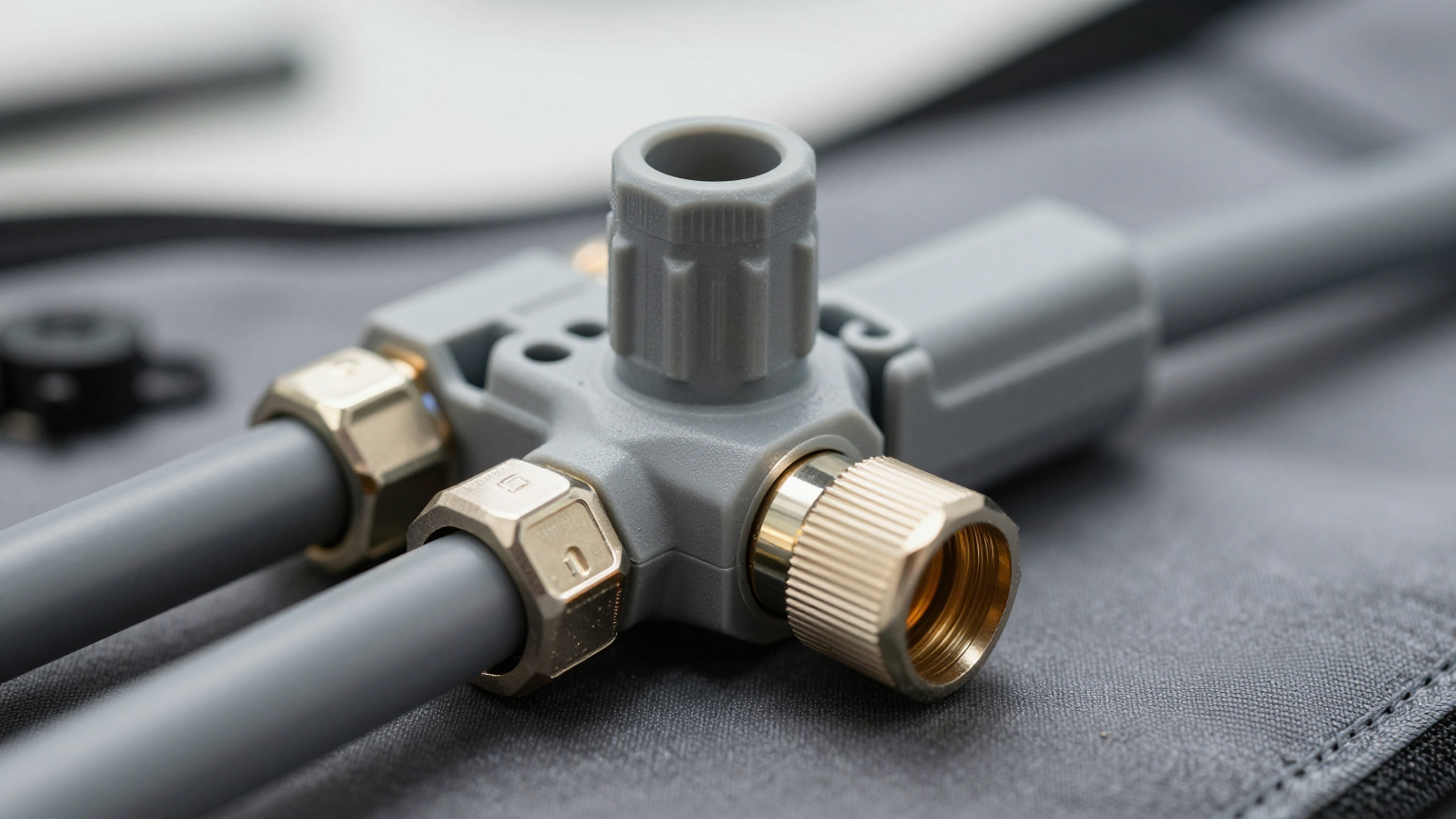
- Kinks and Occlusions: Fluid flow can be blocked if supply lines are pinched. High-quality systems use reinforced tubing to mitigate this.
- Connector Leaks: Quick-disconnect fittings are wear items. If they are not maintained, they can drip.
- Power Dependency: If the chiller loses power, cooling stops immediately. There is no residual thermal mass.
Decision Matrix: Selecting the Right Thermal Defense
The choice between passive and active cooling should be driven by the operational profile, not just the unit cost. We recommend the following heuristic for safety and operations leads:
| Constraint / Variable | Passive Ice Vest | Active Liquid Cooling Vest |
|---|---|---|
| Shift Duration | Short bursts; intermittent tasks. | Continuous; full-shift operations. |
| Mobility Requirement | High (untethered). | Variable (tethered or backpack). |
| Cooling Consistency | Variable (Sawtooth profile). | Constant (Steady state). |
| Logistics Burden | High (Freezer management, frequent swaps). | Low (Power connection, occasional maintenance). |
| Moisture Tolerance | Low (Condensation likely). | High (Closed loop, controllable). |
Integration Support
Implementing a liquid cooling strategy often requires an assessment of the facility’s infrastructure—specifically power availability for chiller units and the spatial constraints of the operator’s station. If your deployment involves vehicle-integrated cooling or stationary manufacturing posts, we can review the mounting interfaces and power budgets required to support the AlphaCooler platform. For mobile teams, we can analyze the trade-offs between battery weight and cooling duration to define a configuration that balances thermal safety with ergonomic performance.