
What an IP65 Portable Air Conditioner Rating Actually Claims
The RIGID Portable DC Air Conditioner page lists IP65 environmental protection with a qualifier that is easy to read past: it applies to the ambient side. For an IP65 portable air conditioner, that qualifier limits the published claim. It does not establish the protection of the cold-air side, external power supply, drain or complete installation; those details need confirmation for the exact delivered configuration.
An air conditioner has two air paths. One side rejects heat to the outdoors and lives with weather. The other side blows cold air into the space you care about and lives with whatever that space contains. A rating quoted for the ambient side describes the first path, not the second.
Apply the rating only to the enclosure or section and installation conditions identified by the manufacturer. Reading them that way avoids most of the disappointments that follow an outdoor deployment.
The Two Digits, in Plain Terms
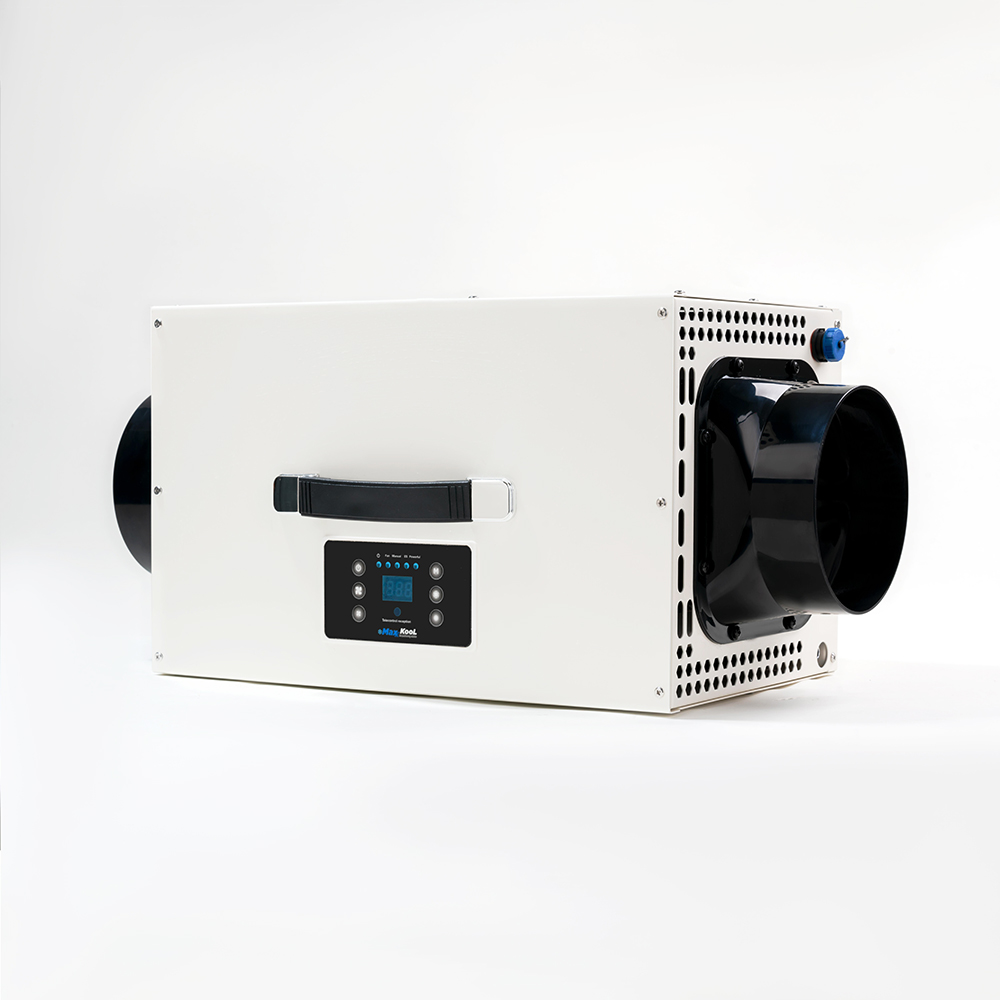 IP codes come from IEC 60529. The first digit covers solids, the second covers water, and each is a separate test with a defined procedure.
| Digit | Level | What the test represents |
|---|---|---|
| First: 6 | Dust-tight | No dust ingress under the applicable standardized test conditions |
| Second: 5 | Water jets | Jets from a nozzle, from any direction, without harmful effect |
Do not read the water-protection digit as permission for every type of wet exposure. Jet testing and immersion testing address different conditions; an immersion claim does not automatically establish jet protection. A level 5 result says the enclosure survives jets. It does not claim immersion, which is a different digit and a different test, and it does not promise anything about prolonged submersion in a flooded pit. The standard itself is the reference worth keeping at hand: IEC 60529 defines each level and its test rig.
So an IP65 portable air conditioner has a manufacturer-stated ingress claim for its ambient side. The standardized water-jet test does not authorize a particular cleaning procedure, immersion, hot water or chemical washing. Obtain installation and cleaning instructions before translating that claim into site practice.
Why the Ambient Side Is the One That Gets Rated
On the ambient side, the condenser fan draws outdoor air across a coil and pushes it back out. That path sees rain blowing sideways, dust from a passing vehicle, and whatever the wind carries. The public wording alone does not identify every protected component or opening. Ask for a drawing or test scope that marks the protected boundary, including penetrations and any required covers.
The cold side is a different problem. It must stay open to the space it cools, it produces condensate by design, and it is usually indoors, in a tent, in a cabin or in a cabinet. The public ambient-side statement does not establish a cold-side rating. Keep that side and its connections protected as instructed, and manage both external water exposure and condensate.
Rain, Spray and the Difference Between Them
When specifying an IP65 portable air conditioner, separate the following exposures. This is a planning checklist, not a report of field tests on the LC series.
| Exposure | Realistic outcome | What to do about it |
|---|---|---|
| Rain and wind-driven spray on the ambient face | Evaluate against the stated ambient-side scope and installation instructions | Confirm orientation, drainage and protection of other openings |
| Hose or pressure washing | A standardized jet test is not a washdown instruction | Use only the manufacturer-approved cleaning method; do not pressure wash |
| Standing water around the unit | Outside the claim entirely | Raise the unit; drain the site |
The middle row is easy to misinterpret. A pressure washer concentrates far more energy than the jet used in the standard’s test, and it is often pointed at exactly the joints that were never meant to take it. If a site washes equipment down, say so before the specification is fixed rather than after the first failure.
Dust Behaves Differently From Water
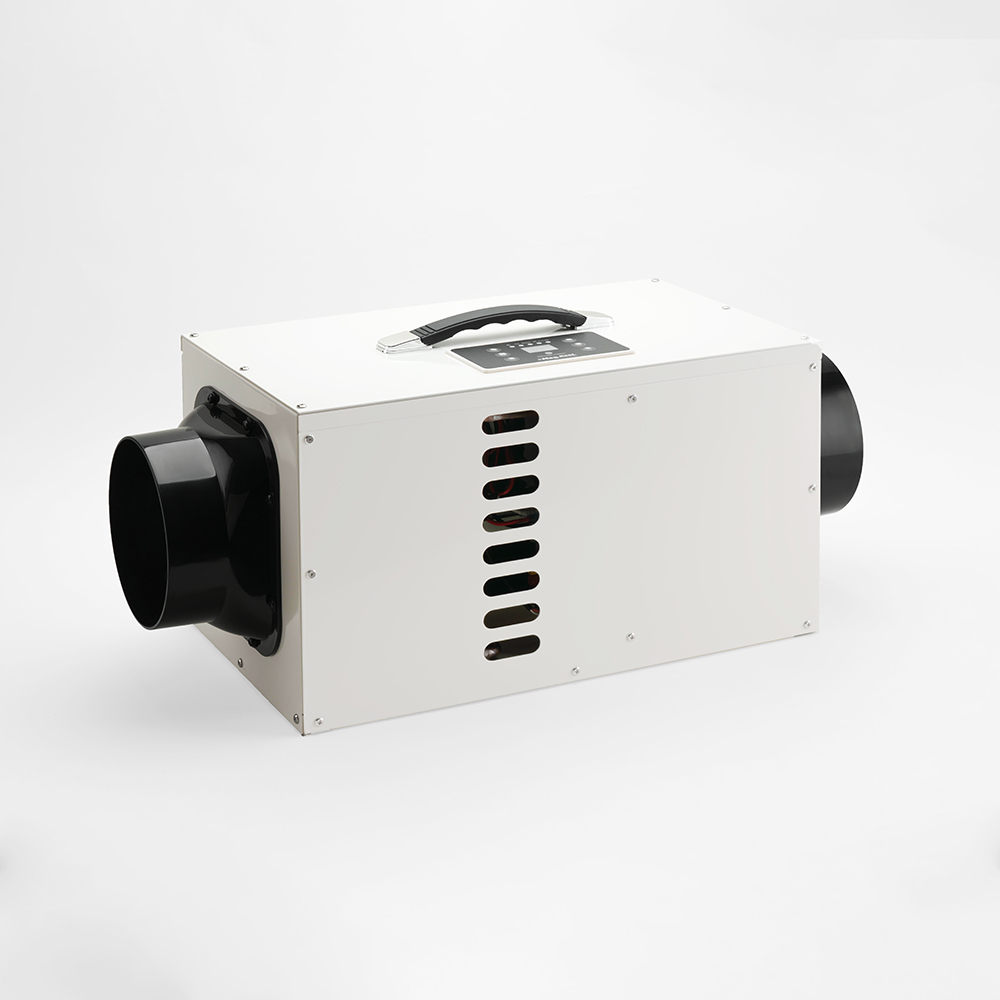 Dust behaves differently from water because it accumulates rather than drains. A dust-tight enclosure protects the parts inside it; it does nothing for the heat exchanger surface in the air stream, which is outside the sealed volume by necessity.
What follows is a performance problem, not an ingress problem. A fouled condenser raises condensing pressure, the compressor works harder for the same effect, and capacity falls. The unit is still sealed and still rated. It is simply doing less. Inspect and clean the ambient-side coil on a schedule set by the site, and treat a rising discharge-side temperature as the symptom to watch. Our guide to sealed outdoor cabinet cooling covers the same dynamic on cabinet-mounted units.
Condensate: the Water the Machine Makes
An air conditioner produces condensate when its evaporator surface falls below the dew point of the air passing over it. Outdoors that is usually convenient, because the water simply leaves. In a tent, a van or a guard booth it has to go somewhere deliberate.
Plan the drain path before the trip, not during it. Keep the unit level or tilted the way the manual specifies, route the drain away from batteries, cables and bedding, and check it after the first hour of running rather than the next morning. A protected enclosure does not protect a separate power station or bedding placed under its drain. Keep the receiving container stable and ensure the hose cannot kink or discharge into a cable connection.
Salt, Coastal Air and the Limits of a Rating
An ingress rating says nothing about corrosion. Salt-laden outdoor air can reach exposed heat-exchanger surfaces even where a separate protected enclosure is dust-tight. Ingress protection does not establish resistance of those exposed surfaces to salt or other corrosive contaminants. Coastal and marine deployments therefore need a materials conversation, not just an IP number: fin coatings, fastener choice, rinse intervals.
The same applies to chemical atmospheres in industrial settings. If the air carries something aggressive, the question to ask a supplier is what the exposed surfaces are made of, not whether the unit is rated to a given IP level.
Ambient Conditions Still Affect Cooling
A rating tells you what gets in. It says nothing about the conditions the machine can work in. Cooling performance depends on the air temperature and flow at the condenser, the load and the evaporator conditions. A temperature setting or cold-air outlet statement must not be treated as the approved outdoor operating range. Obtain the operating envelope for the exact variant. Hot, still air behind a unit pushed against a wall costs more capacity than most users expect.
Give the ambient face clearance, avoid recirculating its own hot discharge back into its inlet, and remember that an IP65 portable air conditioner parked in full sun is still absorbing solar gain through its case like anything else on site. For enclosure-mounted equivalents, the NEMA 4X cabinet cooling notes discuss a different North American enclosure classification; they do not establish that the LC unit meets a NEMA type.
What the LC Series Data Sheet Gives You to Work With
Specifying outdoor use goes better when the physical facts are on the table. The portable line is listed as three variants of the same machine: the LC2810E-AC at 12 V with a 16 A working current, the LC2820E-AC at 24 V with 8 A, and the LC2830E-AC at 48 V with 4 A, with R134a and an 11 kg published weight. The product page and model PDF list a 565 x 255 x 245 mm case, while the 24 V shop listing gives a different length. Confirm the current outline drawing before building a shelf, bracket or weather cover around a catalog dimension.
Those numbers help plan placement, but they do not establish lifting arrangements or support strength. Use a stable support appropriate to the installed weight, keep drainage clear and follow the specified orientation. A weather cover must preserve condenser airflow and must not trap hot discharge air. Check that hoses and cables remain supported rather than pulling on their connections.
Put the money into placement before you put it into ingress class. A raised, shaded location with the required clearances can reduce exposure, but it does not increase the manufacturer-stated ingress protection. Verify that the proposed shelter leaves inspection, cleaning and electrical isolation accessible.
IP and NEMA Are Not Interchangeable
Some North American specifications use NEMA enclosure types, and the two systems do not convert cleanly. NEMA types include requirements that IP codes do not address, such as corrosion resistance, icing and gasket aging, while IP codes describe ingress tests in more granular steps.
The practical rule is one-directional: published NEMA comparisons can indicate ingress protection associated with particular types, but an IP code alone cannot establish compliance with a NEMA type. When a tender asks for an enclosure type and the equipment carries an IP figure, put the question to the supplier in writing rather than inferring equivalence from a conversion chart found online.
For an IP65 portable air conditioner going into a plant that specifies enclosure types, this is worth settling before procurement, not during commissioning.
Ask for the Test Scope, Not Just the Number
Two suppliers can quote the same code and mean different things, because the interesting question is which faces and which openings were included. Ask for the scope in writing: the standard edition the test followed, the sections of the enclosure covered, and whether cable entries and drain openings were part of the tested configuration.
That request is routine on industrial projects and it takes one email. It also gives a maintenance team something concrete to work from later, when someone asks whether the unit can be hosed down or whether the cable gland is part of the sealed boundary.
Specifying Outdoor Protection Without Overbuying
Most disappointments come from a mismatch between the rating quoted and the exposure the unit actually meets. This table is the short version of the conversation.
| Deployment | What the ambient-side rating covers | What you still need to decide |
|---|---|---|
| Camping, rooftop tent, trailer | Manufacturer-stated ambient-side ingress protection | Condensate routing; power path; clearance |
| Guard booth, kiosk, site office | Protection within the stated installation and test scope | Filter and coil cleaning interval |
| Coastal or marine | Ingress only | Corrosion protection and rinse regime |
| Washdown areas | Specified water-jet test only; no cleaning authorization | Cleaning procedure written down |
Tell a supplier the exposure in those terms and the specification usually settles in one exchange. If you want that checked against a specific site before you commit, send us the details.
Frequently Asked Questions
Is an IP65 portable air conditioner waterproof?
No. Level 5 on the second digit describes protection against water jets, not immersion. The manufacturer qualifies its claim as ambient-side protection. Confirm installation conditions; do not treat that statement as coverage of the cold-air side, connectors, separate power equipment or immersion.
What does the ambient side qualifier mean?
It means the rating was assigned to the outdoor-facing section, where the condenser and its fan handle outside air. That wording does not establish protection of the cold-air side. Ask the supplier to identify protected openings, required covers, cable entries and the permitted operating orientation.
Can I pressure wash the unit?
Treat that as outside the rating. The test behind the second digit uses a defined nozzle and flow, while a pressure washer concentrates far more energy and is usually aimed at seams. Do not substitute extra distance for a cleaning instruction. Isolate power and use only the manufacturer-approved method, keeping water out of unprotected openings and connections.
Does a dust-tight IP65 portable air conditioner need cleaning?
Yes. The stated ingress protection does not eliminate maintenance. The heat exchanger sits in the air stream and collects dust regardless, and a fouled coil costs cooling capacity long before anything fails. Schedule coil inspection according to how dirty the site is.
Is IP65 enough for coastal deployment?
It addresses ingress only. Salt air corrodes exposed fins and fasteners whether or not the enclosure is sealed, so ask about materials, coatings and a rinse interval separately from the IP rating.