
Lab Chiller Quote Checklist: Start with the Information You Have
For a lab chiller quote, send the equipment you need to cool, its required coolant temperature, any available heat-load and flow data, your electrical supply, and your project timing. Mark missing values as unknown. A useful inquiry gives the supplier a starting point and identifies what must be confirmed before you buy.
This checklist is for laboratories and small equipment teams connecting a recirculating chiller to an instrument, jacket, or condenser. It covers an initial machine purchase or replacement, not a building chilled-water plant. Start with the copyable table below; use the later sections only where you need help finding an answer.
You can request a preliminary quote before the thermal design is complete. Keep the distinction between a budget estimate and a confirmed equipment selection visible throughout the discussion.
Copy This Inquiry Form into an Email
Fill in what you know and attach the equipment manual or relevant photographs. The technical fields help assess compatibility; the project fields help distinguish a single laboratory purchase from an OEM development request. Unknown entries should prompt a specific follow-up, rather than a guessed number.
Download the editable lab chiller quote template or copy the table into your inquiry.
| Information to send | Your entry | Useful supporting evidence |
|---|---|---|
| Equipment and cooling connection | [Make/model; jacket, condenser, or instrument port] | Manual page, connection drawing, labeled photo |
| Required coolant supply temperature | [Temperature/range; process target listed separately] | Equipment cooling-water requirement |
| Heat rejected to coolant | [Value and duty cycle, or unknown] | Manufacturer data or measurement method |
| Fluid and hydraulic limits | [Fluid; required flow; maximum permitted pressure] | Equipment limits and hose layout |
| Installation and power | [Ambient; available space; voltage/phase/frequency] | Site survey and supply details |
| Existing chiller, if replacing one | [Model; nameplate; what is not working] | Current settings and service history |
| Project stage and quantity | [Evaluation, replacement, or OEM design; units required] | Expected later volume, if known |
| Destination and timing | [Country/region; preferred delivery date] | State whether timing is flexible |
| Open questions | [Missing information; who will obtain it] | Separate supplier questions from your own measurements |
Label technical values as measured, equipment-manufacturer specified, estimated, or unknown. Add the date and operating conditions to a measurement. Do not turn an instrument’s maximum electrical input into a measured coolant heat load, or a pump’s catalog maximum into verified flow through your instrument.
A Filled Example When the Heat Load Is Unknown
The following lab chiller quote example is hypothetical. It demonstrates how to submit an incomplete inquiry; it is not a customer case, a tested installation, or a model recommendation.
| Field | Example entry |
|---|---|
| Application | One benchtop jacketed vessel used for repeated laboratory batches; vessel drawing attached. |
| Coolant requirement | Subzero supply is requested; the exact target remains subject to equipment documentation. Process temperature is tracked separately. |
| Heat load | Unknown. The instrument’s electrical nameplate is available, but the portion entering the coolant has not been established. |
| Hydraulics and fluid | Jacket pressure limit, minimum flow, and approved fluid still requested from the vessel supplier. Proposed hose route attached. |
| Installation | Indoor laboratory; actual condenser-intake ambient and electrical supply to be confirmed by the facilities team. |
| Purchase plan | One evaluation unit initially; any later quantity depends on testing. Destination and requested delivery date supplied by purchasing. |
| Requested response | Preliminary configuration assessment, missing selection inputs, and the conditions needed for a firm quotation. |
The next actions are specific. The vessel supplier owns the cooling-interface limits. The laboratory owns the operating sequence and site survey. The chiller supplier is asked to identify the capacity and pump information needed to assess a candidate configuration. Purchasing records that the initial quotation remains conditional.
When the missing answers arrive, attach them to the same inquiry and revise the date. The decision to purchase follows confirmation of the operating point, not merely receipt of a price. If the specified temperature or circuit changes, flag the revision explicitly so that the supplier does not select against an obsolete requirement.
Resolve Which Temperature Actually Matters
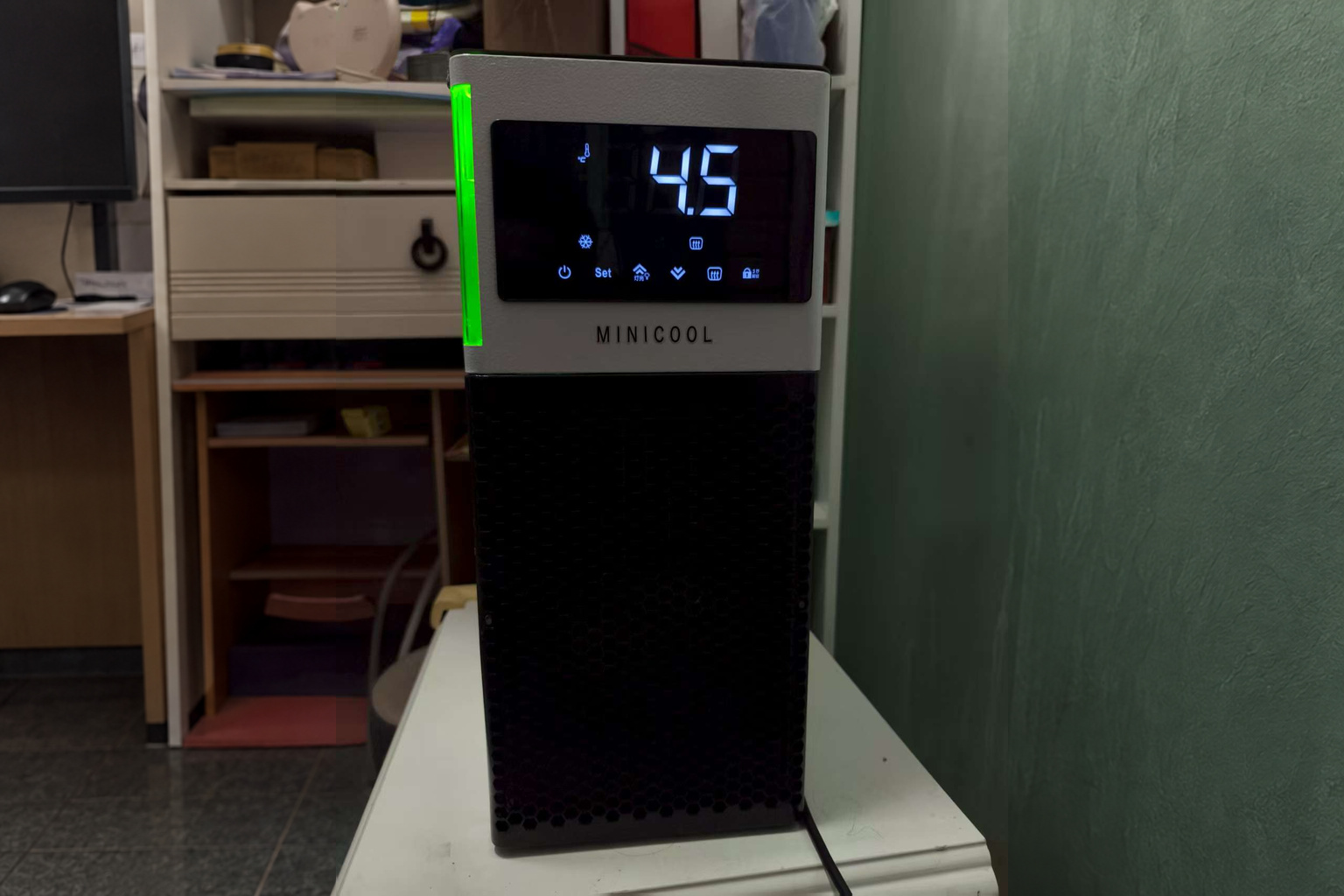
Equipment descriptions may contain several temperatures: the process target, the supply liquid entering a jacket, the warmer return liquid, and the refrigerant evaporation temperature inside the cooling machine. They are not interchangeable. A supplier needs to know which temperature the specification refers to and where it will be measured.
Write the coolant requirement separately from the process requirement. If a process must remain at a particular temperature, do not automatically request the same coolant setpoint. The heat exchanger needs an appropriate temperature difference to transfer the heat, and its design determines what difference is acceptable.
When that relationship is unknown, ask the instrument manufacturer for its required cooling-water conditions. If you are designing the heat exchanger yourself, identify the uncertainty as part of the thermal design. Do not ask the chiller supplier to guarantee sample temperature without describing the thermal path and control arrangement.
Also record the permitted process excursion and the relevant duration. A maximum temperature during a short loading event is a different acceptance requirement from steady operation. A single stability number cannot describe both unless its measurement conditions are defined.
Find Heat Load Without Guessing from the Electrical Nameplate
The electrical input of an instrument is a useful clue, but it is not automatically the heat entering the cooling liquid. Some energy leaves through air, an exhaust stream, a product, or another cooling circuit. Conversely, the external loop may absorb room heat and remove energy from incoming material as well as from the instrument itself.
If the equipment manufacturer provides a heat-rejection value for the intended operating mode, start there and retain its conditions. If only electrical input is available, label it as such. It may be a conservative starting assumption in some configurations, but the heat paths must be understood before treating it as the final cooling duty.
Where a stable liquid loop already exists, an engineering team may estimate transported heat from mass flow, fluid heat capacity, and the supply-to-return temperature difference. That method needs the correct fluid properties and suitably accurate measurements. Small temperature differences can make sensor error important, so agree on the method before buying measurement equipment.
Keep peak duty and average duty in separate fields. Include how long a peak lasts and how much recovery time is available. If measurements are not yet practical, send the operating sequence and ask which missing value most strongly affects the preliminary selection.
Turn the Hose Route into a Hydraulic Question
Draw the liquid path from the chiller outlet, through the load, and back to the inlet. Include the approximate hose lengths, internal diameters, changes in elevation, quick couplings, valves, filters, and any parallel branches. A simple labeled sketch is sufficient for the inquiry.
A pump’s maximum flow does not establish the flow through this assembled circuit. The relevant question is what flow the pump can deliver against the circuit’s resistance with the selected fluid at the operating temperature. If the equipment’s pressure-drop curve is unavailable, explicitly request a way to verify the operating point during commissioning.
Maximum permitted pressure is a separate limit. Glass jackets, instrument passages, hoses, and fittings may have different ratings. Report the equipment manufacturer’s limits instead of assuming the chiller’s normal operating pressure protects every connected part.
The existing small chiller selection guide helps distinguish equipment classes. This inquiry record goes one step earlier: it identifies which information is still needed before choosing within a class.
Record the Installation the Chiller Will Actually See
Measure the proposed space with the equipment in place. Include room for connections, filling, draining, servicing, and the manufacturer’s required airflow. A machine that fits into a recess may still draw its own warm exhaust back into its condenser.
Record the ambient temperature at the intended air intake during a representative operating period. A building thermostat elsewhere in the room does not describe a warm enclosure or a crowded bench. If conditions vary, provide the observed range and identify the part that remains an estimate.
For electrical supply, copy the available voltage, frequency, phase, and connection information. Do not infer whole-machine compatibility from the compressor’s motor type. Where a particular electrical version is needed, ask the supplier to identify it in the quotation.
Photographs should explain the installation, not replace measurements. Label the cooling ports, the hose route, the proposed location, and nearby obstructions. Remove confidential instrument labels if necessary, but preserve the information required to understand the interfaces.
Where MiniCool Fits in a Lab Chiller Quote
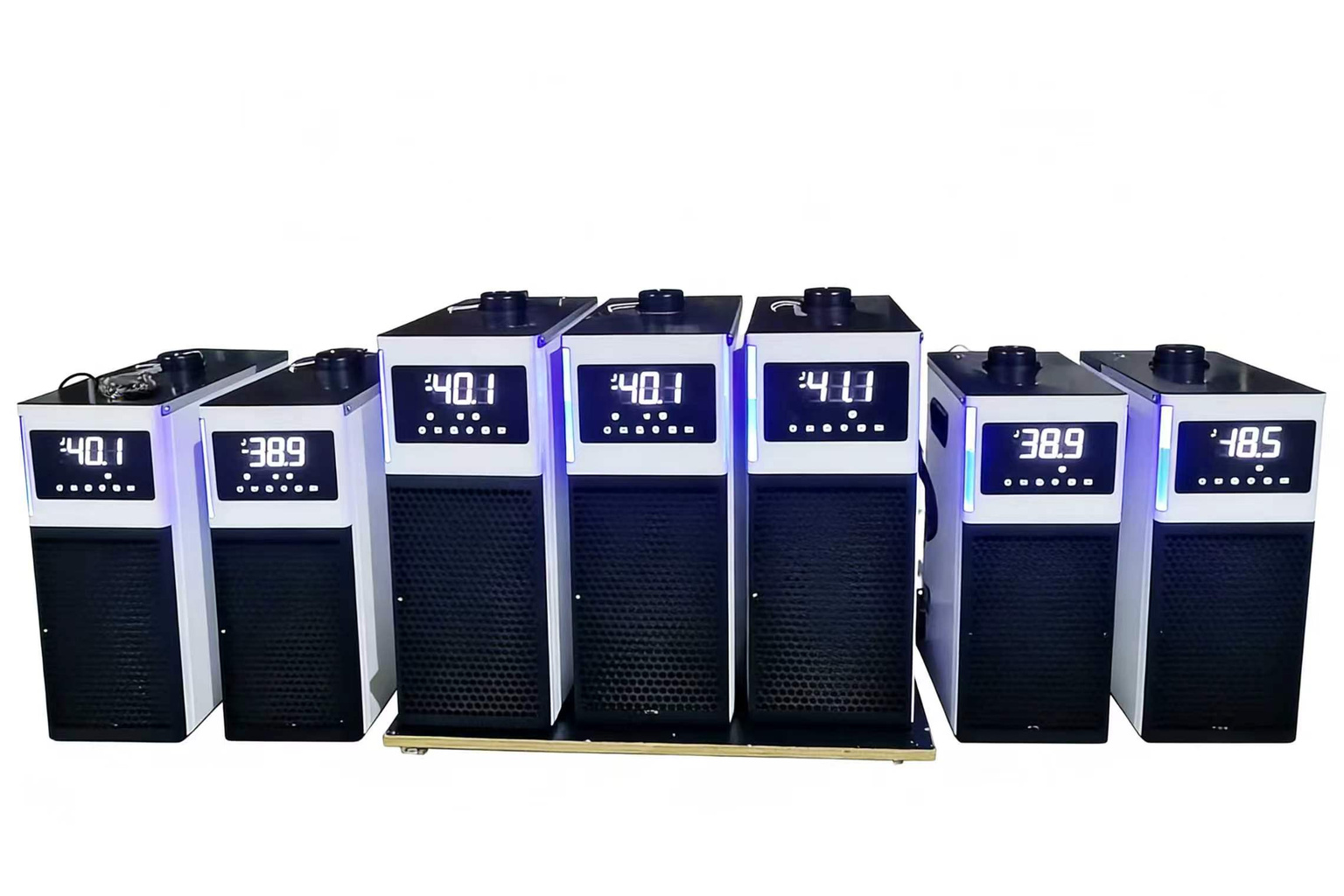
The RIGID MiniCool series is a candidate for external liquid-cooling duties requiring supply temperatures within its published 0°C to −40°C range. That range is a screening boundary, not a promise that every model will remove the requested heat at every temperature.
The series page does not establish the available cooling capacity at your exact combination of setpoint, ambient temperature, fluid, and flow. It also does not provide all the hydraulic information needed for every external circuit. Ask for the relevant operating data and the selected configuration rather than treating a headline capacity as the final answer.
A positive-temperature cooling-water requirement should not be assigned to MiniCool merely because the process itself needs precision. It belongs in a different product assessment. Similarly, a demand below the published lower temperature limit needs a different cooling approach, not a larger assumed capacity.
This is where the lab chiller quote becomes specific: the supplier can either propose a documented operating point or identify the information that prevents a responsible recommendation.
Ask for a Quote You Can Check Against Your Requirements
Ask the quotation to identify the proposed model and electrical version, the operating conditions supporting the selection, what is included, and what remains your responsibility. For an external liquid circuit, that means knowing which hoses, fluid, accessories, or installation work are included rather than assuming they accompany the machine.
Separate the commercial offer from the performance confirmation. Record price, quantity, destination, and the quoted lead time alongside the technical conditions. A desired delivery date is your requirement; it is not a manufacturer commitment until confirmed in the offer.
For a MiniCool inquiry, request available capacity at your supply temperature and ambient, the pump operating point for your circuit, and confirmation of fluid and interface compatibility. Ask which supporting documents are available for the proposed configuration. The public product page does not establish that every requested curve or test report is available.
Use the completed table to request a RIGID lab chiller quote. Include your unresolved questions in the message and request a clear list of information needed for final selection. If you only need a budget estimate now, say so; retain the assumptions with that estimate.
Frequently Asked Questions About a Lab Chiller Quote
Can I request a quote without knowing the heat load?
Yes, as a preliminary inquiry. State that the heat load is unknown, describe the operating sequence, and attach the equipment documentation. Ask which measurement or manufacturer value is needed before the supplier can confirm performance. Do not present an estimated electrical input as measured coolant heat rejection.
Should I use the process temperature as the chiller setpoint?
Not automatically. The process and coolant are separated by a heat-transfer path, and their temperatures can differ while heat is flowing. Use the equipment’s specified cooling-water conditions or have the thermal interface evaluated. Record both temperatures and their measurement locations.
What if the pump curve is unavailable?
Mark the hydraulic operating point as unresolved. Provide the circuit layout, fluid, temperature, required flow, and equipment pressure limits, then request the manufacturer’s pump data or an agreed verification method. A free-flow rating alone does not confirm delivered flow through the load.
Does a published temperature range guarantee capacity at its lowest point?
No. Temperature range and cooling capacity describe different parts of the specification. Ask for available capacity at your actual setpoint and installation conditions. The proposed machine must satisfy that duty as well as the fluid, hydraulic, electrical, and control requirements.
What makes a lab chiller quote ready for a purchase decision?
The important inputs have documented sources, the supplier has identified the quoted configuration, and the performance and acceptance conditions are agreed. Remaining unknowns should have explicit consequences rather than being hidden in general assumptions. Keep the final requirements record with the purchase documents.