
Laser Warm Up Cooling: Why Wavelength Stability Starts with Thermal Control
A laser diode or solid-state laser does not produce its rated wavelength the moment it powers on. The emission wavelength of a semiconductor laser shifts with temperature — typically 0.3–0.5 nm per degree Celsius for common diode lasers, and even more for some DPSS (diode-pumped solid-state) configurations. In applications where wavelength precision matters — spectroscopy, fiber-optic communications, medical diagnostics, lidar — this thermal drift during warm-up is not a minor inconvenience. It is a measurement error source that can invalidate results or reduce system performance until the laser reaches thermal equilibrium.
The conventional approach is to wait. Power on the laser, let it self-heat to a stable operating temperature over 15–45 minutes, and begin work only after the wavelength has settled. In a research lab with flexible schedules, this is tolerable. In a production environment running three shifts, or a field-deployed system that must deliver accurate readings within minutes of power-on, that warm-up delay is lost productivity. And in cold environments — outdoor installations, unheated warehouses, mobile platforms — the warm-up time can stretch to an hour or more as the laser fights ambient heat loss while trying to reach its operating temperature.
Laser warm up cooling addresses both sides of this problem: actively heating the laser to its operating temperature during cold start, then switching to active cooling to prevent thermal overshoot during sustained operation. The goal is not just temperature — it is temperature stability, reaching and holding the target with minimal overshoot and the tightest possible control band.
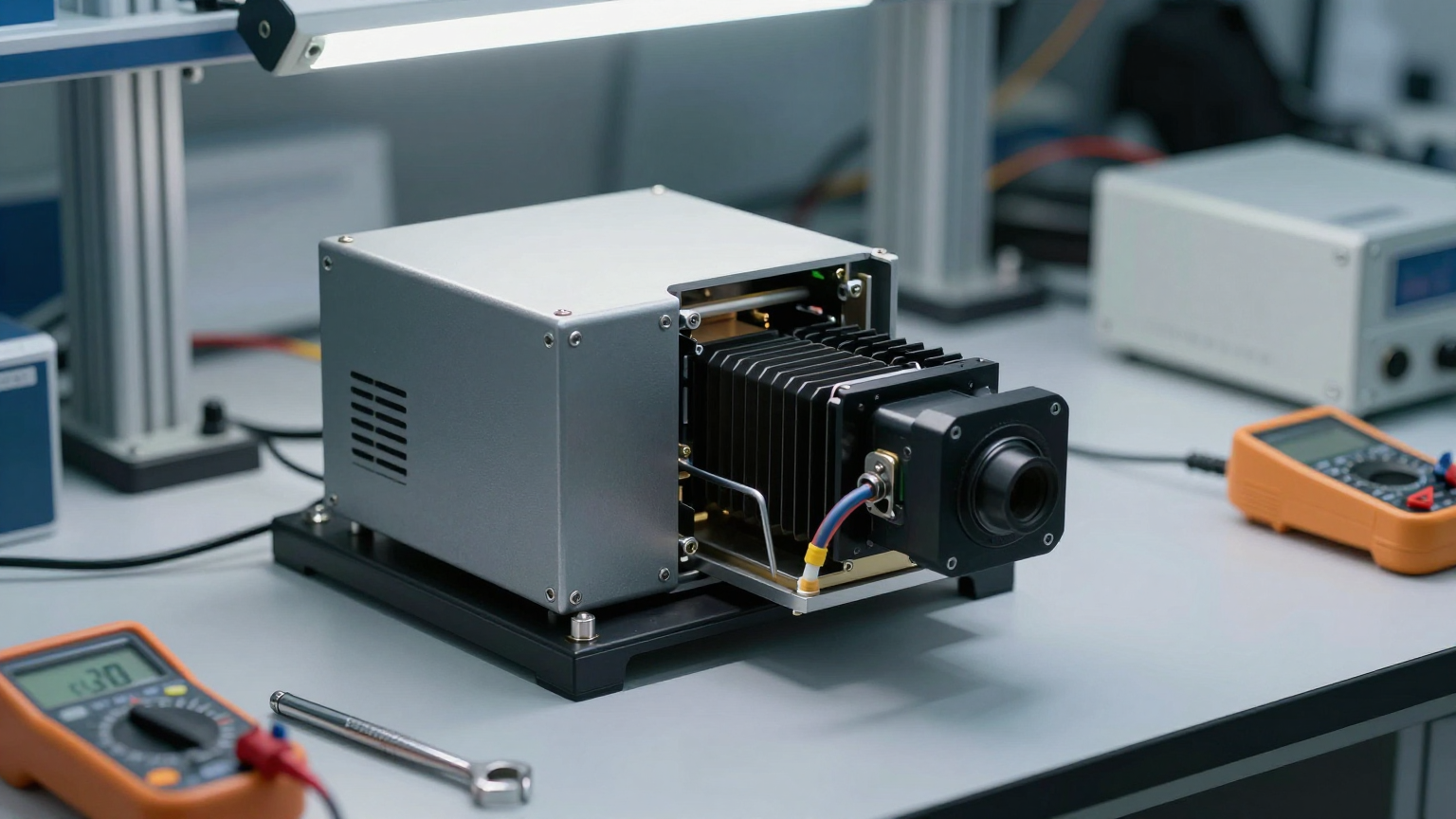
The Two-Phase Thermal Problem in Laser Systems
Every laser system faces a thermal management challenge that unfolds in two distinct phases, and most cooling solutions only address one of them.
Phase 1: Cold Start — The Laser Needs Heat
When a laser powers on in a cold environment, the gain medium, the optical cavity, and the mounting structure are all below the target operating temperature. The laser begins generating heat internally, but the rate of self-heating depends on the laser’s electrical-to-optical efficiency — and a significant portion of that heat is lost to the cold surrounding structure before it can warm the active region. In a 20°C lab, a typical diode laser module might reach thermal equilibrium in 15–20 minutes. At 5°C ambient, that extends to 30–40 minutes. At −10°C, it may take over an hour.
During this entire warm-up period, the wavelength is drifting. Any measurement, process, or communication that depends on wavelength accuracy is compromised. The laser is on, consuming power, but not yet useful.
Phase 2: Steady State — The Laser Needs Cooling
Once the laser reaches operating temperature, the thermal problem reverses. The waste heat that was helpful during warm-up now becomes a threat. Without active cooling, the laser temperature continues to climb past the optimal operating point. Wavelength drifts in the opposite direction. Thermal lensing distorts the beam profile. In high-power lasers, sustained overtemperature accelerates degradation of the gain medium and reduces operational lifetime.
The fundamental challenge is that a laser system needs heating during cold start and cooling during operation — two opposite thermal functions that must transition smoothly without overshooting the target temperature in either direction.
Why Single-Function Thermal Solutions Fall Short
Most laser thermal management systems are designed for one function: cooling. A thermoelectric cooler (TEC) mounted under the laser diode, a fan blowing across a heatsink, or a liquid cooling loop circulating through a cold plate. These work well for Phase 2 — removing waste heat during steady-state operation. But they offer nothing for Phase 1.
Some TEC-based systems can reverse polarity to provide heating, but with significant limitations. TEC heating efficiency is poor (COP approximately 1.0 in heating mode), the heating capacity is limited by the same module that was sized for cooling, and the transition between heating and cooling modes often introduces a temperature oscillation as the control loop adjusts. For applications requiring ±0.1°C stability, this oscillation during mode transition can be unacceptable.
The alternative — oversizing the TEC to handle both heating and cooling demands — increases power consumption, generates more waste heat on the rejection side, and often requires a larger heatsink that conflicts with the compact packaging requirements of modern laser systems.

Vapor-Compression Heat Pump: One System for Both Phases
A vapor-compression heat pump solves the two-phase problem with a single refrigeration circuit. In heating mode, the system extracts thermal energy from ambient air and delivers it to the laser mounting plate, actively warming the laser to its operating temperature far faster than self-heating alone. Once the target temperature is reached, the four-way reversing valve switches the refrigerant flow, and the same system begins removing waste heat — cooling the laser to maintain the target temperature during sustained operation.
The thermodynamic advantage over TEC or resistive heating is significant:
- In heating mode, a vapor-compression heat pump typically delivers COP values of 2.5–3.5, meaning each watt of electrical input produces 2.5–3.5 watts of heating. This translates to faster warm-up times with less power draw from the system’s DC supply.
- In cooling mode, the same COP advantage applies — the system removes more heat per watt of input than a TEC, enabling higher cooling capacity in a smaller package.
- The transition between heating and cooling is managed by the reversing valve, not by reversing electrical polarity through a semiconductor junction. The thermal mass of the refrigerant circuit provides inherent damping that smooths the mode transition.
For laser applications requiring tight temperature control, the variable-speed DC compressor is the key enabler. Rather than cycling on and off — which creates periodic temperature oscillations — the compressor adjusts its speed continuously to match the instantaneous thermal load. At low loads (near setpoint), the compressor runs slowly, consuming minimal power and producing minimal vibration. At high loads (during warm-up ramp or after a sudden increase in laser power), it ramps up to deliver full capacity.
Sizing a Thermal Management System for Laser Warm-Up and Cooling
Selecting the right thermal management module for a laser system requires balancing four parameters: warm-up speed, steady-state cooling capacity, temperature control precision, and physical envelope.
Warm-Up Heating Requirement
The heating power needed to bring a laser module from ambient to operating temperature within a target time depends on the thermal mass of the laser assembly and the temperature delta. A typical laser diode on a copper mount with associated optics might have a thermal mass of 50–200 J/°C. To warm this assembly from 0°C to 25°C in 5 minutes requires approximately 4–17W of net heating delivered to the laser — after accounting for losses to the surrounding structure. With a heat pump COP of 3.0, the electrical input is roughly 1.3–5.7W.
Steady-State Cooling Requirement
The cooling capacity must exceed the laser’s waste heat output at maximum operating power, plus any environmental heat gain. A 10W laser diode with 40% electrical-to-optical efficiency generates roughly 15W of waste heat. Add 5–10W of environmental heat gain through the enclosure walls, and the total cooling requirement is 20–25W. For higher-power lasers or multi-diode arrays, this scales proportionally.
Temperature Control Precision
The achievable control band depends on the thermal coupling between the cooling module and the laser, the sensor placement, and the control algorithm. With a variable-speed compressor and PID control loop, ±0.5°C is typically achievable with standard integration. For applications requiring ±0.1°C — such as wavelength-locked telecom lasers or precision spectroscopy sources — additional thermal mass at the laser mount (a copper heat spreader) and optimized PID tuning can tighten the control band further.
Physical Envelope
Laser systems are often space-constrained. The thermal management module must fit within the available volume without interfering with optical paths, electrical connections, or airflow. Compact cool-and-heat units built around miniature DC compressors can fit within a volume roughly the size of a paperback book — small enough to mount alongside or beneath most laser modules without requiring a redesign of the optical layout.

Application Scenarios Where Laser Warm-Up Cooling Delivers the Highest Value
Field-Deployed Lidar and Remote Sensing
Lidar systems mounted on vehicles, drones, or fixed outdoor platforms operate across wide temperature ranges. A lidar unit powered on at dawn in a desert environment may start at 5°C and face 50°C ambient by midday. Without bidirectional thermal management, the laser either drifts during warm-up (reducing measurement accuracy in the first hour) or overheats during peak ambient (triggering thermal shutdowns). A compact heat pump module handles both extremes with a single system, enabling accurate measurements from the moment of power-on through the hottest part of the day.
Industrial Laser Processing
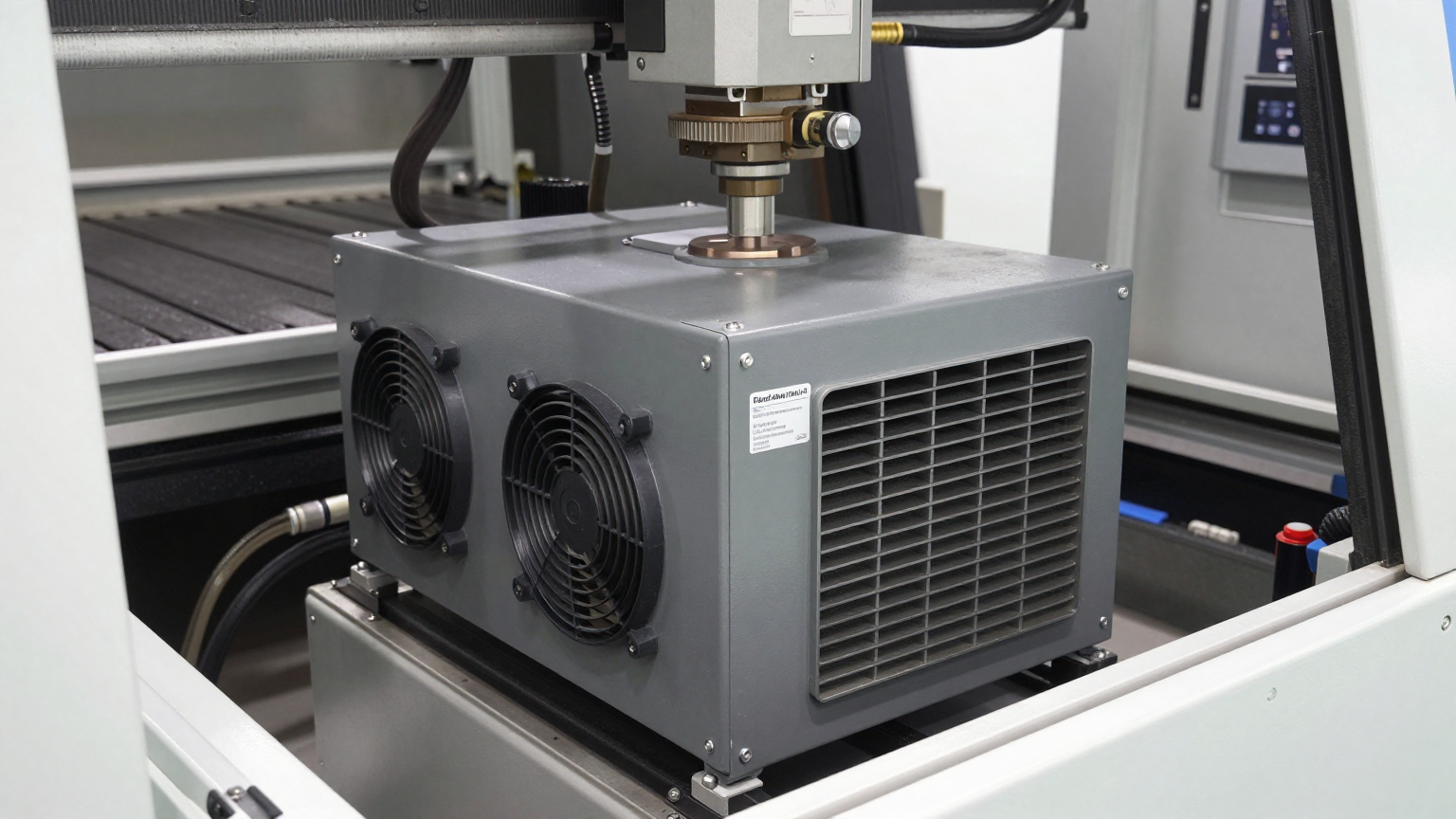
Laser cutting, engraving, and welding systems in factory environments often sit idle overnight in unheated facilities. The first production run of the morning requires a warm-up period before the laser reaches stable output. In high-throughput operations, this warm-up delay directly reduces daily output. Active preheating cuts the warm-up time and ensures the first cut of the day meets the same quality standard as the hundredth.
Medical and Aesthetic Laser Devices
Medical lasers used in dermatology, ophthalmology, and surgical applications require precise wavelength and power stability for patient safety. A laser that has not fully stabilized thermally may deliver inconsistent energy density, affecting treatment outcomes. Active thermal management ensures the laser is ready for clinical use within minutes of power-on, rather than requiring a lengthy warm-up protocol that delays patient scheduling.
Telecom Wavelength-Division Multiplexing
In dense wavelength-division multiplexing (DWDM) systems, laser transmitters must maintain wavelength accuracy within fractions of a nanometer to avoid channel crosstalk. Temperature control is the primary mechanism for wavelength locking. A thermal management system that can both heat and cool the laser — maintaining the target temperature regardless of ambient conditions in the telecom shelter or cabinet — is essential for reliable network operation.
Selection Guide: Matching Thermal Module to Laser Requirements
| Laser Application | Typical Thermal Load | Control Precision Needed | Key Selection Criteria |
|---|---|---|---|
| Single diode, low power | 5–15W | ±1.0°C | Compact size, low vibration |
| Diode array or bar | 30–100W | ±0.5°C | Higher cooling capacity, uniform distribution |
| DPSS laser | 20–50W | ±0.5°C | Vibration isolation, stable mounting |
| Fiber laser pump module | 50–200W | ±1.0°C | Liquid cooling interface, high capacity |
| Telecom DFB laser | 2–5W | ±0.1°C | Precision PID, minimal thermal mass |
The selection process starts with the thermal load (waste heat at maximum laser power) and the required control precision. From there, the physical constraints — available volume, mounting orientation, vibration sensitivity, and available DC voltage — narrow the options. For most applications in the 5–100W thermal load range, a miniature vapor-compression module provides the combination of heating capability, cooling capacity, and control precision that single-function solutions cannot match.
Frequently Asked Questions
Does compressor vibration affect laser beam quality?
Vibration is a valid concern for precision optical systems. Miniature DC rotary compressors produce significantly less vibration than reciprocating designs. Additionally, anti-vibration mounting (rubber grommets or flexible couplings) and physical separation between the compressor and the optical path can reduce transmitted vibration to levels that do not measurably affect beam pointing stability in most applications. For ultra-sensitive setups, mounting the compressor on a separate structure from the optical bench is recommended.
How fast can a heat pump bring a laser to operating temperature?
Warm-up speed depends on the thermal mass of the laser assembly and the heating capacity of the module. For a typical diode laser module with moderate thermal mass, a compact heat pump can reduce warm-up time from 30–45 minutes (passive self-heating) to 5–10 minutes (active heating). The exact improvement depends on ambient temperature and insulation quality.
Can the same module cool a laser and heat it for wavelength tuning?
Yes. Some laser applications deliberately adjust the operating temperature to tune the emission wavelength. A bidirectional thermal module can shift the laser temperature up or down on command, providing active wavelength tuning in addition to thermal stabilization. The variable-speed compressor enables smooth, continuous temperature adjustment rather than stepped changes.
What refrigerant is used, and does it require field servicing?
Compact cool-and-heat modules typically use R134a or R290 refrigerant, pre-charged at the factory. The sealed refrigerant circuit requires no field charging, brazing, or vacuum procedures. Under normal operating conditions, the refrigerant charge lasts the lifetime of the unit. This is a significant advantage for laser systems deployed in cleanroom or controlled environments where refrigerant handling would be impractical.
Is DC-native operation important for laser systems?
Many laser systems run on DC power — either from a bench supply, a battery pack, or a DC bus within a larger instrument. A DC-native compressor connects directly to this supply without requiring an inverter, which eliminates 15–20% conversion losses and removes a potential source of electrical noise that could affect sensitive laser electronics. For battery-powered field instruments, the efficiency gain directly extends operational runtime.
What is the typical noise level of a miniature compressor module?
Noise levels vary by model and operating speed, but miniature DC rotary compressors in variable-speed mode typically produce noise levels comparable to a quiet office environment. At low speed (near setpoint, minimal thermal load), noise is further reduced. For noise-sensitive laboratory environments, this is generally acceptable, though acoustic isolation enclosures can be added if needed.
From Waiting to Working: The Operational Case for Active Laser Thermal Management
The warm-up delay in laser systems is an accepted inconvenience in many installations — but it does not have to be. Active thermal management with a bidirectional heat pump eliminates the wait by delivering controlled heating during cold start and seamless transition to cooling during operation. The result is faster time-to-stable-output, tighter wavelength control, and consistent performance across ambient temperature variations.
For laser systems that operate in variable environments, require rapid readiness, or demand precision wavelength stability, a compact cool-and-heat module built around a variable-speed DC compressor provides both the heating and cooling functions in a single, pre-charged, integration-ready package.
If your laser platform has specific thermal constraints — unusual mounting geometry, tight vibration budgets, or precision requirements beyond ±0.1°C — we can review the thermal profile and discuss a configuration that fits your optical and mechanical envelope.