
便携式诊断用医用冷却设备:为什么空气冷却至关重要
从手持式超声扫描仪、即时血液分析仪到移动式X光机,便携式诊断设备正在改变临床医生在传统医院环境之外提供医疗服务的方式。野战诊所、救护车、灾害救援车辆和远程筛查站都依赖于能够在不可预测的环境中可靠运行的设备。
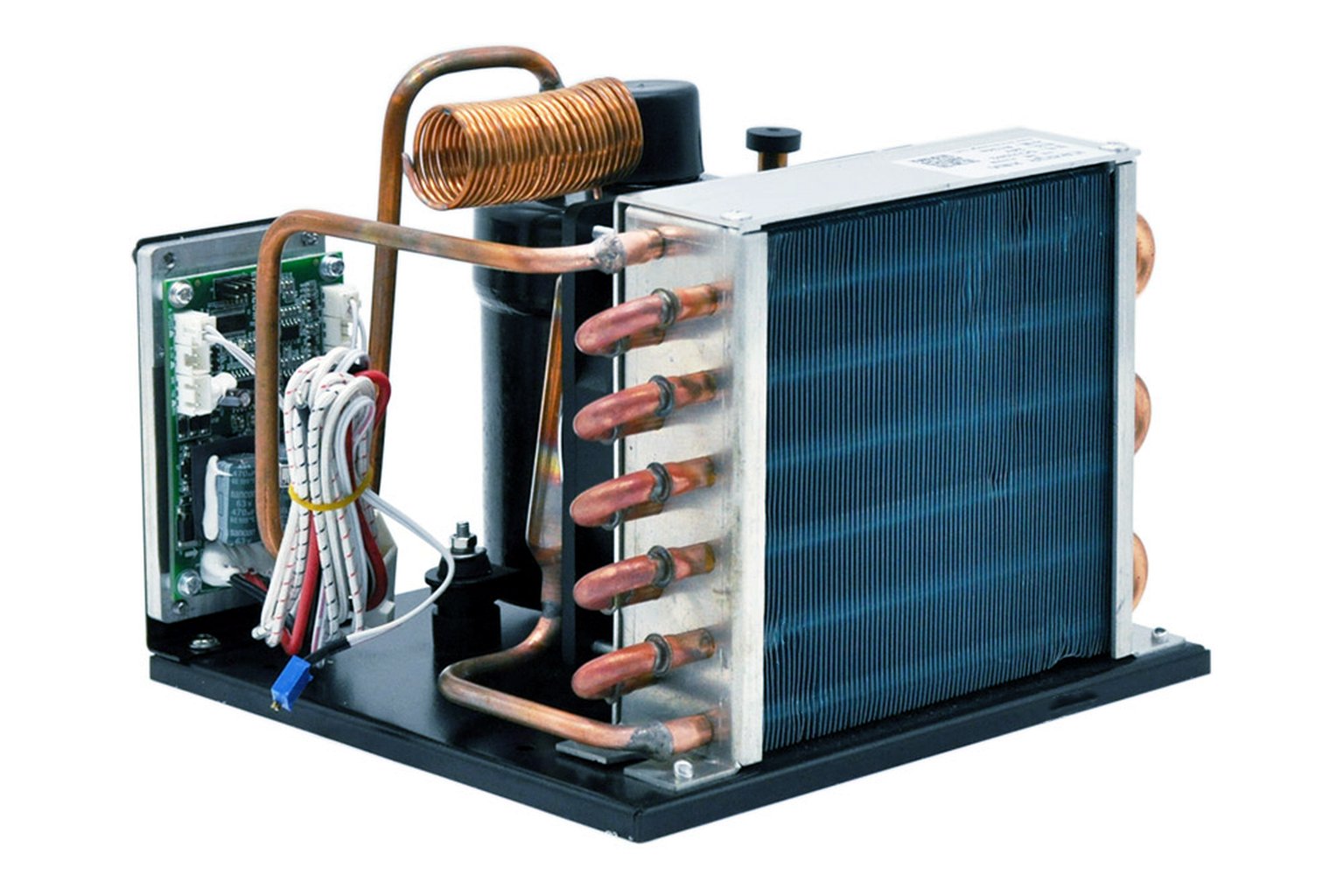
但可靠运行不仅仅取决于电子元件和软件。温度直接影响敏感诊断元件的精度和使用寿命。当这些设备在封闭的机壳或机柜中运行,暴露于环境热量时,散热器和小风扇等被动冷却方法往往效果不佳。这时,主动式医疗冷却设备——特别是紧凑型直流空调——就显得至关重要。
本文探讨了便携式诊断设备为何能从专用空气冷却系统中受益,空气冷却与液体冷却在此方面有何异同,以及 OEM 工程师和产品经理在为医疗应用选择紧凑型直流空调装置时应考虑哪些因素。
为什么被动冷却在便携式医疗设备中存在不足
Many electronic devices rely on passive thermal management — heat sinks, thermal pads, and small axial fans that move ambient air across warm components. For low-power consumer electronics, this approach works well enough. Portable diagnostic instruments, however, face a different set of challenges.
First, these devices often operate inside sealed or semi-sealed enclosures to protect sensitive optics, sensors, and fluid-handling systems from dust, moisture, and contamination. Sealing limits natural airflow, trapping heat inside the housing. A small fan recirculating warm internal air cannot reduce the temperature below ambient — it can only redistribute heat.
Second, portable diagnostics are frequently deployed in environments where ambient temperatures are elevated: vehicles parked in direct sunlight, outdoor field stations, or poorly ventilated mobile clinics. When the surrounding air is already 35 °C or higher, passive methods cannot maintain the sub-30 °C operating window that many diagnostic sensors require.
Third, some diagnostic processes generate concentrated heat bursts — laser modules in analyzers, high-frequency transducers in ultrasound probes, or rapid sample-heating cycles in PCR-based testing. These transient thermal loads demand active heat removal, not just heat spreading.
Active medical cooling equipment based on vapor-compression refrigeration can pull heat out of an enclosed space and reject it externally, maintaining internal temperatures well below ambient. This is the fundamental advantage over passive approaches.
Air Cooling vs. Liquid Cooling: When to Choose Air-Based Systems
Within the category of active cooling, engineers typically evaluate two architectures: air cooling (where refrigerated air circulates through the device enclosure) and liquid cooling (where a chilled fluid loop absorbs heat from components via cold plates or heat exchangers).
Both have legitimate roles. The choice depends on the application’s thermal density, form factor, and operational context.
Where Liquid Cooling Excels
Liquid cooling is well suited to applications with high heat flux concentrated on specific components — situations where a cold plate pressed directly against a heat source can extract large amounts of thermal energy through a small contact area. Large imaging systems, high-power laser assemblies, and laboratory instruments with localized hot spots often benefit from liquid cooling loops.
Where Air Cooling Makes More Sense
For portable diagnostic devices, the thermal challenge is often different. Rather than a single high-density hot spot, the concern is maintaining a stable ambient temperature inside an equipment enclosure or cabinet. The heat sources may be distributed — a processor board here, a power supply there, a display module on the other side. In these scenarios, circulating cooled air through the enclosure is simpler, lighter, and more practical than routing liquid lines to every warm component.
Air-cooled systems also eliminate risks associated with fluid leaks near sensitive electronics and biological samples. In a portable blood analyzer or a mobile immunoassay reader, even a small coolant leak could compromise both the device and the test results. Air cooling removes that risk entirely.
Additionally, air-based medical cooling equipment requires less integration complexity. There are no pumps, reservoirs, quick-disconnect fittings, or fluid maintenance schedules. For OEMs designing portable devices that will be serviced in the field by technicians with limited tooling, this simplicity is a meaningful advantage.
Constraints Unique to Portable and Mobile Medical Scenarios
Designing thermal management for portable diagnostics is not the same as designing for a stationary laboratory instrument. Several constraints shape the engineering decisions.
Battery and DC Power
Portable medical devices frequently run on battery packs or vehicle DC power systems — 12 V, 24 V, or 48 V supplies. Traditional air conditioning compressors designed for AC mains power require inverters to operate from DC sources. Inverters add weight, volume, cost, and conversion losses. They also introduce another potential failure point in a system that needs to be dependable in the field.
A DC-native air conditioning unit that connects directly to a 12 V, 24 V, or 48 V battery eliminates the inverter entirely. The compressor runs on the same DC bus as the rest of the device, simplifying the power architecture and reducing energy wasted in AC-DC-AC conversion chains.
Weight and Size
Every gram matters in a device that clinicians carry between patients or load into a vehicle alongside other equipment. A cooling module that weighs 20 kg is impractical for a portable ultrasound cart. Compact units weighing around 5 kg (approximately 11 lbs) can be integrated without fundamentally changing the device’s portability profile.
Vibration and Shock
救护车、军用车辆或坚固的野战箱中运输的设备会受到振动和机械冲击,这会损坏脆弱的冷却部件。采用无刷直流电机(BLDC)的压缩机 and robust mechanical designs tolerate these conditions better than conventional AC compressor assemblies with their heavier reciprocating mechanisms.
噪音
诊断环境——即使是移动诊断环境——也需要合理的噪音水平。制冷设备如果噪音过大,会干扰听诊、医患沟通或超声检查。变频压缩机能够根据热负荷调节制冷量,在部分负荷运行时比定速压缩机在全功率下频繁启停时更加安静。
DC-Native压缩技术:深入剖析
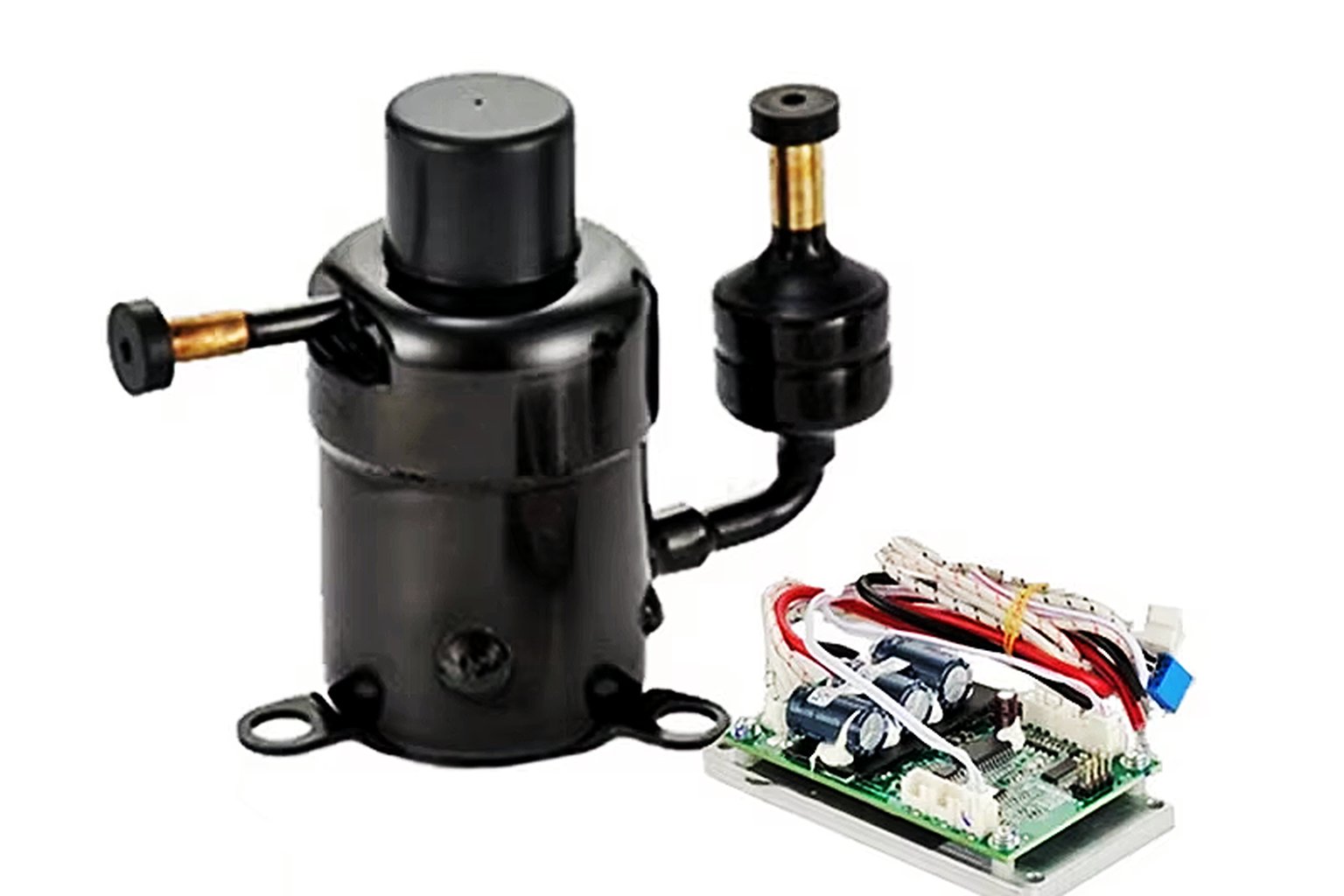
任何蒸汽压缩式空调系统的核心部件都是压缩机。在专为便携式应用设计的紧凑型直流系统中,压缩机采用无刷直流电机,可直接由直流电源供电,无需转换为交流电。
这种基于数据中心的集成方法为医疗器械集成提供了几个实际优势:
- 直接电池连接——压缩机可连接到 12V、24V 或 48V 直流电源,与便携式医疗设备和应急车辆中使用的常见电池配置相匹配。
- 变速运行——无刷直流压缩机可根据制冷需求持续调节转速。当热负荷较低时,压缩机减速,从而降低能耗和噪音。当需求增加时,压缩机加速运转。这种调节方式比简单的启停循环能实现更精确的温度控制。
- 紧凑的外形尺寸——直流微型压缩机比传统的交流压缩机组件小得多,可以集成到空间受限的便携式设备外壳中。
- 制冷剂选择——系统可选用R134a或R290(丙烷)制冷剂。R290的全球变暖潜值(GWP)较低,可能符合某些地区不断变化的环境法规,但其易燃性要求在系统设计中考虑相应的安全因素。
例如,RIGID 微型直流空调系列提供八款型号,制冷量从 450 瓦(1535 BTU)到 900 瓦(3069 BTU)不等,并有 12 伏、24 伏和 48 伏三种电压配置可选。这些空调重量约为 5 公斤,可将设定温度维持在 5°C 至 30°C 之间。如需详细规格,请访问微型直流空调产品页面。
温度稳定性和诊断准确性
温度不仅仅是诊断设备中的一个舒适性参数,它还会直接影响测量精度。请看以下几个例子:
血液分析仪中的光学传感器具有校准曲线,这些曲线基于特定的工作温度范围。如果传感器的工作温度超出该范围,吸光度读数就会发生偏移,从而可能影响分析物浓度的测定结果。此时可能需要重新校准,这在紧急临床情况下会耗费时间。
超声换能器在长时间扫描过程中会产生热量。如果换能器外壳温度持续升高,设备可能会触发过热保护机制以保护压电元件,从而在关键时刻中断检查。
即时检测设备中的试剂储存隔间通常需要保持在 2°C 至 30°C 之间的温度。在夏季高温下停放的车辆中,车内温度会在几分钟内超过 50°C。如果没有主动冷却,储存的试剂会降解,导致检测结果无效和耗材浪费。
变速直流空调系统通过维持稳定的设定温度来解决这些问题,使其不受环境温度波动的影响。压缩机转速的连续调节(而非突然的启停循环)减少了机柜内部的温度波动,从而提高了诊断性能的稳定性。
应用范围:这种方法适用于哪些情况,不适用于哪些情况
坦诚面对应用范围的局限性有助于工程师做出更明智的决策。紧凑型直流空调非常适合特定类型的医疗制冷需求,但它并非通用解决方案。
适用场景
- 便携式和手持式超声系统可用于救护车、野战医院或家庭访视等场景。
- 移动筛查单元中部署的即时血液分析仪和免疫分析仪读数仪
- 移动式X射线设备柜在运输和运行过程中需要内部温度控制
- 现场部署检测站中的试剂和样品存储隔间
- 在非温控环境下使用的远程医疗推车和便携式监测站
- 兽医诊断设备用于农场或田间环境
不适合
- 诸如MRI或CT扫描仪等高热密度成像系统需要容量更高的专用液冷回路。
- 需要在芯片级或晶圆级进行精确的组件级温度控制的应用,需要使用直接接触式液体冷板。
- 大型固定式实验室仪器,配备现有设施暖通空调基础设施
了解这一界限可确保工程师为每个应用选择合适的散热架构,而不是过度或不足地配置冷却系统。
医疗器械热系统的监管考量
在将冷却设备集成到医疗器械中时,必须认真对待相关法规要求。以下几点值得注意:
IEC 60601-1 是国际医疗电气设备安全标准,适用于用于诊断、治疗或监测患者的设备。如果冷却系统集成到符合该标准范围的设备中,则热子系统将成为设备整体合规性评估的一部分。这可能会影响材料选择、电气隔离、漏电流限制和风险分析文档。
请注意,IEC 60601 专门适用于医疗电气设备——并非所有用于医疗保健环境的设备都必然在其适用范围内。设备的分类取决于其预期用途和监管途径。OEM 工程师应在设计过程的早期阶段咨询其监管团队,以确定哪些标准适用于其特定产品。
对于预计在恶劣运输条件下运行的便携式设备,IEC 60068(振动、冲击和温度循环)等环境测试标准也可能具有相关性。
需要注意的是,从组件供应商处选择冷却模块并不意味着最终设备就能自动获得任何医疗认证。原始设备制造商 (OEM) 仍需对整个设备的合规性负责,包括集成的冷却子系统。
OEM工程师的选拔标准
在评估小型直流空调机组作为便携式诊断医疗冷却设备时,应考虑以下因素:
制冷能力与热负荷
计算机箱内部的总散热量——包括电子元件、显示屏、电源以及任何放热过程产生的热量。考虑到环境温度升高,需要预留一定的余量。将此值与设备的额定散热能力相匹配。450 W 至 900 W 的功率范围涵盖了许多便携式诊断机箱,但精确的热建模至关重要。
电压兼容性
确认冷却装置的输入电压与设备的直流母线电压匹配。该装置提供 12V、24V 和 48V 三种规格,可直接与医疗和应急车辆应用中常用的电池系统集成。
物理外壳
测量冷却模块的可用空间,包括蒸发器侧和冷凝器侧的空气流通间隙。该模块重量约为 5 公斤,体积小巧,可安装在许多便携式设备外壳中,但请务必根据您的具体外壳设计核对尺寸。
温度范围
确认设备的可控温度范围(例如 5 °C 至 30 °C)是否涵盖您设备所需的运行温度范围。请同时考虑试剂保存所需的最低温度和设备可能遇到的最高环境温度。
制冷剂选择
根据目标市场的环保法规、设备使用环境的安全要求以及客户偏好,评估 R134a 和 R290 的优劣。两种制冷剂都有效;选择时需要在 GWP 值、易燃性等级和区域监管趋势之间权衡。
噪声和振动
向供应商索取声学数据,并根据您设备的噪声预算进行评估。变速运行通常比定速运行产生更低的平均噪声水平,这在临床环境中尤为有利。
定制支持
便携式医疗设备通常具有独特的外形尺寸和集成要求。与能够提供定制化改造服务的制造商合作——例如调整安装配置、修改冷凝器或蒸发器结构,或定制控制接口——可以显著降低集成工作量,远胜于直接改造现成的固定式设备。
推进医疗器械用紧凑型直流空调技术的发展
便携式即时诊断技术的发展趋势持续加速。随着这些设备从温控实验室走向车辆、现场工作站和远程诊所,可靠的热管理已成为设计上的必要条件,而非事后考虑的因素。
紧凑型直流空调系统为需要主动冷却但又不想采用复杂的液冷回路、承受交流系统重量或受限于被动散热的原始设备制造商 (OEM) 提供了一条切实可行的解决方案。这些设备直接由直流电池供电,通过变速压缩机控制保持温度稳定,并且重量轻、体积小巧,能够安装在狭小的空间内,从而满足便携式医疗应用的特定需求。
对于正在评估下一代便携式诊断平台医疗冷却设备方案的工程团队而言,关键在于将冷却架构与应用的实际散热特性、电源基础设施和部署环境相匹配。空气冷却虽然不能解决所有散热难题,但对于特定类型的便携式设备而言,它能够在最关键的环节提供可靠、易于维护且便于集成的温度控制。