
Medical Device Cooling Demands What Industrial Cooling Ignores
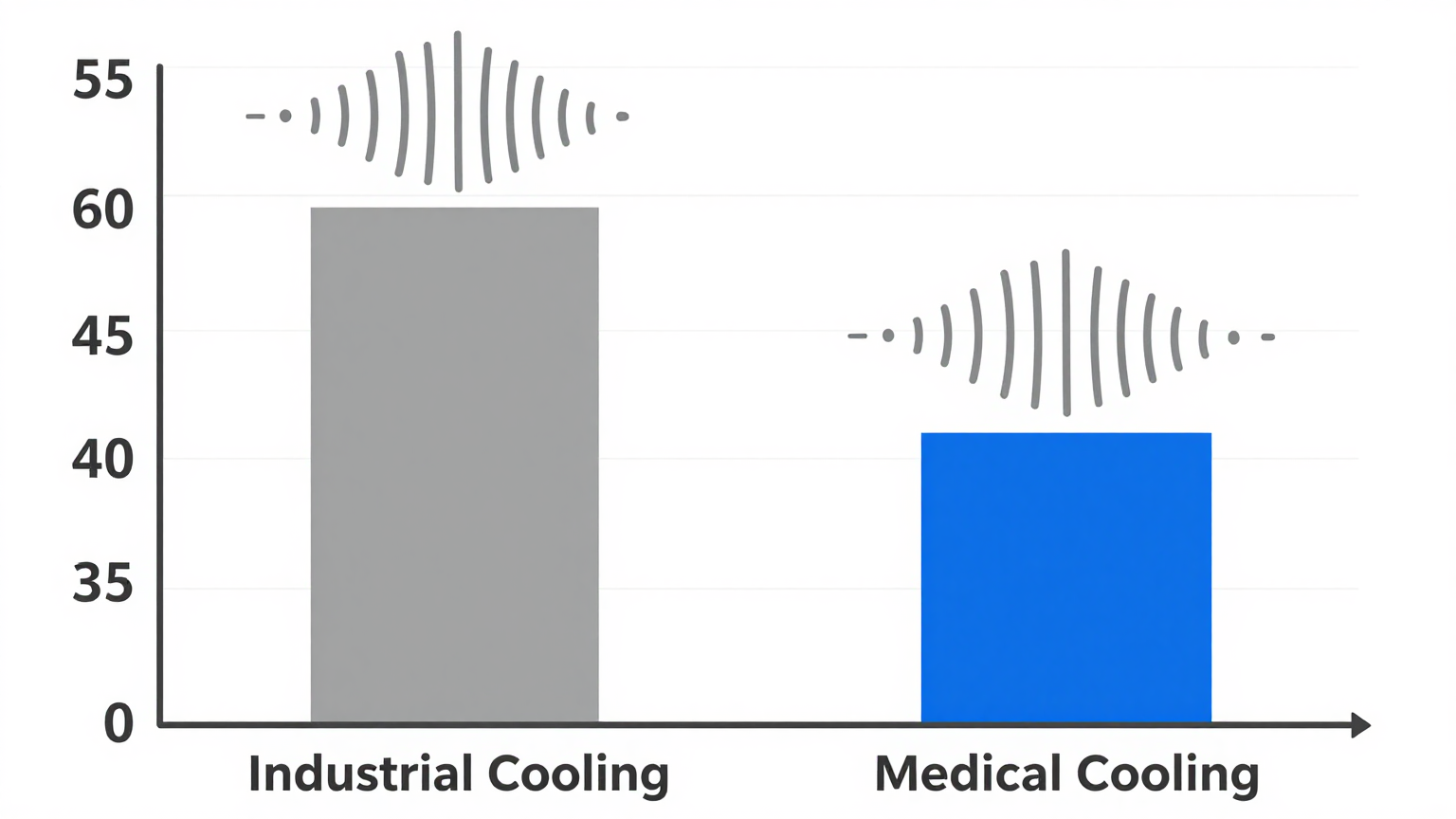
In an industrial enclosure, a cooling module that produces 55 dB of noise and measurable vibration is unremarkable. In a hospital examination room, a patient consultation area, or a mobile diagnostic cart parked next to a patient bed, that same noise and vibration level is unacceptable. Medical device cooling operates under constraints that most industrial cooling engineers never encounter — and the consequences of ignoring those constraints are not just technical but regulatory and clinical.
This guide addresses the specific cooling requirements for medical devices — particularly mobile medical carts, point-of-care analyzers, diagnostic imaging peripherals, and laboratory instruments — where thermal stability must coexist with strict noise, vibration, and electromagnetic compatibility requirements.
The core challenge is not generating cold air. It is generating cold air quietly, smoothly, and without interfering with the medical device’s primary function.
Why Medical Devices Need Active Cooling
Medical devices generate heat for the same reasons industrial equipment does — power electronics, processors, displays, and sensors all convert electrical energy into waste heat. But medical devices add specific thermal requirements that make passive cooling insufficient for many applications.
Temperature-Sensitive Reagents and Samples
Point-of-care analyzers and diagnostic carts often carry temperature-sensitive reagents, blood samples, or biological materials that degrade if exposed to elevated temperatures. The device must maintain an internal temperature of 20 to 25 degrees regardless of the ambient environment — which may be a warm patient room, an outdoor mobile clinic, or a non-climate-controlled storage area between uses.
Precision Instrument Stability
Optical sensors, spectrophotometers, and imaging detectors deliver calibrated results only within a specified temperature range. Thermal drift causes measurement drift. A diagnostic device that produces different results at 22 degrees than at 32 degrees is a device that produces unreliable results — a clinical risk that is both a patient safety issue and a regulatory liability.
Continuous Operation Duty Cycle
Many medical devices operate continuously or for extended periods — 12-hour shifts in emergency departments, 24-hour monitoring in ICUs, or multi-hour surgical procedures. The cooling system must sustain its performance for these durations without degradation, maintenance intervention, or operator attention.
Noise Requirements in Clinical Environments
Hospital noise standards are defined by regulatory and accreditation bodies. The World Health Organization recommends background noise levels below 35 dB in patient rooms and below 40 dB in general hospital areas. In practice, most clinical environments target ambient noise levels of 40 to 50 dB, which means any device contributing noise must stay well below this range to avoid being the dominant noise source.
| Clinical Area | Target Ambient Noise | Max Device Contribution |
|---|---|---|
| Patient room / ICU | 35-40 dB | Under 35 dB at 1 meter |
| Examination room | 40-45 dB | Under 40 dB at 1 meter |
| Laboratory | 45-55 dB | Under 45 dB at 1 meter |
| Operating room | 45-55 dB (with equipment) | Under 45 dB at 1 meter |
A cooling module that produces 50 dB at 1 meter — typical of many industrial enclosure coolers — would be the loudest device in a patient room. Medical device OEMs need cooling modules in the 35 to 42 dB range, which requires specific design choices: low-speed DC fans, vibration-isolated compressor mounts, acoustically optimized airflow paths, and variable-speed compressor operation that reduces speed (and noise) when full cooling capacity is not needed.
Vibration Requirements
Vibration from a cooling module affects medical devices in two ways:
- Mechanical interference — vibration transmitted through the device structure can blur imaging results, cause fluid handling errors in microfluidic systems, or introduce artifacts in sensor readings
- Acoustic emission — vibration transmitted to the device enclosure becomes audible noise, contributing to the noise problem described above
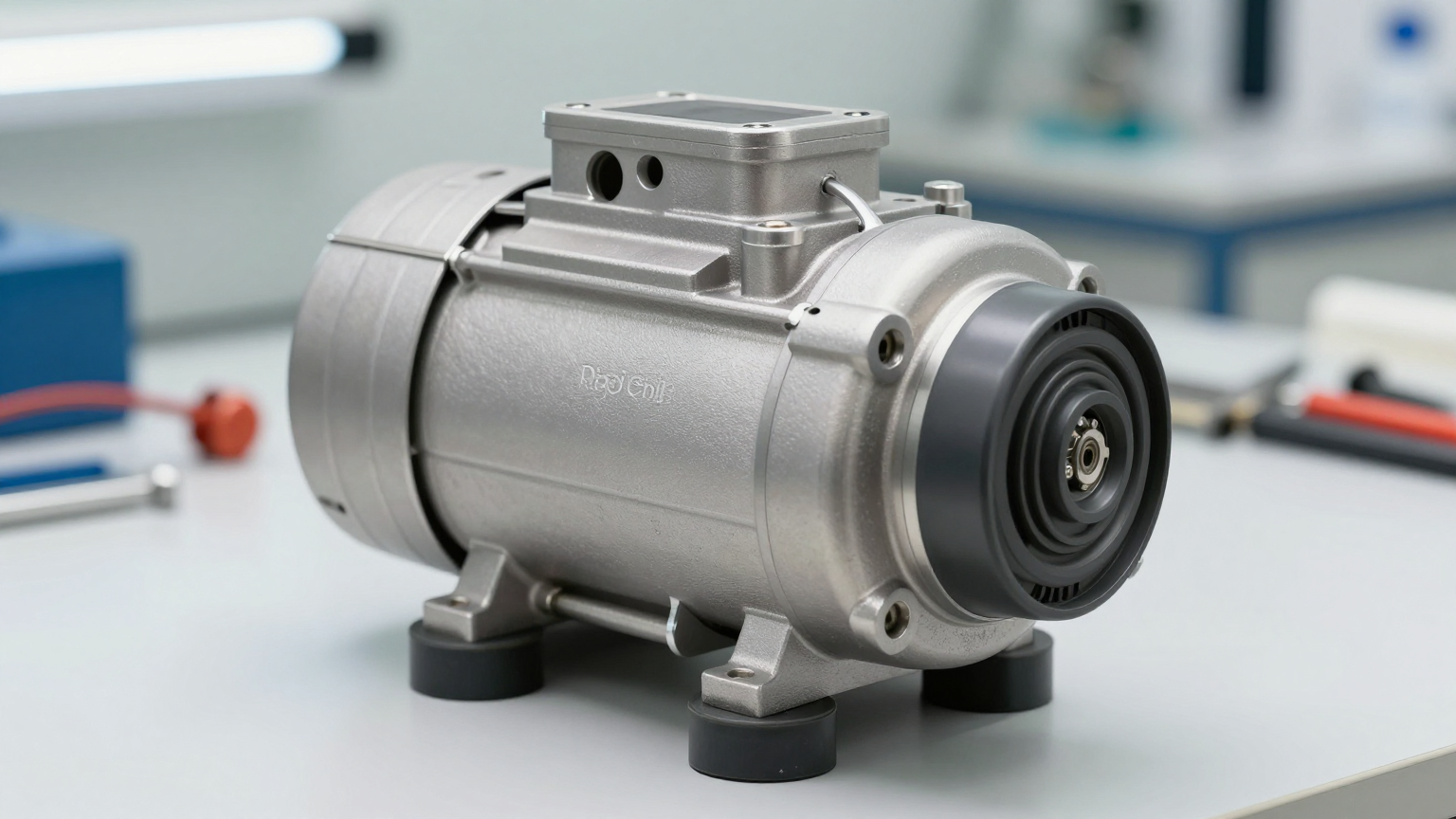
DC rotary compressors inherently produce less vibration than reciprocating compressors because the rotary compression mechanism generates smooth, continuous force rather than the pulsating force of a reciprocating piston. Variable-speed operation further reduces vibration by allowing the compressor to run at lower speeds (and lower vibration amplitudes) during partial-load conditions — which is the majority of the operating time for most medical devices.
Vibration isolation between the compressor and the device structure — using rubber mounts, spring isolators, or elastomeric pads — attenuates the remaining vibration before it reaches sensitive components. For the most demanding applications, double isolation (compressor-to-module and module-to-device) provides additional attenuation.
Electromagnetic Compatibility (EMC)
Medical devices must comply with IEC 60601-1-2 for electromagnetic compatibility. A cooling module’s compressor motor, driver electronics, and fan motors generate electromagnetic emissions that can interfere with the medical device’s sensitive electronics — particularly low-level analog signals from sensors and detectors.
DC brushless motors (BLDC) generate less EMI than brush-type motors. Shielded motor cables, filtered power connections, and proper grounding reduce conducted and radiated emissions. The cooling module manufacturer should provide EMC test data demonstrating compliance with the relevant emission limits when the module is integrated into the medical device.
Design Selection Criteria for Medical Cooling Modules
When evaluating a cooling module for medical device integration, the following criteria should be assessed in order of priority:
- Noise level at 1 meter: must be below the target for the intended clinical environment
- Vibration specification: measured in mm/s or mG at the mounting interface, at all operating speeds
- Temperature stability: the module’s ability to hold setpoint within the required tolerance (typically plus or minus 1 to 2 degrees for general medical, plus or minus 0.5 degrees for precision diagnostics)
- Cooling capacity at ambient: verified at the maximum ambient temperature the device will encounter
- EMC performance: conducted and radiated emissions within IEC 60601-1-2 limits
- Condensate management: internal drain path that prevents any moisture from reaching device electronics
- Size and weight: must fit within the device’s available volume and weight budget
- DC power compatibility: matches the device’s internal power bus voltage
Thermal Design for Mobile Medical Carts
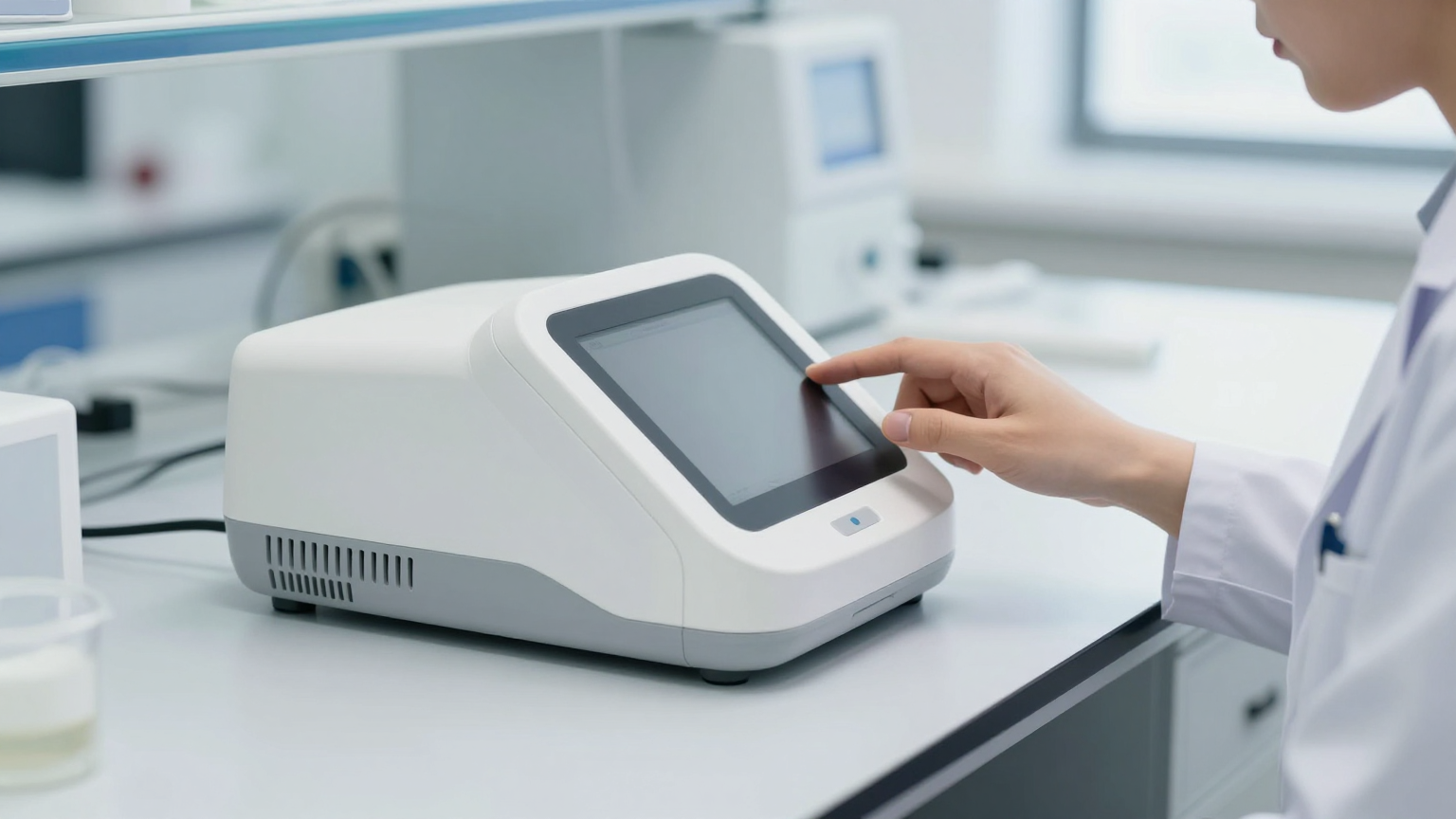
Mobile medical carts present a unique combination of thermal challenges. The cart is compact — typically 600 to 800 mm wide, 500 to 600 mm deep, and 1,000 to 1,200 mm tall. Inside that volume, the OEM must fit a computer, display, battery pack, medical analyzer, sample storage, and cooling system. Space for the cooling module is measured in liters, not cubic meters.
The cooling module must fit within a volume of 2 to 5 liters while delivering 100 to 300 W of cooling capacity — a power density requirement that eliminates most conventional cooling solutions and demands purpose-built miniature DC compressor technology. The module’s weight matters because the cart must be easily movable by a single nurse or technician — typically under 50 kg total cart weight including all equipment and consumables.
Battery operation adds another constraint. Mobile carts operate on internal batteries during transport between rooms and during procedures away from wall outlets. The cooling module’s power consumption directly reduces the cart’s battery runtime. A module consuming 80 W at partial load provides 4 to 5 hours of cooling on a typical 400 Wh cart battery — adequate for most clinical workflows but requiring careful power budgeting during the cart’s design phase.
The cart’s motion introduces intermittent vibration and tilting as it is pushed over door thresholds, into elevators, and across uneven flooring. The cooling module must tolerate these dynamics without refrigerant migration, oil displacement, or condensate spillage — requirements that fixed-installation cooling modules may not meet.
Regulatory Landscape and Standards
Medical device OEMs must navigate a complex regulatory environment when integrating cooling modules. The primary standards include IEC 60601-1 (safety), IEC 60601-1-2 (electromagnetic compatibility), and ISO 14971 (risk management). While the cooling module is a component rather than a standalone medical device, its integration into the medical device must not compromise device-level compliance.
Key regulatory considerations for cooling module integration include electrical safety isolation between the cooling module and patient-accessible surfaces, EMC testing with the cooling module operating at all speed settings, thermal safety (ensuring no accessible surface exceeds 41 degrees Celsius during normal operation), and risk assessment covering compressor failure modes and their impact on the medical device’s primary function.
Documentation requirements include the cooling module’s material declarations (for RoHS and REACH compliance), EMC test data at the component level, and reliability data (MTBF) for inclusion in the medical device’s risk analysis. OEMs should request this documentation from the cooling module manufacturer during the evaluation phase — not after the integration is complete.
Common Field Questions
Can a thermoelectric cooler (TEC) meet medical noise requirements more easily than a compressor?
TECs have no moving parts and produce zero mechanical noise — but they still need fans for heat rejection, and those fans produce noise. At low heat loads (under 50 to 100 W), a TEC with a low-speed fan may be quieter than a compressor module. At higher heat loads, the TEC requires a larger fan running faster (louder) to reject the additional waste heat it generates, and a well-designed compressor module becomes quieter per watt of cooling delivered.
Does the compressor cycling create temperature spikes?
A variable-speed DC compressor does not cycle on and off — it modulates speed continuously to match demand. This eliminates the temperature oscillation that occurs with on-off cycling and provides the smooth, stable temperature control that medical devices require. Fixed-speed compressors with on-off cycling are generally unsuitable for medical applications requiring tight temperature stability.
What about regulatory approval for the cooling module?
The cooling module itself is a component, not a medical device. It does not require separate medical device approval. However, the complete medical device — including the integrated cooling module — must comply with all relevant standards (IEC 60601-1 for safety, IEC 60601-1-2 for EMC, and any application-specific standards). The cooling module’s specifications must support the device-level compliance.
How long do DC compressor modules last in continuous medical service?
Quality DC rotary compressors are rated for 20,000 or more hours of operation. In a medical device operating 12 hours per day, 365 days per year, that represents over 4.5 years of continuous service. At partial-load operation (where variable-speed compressors spend most of their time), actual life expectancy often exceeds the rated figure.

Integration Support
Medical device thermal design must balance cooling performance against noise, vibration, EMC, and regulatory requirements — a multi-constraint optimization that differs from industrial cooling in fundamental ways. If your medical device requires embedded active cooling and your current thermal solution creates noise or vibration concerns, the Rigid engineering team can evaluate the application. The Rigid Micro DC Aircon module uses a variable-speed DC rotary compressor with low vibration output and quiet operation, designed for OEM integration into space-constrained medical and precision equipment.
The patient does not care about your cooling system’s COP. The clinician does not care about your condenser fin spacing. They care that the device is quiet, the results are accurate, and the equipment does not interfere with the clinical environment. Meeting those requirements simultaneously, within a compact and lightweight package, is what medical device cooling means in practice.