
Angle: The decision moment for an engineer is choosing between a familiar, low-cost fan ventilation system and a closed-loop, active cooling solution for an outdoor electronics cabinet. The two most common failure modes are catastrophic component failure from dust and moisture ingress through vents, and system-wide thermal throttling caused by solar load that fans cannot overcome. The dominant constraint driving this decision is the non-negotiable need for a sealed enclosure to ensure long-term system reliability in unpredictable outdoor environments.
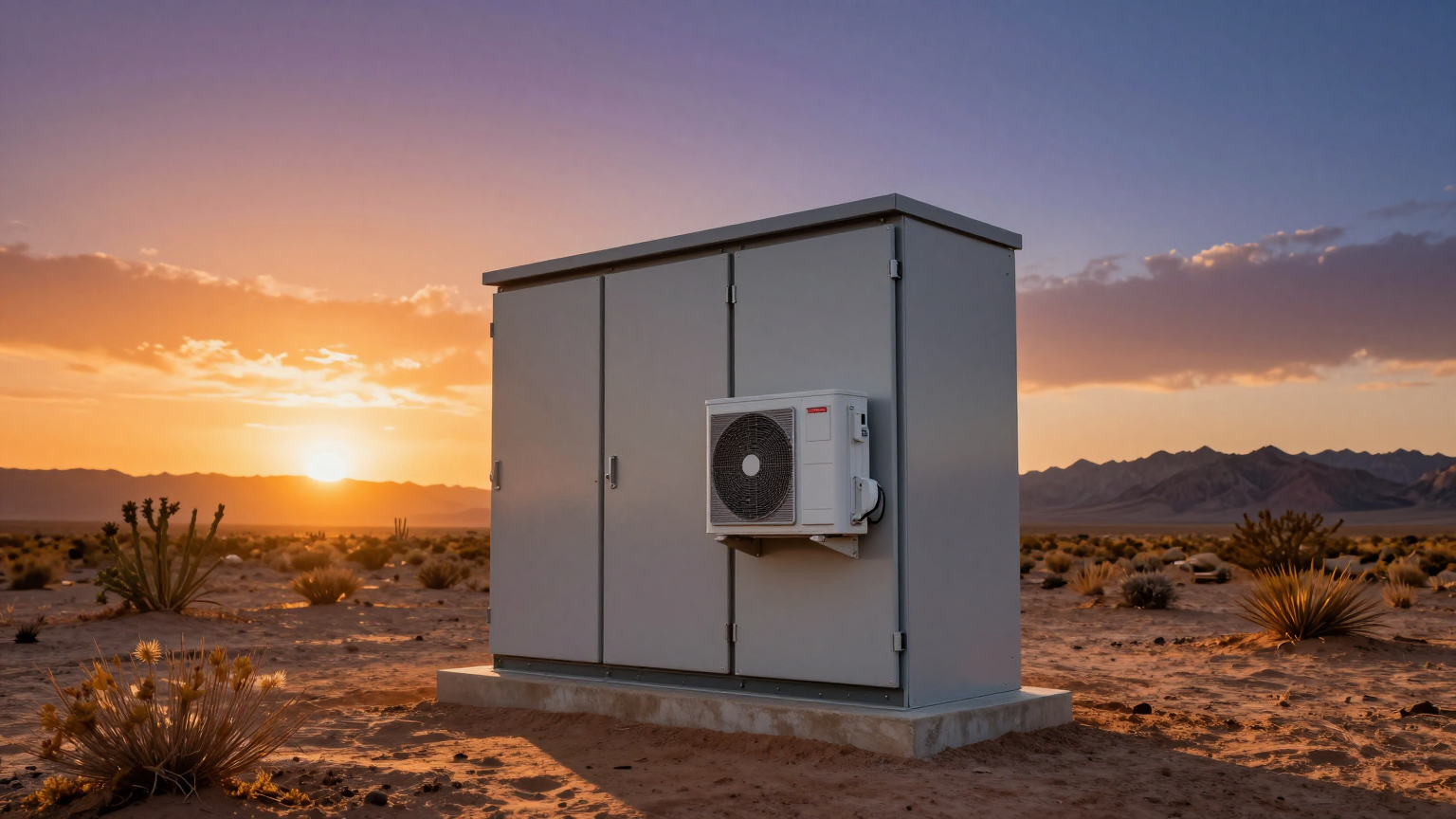
Why Fans Fail: The Case for a Micro DC Air Conditioner Outdoor Cabinet
An outdoor electronics cabinet—housing critical telecom hardware, industrial controls, or battery backup systems—is a deceptively complex thermal environment. When it’s deployed in the field, it’s not just the heat from the internal electronics that you have to manage; it’s the relentless assault from the external world. An integrator can specify the highest quality components, but if the thermal management system fails, the entire deployment is at risk. Intermittent faults, premature component aging, and catastrophic shutdowns are often traced back not to a faulty power supply or processor, but to an environment that silently cooked them.
The go-to solution for decades has been simple: cut a hole and add a fan. But as electronics become more powerful and densely packed, and as reliability standards tighten, this open-loop approach reveals its critical weaknesses. By the end of this article, you will be able to determine the precise threshold where filtered fans become a liability and a closed-loop, active cooling solution becomes the only viable engineering path. In this analysis, we prioritize long-term reliability and component protection over minimal upfront cost, exploring why specifying a sealed enclosure with a compact, efficient micro dc air conditioner outdoor cabinet often yields a lower total cost of ownership.

Deployment Context: Two Scenarios of Thermal Failure
Theoretical problems are less instructive than real-world failures. Here are two common scenarios where conventional cooling methods proved inadequate, forcing a design revision toward a more robust solution.
Scenario A: The Remote 5G Telecom Site
A network operator deployed a series of 5G base station cabinets in a semi-arid, agricultural region. The initial design used high-quality, filtered fans to cool the power amplifiers and radio units. Within the first year of operation, service calls spiked during the late summer months. Technicians found filters completely clogged with fine dust and pollen, causing the fans to labor and airflow to drop to near zero. Internal cabinet temperatures, logged by the system, were exceeding 65°C on sunny afternoons, triggering thermal shutdown of the radio hardware and causing service outages. The core constraint was the high particulate environment, which made any form of air exchange a maintenance-intensive reliability risk.
Scenario B: The Coastal Industrial Control Panel
An integrator designed a control system for a municipal water processing facility located near the coast. The enclosure housed PLCs and variable frequency drives (VFDs) that were critical to plant operations. To manage the heat from the VFDs, the cabinet was designed with louvred vents to promote passive convection. However, the humid, salt-laden air proved corrosive. Within 18 months, technicians discovered significant corrosion on PCB traces and connector pins, leading to intermittent and difficult-to-diagnose faults. The constraint here was not just heat, but the specific chemical composition of the ambient air, which mandated a completely isolated internal environment to protect the sensitive electronics.
Common Failure Modes & Design Constraints
When designing for outdoor deployments, engineers must anticipate the ways a system can fail. For thermal management, these issues are often interconnected. The following list is ordered by a combination of likelihood and severity of impact.
- Solar Radiation Overload: Symptom: System failures that only occur on bright, sunny afternoons, even on days with moderate air temperatures. → Cause: Direct and indirect solar radiation can add 300-1000+ watts of thermal load to a cabinet’s surface, an external heat source that ambient air exchange cannot mitigate. → Why it matters: This is the primary cause of outdoor electrical cabinet overheating sun load, leading to component derating, shortened lifespan, and immediate shutdowns.
- Contaminant Ingress: Symptom: A fine layer of conductive dust on all internal surfaces, clogged heatsinks, or evidence of moisture. → Cause: Any ventilation-based system, even with filters, inherently pulls in outside air and its contaminants. → Why it matters: Dust insulates components, preventing proper heat dissipation, while moisture and corrosive agents lead to short circuits and material degradation.
- Loss of Sealing Integrity: Symptom: The cabinet was specified as NEMA 4 or IP65, but evidence of internal water or dust is present. → Cause: Cutouts made for fans, filters, and vents create points of failure for gaskets and seals. → Why it matters: The specified environmental protection rating of the enclosure is compromised, rendering it ineffective.
- Fan and Filter Maintenance Burden: Symptom: System reliability is dependent on a recurring, manual maintenance schedule. → Cause: Filters are a consumable item that must be cleaned or replaced regularly to maintain airflow. → Why it matters: This adds significant operational expense (OpEx) and introduces a high risk of thermal failure if maintenance is deferred or forgotten.
- Condensation Formation: Symptom: Puddles of water inside the enclosure or corrosion on lower surfaces. → Cause: When external temperatures drop rapidly (e.g., at night), the warm, humid air trapped inside a poorly sealed cabinet can cool below its dew point, causing water to condense on surfaces. → Why it matters: Liquid water inside a live electrical cabinet is a direct path to catastrophic failure.
- Acoustic Noise Pollution: Symptom: Complaints about audible noise from cabinets installed near residential or commercial properties. → Cause: Moving enough air to cool a high-power cabinet with fans often requires high-speed operation, which generates significant noise. → Why it matters: This can violate local noise ordinances or service level agreements.
Engineering Fundamentals: Open vs. Closed-Loop Cooling
To make the right design choice, it’s crucial to understand the fundamental difference between moving air and actively cooling it. A fan-based system is an open-loop solution. It works by convection, performing an air exchange: it pushes hot internal air out and pulls cooler ambient air in. Its effectiveness is therefore fundamentally limited by the temperature and quality of the outside air. If the outside air is 35°C, the best a fan can ever achieve is an internal temperature slightly above 35°C (due to the heat generated by the electronics).
A micro dc air conditioner outdoor cabinet, by contrast, is a closed-loop system. It operates on a vapor-compression refrigeration cycle, creating two completely separate air paths that never mix. The internal loop pulls warm air from inside the sealed cabinet, passes it over a cold evaporator coil to remove heat and moisture, and returns cool, dry air back into the cabinet. The heat absorbed by the evaporator is transferred via refrigerant to an external condenser coil, where a second fan dissipates it into the outside atmosphere. This is the critical distinction: it doesn’t just move heat, it actively pumps it out of a sealed environment.
 Common Misconception: “If my cabinet is overheating, I just need a bigger, more powerful fan.”
Engineering Correction: This is only true if the ambient air temperature is significantly lower than the maximum allowable internal temperature. If direct solar load has heated the ambient air around the cabinet to 45°C, and your internal components are rated for a maximum of 50°C, a fan is simply circulating very hot air. It cannot physically cool the components below 45°C. To achieve a lower internal temperature, you need an active refrigeration system that can create a temperature differential. A micro DC air conditioner is designed for precisely this scenario.
Key Specifications for a Micro DC Air Conditioner Outdoor Cabinet
When you move from ventilation to active cooling, the selection criteria change. You are no longer thinking in terms of airflow (CFM or CMM), but in terms of thermal load (watts). When evaluating a micro dc air conditioner outdoor cabinet, focus on these key parameters to ensure a successful integration. The cooling capacity must be sized to handle the total heat load, and the voltage must align with your system’s DC power bus.
| Parameter | Specification | Engineering Notes |
|---|---|---|
| Series | Micro DC Aircon | Miniature vapor-compression refrigeration system. |
| DC Voltage Options | 12V / 24V / 48V | Must be matched to the cabinet’s power supply or battery bus. |
| Nominal Cooling Capacity | 100W – 900W | Varies by model. Must exceed the calculated total heat load (internal + solar). |
| Compressor Type | BLDC Inverter Rotary | Allows for variable-speed operation, improving efficiency and reducing power consumption. |
| Control System | Integrated Driver Board (PCB) | Enables software control of temperature setpoints and fan speeds. |
| Available Refrigerants | R134a / R290 / R1234yf | Selection depends on configuration, regional regulations, and application requirements. |
| Example Model | DV1920E-AC (Pro) | A representative 24V model with 450W nominal cooling capacity using R134a. |
Engineering Selection Matrix: Logic Gates for System Design
Choosing the correct thermal solution is a process of elimination based on hard constraints. A lead engineer must walk through a series of logic gates. If the deployment fails any of these checks, a simpler solution like a fan becomes a high-risk choice.
Logic Gate 1: The Sealing Requirement
- The Constraint Gate: Does the operational environment contain significant dust, moisture, salt spray, or other corrosive agents that mandate a sealed enclosure (e.g., IP55, NEMA 4/4X)?
- The Decision Trigger: If the answer is yes, any cooling solution that requires an air exchange with the outside environment is fundamentally at odds with the primary design goal of isolation.
- Engineering Resolution: The selection must be a closed-loop system. This immediately narrows the field to two options: a passive heat exchanger or an active air conditioner. A panel mount micro dc air conditioner outdoor unit is designed specifically to be integrated into a sealed enclosure wall, maintaining the seal’s integrity.
- Integration Trade-off: This path requires a higher initial capital investment compared to a fan and filter. However, it preserves the enclosure’s protective rating and virtually eliminates the cost and risk associated with filter maintenance.

Logic Gate 2: The Thermal Delta Requirement
- The Constraint Gate: Must the maximum internal operating temperature be maintained at or below the maximum expected external ambient temperature?
- The Decision Trigger: If the answer is yes, then any device that relies on ambient air for cooling is physically incapable of meeting the requirement. This is a common outcome when high solar load is a factor.
- Engineering Resolution: Active refrigeration is the necessary technology. A heat exchanger can only achieve an internal temperature that is a few degrees *above* ambient. A micro dc air conditioner outdoor cabinet can actively pump heat out, creating a significant negative temperature differential and holding an internal temperature far below the outside air temperature.
- Integration Trade-off: An active system introduces a higher continuous power draw on the DC bus. The power budget must be verified to handle this load, but in return, it ensures that sensitive, expensive electronics are never forced to operate outside their specified temperature range, preventing thermal derating.
Logic Gate 3: The Total Heat Load Calculation
- The Constraint Gate: Is the total heat load—calculated as the sum of the internal components’ heat dissipation (in watts) plus the external solar gain (in watts)—greater than the removal capacity of a passive or fan-assisted solution?
- The Decision Trigger: Perform a thermal calculation. A conservative estimate for solar load on a medium-sized cabinet in full sun can be 500 watts or more. If this figure, added to the 200 watts from your power supplies and electronics, results in a 700-watt total load, a simple fan is inadequate.
- Engineering Resolution: The cooling capacity of the selected active system must exceed this calculated total. For a 700-watt load, a unit with a nominal cooling capacity of 900W would be a suitable choice, providing a healthy safety margin. Sizing is critical for any sealed enclosure cooling outdoor kiosk or cabinet.
- Integration Trade-off: This requires a more rigorous upfront analysis and thermal modeling. An undersized unit will fail to maintain the setpoint on the hottest days, while a grossly oversized unit wastes capital and energy. Accurate calculation is key to an efficient and reliable design.
Implementation and Verification Checklist
Proper installation is just as critical as proper selection. A high-quality cooling unit can be compromised by a poor mechanical or electrical installation. Follow this checklist to ensure performance and reliability.
- Mechanical Integration
- Mounting Surface: Ensure the cabinet wall is flat, rigid, and strong enough to support the unit. The cutout for the panel mount micro dc air conditioner outdoor unit must be precise and have clean, burr-free edges.
- Sealing Gasket: Use the manufacturer-supplied gasket. Ensure it is clean and properly seated. Tighten mounting bolts in a star pattern to apply even pressure and create a continuous, compressed seal.
- Airflow Integrity: Internally, verify that no cables, brackets, or components obstruct the cold air outlet or the return air inlet. Externally, ensure the condenser has several inches of clearance for unobstructed airflow.
- Electrical Connection
- Power Budget: Confirm that the DC power supply and wiring are rated for the air conditioner’s peak (startup) current draw, not just its nominal running current.
- Circuit Protection: Install an appropriately rated fuse or circuit breaker on the supply line as close to the power source as possible.
- Wiring Practices: Use the correct gauge of wire for the current and distance to minimize voltage drop. Ensure secure connections and correct polarity.
- Thermal Validation
- Sensor Placement: For accurate monitoring, place an independent temperature sensor in the upper third of the cabinet, away from the direct path of the cold air outlet. This measures the average ambient internal temperature.
- Acceptance Testing: After installation, perform a load test. If possible, do this on a warm, sunny day. Run all internal electronics at high load and monitor the internal temperature to confirm the cooling unit can achieve and maintain the desired setpoint.
- Maintenance Planning
- External Access: Ensure the final cabinet installation provides sufficient clearance to access the external condenser coils for inspection and cleaning.
- Inspection Schedule: For units in dusty or leafy environments, schedule a semi-annual visual inspection of the condenser coils. If clogged, clean gently with compressed air or a soft brush to maintain thermal transfer efficiency.
Frequently Asked Questions (FAQ)
What is the primary advantage of a micro DC air conditioner over a thermoelectric (Peltier) cooler?
The primary advantages are efficiency and capacity. Vapor-compression systems, like those in a Micro DC Aircon, have a much higher coefficient of performance (COP), meaning they provide more watts of cooling for each watt of electricity consumed. They are far more effective for handling heat loads above 100-200 watts.
How is condensation managed inside a sealed cabinet?
A properly functioning micro dc air conditioner outdoor cabinet is also an effective dehumidifier. As warm, moist internal air passes over the cold evaporator coil, water vapor condenses into liquid. This condensate is collected in a drip pan and is typically drained to the outside of the enclosure through a dedicated port, keeping the internal environment dry.
My cabinet is in direct, intense sunlight. How does that affect the cooling unit?
Direct sun exposure is a primary use case. The solar heat gain must be calculated and added to your internal heat load to correctly size the unit. For extreme exposure, consider adding a simple solar shield (a secondary roof or panel) with an air gap above the cabinet. This can significantly reduce the solar load and improve the overall efficiency of the cooling system.
Is this type of cooler suitable for dusty or corrosive environments?
Yes, this is one of its greatest strengths. Because it enables a truly sealed outdoor enclosure, the micro dc air conditioner outdoor cabinet protects all internal electronics from airborne dust, sand, salt spray, and other contaminants that would quickly destroy a ventilated system.
What is the first thing I need to measure or calculate before selecting a cooling unit?
You need two key pieces of data: 1) The total internal heat dissipation of all your components combined, in watts. 2) The worst-case environmental conditions: maximum expected ambient temperature and the level of solar exposure. These factors are essential for an accurate total heat load calculation.
How can I validate the cooling performance after the system is deployed?
The most effective method is to use a data logger to record the internal cabinet temperature and the external ambient temperature simultaneously over a 24-48 hour period, specifically during a hot, sunny day. The resulting data will clearly show the system’s ability to maintain the setpoint regardless of external conditions.
Conclusion: Matching the Solution to the Constraints
The decision to move from simple ventilation to active, closed-loop cooling is not about over-engineering a solution; it’s about acknowledging the operational realities of outdoor deployments. Fans and filters have their place, but they are not a one-size-fits-all solution for thermal management.
A micro dc air conditioner outdoor cabinet is the most robust engineering choice when the system’s reliability depends on two conditions being met simultaneously: the enclosure must remain sealed to protect against environmental contaminants, and the internal temperature must be maintained at or below the external ambient temperature due to high internal heat loads or significant solar gain. For less demanding applications with low internal heat and clean, dry environments, a simpler solution may suffice. But when uptime is critical and the environment is unforgiving, isolating the internal components and giving them their own controlled climate is the most direct path to long-term success.
Sizing a cooling system for a sealed outdoor enclosure requires a careful analysis of all thermal factors. If you are facing challenges with outdoor electrical cabinet overheating sun load or need to maintain a sealed design, our engineering team can help. Contact us to discuss your project’s specific requirements, including power constraints, enclosure geometry, and harsh environment considerations.