
When Your Mini Fridge Compressor Dies — What Are Your Real Options?
Your mini fridge stopped cooling. The light turns on, but nothing happens — or worse, it hums and clicks but never gets cold. In most cases, the compressor is either failing or already dead. Now you have a decision: replace, upgrade, or scrap it and build something better.
This guide covers all three paths. We will walk through diagnosing the problem, finding a replacement mini fridge compressor, upgrading to a more efficient DC compressor, and the option of building a custom cooler from scratch using modern compressor technology. The right choice depends on what your mini fridge is worth to you and what you actually need it to do.
Diagnosing the Problem: Is It Actually the Compressor?
Before you buy a replacement, confirm the compressor is the issue. Other common failures mimic a dead compressor:
- Thermostat failure: The thermostat may not be signaling the compressor to run. Test by bypassing the thermostat temporarily — if the compressor starts, replace the thermostat ($10-20 fix), not the compressor.
- Start relay/overload failure: The start relay and overload protector are small components attached to the compressor that help it start and protect it from overcurrent. They are cheap ($5-15) and fail more often than the compressor itself. Replace these first before condemning the compressor.
- Refrigerant leak: If the compressor runs but the fridge does not cool, you may have a refrigerant leak rather than a compressor failure. Listen for the compressor running — if it hums steadily but the fridge is warm, check for oil stains on refrigerant lines (indicating a leak point).
- Dirty condenser: Dust-clogged condenser coils prevent heat rejection, causing the compressor to overheat and shut down on thermal protection. Clean the coils with a brush and vacuum. If the compressor runs normally afterward, you just saved yourself a compressor purchase.
If the compressor itself is confirmed dead (does not start, trips the breaker immediately, or makes grinding/rattling noises), it is time for a replacement.
Option 1: OEM Replacement — Same Compressor, Same Performance
The simplest path is replacing the dead compressor with the same model. This means same capacity, same refrigerant, same mounting, and minimal modification to the existing system.
Pros: Drop-in replacement, no system redesign, maintains original performance.
Cons: You are replacing with the same technology that already failed. If the original compressor was a fixed-speed AC unit (most mini fridges use these), you get the same efficiency, same noise, and same on-off cycling that stresses the compressor over time.
Cost: $50-150 for the compressor plus $100-200 for a technician to braze it in, evacuate, and recharge the system. Total: $150-350.
When this makes sense: The fridge is relatively new, you are happy with its performance, and the cost of repair is less than 50% of replacement cost.
Option 2: Upgrade to a DC Variable-Speed Compressor
This is where it gets interesting. Instead of replacing the dead compressor with another fixed-speed AC unit, you can upgrade to a BLDC variable-speed DC compressor. This changes the fridge’s fundamental performance characteristics.
What Changes with a DC Mini Fridge Compressor
- Energy efficiency improves 30-50%. Variable-speed operation means the compressor runs at minimum speed to maintain temperature rather than cycling on and off at full power. Lower average power consumption = lower electricity bills and longer battery runtime if you convert to DC operation.
- Temperature stability improves. No more temperature swings from on-off cycling. The compressor maintains a steady, even temperature — better for food preservation, medication storage, or any application where temperature consistency matters.
- Noise drops significantly. BLDC compressors at low speed are remarkably quiet. No more loud startup clicks and compressor roar every 20 minutes. In a bedroom, dorm room, or office, this is a meaningful quality-of-life improvement.
- Battery/DC operation becomes possible. A 12V DC compressor runs directly from a battery or solar panel — no inverter needed. This opens up portable, mobile, and off-grid applications that the original AC compressor could never serve.
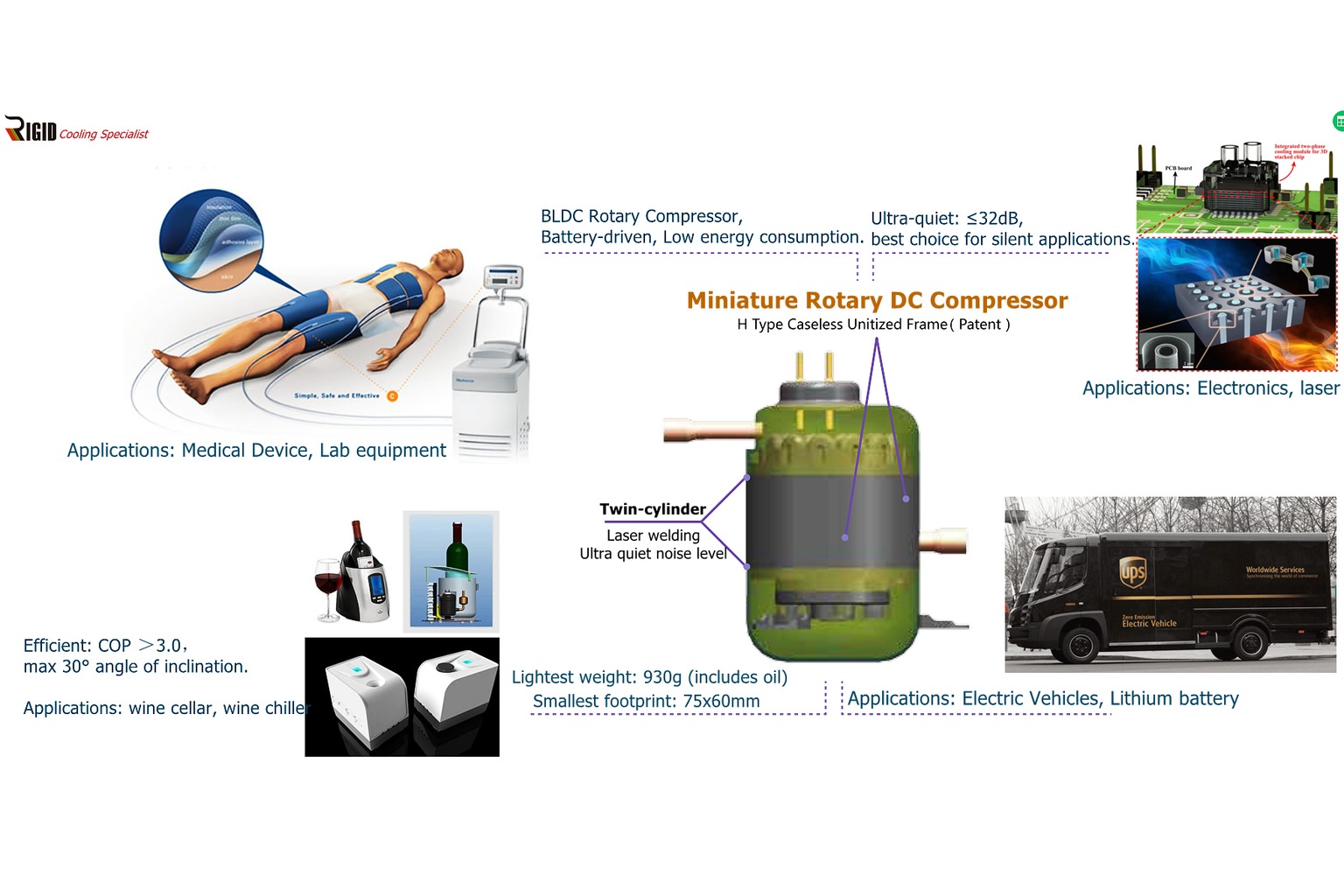
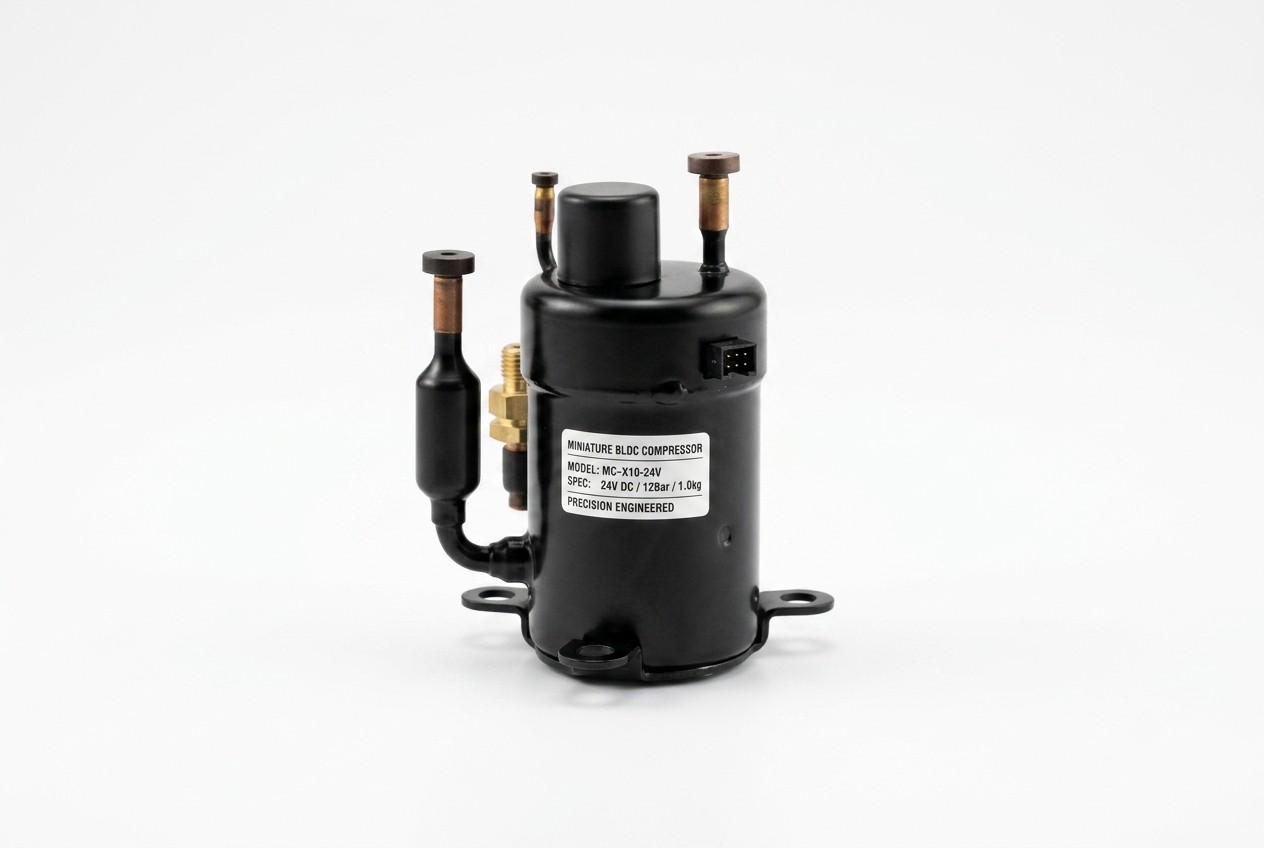
The RIGID QX1901VDL(H) is a mini fridge compressor replacement candidate that delivers 100-455W (360-1,550 BTU) of variable cooling capacity on 12V DC. At 0.72 kg (1.6 lbs), it fits in spaces where even small household compressors would not — making it suitable for mini fridge conversions, custom builds, and portable cooler projects.
What the Upgrade Requires
Swapping from an AC compressor to a DC compressor is not a simple drop-in. You will need to:
- Remove the old compressor, start relay, and overload protector
- Mount the new DC compressor (different dimensions and mounting pattern)
- Possibly replace the condenser and evaporator if the capacity is significantly different
- Install the driver board and wire to a 12V DC power supply or battery
- Add a temperature controller (the original thermostat may not be compatible)
- Evacuate and recharge with the correct refrigerant amount
This is a moderate DIY project — not a simple swap, but achievable for anyone comfortable with basic tools and willing to follow refrigerant handling procedures.
Option 3: Build a Custom Mini Fridge from Scratch
If your old mini fridge is beyond saving (rusted cabinet, damaged insulation, not worth the repair cost), consider building a custom replacement. A purpose-built mini fridge using a modern DC compressor can outperform any commercial mini fridge at a comparable cost.
Why Build Custom?
- Perfect dimensions: Build to fit your exact space — under a desk, in a van cabinet, built into a wall niche.
- Better insulation: Commercial mini fridges use thin insulation (15-25mm) to maximize interior volume. A custom build with 50mm foam uses more space externally but runs far more efficiently — your electricity savings pay for the larger footprint.
- DC native: Built from the start for 12V/24V operation, perfect for boats, RVs, off-grid cabins, or solar-powered setups.
- Exact temperature control: Digital thermostat plus variable-speed compressor holds temperature within ±1°C — better than most commercial mini fridges that swing ±3-5°C with their on-off cycling.
Custom Build Cost Comparison
| Approach | Cost | Performance | Portability |
|---|---|---|---|
| Repair old mini fridge (OEM compressor) | $150-350 | Same as before | None (AC only) |
| Upgrade to DC compressor | $200-400 | 30-50% more efficient | Battery capable |
| Custom build with DC compressor | $300-600 | Best (optimized insulation) | Fully portable |
| Buy new commercial mini fridge | $100-300 | Varies widely | None (AC only) |
Choosing the Right Compressor Size for Your Mini Fridge
Mini fridges range from 20 liters (beverage cooler) to 120 liters (dorm fridge with freezer compartment). The compressor needs to match:
| Fridge Size | Type | Suggested Capacity | QX1901VDL(H) Setting |
|---|---|---|---|
| 20-40 liters | Beverage cooler (5-8°C) | 80-120W | Low speed |
| 40-70 liters | Standard mini fridge (3-5°C) | 120-200W | Low-medium speed |
| 70-120 liters | Dorm fridge with freezer | 200-350W | Medium-high speed |
| Any size | Freezer only (-18°C) | 250-455W | High speed |
The QX1901VDL(H) variable range of 100-455W covers all mini fridge applications. You set the speed to match your fridge’s size and temperature target, and the compressor automatically adjusts further based on actual demand.
Peltier vs Compressor Mini Fridges — The Real Comparison
Many mini fridges — especially the cheapest ones ($50-100) — use Peltier (thermoelectric) cooling instead of a compressor. If your Peltier mini fridge died, upgrading to a compressor is a massive improvement:
- Cooling capacity: A compressor provides 3-5x more cooling per watt of electricity consumed. Your fridge actually gets cold, and stays cold.
- Temperature achievement: Peltier fridges typically reach only 15-20°C below ambient. On a 30°C day, that is 10-15°C — warm enough for bacteria to thrive. A compressor fridge maintains 3-5°C regardless of ambient temperature.
- Energy use: Counterintuitively, a compressor fridge often uses less electricity than a Peltier fridge for the same cooling because of the COP advantage (compressor COP 1.5-3.0 vs Peltier COP 0.3-0.7).
- Noise: Peltier fridges are silent (no moving parts). BLDC compressors at low speed are very quiet but not silent. For a bedroom, the difference is noticeable but manageable.
Understanding Compressor Types for Mini Fridge Applications
Not all compressors are created equal, and understanding the types available helps you make the right choice for your mini fridge project.
Reciprocating (Piston) Compressors
The traditional workhorse of household refrigeration. A piston moves back and forth in a cylinder to compress refrigerant. Reciprocating compressors are robust and widely available, but they are the largest and heaviest option for a given capacity. They also produce more vibration and noise than rotary designs. Most conventional mini fridge compressors are reciprocating.
Rotary Compressors
A rolling piston or scroll mechanism compresses refrigerant in a continuous rotary motion rather than a back-and-forth piston stroke. Rotary compressors are smaller, lighter, smoother, and quieter than reciprocating designs at the same capacity. They are the preferred type for modern mini fridge and portable cooling applications. The RIGID QX1901VDL(H) uses a rotary compression mechanism, which is one reason it achieves such compact dimensions at 0.72 kg.
Scroll Compressors
Two spiral-shaped scrolls intermesh to compress refrigerant. Extremely smooth, quiet, and efficient, but typically available only in larger capacities (1 kW+). Not commonly used in mini fridge applications due to their minimum practical size, but worth noting if you are building a larger custom cooling system.
Safety Considerations for DIY Compressor Work
Working with refrigeration compressors involves some real hazards that deserve respect:
Refrigerant Handling
R134a is not toxic at low concentrations, but it displaces oxygen in enclosed spaces. Always work in well-ventilated areas. Never intentionally vent refrigerant to the atmosphere — it is illegal in many jurisdictions and contributes to greenhouse gas emissions. Use recovery equipment if removing refrigerant from an existing system.
High Pressures
The high side of a refrigeration system can reach 150-250 PSI during operation. Never open or disconnect pressurized lines. Always recover refrigerant and verify zero pressure before breaking any connection. Wear safety glasses when working near pressurized fittings.
Electrical Safety
While 12V DC is generally safe from shock hazard, the currents involved (up to 38A for the QX1901VDL(H) at full capacity) can cause severe burns or fires if wiring is incorrect. Always fuse the positive wire at the battery terminal, use properly rated wire gauges, and ensure all connections are tight and insulated. A 38A short circuit through thin wire will glow red and ignite surrounding materials within seconds.
Brazing Safety
If you are brazing copper connections, you are working with an open flame and temperatures above 600°C. Keep a fire extinguisher nearby. Use nitrogen purge flow through the system during brazing to prevent internal oxidation — copper oxide flakes inside the system will eventually clog the capillary tube or damage the compressor valves.
Frequently Asked Questions
Can I replace a Peltier cooler with a compressor in an existing mini fridge?
Yes, but it requires significant modification. Peltier mini fridges have no refrigerant plumbing — you need to add an evaporator, condenser, capillary tube, filter drier, and the compressor itself. It is essentially building a new cooling system inside the existing cabinet. Often easier to build a new cabinet with proper insulation rather than retrofitting the thin-walled Peltier enclosure.
How long does a mini fridge compressor last?
A quality BLDC compressor can last 50,000+ hours of operation — roughly 10-15 years of continuous use. Fixed-speed compressors in cheap mini fridges may last only 3-5 years due to the mechanical stress of repeated start-stop cycling. Variable-speed operation extends compressor life significantly because the motor runs continuously at lower stress rather than hammering on and off thousands of times per day.
Is it worth repairing a $100 mini fridge?
Usually not if the repair requires a new compressor plus technician labor ($150-350). At that point, a new mini fridge costs less. The exception: if you want to upgrade to DC capability for battery or solar operation, the repair becomes an upgrade investment rather than a simple fix — and the value proposition changes entirely.
Can I use a mini fridge compressor for other projects?
Absolutely. A mini fridge compressor is just a small refrigeration compressor. People use them for custom coolers, kegerators, aquarium chillers, small wine cellars, pet cooling systems, and even air conditioning for tiny enclosures. The RIGID QX1901VDL(H) at 0.72 kg and 100-455W variable capacity is particularly versatile for creative cooling projects.
Bottom Line
When your mini fridge compressor fails, you have three real options: replace with the same (cheapest, same performance), upgrade to a BLDC DC compressor (better efficiency, battery capable, quieter), or build custom (best performance, perfect fit, most work). For most people, the decision comes down to whether you just want the old fridge working again or whether you want something genuinely better. A modern variable-speed DC mini fridge compressor transforms a basic appliance into a high-performance, portable, efficient cooling system — whether that is worth the extra effort depends on what you need it to do.