
Designing for Day 365: A Framework for Resilient Dust Contamination Cooling Performance
As reliability engineers and system integrators, we design for performance under load. We calculate heat dissipation, model airflow, and specify components to maintain optimal operating temperatures. However, a system’s performance on its first day of operation is often vastly different from its performance after a year in a demanding industrial environment. The slow, insidious accumulation of dust, oil mist, and other airborne particulates is a primary cause of thermal degradation, leading to premature component failure and costly downtime. The challenge of maintaining effective dust contamination cooling performance is a critical factor in long-term system reliability.
Many thermal management strategies that appear sufficient on paper fail when deployed in environments like factory floors, processing plants, or outdoor cabinets. The gradual clogging of filters and fouling of heat exchange surfaces can silently push sensitive electronics outside their safe operating temperature range. This article provides a practical, data-driven framework for understanding, planning for, and mitigating the effects of airborne contaminants on enclosure cooling systems. By the end, you will be able to make more robust design choices that prioritize long-term performance and serviceability over initial simplicity.
Get A Sample Online

Product link: https://rigidchill.com/3.8cc-twin-cylinder-micro-dc-aircon

Real-World Scenarios: Where Contamination Compromises Cooling
The threat of particulate contamination is not theoretical. It is a daily operational reality in numerous industries. Consider these two common scenarios:
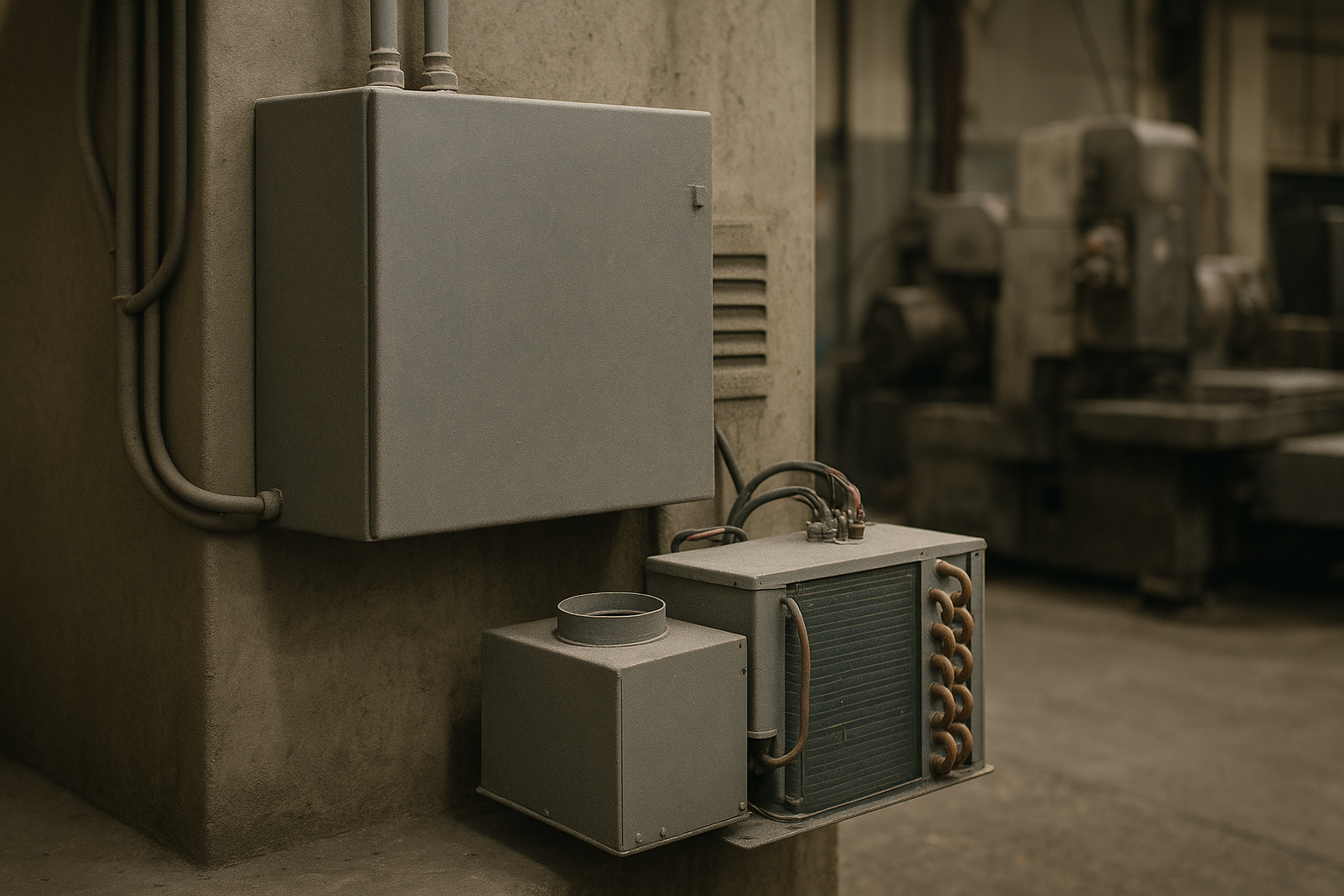
- Scenario 1: The CNC Machining Center. A sealed cabinet housing the VFDs (Variable Frequency Drives) and controllers for a multi-axis milling machine is located directly on the factory floor. The ambient air is filled with a fine aerosol of cutting fluid and microscopic metallic particles. An open-loop cooling system, relying on a simple filtered fan, is initially installed. Within weeks, the filter is saturated with a sticky paste of oil and metal dust. Airflow drops significantly. The maintenance team, already stretched thin, misses a filter change cycle. The VFDs, now operating at elevated temperatures, begin to fault intermittently, causing production halts. Eventually, a drive fails, requiring emergency replacement and resulting in thousands of dollars in lost production.
- Scenario 2: The Wayside Rail Control Cabinet. An outdoor enclosure contains signaling and communication hardware critical for railway operations. It is located near a gravel access road and agricultural land. Throughout the year, it is exposed to road dust, pollen, and moisture. The constant buildup of this dry, abrasive dust clogs the intake filters of its ventilation system. The reduced airflow causes the internal temperature to soar during hot summer days, leading to derating and failure of sensitive communication modules. This is a classic case of filter clogging enclosure failure, where the protective system itself becomes the point of failure due to environmental load.
Common Failure Modes and System Constraints
Understanding how dust impacts a cooling system is the first step toward designing a more resilient solution. The failure cascade often proceeds as follows:
- Heat Exchanger Fouling: The primary mechanism of failure. A layer of dust acts as an insulator on the fins of a heat sink or condenser coil. This dramatically reduces the efficiency of heat transfer from the metal surface to the air, trapping heat inside the system.
- Airflow Reduction: As filters become clogged, the static pressure of the system increases. The fan, which is specified to deliver a certain airflow at a given pressure, can no longer move the required volume of air. This starves the system of its cooling medium.
- Fan Motor Strain and Failure: A fan working against high backpressure from a clogged filter must work harder, drawing more current. This increased load leads to overheating of the fan motor itself, significantly shortening its operational lifespan and leading to premature failure.
- Abrasive and Corrosive Damage: Not all dust is benign. Particulates from industrial processes (like concrete or metal grinding) can be highly abrasive, physically eroding fan blades and coil surfaces. In humid or coastal environments, dust can mix with moisture to create corrosive sludge that attacks electronic components and solder joints.
- Condensate Management Problems: In air conditioning systems, dust that gets past filters can mix with condensation on the evaporator coil. This forms a thick sludge that can clog condensate drain pans and tubes, potentially causing water to back up and overflow inside the protected enclosure.

Engineering Fundamentals: The Critical Difference of Closed-Loop Airflow
To combat these failure modes, we must move beyond simple ventilation. The choice between an open-loop and a closed-loop cooling architecture is the single most important decision for ensuring reliability in contaminated environments.
Open-Loop Cooling (e.g., Filtered Fans) involves drawing ambient outside air into an enclosure, circulating it over the electronics, and then exhausting it. While inexpensive and simple, this design has a fundamental flaw: it directly introduces contaminants into the protected space. No matter how effective the filter is, it will eventually clog, degrade, or be bypassed. It is a solution best reserved for clean, climate-controlled environments.
Closed-Loop Cooling (e.g., Air Conditioners) creates two completely separate, isolated air circuits. This is the key to reliability in harsh environments.
- The Internal Circuit (Evaporator Side) circulates clean air exclusively *within* the sealed enclosure. It picks up heat from the electronics, passes it over a cold evaporator coil, and returns the cooled, dehumidified air to the components. This internal air never mixes with the outside environment, keeping the electronics pristine.
- The External Circuit (Condenser Side) uses a separate fan to pull ambient outside air across a hot condenser coil. This is where the heat collected from the internal circuit is rejected to the outside world. While this external circuit is exposed to dust and will require periodic cleaning, the contamination is kept entirely outside the sealed enclosure.
This separation is the core principle behind the robust performance of systems like the Rigid Chill Micro DC Aircon series. By creating a sealed internal environment, the sensitive electronics are completely protected from the performance-degrading effects of dust, humidity, and chemical contaminants.
Key Specifications for High-Contamination Environments
When evaluating a closed-loop cooling solution, certain specifications are more critical than others for ensuring long-term performance.
- Sealing and Ingress Protection (IP/NEMA): An IP or NEMA rating defines a system’s ability to resist the ingress of solids (dust) and liquids. A cooling unit must be selected to match or exceed the rating of the enclosure it is being fitted to. Installing a low-IP-rated cooler on a high-IP-rated box compromises the integrity of the entire assembly.
- Cooling Capacity and Derating: The nominal cooling capacity (measured in Watts) is determined under ideal laboratory conditions. In a real-world industrial setting with high ambient temperatures and the inevitable, gradual fouling of the condenser coil, the effective cooling capacity will be lower. Engineers must apply a derating factor, selecting a unit with a capacity 25-35% higher than the calculated thermal load to ensure sufficient performance between maintenance cycles.
- Power and Control Systems: In many remote or mobile applications, power is supplied by DC sources. Systems designed to run on 12V, 24V, or 48V DC offer significant integration advantages. Furthermore, modern units utilizing variable-speed BLDC compressors and fans can modulate their cooling output to match the real-time load, improving efficiency and reducing mechanical stress. An integrated driver board allows for precise control and potential integration with system monitoring software.
- Construction and Materials: The materials used for the condenser coils, fins, and casing should be suitable for the operating environment. In corrosive atmospheres, for example, special coatings on the coils can prevent degradation and extend the unit’s service life.
A 4-Step Framework for Selecting a Resilient Cooling Solution
Follow this structured process to move from problem definition to a robust, maintainable solution.
- Step 1: Quantify the Thermal Load and Environment. First, perform a thorough thermal audit. Calculate the total heat load from all internal components. Factor in external loads like solar gain if the enclosure is outdoors. Crucially, characterize the environment itself. What is the nature of the contaminant—is it dry dust, oily mist, or corrosive particles? What is the typical and maximum ambient temperature? This data is foundational.
- Step 2: Define System Constraints and Requirements. Document all physical and electrical constraints. This includes the available mounting space, the enclosure’s target IP/NEMA rating, and the available power source (e.g., 24V DC). Service access should also be considered—how will maintenance personnel access the unit for cleaning?
- Step 3: Choose the Cooling Architecture. Based on the environmental analysis from Step 1, make the critical architecture decision. If the environment contains anything more than light, clean office dust, a closed-loop air conditioner is the only viable long-term solution. A filtered fan system will represent a recurring maintenance liability and an unacceptable risk of failure.
- Step 4: Size the Unit with an Appropriate Safety Margin. Using the heat load from Step 1, select a closed-loop cooling unit. Apply a safety margin of at least 25% to account for performance degradation between cleaning cycles and to handle peak temperature conditions. For extremely dirty environments or those with long maintenance intervals, a margin of 35% or more may be prudent. This ensures that even with some fouling, the unit can maintain the required internal temperature.
Implementation and Maintenance Checklist for Longevity
Proper installation and a disciplined maintenance plan are essential to realizing the long-term benefits of a closed-loop system.
- Mechanical Installation
- Ensure the gasket between the cooling unit and the enclosure wall is properly compressed to create a perfect seal. This is critical for maintaining the system’s IP/NEMA rating.
- Verify that all other enclosure openings, such as doors, cable glands, and access panels, are sealed correctly.
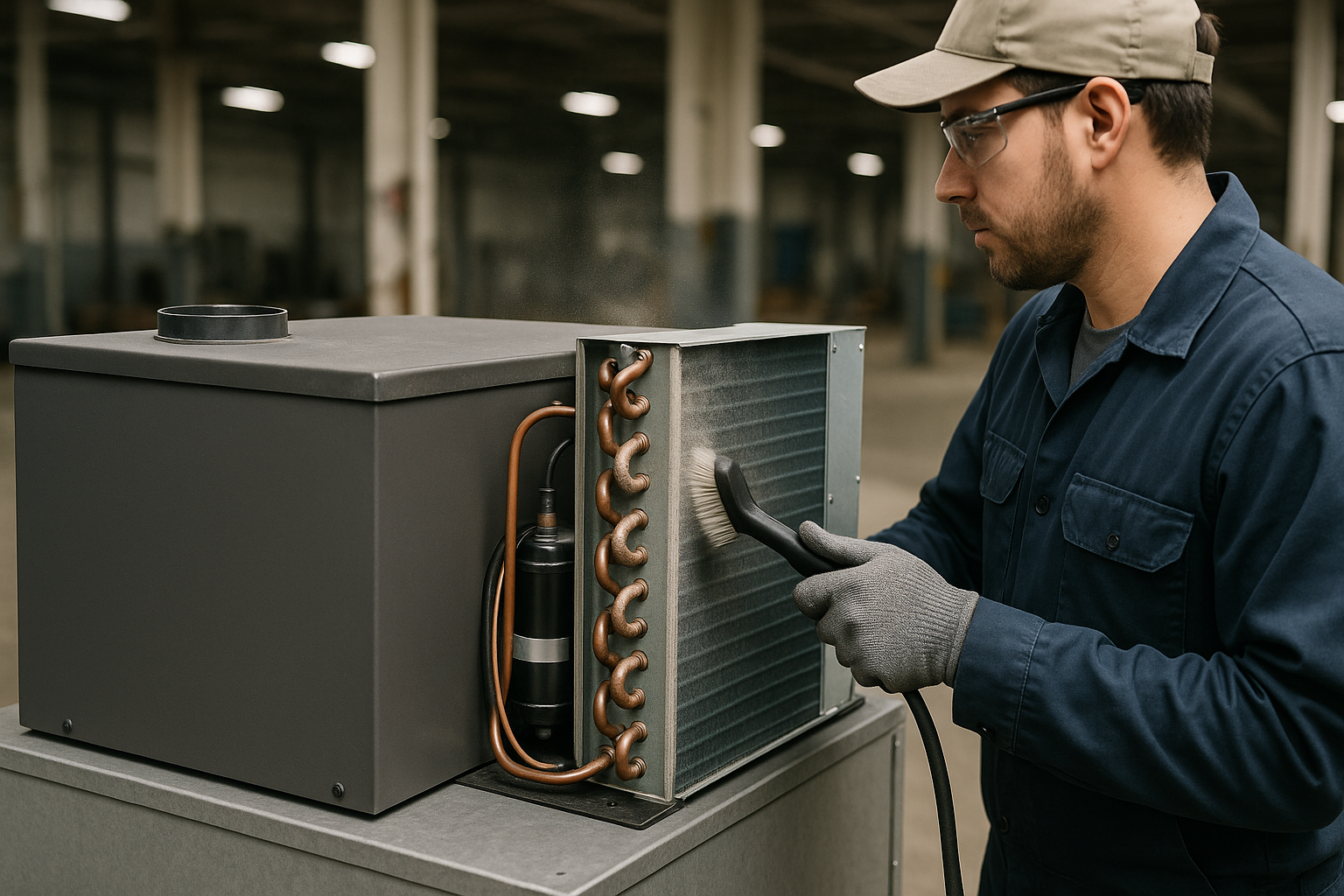
- Position the cooling unit where the external condenser coils are easily accessible for cleaning with a brush or compressed air.
- Electrical Integration
- Use the appropriate wire gauge for the DC power supply to prevent voltage drop, especially on 12V systems with long cable runs.
- Ensure the DC power source is stable and properly regulated to protect the unit’s sensitive control electronics.
- If the unit provides alarm outputs (e.g., for over-temperature or fan failure), connect them to the main system controller for remote monitoring.
- Thermal Commissioning
- After installation, operate the system under a typical full load. Use thermocouples or thermal imaging to verify that internal component temperatures are well within their specified safe operating limits.
- Record a baseline temperature differential between the inside of the enclosure and the ambient air. This baseline is a key performance indicator for future maintenance checks.
- Preventive Maintenance Schedule
- Establish a cleaning schedule based on the severity of the environment. This could range from monthly in a machine shop to annually in a cleaner location.
- The cleaning procedure should be simple: de-energize the unit, use a soft brush and a vacuum or low-pressure compressed air to remove accumulated dust from the condenser fins.
- After cleaning, re-run the commissioning test and compare the temperature differential to the baseline. A return to baseline performance confirms a successful cleaning.

Frequently Asked Questions (FAQ)
- 1. How often should I clean the condenser coils on a closed-loop air conditioner?
- This depends entirely on the severity of the environment. A good starting point is a visual inspection after the first month of operation. If there is significant buildup, move to a monthly schedule. If it’s relatively clean, check again at three months. Use this empirical data to establish a formal schedule for your specific application.
- 2. Can I just use a bigger fan and a better filter instead of an air conditioner?
- While this may seem like a simpler solution, it does not address the fundamental problem of introducing contaminated air. It also cannot cool the internal air below the ambient temperature. In environments with significant particulate loads or high ambient heat, this approach leads to high maintenance costs and a high risk of thermal failure.
- 3. What is the impact of oil mist versus dry dust on cooling performance?
- Oil mist is generally more problematic. It creates a sticky surface on filters and coils, which captures dry dust more effectively and is much harder to clean. Dry dust can often be removed with compressed air, whereas an oil-and-dust mixture may require detergents and manual wiping, increasing maintenance time.
- 4. Does a higher IP or NEMA rating guarantee no dust will affect my cooler?
- No. The IP/NEMA rating applies to the *sealed internal circuit*. It ensures that dust cannot get *inside* your electronics cabinet. The external condenser circuit is, by design, exposed to ambient air and will always accumulate dust. The rating protects your components, but regular cleaning of the external loop is still essential for performance.
- 5. How does high ambient temperature combine with dust to affect dust contamination cooling performance?
- They have a compounding negative effect. High ambient temperature reduces the thermal differential, making it harder for the air conditioner to reject heat. Dust accumulation further insulates the condenser coils, reducing their efficiency. The combination means the system has to work much harder to achieve the same level of cooling, increasing wear and energy consumption.
- 6. Are there filterless closed-loop cooling solutions?
- Yes. A closed-loop air conditioner does not use a filter on its external (condenser) loop. The fins of the condenser coil itself act as the heat exchange surface. While this design avoids the problem of filter clogging, the fins themselves must be cleaned periodically to maintain performance.
- 7. What’s the first sign that filter clogging in my enclosure is becoming a problem?
- The first sign is often a gradual increase in the enclosure’s internal operating temperature. If you have monitoring in place, you may see temperature alarms. You might also hear the fans running at maximum speed more frequently or for longer periods as they struggle to achieve the cooling setpoint.
- 8. Can Rigid Chill customize a unit for a particularly harsh or unusual type of dust?
- Yes. Customization is a core part of our engineering process. For environments with unique challenges, such as corrosive or conductive dust, we can explore options like specialized coil coatings, different fin spacing, or modified casing materials. We encourage you to discuss your specific requirements with our team.
Conclusion: Proactive Design for Long-Term Reliability
In industrial and field-deployed applications, thermal management is not a one-time design decision but a long-term reliability strategy. The most significant threat to sustained dust contamination cooling performance is the introduction of ambient air into a sealed enclosure. By adopting a closed-loop cooling architecture, engineers can effectively isolate sensitive electronics from the harmful effects of dust, moisture, and chemical contaminants.
While this approach requires a greater initial investment than simple fan-based systems, it pays significant dividends in reduced maintenance, increased uptime, and longer component life. The key is to accurately assess the operational environment, select a properly sized closed-loop system with a conservative safety margin, and implement a disciplined preventive maintenance plan. For assistance with thermal load calculations or selecting the right Micro DC Aircon for your application, we invite you to contact our engineering team for a consultation.
Customization for Unique Environments
Rigid Chill specializes in providing customized cooling solutions that meet unique and demanding requirements. If your application involves extreme temperatures, unusual contaminants, or specific physical constraints, our team is ready to help. We encourage you to contact us to discuss your specific cooling needs, ask for a consultation, or inquire about product development for highly specialized environments.