
Outdoor Robot Dock Cooling Solves the Problem Robots Cannot Solve Themselves
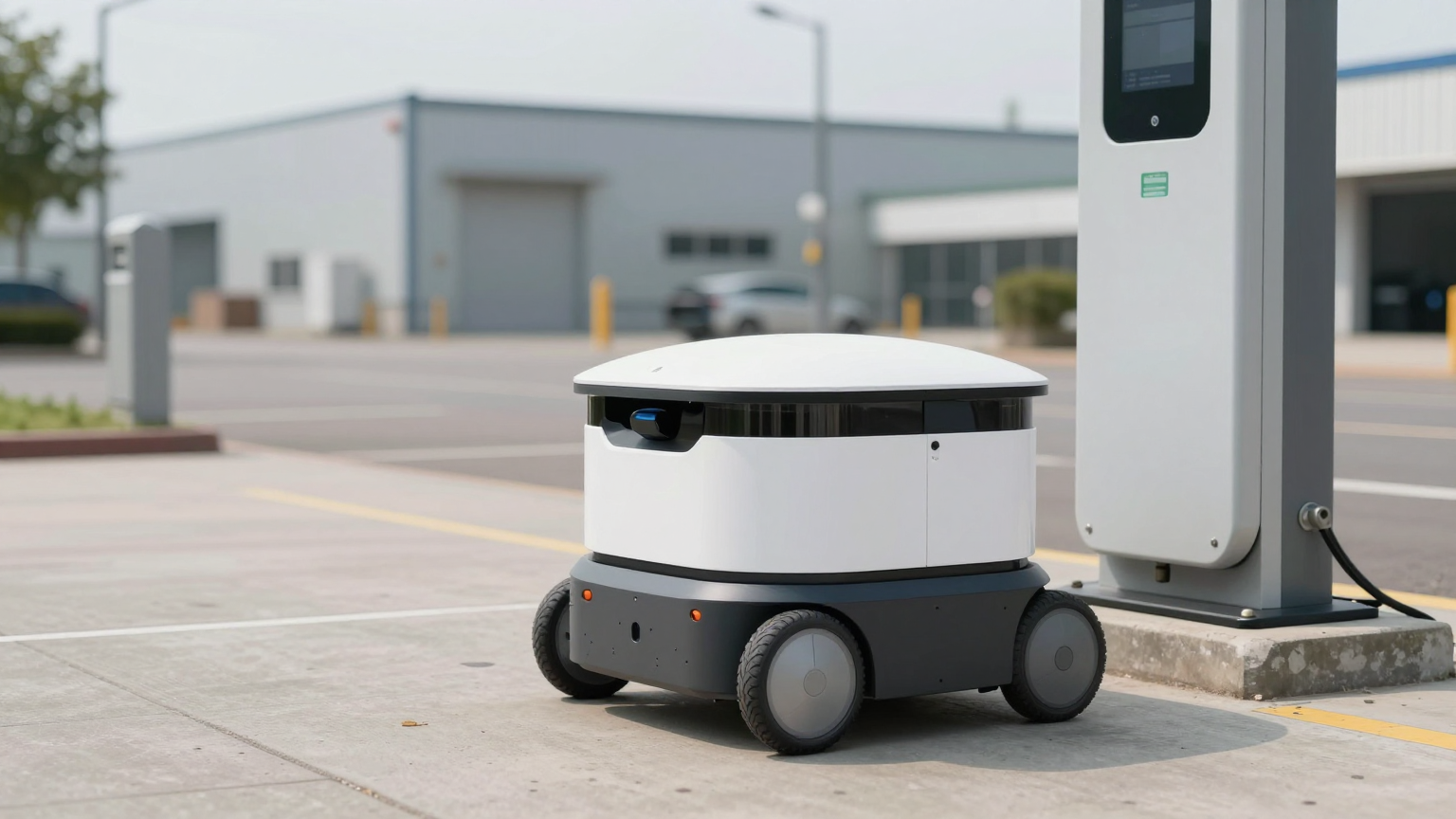
Autonomous mobile robots — delivery robots, agricultural drones, security patrol units, warehouse AGVs that transition between indoor and outdoor zones — return to docking stations to recharge. The docking station is the infrastructure that keeps the fleet operational. Inside that docking station sits the charging electronics, communication controllers, fleet management processors, and sometimes spare battery packs staged for hot-swap. All of these components generate heat. All of them are sensitive to temperature.
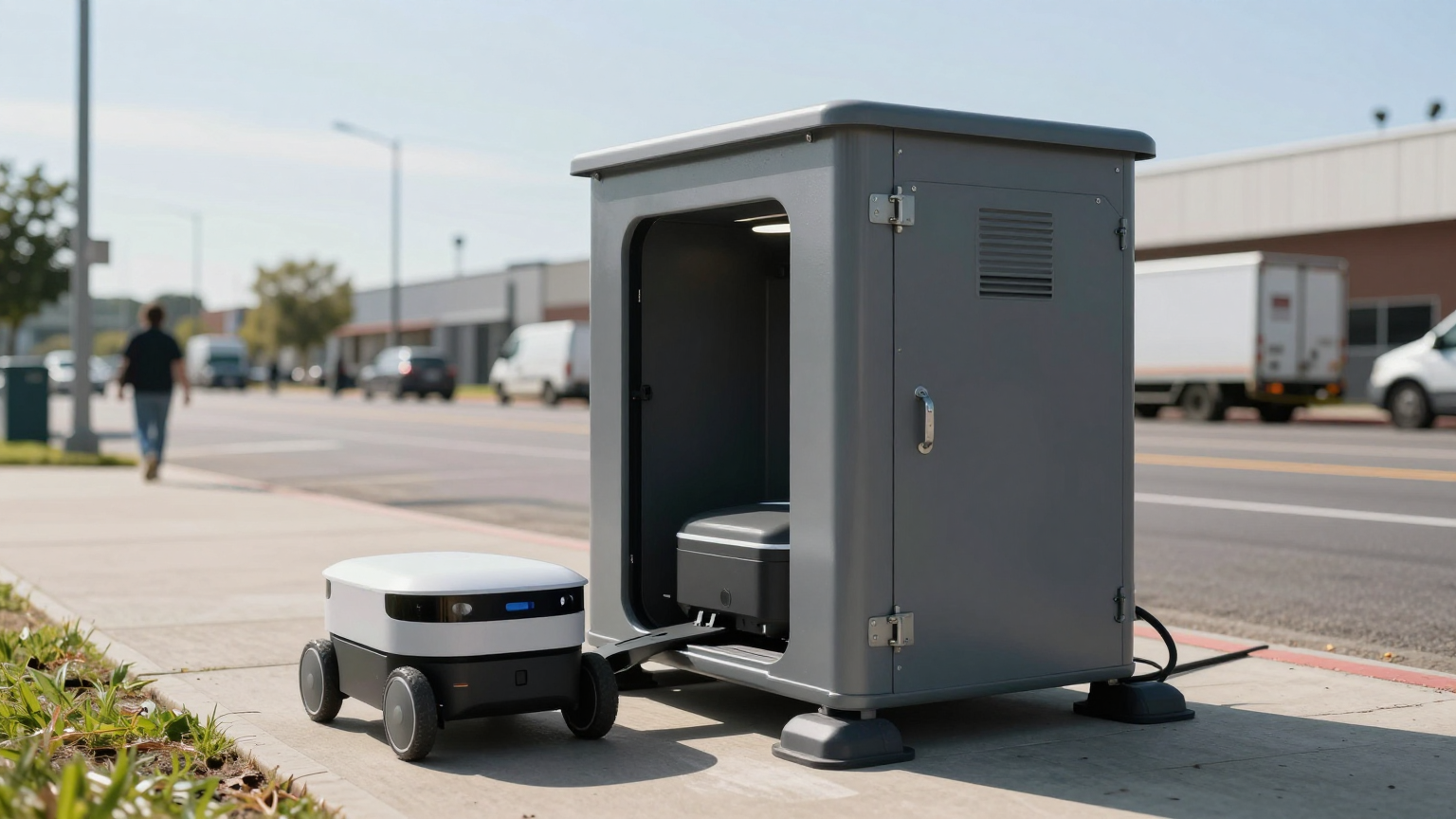
When the docking station is installed outdoors — on a sidewalk, in a parking lot, at a farm perimeter, or in a logistics yard — it becomes an electronics enclosure exposed to direct solar radiation, rain, dust, humidity, and temperature extremes. A dark-colored outdoor enclosure in direct summer sunlight can reach internal temperatures of 70 to 80 degrees Celsius without active cooling — well above the operating limits of most electronic components.
This guide covers the thermal design considerations for outdoor robot docking stations, the role of sealed enclosure cooling with micro DC aircon modules, and the IP rating requirements that determine whether the station survives its first summer.
The Thermal Load Profile of a Robot Dock
A robot docking station’s thermal load comes from two sources: internal heat generation and external heat gain.
Internal Heat Generation
The charging system converts AC or solar power to the DC voltage required by the robot’s battery. This conversion is not perfectly efficient — a charger operating at 90 to 95 percent efficiency generates 50 to 500 W of waste heat depending on the charging power level. Communication equipment, edge computing processors, cameras, and sensors add another 20 to 100 W. Total internal heat generation for a typical single-robot dock ranges from 100 to 600 W; multi-robot docks with multiple simultaneous charging bays can exceed 1,000 W.
External Heat Gain (Solar)
Solar radiation on an outdoor enclosure adds significant thermal load. A 1 square meter surface in direct sunlight absorbs 400 to 800 W of solar energy depending on the surface color, orientation, and solar angle. A compact docking station enclosure with 2 to 3 square meters of exposed surface area may absorb 800 to 2,000 W of solar heat — often exceeding the internal heat generation. Solar heat gain is frequently the dominant thermal load for outdoor enclosures, yet it is the most commonly underestimated factor in thermal design.
Why Ventilation Fails Outdoors
Ventilated enclosures use filtered openings and fans to circulate ambient air through the enclosure. Outdoors, this approach creates multiple problems:
- Dust, pollen, and debris clog filters rapidly — especially in agricultural, construction, and urban roadside environments
- Rain and humidity enter through ventilation openings despite weather shields, particularly during wind-driven rain events
- Insects nest inside warm, sheltered enclosures — creating biological contamination and potential short circuits
- Ambient air above 35 degrees provides insufficient cooling capacity for high-power charging electronics
For indoor robot docks in climate-controlled warehouses, ventilation may be adequate. For any outdoor installation, sealed enclosure cooling is the engineering default.
IP Rating Requirements for Outdoor Docks
The IP (Ingress Protection) rating defines the enclosure’s resistance to solid particles and liquids. For outdoor robot docking stations, the minimum practical ratings are:
| IP Rating | Dust Protection | Water Protection | Suitability |
|---|---|---|---|
| IP54 | Limited dust ingress | Splash-proof | Covered/sheltered outdoor only |
| IP55 | Limited dust ingress | Low-pressure water jets | General outdoor with some shelter |
| IP65 | Dust-tight | Low-pressure water jets | Fully exposed outdoor |
| IP66 | Dust-tight | High-pressure water jets | Harsh outdoor, coastal, industrial wash-down |
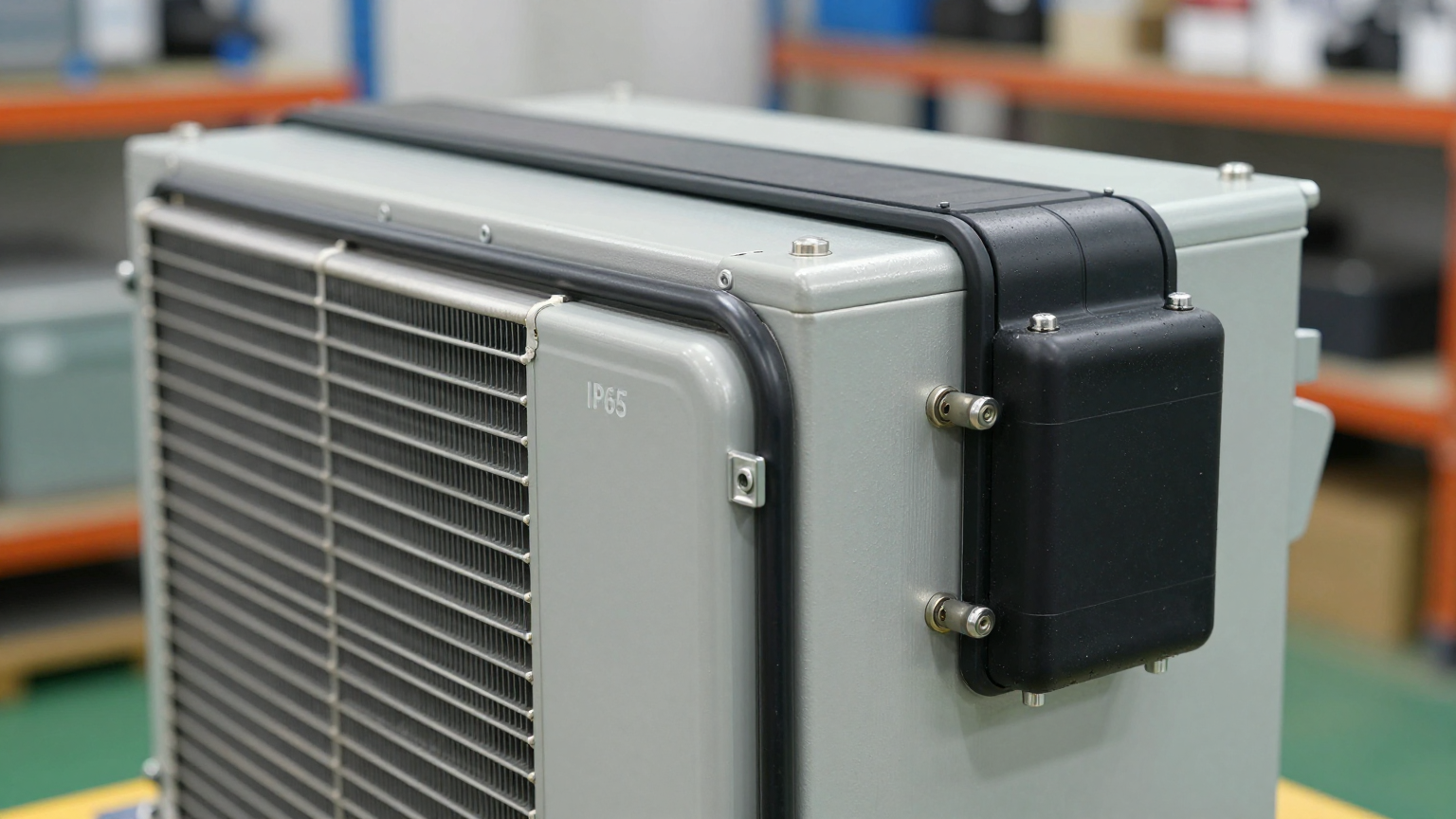
A sealed enclosure with an integrated cooling module maintains its IP rating because the cooling system does not require ventilation openings. The cooling module’s condenser penetration is sealed and weatherproofed as part of the enclosure design. This is the key advantage of sealed cooling over ventilation: it enables the IP rating that outdoor deployment requires.
Micro DC Aircon Module Sizing for Robot Docks
The cooling module must handle the total thermal load at worst-case ambient conditions. A sizing approach:
- Calculate internal heat generation at maximum charging load plus all auxiliary electronics
- Estimate solar heat gain based on enclosure surface area, color, and worst-case solar exposure
- Sum the total thermal load and add 20 percent margin for design safety
- Select a cooling module with rated capacity meeting or exceeding this total at the maximum expected ambient temperature
Example: A single-robot charging dock with 300 W internal heat and 600 W solar gain in Phoenix, Arizona (48 degrees ambient) needs a cooling module rated for at least 1,080 W (900 W total plus 20 percent margin) at 48 degrees ambient — not at the module’s 25-degree headline rating.
Power Architecture
Robot docking stations typically include a DC power bus for charging. The cooling module can draw from this same bus, eliminating the need for a separate AC power connection. For solar-powered remote docks, the cooling module’s power consumption must be included in the solar array and battery sizing calculation. A cooling module consuming 200 W on a solar-powered dock requires approximately 1 kWh per 5 hours of daytime operation — significant for remote installations where every watt matters.
Variable-speed DC compressor modules minimize energy consumption by modulating cooling output to match the actual thermal load. On a cool morning with no solar gain, the module may idle at 20 percent capacity. At peak afternoon sun with full charging load, it ramps to 100 percent. This dynamic range reduces average power consumption by 30 to 50 percent compared to a fixed-capacity system.
Environmental Durability Requirements
Outdoor robot docks face environmental stresses beyond temperature:
- UV exposure degrades plastics, seals, and labels — the cooling module’s external components must use UV-resistant materials
- Condensation cycles (cool nights followed by warm mornings) stress seals and create moisture pathways — the module’s internal design must accommodate condensation without allowing water to reach electronics
- Vibration from nearby traffic, robot docking impacts, or wind loading — the compressor and refrigerant connections must tolerate sustained low-level vibration
- Wide temperature range operation — the module must function from winter lows (potentially minus 20 degrees or below) to summer highs (45 plus degrees), with appropriate low-ambient compressor protection for cold-weather startup
Remote Monitoring and Predictive Maintenance
Outdoor robot docking stations are frequently deployed at remote or distributed locations — parking lots, farm fields, warehouse perimeters, urban delivery zones — where on-site maintenance visits are expensive and disruptive to fleet operations. The cooling module should support remote monitoring of key operating parameters to enable predictive maintenance and early fault detection.
Critical monitoring parameters include compressor current draw (increasing current at constant cooling load indicates condenser fouling or refrigerant loss), evaporator air outlet temperature (rising outlet temperature indicates reduced cooling capacity), and compressor run time percentage (increasing duty cycle at constant ambient indicates degrading system performance).
These parameters can be read by the docking station’s edge computing controller through the cooling module’s communication interface (serial, I2C, or analog outputs) and transmitted to the fleet management platform along with the dock’s other telemetry data. A maintenance alert triggered by a 15 percent increase in compressor current allows a scheduled condenser cleaning visit before the cooling module fails and the dock overheats — converting an unplanned emergency into a planned 15-minute maintenance task.
Multi-Robot Dock Thermal Scaling
As autonomous fleets grow, docking stations scale from single-robot to multi-robot configurations with 4, 8, or more simultaneous charging bays. The thermal load scales proportionally — a 4-bay dock generates 4 times the charging heat of a single-bay dock, plus the shared communication and fleet management electronics. However, the enclosure surface area does not scale linearly with bay count, creating a thermal density problem that worsens as the dock grows.
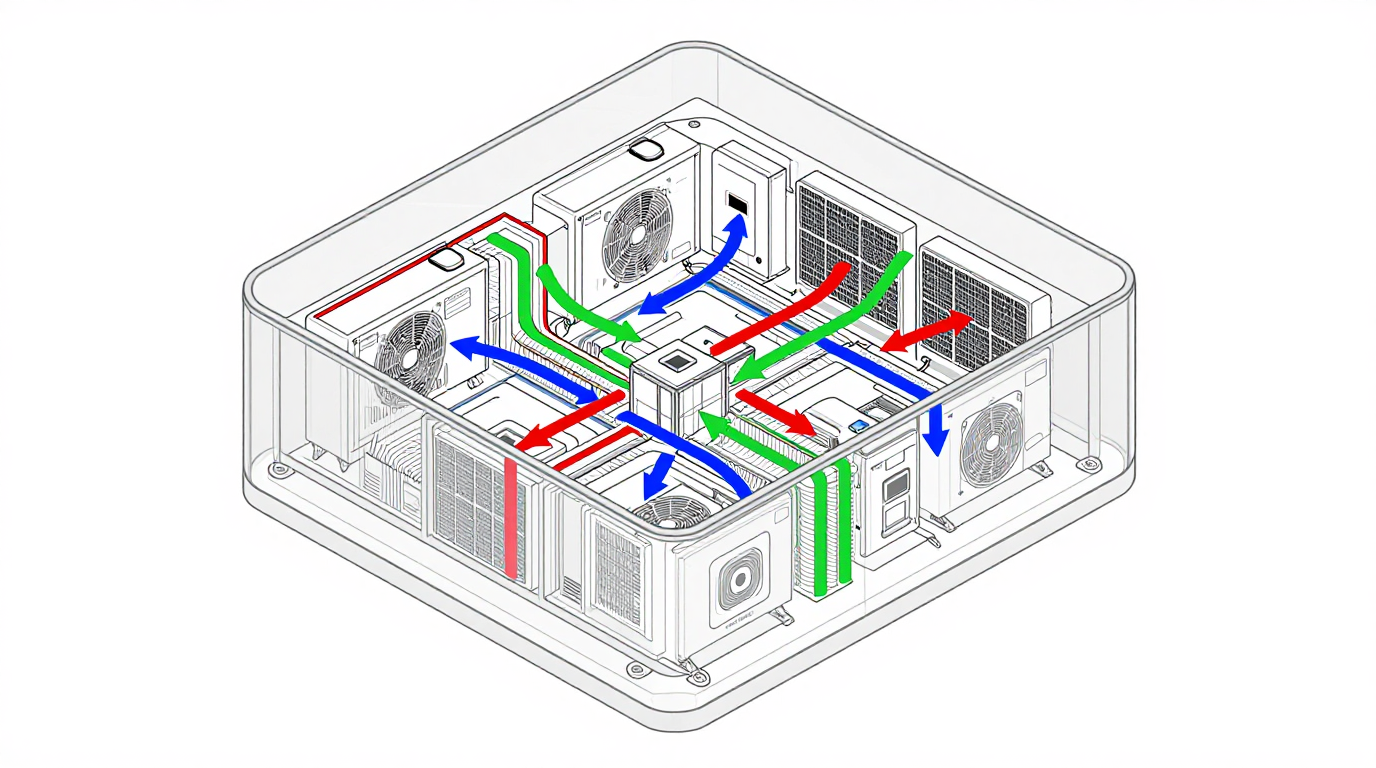
Multi-robot docks typically require multiple cooling modules or a single larger module rather than simply scaling the single-robot cooling solution. The airflow distribution within a larger enclosure must be designed to prevent hot spots at individual charging bays while maintaining uniform temperature across all positions. Internal baffles, directed airflow ducts, and strategic module placement ensure that no single bay overheats while others remain cool.
Redundancy becomes important at multi-robot scale. If a single cooling module serves a 4-bay dock and that module fails, the entire dock overheats and 4 robots are grounded. Two smaller modules provide redundancy — if one fails, the other can maintain reduced cooling sufficient to keep the dock operational at derated capacity until the failed module is serviced.
Common Field Questions
Do I need cooling if the dock is installed under a shade structure?
Shade eliminates direct solar heat gain, which can reduce the cooling requirement by 40 to 60 percent. However, ambient air temperature in shaded outdoor locations still reaches 35 to 45 degrees in hot climates. If the internal heat generation exceeds the enclosure’s passive dissipation capacity at these ambient temperatures, active cooling is still required — just a smaller module than the full-sun case.
Can I use the robot dock enclosure color to reduce solar gain?
Yes. A white or light-colored enclosure absorbs 30 to 50 percent less solar radiation than a dark-colored enclosure. This is the cheapest thermal management improvement available and should be standard practice for outdoor installations. It reduces but does not eliminate the need for active cooling in hot climates.
How do I handle condensate from the cooling module outdoors?
The cooling module’s condensate drain routes to the exterior of the enclosure through a sealed penetration with a drip loop or drain tube. Outdoors, the condensate simply drains to the ground. In freezing conditions, the drain line must be designed to prevent ice blockage — either through a heated drain line or a gravity path that allows complete drainage.
What is the expected service life of a cooling module in outdoor service?
With proper installation and no maintenance neglect, a quality DC compressor module should deliver 5 to 10 years of outdoor service. The main wear items are the compressor motor bearings and the fan motors. Condenser coil cleaning (accessible from outside the enclosure) should be performed annually or more frequently in dusty environments.
Integration Support
Robot docking station thermal design varies with charging power level, fleet size, installation climate, and power architecture. If your outdoor dock encounters overheating, component failures, or uptime issues related to thermal management, the Rigid engineering team can evaluate the application. The Rigid Micro DC Aircon module is a compact, DC-powered, sealed cooling sub-system designed for outdoor enclosure integration — providing active cooling, dehumidification, and IP-compatible thermal management for autonomous fleet infrastructure.
The robot handles its own mission. The dock handles the robot. The cooling system handles the dock. If that last link fails — if the dock overheats, the charger dethrottles, the batteries sit uncharged — the entire fleet stops. Every robot in the fleet sits idle, waiting for a dock that cannot charge them. Outdoor robot dock cooling is not a component decision. It is a fleet uptime decision that determines whether the autonomous operation continues or halts.