
Portable Environmental Chamber Design: Bringing Lab-Grade Conditions to the Field
A laboratory environmental chamber maintains precise temperature and humidity conditions for testing, calibration, and sample analysis. In a fixed lab, this is straightforward — the chamber connects to building power, a chilled water loop or dedicated HVAC system handles the thermal load, and the room itself provides a stable ambient baseline. But when the work moves to the field — geological survey sites, remote research stations, disaster response labs, agricultural testing points — none of that infrastructure exists.
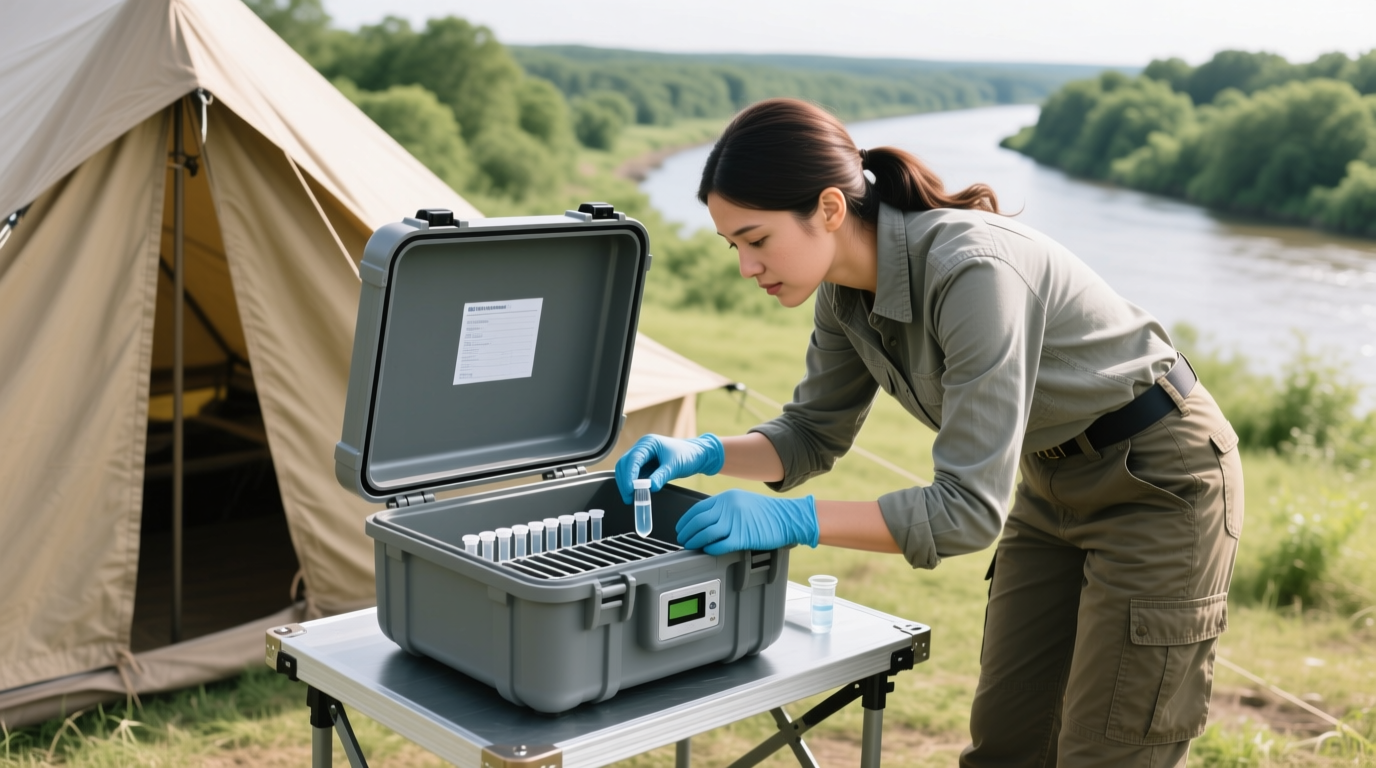
A portable environmental chamber must recreate lab-grade thermal conditions using only the power sources available in the field: a vehicle battery, a portable generator, or a solar panel array. It must handle ambient temperatures that range from sub-zero winter mornings to 40°C+ summer afternoons. And it must do this in a package compact enough to transport in a truck bed or cargo van, rugged enough to survive unpaved roads, and simple enough to set up without a facilities engineer.
The thermal management system is the core enabler — or the limiting factor — of every portable environmental chamber. If the cooling and heating system cannot maintain the target temperature under field conditions, the chamber is just an insulated box with a thermometer.

What Field Conditions Demand from a Portable Environmental Chamber
The gap between lab and field environments creates specific thermal management challenges that fixed-installation chambers never face:
Unpredictable and Extreme Ambient Temperatures
A geological survey team in the Atacama Desert may need to run soil analysis at a controlled 20°C while ambient temperatures exceed 45°C. A wildlife research team in northern Canada may need to maintain 25°C for sample processing while ambient drops to −25°C. The chamber’s thermal system must handle both extremes — and everything in between — without hardware changes or seasonal reconfiguration.
Limited and Variable Power Supply
Field power sources are constrained. A vehicle alternator provides 12V or 24V DC with limited current capacity. A portable generator may provide AC power but with voltage fluctuations and fuel logistics. Solar panels provide DC power but only during daylight hours and at variable output depending on cloud cover and panel orientation. The thermal management system must operate efficiently within these constraints — every watt consumed by the chamber is a watt unavailable for other field equipment.
Rapid Setup and Teardown
Field teams cannot spend hours commissioning a thermal system. The chamber must reach its target temperature quickly after power-on and maintain it with minimal operator attention. A system that requires refrigerant charging, water loop filling, or complex calibration in the field is impractical. Pre-charged, self-contained thermal modules that connect with simple DC wiring are essential for field deployment.
Vibration and Transport Durability
The chamber and its thermal system travel on unpaved roads, in truck beds, and occasionally by helicopter or small aircraft. Components must withstand vibration, shock, and orientation changes without refrigerant leaks, compressor damage, or calibration drift. This rules out fragile laboratory cooling systems designed for vibration-free environments.
Why Thermoelectric Coolers Struggle in Field Environmental Chambers
Many portable cooling applications default to thermoelectric (Peltier) modules because of their simplicity: no moving parts, no refrigerant, compact form factor. For small temperature differentials in mild ambient conditions, Peltier modules can be adequate. But for a portable environmental chamber that must maintain precise temperatures across a wide ambient range, their limitations become critical:
- COP of 0.3–0.6 means high power consumption relative to cooling output — a serious constraint when running on batteries or solar
- Maximum temperature differential of 15–20°C below ambient limits cooling capability in hot environments
- Heating mode (reverse polarity) is inefficient and provides limited capacity
- Performance degrades significantly as the temperature differential increases
For a chamber that needs to maintain 20°C when ambient is 45°C (a 25°C differential), a Peltier system is operating beyond its effective range. The power consumption becomes prohibitive for field power sources, and the cooling capacity may be insufficient to hold the setpoint under solar load.
Vapor-Compression: Lab-Grade Performance in a Field-Ready Package
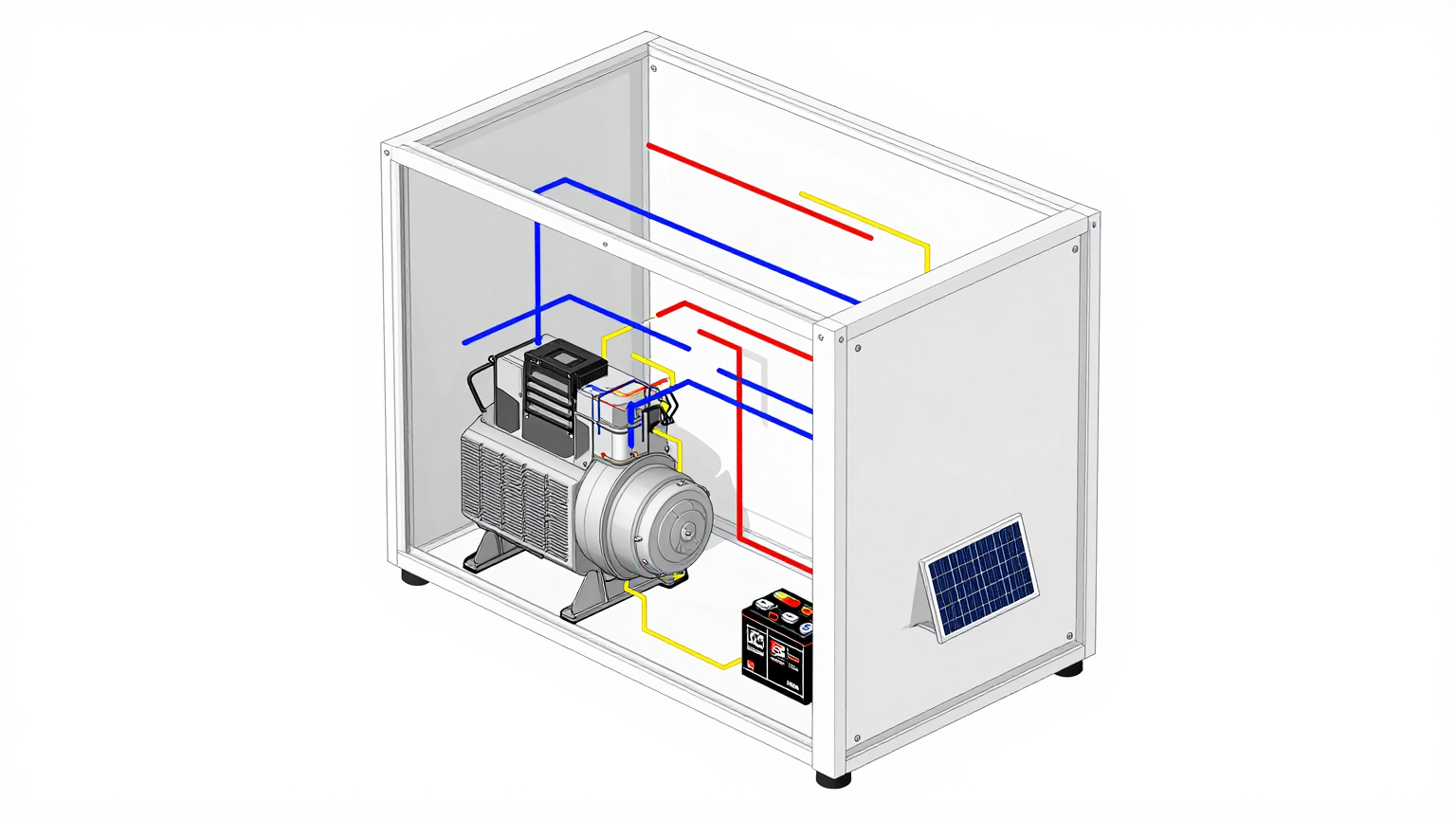
A miniature vapor-compression system overcomes the limitations of thermoelectric cooling while maintaining the portability requirements of field deployment. The key advantages for portable environmental chamber applications:
High COP Across Wide Temperature Range
With COP values of 2.0–3.5 depending on conditions, a vapor-compression system delivers two to three times more cooling (or heating) per watt of electrical input compared to thermoelectric modules. For a field team running on a 24V battery bank, this efficiency advantage directly translates to longer runtime between charges or smaller battery requirements for the same operational duration.
Bidirectional Operation
The four-way reversing valve enables the same system to cool the chamber below ambient or heat it above ambient. A single module handles the full range of field conditions — cooling in desert heat, heating in arctic cold — without hardware changes. The transition between modes is automatic, driven by the internal temperature sensor and setpoint logic.
Deep Temperature Differential
Unlike Peltier modules that lose effectiveness as the differential increases, a vapor-compression system can maintain chamber temperatures well below ambient — reaching differentials of 30–40°C or more depending on insulation quality and compressor capacity. This enables maintaining 4°C for biological sample storage even in 40°C ambient conditions.
DC-Native Operation
Miniature DC compressors run directly on 12V, 24V, or 48V DC — matching the output of vehicle electrical systems, portable battery banks, and solar charge controllers. No inverter is needed, eliminating 15–20% conversion losses and a potential point of failure in the field.
Application Scenarios for Portable Environmental Chambers
Geological and Environmental Sampling
Soil, water, and air samples often require analysis at a standardized reference temperature to produce comparable results. A portable chamber maintaining 20±1°C allows field teams to run tests immediately rather than transporting samples back to a distant lab — reducing sample degradation and accelerating data collection timelines.
Wildlife and Ecological Research
Biological samples — blood, tissue, plant material — degrade rapidly outside controlled temperature ranges. A field chamber maintaining 4°C or −20°C preserves sample integrity until analysis can be performed. For long-duration field campaigns in remote locations, the ability to run the chamber from solar power extends operational capability beyond what passive coolers with ice packs can provide.
Agricultural Quality Testing
Grain moisture analysis, seed germination testing, and pesticide residue screening all require controlled temperature conditions. Mobile agricultural testing units — deployed to farms, grain elevators, and processing facilities — need portable chambers that reach and hold target temperatures quickly, regardless of whether the testing is done in a heated office or an unheated warehouse in winter.
Forensic and Disaster Response
Evidence preservation and field laboratory operations in disaster zones require temperature-controlled environments for sample integrity and analytical accuracy. Power infrastructure may be damaged or unavailable, making DC-powered, battery-compatible thermal systems essential. The chamber must be operational within minutes of arrival, not hours.
Sizing and Specification Guide
Selecting the right thermal module for a portable environmental chamber depends on four primary variables:
| Parameter | Small Chamber (10–20L) | Medium Chamber (30–60L) | Large Chamber (80–150L) |
|---|---|---|---|
| Typical cooling load | 30–80W | 80–200W | 200–500W |
| Recommended module capacity | 100–150W | 200–350W | 450–550W |
| Insulation thickness (PU foam) | 25–30mm | 30–40mm | 40–50mm |
| Battery runtime (24V 50Ah) | 40–80 hours | 15–40 hours | 8–15 hours |
| Warm-up time to setpoint | 5–10 min | 10–20 min | 20–40 min |
These figures assume moderate ambient conditions (25–35°C) and a target chamber temperature of 20°C. In extreme ambient conditions, cooling loads increase and battery runtimes decrease proportionally. Oversizing the thermal module by 30–50% above the calculated steady-state load provides headroom for door-opening recovery, ambient temperature spikes, and the initial pulldown from ambient to setpoint.
Frequently Asked Questions
Can a portable environmental chamber maintain sub-zero temperatures?
Yes. A vapor-compression system can maintain chamber temperatures well below 0°C — typically down to −10°C to −20°C depending on the compressor capacity and insulation quality. For biological sample preservation requiring −20°C, this eliminates the need for dry ice or liquid nitrogen in the field, simplifying logistics significantly.
How does humidity control work in a field chamber?
In cooling mode, the evaporator naturally dehumidifies the chamber air as moisture condenses on the cold heat exchanger surface. For applications requiring specific humidity levels, a secondary humidification system (ultrasonic or wick-based) can add moisture back to the dehumidified air. The combination of dehumidification from the cooling cycle and controlled rehumidification provides basic humidity regulation without a dedicated humidity control system.
What happens if the power source is interrupted?
The insulated chamber acts as a thermal buffer during power interruptions. A well-insulated 30L chamber at 20°C in 35°C ambient will typically drift less than 2°C per hour with the thermal system off. When power returns, the system restarts automatically and recovers to setpoint. For critical applications, a backup battery or dual power input (vehicle plus solar) provides redundancy.
Is the refrigerant circuit affected by altitude?
Vapor-compression systems operate on a sealed refrigerant circuit that is independent of ambient air pressure. The system functions normally at high altitude — a relevant consideration for geological survey teams working at 3,000–5,000m elevation. The only altitude effect is reduced air density at the condenser, which slightly reduces heat rejection efficiency. This is typically compensated by the cooler ambient temperatures found at high altitude.
How portable is the complete system?
A small portable environmental chamber (20L capacity) with integrated thermal module and a 24V battery pack can weigh 15–25 kg total — manageable for two-person carry. Medium chambers (50L) typically require vehicle transport but can be set up by a single operator. The pre-charged refrigerant circuit means no field commissioning — connect power, set the target temperature, and the system is operational.
From Insulated Box to Precision Instrument
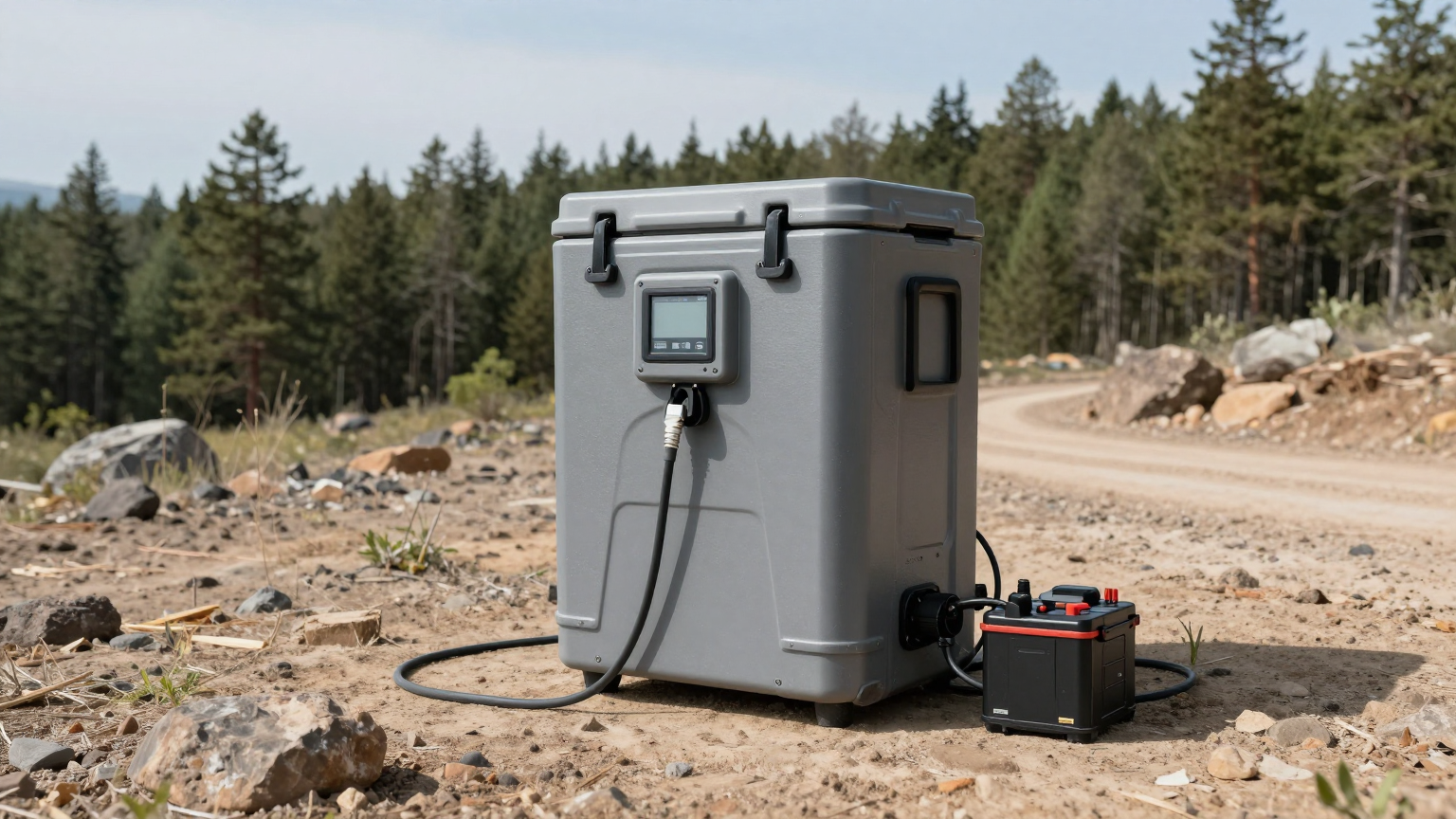
The difference between a portable environmental chamber and an insulated cooler is the thermal management system. Passive insulation buys time. Active thermal control — with bidirectional heating and cooling, variable-speed regulation, and DC-native operation — buys precision and reliability regardless of field conditions.
For research teams, testing laboratories, and field operations that need controlled temperature environments outside the lab, a compact cool-and-heat module transforms a portable enclosure into a field-deployable instrument that delivers lab-grade thermal conditions on battery power.
If your field application involves specific temperature ranges, unusual chamber geometries, or integration with existing data logging and control systems, we can review the requirements and discuss a thermal module configuration that matches your operational needs.