
A sample leaves the lab at -80°C. Twelve hours later, it arrives at the receiving facility and the data logger reads -72°C. The sample is technically still frozen. But the receiving team flags it anyway, because the temperature record shows a 40-minute window where the reading climbed above -75°C during a vehicle transfer. The sample is quarantined. The shipment is delayed. And the conversation shifts from “did it thaw?” to “can we prove it stayed in zone?”
This is the real challenge behind portable ULT cooling for biological samples. The minimum temperature your system can reach matters far less than its ability to hold a defined temperature zone across every leg of the transport chain — from lab to vehicle, vehicle to aircraft, aircraft to destination. Each handoff introduces a thermal disruption. The question is whether your cooling system can absorb that disruption and recover before the sample drifts out of its acceptable range.
Portable ULT Cooling for Biological Samples: The Problem Is Not Cold Enough — It Is Stable Enough
Most procurement conversations start with a number: “We need -80°C.” That number is important, but it is only the entry ticket. The real specification that determines whether a portable ULT cooling system works in the field is the temperature stability window — how tightly the system holds its setpoint under real-world disturbances.
Biological samples — tissue biopsies, cell cultures, RNA extracts, certain enzyme preparations — degrade through repeated thermal cycling, not just through sustained warming. A sample that slowly warms from -80°C to -60°C over six hours may survive intact. A sample that oscillates between -80°C and -70°C four times during a bumpy road transfer may not. The damage mechanism is different: ice crystal restructuring during thermal cycling causes mechanical stress at the cellular level that a single slow excursion does not.
This means the cooling system’s job during transport is not to reach the coldest possible temperature. It is to minimize the amplitude and frequency of temperature oscillations around the setpoint. That is a control problem, not a capacity problem.
Why Compressor-Based Portable Systems Struggle Below -60°C
Conventional vapor-compression refrigeration — the same technology in your kitchen freezer — can reach approximately -40°C in a single stage. Cascade systems (two compressors in series) can push to -80°C or slightly beyond, but they come with trade-offs that matter in portable applications:
- Weight and size. A cascade system capable of -80°C typically weighs significantly more than the sample payload it protects. For a 1-2 liter sample volume, the cooling hardware can dominate the total package weight, making manual handling between transport legs difficult.
- Vibration sensitivity. Compressor-based systems generate mechanical vibration from the motor and piston assembly. In a vehicle, this vibration couples with road-induced vibration, creating complex resonance patterns that can affect both the cooling system’s reliability and the sample’s physical integrity.
- Recovery time after door opening. When a cascade system’s chamber is opened — even briefly, for sample verification at a checkpoint — the recovery time to return to -80°C can be lengthy depending on ambient conditions. During that recovery window, the sample experiences exactly the kind of thermal cycling that causes damage.
- Refrigerant considerations. Cascade systems use synthetic refrigerants. In transport scenarios involving air freight, refrigerant charge limits and leak containment requirements add regulatory complexity that varies by carrier and jurisdiction.
None of these issues make compressor-based ULT systems unusable. They make them less suited to the specific demands of multi-leg transport where the container is repeatedly handled, opened, and moved between environments.
How Free Piston Stirling Coolers Address the Transport Problem
A Free Piston Stirling Cooler (FPSC) operates on a fundamentally different thermodynamic cycle. Instead of compressing and expanding a refrigerant through phase changes, it uses helium gas in a sealed, closed-loop cycle driven by a magnetically levitated piston. No oil. No valves. No refrigerant charge to leak.
For portable ULT cooling for biological samples, this architecture offers several practical advantages in transport scenarios:
Temperature range without cascade complexity. A single FPSC unit can reach -160°C at the cold end. For biological sample transport at -80°C, the system operates well within its capability range, which means it can maintain the setpoint with lower input power and less thermal stress on the mechanism. The RIGID FPSC-RS100 Plus delivers 100W of cooling capacity at 24-30V DC with a cold-end range of -160°C to 0°C — all in a 7 kg package measuring 167×156×291mm.
Fast recovery after thermal disruption. Because the Stirling cycle has no phase-change refrigerant to re-equilibrate, the system responds to temperature deviations quickly. When a transport container is opened at a checkpoint and the cold-end temperature rises, the FPSC ramps up its piston stroke to increase cooling output. The response is proportional and immediate — there is no compressor restart delay, no refrigerant redistribution lag.
Orientation independence. FPSC units work in any mounting orientation. During transport, containers get tilted, rotated, and stacked. A compressor-based system with oil management requirements may lose efficiency or trigger fault conditions when orientation changes. An FPSC does not care which way is up.
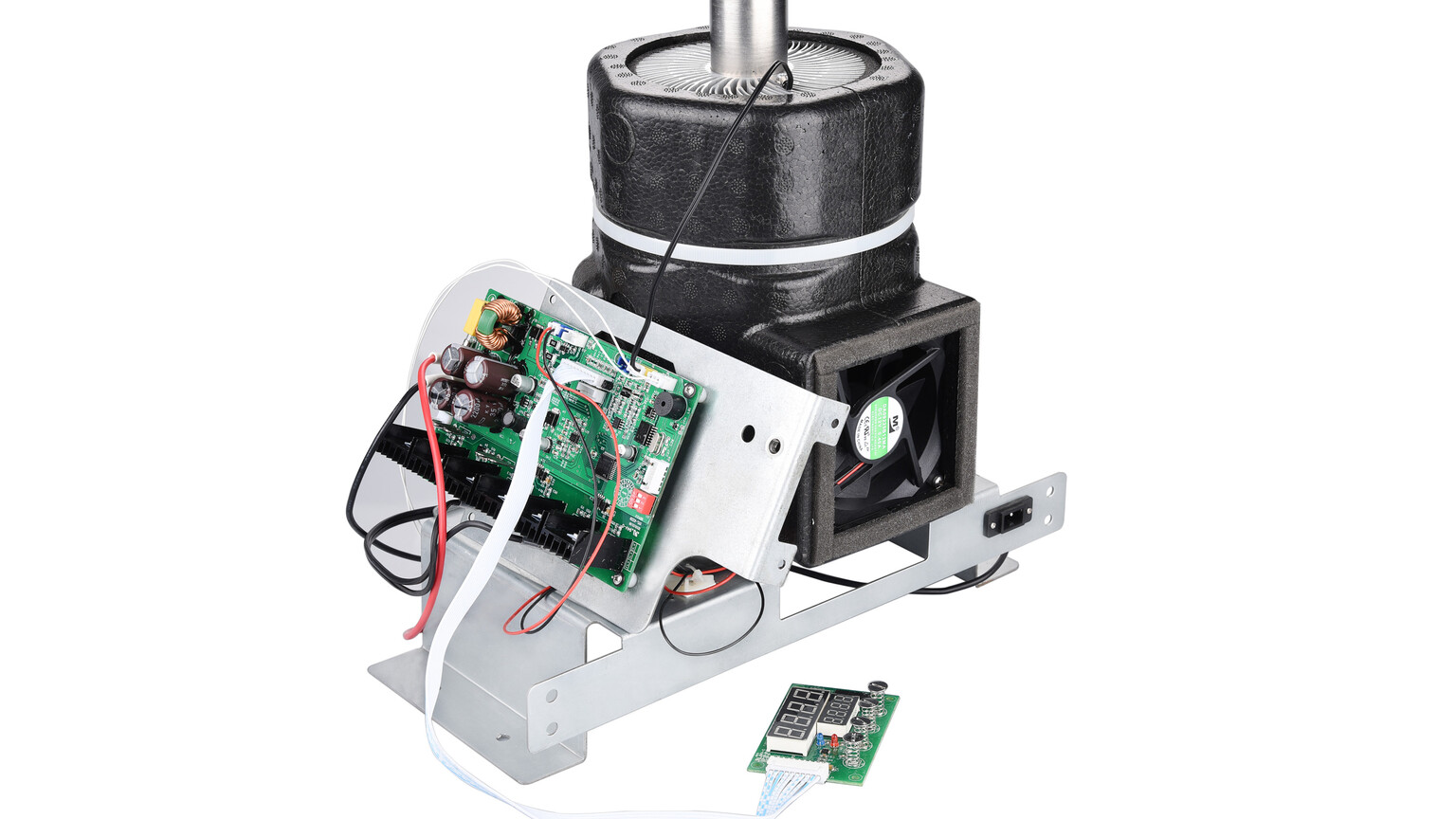 DC power compatibility. All RIGID FPSC models run on DC power (12V or 24-30V depending on model). This means the cooling system can run directly from a vehicle battery, a portable lithium battery pack, or a solar panel during field collection. No inverter needed. No AC power dependency during the most vulnerable legs of the transport chain.
The Transport Chain: Where Temperature Excursions Actually Happen
Understanding where samples are most at risk helps explain why portable ULT cooling for biological samples requires a different engineering approach than stationary ULT storage.
A typical multi-leg biological sample transport looks like this:
- Lab to vehicle (Leg 1). The sample is removed from a stationary -80°C freezer and placed into the portable transport unit. The portable unit may have been pre-cooled, or it may need to pull down from ambient. This is the first thermal disruption.
- Vehicle transit (Leg 2). Road vibration, ambient temperature variation (a vehicle parked in sun vs. shade), and power supply fluctuations (vehicle alternator voltage varies with engine RPM) all create disturbances the cooling system must absorb.
- Vehicle to aircraft or secondary vehicle (Leg 3). The container is unplugged from vehicle power, carried manually (no active cooling during this window unless battery-equipped), loaded into a cargo hold, and reconnected to power — if power is available. This handoff is often the highest-risk moment.
- Destination receiving (Leg 4). The container is opened for sample verification. Ambient air enters the cold zone. The system must recover quickly while the receiving team inspects and documents.
At each transition, the cooling system faces a different challenge: power interruption, ambient heat load spike, mechanical shock, or direct warm-air intrusion. A system designed only for steady-state performance at -80°C may reach that temperature in a controlled lab but fail to maintain it through these real-world disruptions.
Battery Backup and Power Transition: The Critical Gap
The most dangerous moment in biological sample transport is the power gap between transport legs. When a container is unplugged from a vehicle’s 12V or 24V outlet and carried to the next vehicle or loading dock, the cooling system goes dark — unless it has battery backup.
The RIGID Vaccine Freezer RG01L86 addresses this directly. It is a purpose-built portable ULT unit with an integrated battery providing at least 1 hour of autonomous operation. Key specifications from the product page:
- Cooling capacity: 100W
- Power input: 12V-24V DC
- Built-in battery: ≥1 hour runtime
- Internal volume: 1 liter
- Temperature range: -86°C to 4°C
- Weight: 13.5 kg
- Working current: 5A
That 1-hour battery window covers most handoff scenarios: the walk from vehicle to loading dock, the wait at a security checkpoint, the transfer between vehicles. It does not cover an overnight power outage — but it is not designed to. It is designed to bridge the gap where most temperature excursions actually occur.
For longer autonomous requirements, the FPSC-RS40 (12V, 6A working current, 6 kg) or FPSC-RS100 (24-30V, 6A working current, 7 kg) can be paired with external lithium battery packs. A 24V/50Ah battery pack, for example, would provide roughly 8 hours of runtime for an RS100 operating at moderate load — enough for most domestic transport scenarios without external power.
Temperature Logging and Traceability: The Documentation Layer
Reaching and holding -80°C is necessary but not sufficient. For regulated biological sample transport — clinical trial materials, diagnostic specimens, biobank transfers — you also need to prove it. That means continuous temperature logging with tamper-evident records.
The cooling system itself is only one part of this traceability chain. But the system’s behavior directly affects what the data logger records. A system with tight temperature control (±2°C around setpoint) produces a clean, defensible log. A system that hunts ±8°C around setpoint — even if the average is correct — produces a log that raises questions at every review.
When evaluating portable ULT cooling for biological samples, ask the cooling system vendor not just “what temperature can you reach?” but “what is the typical oscillation amplitude at setpoint under a defined ambient heat load?” The second question tells you far more about real-world performance.
Choosing the Right FPSC Configuration for Your Transport Scenario
Not every biological sample transport needs the same cooling system. The right configuration depends on three variables: target temperature, payload volume, and transport duration.
Short-distance, small-volume (-80°C, under 1 liter, under 4 hours): The Vaccine Freezer RG01L86 is purpose-built for this scenario. Integrated battery, 1-liter chamber, -86°C capability. Carry it like a briefcase.
Medium-distance, custom payload (-80°C to -40°C, 2-10 liters, 4-12 hours): An FPSC-RS100 or RS100 Plus integrated into a custom-insulated container with an external battery pack. The RS100 Plus provides 100W cooling capacity with a cold-end range to -160°C, giving substantial thermal margin at -80°C. The 7 kg cooler weight keeps the total package manageable.
Deep cryogenic transport (-120°C to -150°C, specialized samples): The FPSC-RS100 Plus reaches -160°C at the cold end. For samples requiring temperatures below -100°C — certain cell lines, cryopreserved tissues — this is the only portable option that does not require liquid nitrogen or dry ice replenishment during transit.
For all configurations, the DC power input (12V or 24-30V) means the system integrates directly with vehicle electrical systems and portable battery packs without inverters or power conditioning equipment.
What Portable FPSC Cooling Does Not Replace
Portable ULT cooling for biological samples using FPSC technology is not a universal solution. It is important to understand the boundaries:
- Large-volume bulk transport. If you are moving hundreds of liters of frozen material, a portable FPSC unit with a 1-liter chamber is not the right tool. That scenario calls for insulated bulk containers with dry ice or mechanical refrigeration trucks.
- Liquid nitrogen temperature requirements. Some cryopreservation protocols require storage at -196°C (liquid nitrogen boiling point). The FPSC-RS100 Plus 77K model can reach below -196°C at the cold end, but the cooling capacity at that extreme (>5W) is designed for sensor cooling and small thermal loads, not for maintaining large sample volumes at liquid nitrogen temperatures during transport.
- Unattended multi-day storage. A portable transport unit is designed for hours of transit, not days of storage. For multi-day holding, transfer samples to a stationary ULT freezer at the destination.
Being clear about what the system is designed for — and what it is not — helps match the right tool to the right job. For multi-leg transport of small-to-medium biological sample volumes at -40°C to -150°C, FPSC-based portable cooling offers a combination of temperature stability, weight, power flexibility, and orientation independence that compressor-based alternatives struggle to match.
Frequently Asked Questions
How long can an FPSC portable cooler maintain -80°C without external power?
The Vaccine Freezer RG01L86 includes a built-in battery providing at least 1 hour of autonomous operation at -86°C. For longer durations, FPSC modules (RS40, RS100, RS100 Plus) can be paired with external lithium battery packs — runtime depends on battery capacity and ambient conditions.
Does the FPSC system require any refrigerant servicing?
No. FPSC units use a sealed helium charge (2.5-3g depending on model) that does not degrade or leak under normal operation. There are no compressor oil changes, no refrigerant top-ups, and no scheduled mechanical maintenance.
Can the system operate while the transport container is in motion?
Yes. FPSC units are orientation-independent and have no oil sump or liquid refrigerant that could be affected by tilting or vibration. They operate continuously during vehicle transit.
What certifications apply to transporting biological samples with active cooling?
Certification requirements vary by jurisdiction, sample type, and transport mode. Common frameworks include IATA Dangerous Goods Regulations (for air transport), WHO PQS (for vaccine cold chain equipment), and regional GDP guidelines (for pharmaceutical materials). Consult your regulatory team for the specific requirements applicable to your transport scenario.
For detailed specifications on RIGID FPSC Stirling Coolers and the Vaccine Freezer, visit the FPSC Stirling Cooler product page.