
What a Power Station Air Conditioner Setup Has to Deliver
A power station air conditioner setup needs a compatible output before battery capacity becomes useful. If the air conditioner requests more current than the selected port can supply, the station may trip even with a fully charged battery. Check voltage, continuous output power and connector ratings before estimating runtime.
The question worth answering first in any power station air conditioner plan is not how many hours you get. It is whether the output you plan to use can carry the current the machine draws while it is pulling down, and whether the voltage still sits inside the compressor’s window at the end of the cable. Runtime is arithmetic you can do later; the connection either works or it does not.
A portable DC unit is a current problem before it is an energy problem. RIGID lists the LC2810E-AC at 12 V with a working current of 16 A, the LC2820E-AC at 24 V with 8 A, and the LC2830E-AC at 48 V with 4 A. These are published working-current figures, not a complete specification of peak demand or total system power. Confirm the requirements of the delivered variant before selecting its supply.
Reading the Outputs on the Station Before You Buy Anything
Most portable power stations expose three families of output, and they are not interchangeable for this load.
| Output | Typical use | What limits it |
|---|---|---|
| Vehicle-style socket (car port) | Fridges, fans, small pumps | A fixed current ceiling set by the station’s own fuse or regulator |
| Dedicated DC outputs | Loads supported by the stated output rating | Voltage, continuous current, shared-output limits and approved connector; connector shape alone does not establish capacity |
| AC outlet through the internal inverter | Mains appliances | Inverter conversion losses and idle draw |
Read the printed rating next to the socket rather than assuming the industry norm. A port can have a lower limit than the plug fitted to it. Some stations also share one current budget across several DC sockets, so check simultaneous-output restrictions as well as the label beside the individual socket. If the number beside the socket is below the working current on the air conditioner’s data sheet, that socket is not the answer, no matter how large the battery behind it is.
Two details decide whether a power station air conditioner pairing is realistic: the current ceiling on the output you intend to use, and whether that output is regulated. An unregulated port follows the battery down as it discharges, which matters for the next section.
Current Requirements at 12 V, 24 V and 48 V
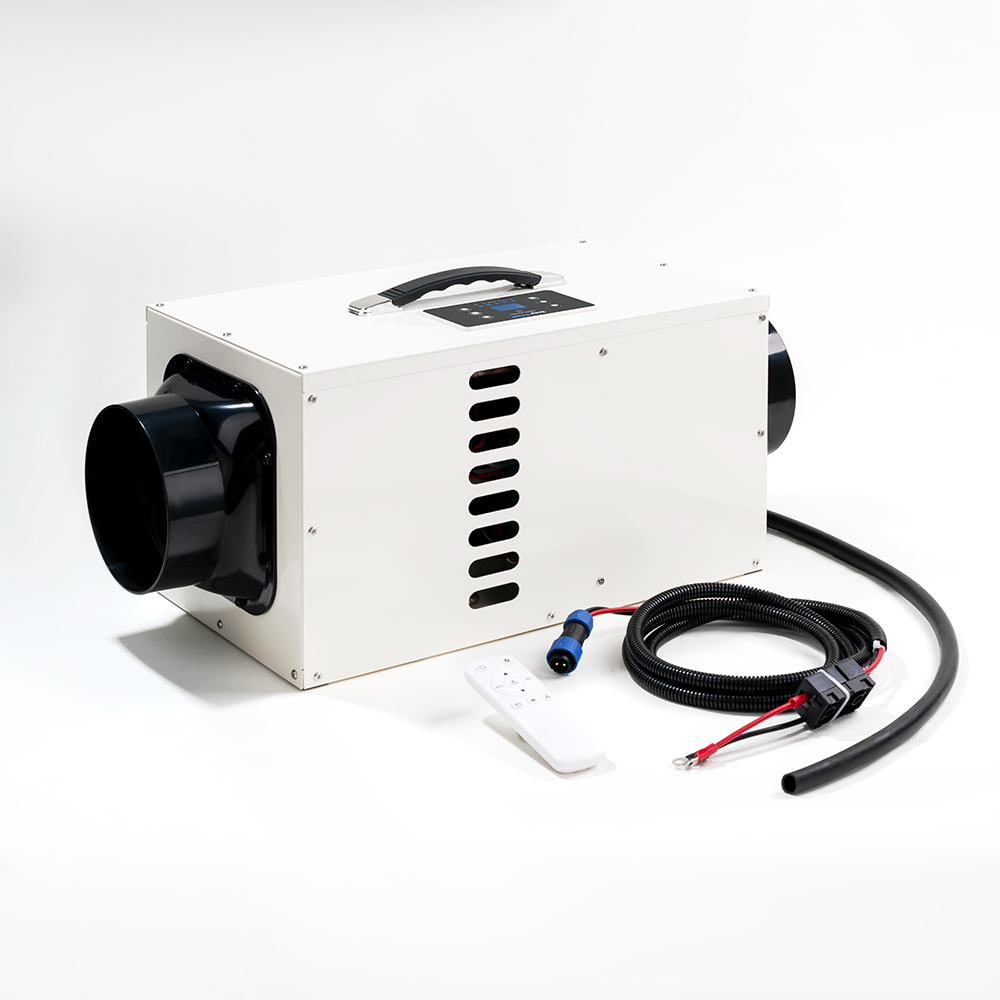 Current requirements depend on the selected supply voltage. For equal electrical input power, a 48 V circuit carries one quarter of the current of a 12 V circuit, because power equals voltage times current. That relationship does not make different voltage variants interchangeable: the output must match the specific unit, and auxiliary loads and controller behavior still need checking.
| Model | Supply | Working current | Practical implication |
|---|---|---|---|
| LC2810E-AC | 12 V DC | 16 A | Requires a manufacturer-approved output with sufficient continuous and transient capacity |
| LC2820E-AC | 24 V DC | 8 A | Requires a compatible 24 V output; a 12 V socket will not work |
| LC2830E-AC | 48 V DC | 4 A | Requires a compatible 48 V output and correctly rated wiring |
Those figures come from the Portable DC Air Conditioner product page, which lists R134a and an 11 kg unit weight. Cooling capacity is separate from electrical demand: do not size the source from cooling watts or a headline Btu figure. Ask for the current model specification, including total input demand and the operating conditions attached to its cooling rating. The page contains inconsistent voltage text for the 24 V entry; its linked LC2820E-AC specification identifies that model as 24 V. Confirm the delivered variant against its own label and current documentation.
A 12 V socket is suitable only if it meets the confirmed complete-unit demand. Selecting a 24 V or 48 V variant does not solve an inadequate 12 V output unless a compatible, approved supply path is also available. Match the delivered unit to the output you can actually use.
Voltage Windows and Where the Station Cuts Out
A variable-speed DC compressor runs inside a voltage window. Below the low-voltage cutout the controller stops, and that is by design: it protects the battery and the compressor from operating brownouts. A lithium power station adds a second cutoff of its own through its battery management system.
Whichever limit is reached first ends the session. If the station’s regulated 12 V output holds a steady voltage until the pack itself is nearly empty, the compressor sees clean supply the whole way and stops when the station stops. If the output is unregulated and simply tracks the pack, the compressor may cut out with usable energy still in the battery, then restart as the pack recovers. Short-cycling like that looks like a fault and is really a supply characteristic.
Startup Behavior That Trips Protections
A variable-speed drive can control acceleration, but that does not establish the startup demand of the complete air conditioner. Controller capacitors, fans and compressor operating conditions all affect the supply. Use a stated startup requirement or a measurement accepted by the supplier instead of assuming that variable speed guarantees compatibility with a marginal port.
Two moments still matter. The first is sustained pull-down demand after a warm start. The second is a restart under the conditions permitted by the controller. Neither demand is established by the working-current table alone. Compare sustained demand with the continuous output rating and short events with the station’s transient limit. Follow the prescribed restart delay; do not repeatedly force restarts to test the protection.
A power station air conditioner test should cover the intended operating conditions. For example, a successful trial in a cool room does not establish compatibility during a hot-afternoon pull-down, when demand may be higher. Record the station output and the voltage at the air conditioner during a representative test.
Voltage Drop Is the Quiet One
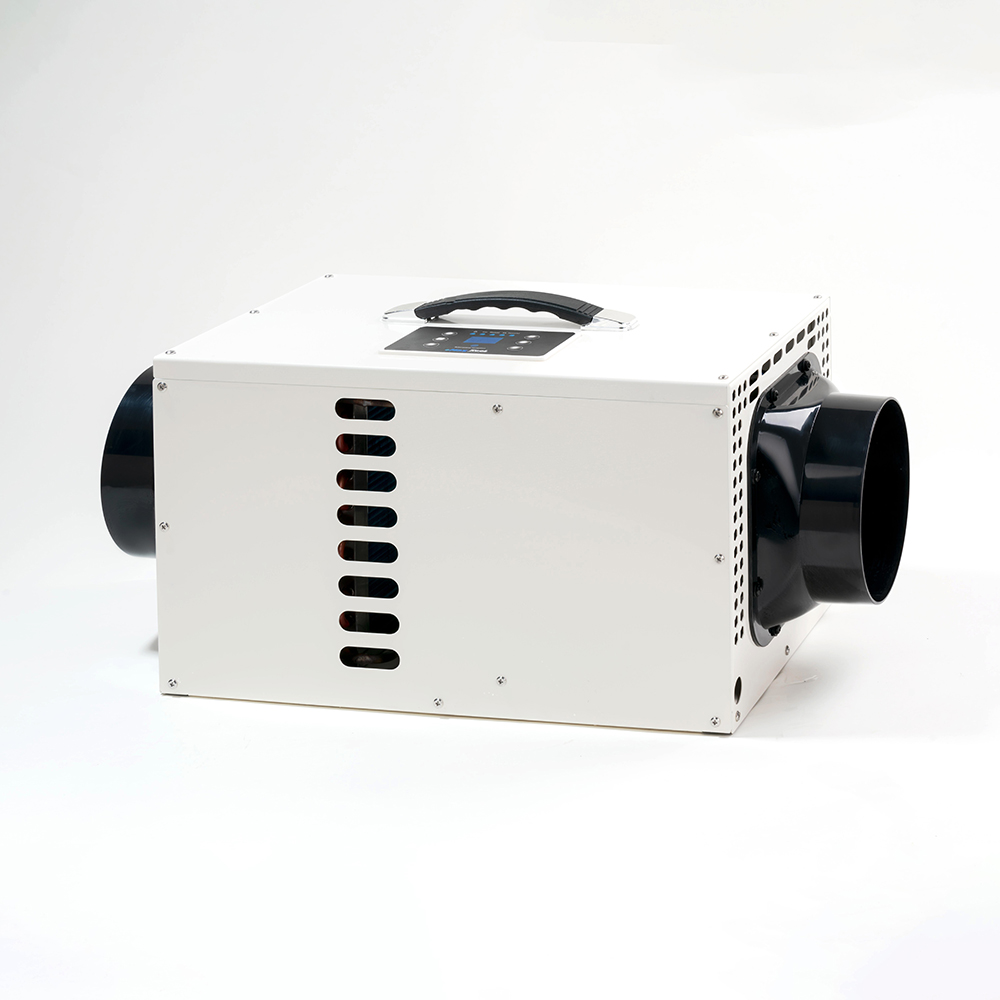 Voltage drop is the quiet failure. Current through a cable costs voltage, and the loss rises with current and length. At 16 A the margin between a working setup and one that nuisance-trips can be a length of undersized extension lead and two crimps that were never properly made.
Three habits keep it out of the way. Keep the run between station and unit as short as the layout allows. Select a manufacturer-approved lead, accounting for current, run length, installation temperature and protection requirements. Treat every connector as a resistance you added on purpose, because a warm connector under load is telling you exactly that. Our note on direct DC cooling versus inverter power paths covers why each conversion stage costs efficiency before the compressor has done any work.
When the AC Outlet Is Still the Right Answer
Running the unit from the station’s AC outlet is not automatically wrong. It is a trade, and it is worth stating plainly rather than dismissing.
| Path | Advantage | Cost |
|---|---|---|
| Direct DC from a station port | Avoids the AC inverter path; an internal DC regulator may still consume power | Port current ceiling; connector and cable discipline |
| Station AC outlet, then a power supply | Uses a familiar outlet and a supply sized for the load | Two conversions, extra losses, extra hardware to carry |
If no suitable DC output is available, use only an approved AC-to-DC supply matched to the air conditioner. Check the AC outlet in watts and the power supply’s DC output in the required volts and amps; 16 A on a 12 V circuit is not 16 A at a mains outlet. Include conversion losses and inverter idle demand in the battery budget.
Estimating Runtime Without Fooling Yourself
Estimate runtime as usable battery energy in watt-hours divided by average battery-side demand in watts. Measure the whole system, including fans, controls and the selected power path, over representative conditions. Published working current multiplied by voltage is only a preliminary estimate when the scope of that current is unclear. Conversion losses shorten runtime; compressor cycling or reduced speed can lower average demand and extend it. Do not count either effect twice if it is already included in your battery-side measurement.
The number that matters is not the best case. It is whether the setup still works at the end of the session, when the pack voltage is low and the cabin is hottest. For the battery-side arithmetic on a 12 V system, the 100 Ah runtime walkthrough goes through it in more detail than belongs here.
A Pre-Trip Check Under Representative Load
Before you rely on a power station air conditioner setup in the field, run through this on the bench with the load connected.
| Check | What good looks like |
|---|---|
| Port rating versus working current | Correct output voltage; continuous and transient ratings meet the confirmed complete-unit requirements |
| Voltage at the unit during pull-down | Stays inside the compressor’s stated window under load |
| Connector temperature during sustained operation | Temperature stays within manufacturer limits; abnormal heating requires shutdown and inspection |
| Behavior at low state of charge | Runs or stops cleanly; no repeated cut-and-restart cycling |
| Condensate path | Drains away from the station and its cables |
The last row is the one people skip. Condensate forms when the cooling surface is below the air’s dew point. Route the drain so water cannot reach the power station, connectors or cables, and check it in the intended installation.
Choosing the Voltage You Will Live With
If the station has only an inadequate accessory socket, choose a suitable approved power path or different equipment. Do not open the station, bypass its protection, parallel its output sockets or connect to its charging input as though it were an output. A separate battery installation is a different design task requiring appropriate protection and wiring. Higher voltage can reduce current for the same input power, but only where both the source and load support that voltage.
Choose the air conditioner and its approved supply as a pair. Confirm the voltage window, total demand, connector polarity and protection requirements for the delivered unit. A low current figure at the wrong voltage does not produce a compatible installation. Send us the station’s port ratings and the run length and we can tell you which variant fits: get in touch.
Frequently Asked Questions
Can I run a power station air conditioner setup from the car socket?
Only if its voltage is compatible and its continuous and transient output ratings meet the complete unit’s requirements. At 12 V the LC2810E-AC lists 16 A, which is above the ceiling many stations set for their vehicle socket. The 24 V and 48 V variants list 8 A and 4 A, but require outputs at their respective voltages. A lower current does not make them compatible with a standard 12 V car socket.
Why does my unit stop before the power station is empty?
Two cutoffs are in play. The compressor controller stops below its low-voltage limit, and the station’s battery management system has a limit of its own. On an unregulated output, the voltage the compressor sees falls as the pack discharges, so the compressor limit can be reached while energy remains in the battery.
Is it better to use the AC outlet instead of a DC port?
A compatible DC path avoids the AC inverter stage, although internal DC conversion can still have losses. Compare complete power paths at the intended load rather than assuming either one is lossless. If no DC output can carry it, the AC outlet with a suitably rated supply is a reasonable fallback, accepting the extra losses.
Does a bigger battery make a power station air conditioner cool better?
No. Capacity depends on the machine and the ambient conditions, not on the size of the battery. More usable battery energy can extend runtime at the same load. Output compatibility is a separate requirement, and extra stored energy does not increase the air conditioner’s rated cooling capacity.
What cable should I use between the station and the unit?
Select the cable and protection using the complete unit’s confirmed maximum demand, the supplier’s instructions, run length, installation temperature and allowable voltage drop. Rather than trusting a pre-made lead because the plug fits, check the voltage at the unit while it is pulling down; if it sags toward the cutout, compare voltage at the source and load to distinguish cable loss from a weak or overloaded source.