
Refrigerant choice is a purchasing decision that most buyers overlook entirely — but it affects efficiency, regulatory compliance, environmental impact, and long-term serviceability. The refrigerant inside your cooling system matters more than most buyers realize. R134a — the standard for decades — has a global warming potential (GWP) of 1,430. That means one kilogram of R134a released into the atmosphere traps as much heat as 1,430 kg of CO2 over 100 years. Propane (R290), with a GWP of just 3, delivers equivalent or better cooling performance while being nearly climate-neutral if released.
This shift is not theoretical. It is happening now in portable cooling, heat pumps, and off-grid refrigeration systems. Here is what the propane heat pump transition means for buyers making purchasing decisions today.
What Is a Propane Heat Pump and How Is It Different?
A propane heat pump uses R290 (propane) as its refrigerant instead of synthetic fluorocarbon gases like R134a, R410A, or R32. The thermodynamic cycle is identical — compression, condensation, expansion, evaporation. The difference is the working fluid properties:
- Higher latent heat of vaporization: R290 carries more thermal energy per kilogram during phase change. This means the same compressor displacement moves more heat per cycle with R290 compared to R134a. Practical result: slightly higher COP (efficiency) under most operating conditions.
- Lower discharge temperature: R290 compressors run cooler than R134a equivalents at the same pressure ratio. This reduces thermal stress on compressor components and lubricants, potentially extending service life.
- Lower operating pressure: At typical evaporating and condensing temperatures, R290 operates at lower pressures than R134a. This reduces mechanical stress on compressor components, heat exchangers, and joints.
- Natural substance: Propane exists naturally in the atmosphere. It biodegrades through atmospheric oxidation within weeks. No ozone depletion potential. Negligible climate impact even if the entire charge escapes.
The trade-off: propane is flammable (A3 safety classification). This single property drives all the engineering differences between R290 and R134a systems. Managing this flammability is straightforward for small-charge systems but requires specific design attention.
Propane Heat Pump Safety: Separating Fear from Engineering Reality
Flammability sounds alarming. The engineering reality for small cooling systems is much more manageable than the word implies:
Charge quantities in portable and mini systems: A RIGID R290 compressor (QX2802VDL-T or DV2820E-AC-T) uses approximately 50-80g of propane — less than what a standard cigarette lighter contains. The lower explosive limit (LEL) of propane in air is 2.1% by volume. To reach this concentration from a 80g charge, you would need to release it into a sealed space smaller than 1.5 cubic meters with zero ventilation. In any normal room or outdoor environment, the concentration never approaches hazardous levels even with complete instantaneous release.
International standards accommodate R290: IEC 60335-2-89 (commercial refrigeration), IEC 60335-2-40 (heat pumps and AC), and EN 378 all include provisions for flammable refrigerants at specified charge limits. Products designed within these limits can achieve CE, UL, and other international certifications without special dispensation.
Design measures are standard engineering:
- Sealed refrigerant circuit with no field-serviceable connections (reduces leak potential to near zero)
- No ignition sources near potential leak points (standard practice for any gas system)
- Charge limits sized to remain below hazardous concentration even in worst-case room volume
- Ventilation requirements for indoor installations (typically passive ventilation at floor level since propane is heavier than air)
The fear of R290 is disproportionate to the actual risk for small cooling systems. Every gas appliance in your kitchen (stove, water heater, furnace) manages larger quantities of the same gas with routine safety measures.
Why Propane Matters for Off-Grid and Portable Cooling
For off-grid, solar-powered, and portable cooling applications, R290 offers specific advantages beyond environmental benefit:
Higher COP means longer battery runtime: The 5-10% efficiency improvement of R290 over R134a translates directly to extended operation from the same battery. For a system drawing 100W average with R134a, the R290 equivalent draws 90-95W for the same cooling — an extra 30-60 minutes of runtime on a 100Ah battery. Not revolutionary for one charge cycle, but meaningful over weeks of daily use.
Better performance in hot ambient: R290 maintains better COP than R134a as condensing temperature rises (hot ambient). In desert, tropical, or direct-sun conditions where ambient exceeds 40°C, R290 systems hold performance better. This matters for outdoor, vehicle, and portable applications that cannot control their environment.
Future-proof purchasing: Regulatory trends worldwide are moving toward lower-GWP refrigerants. The EU F-gas regulation, US EPA SNAP program, and similar regulations in Japan, Australia, and other markets are progressively restricting high-GWP refrigerants. Buying R290 today means your equipment is not at risk of regulatory obsolescence. Service and recharge availability for R290 will increase while R134a availability may decrease over the coming decade.
No special recovery requirements: When an R290 system eventually reaches end of life, the small propane charge does not require specialized refrigerant recovery (though responsible practice still recommends proper handling). R134a systems require certified recovery to prevent atmospheric release — adding cost and complexity to equipment disposal.
Available R290 Compressor Options
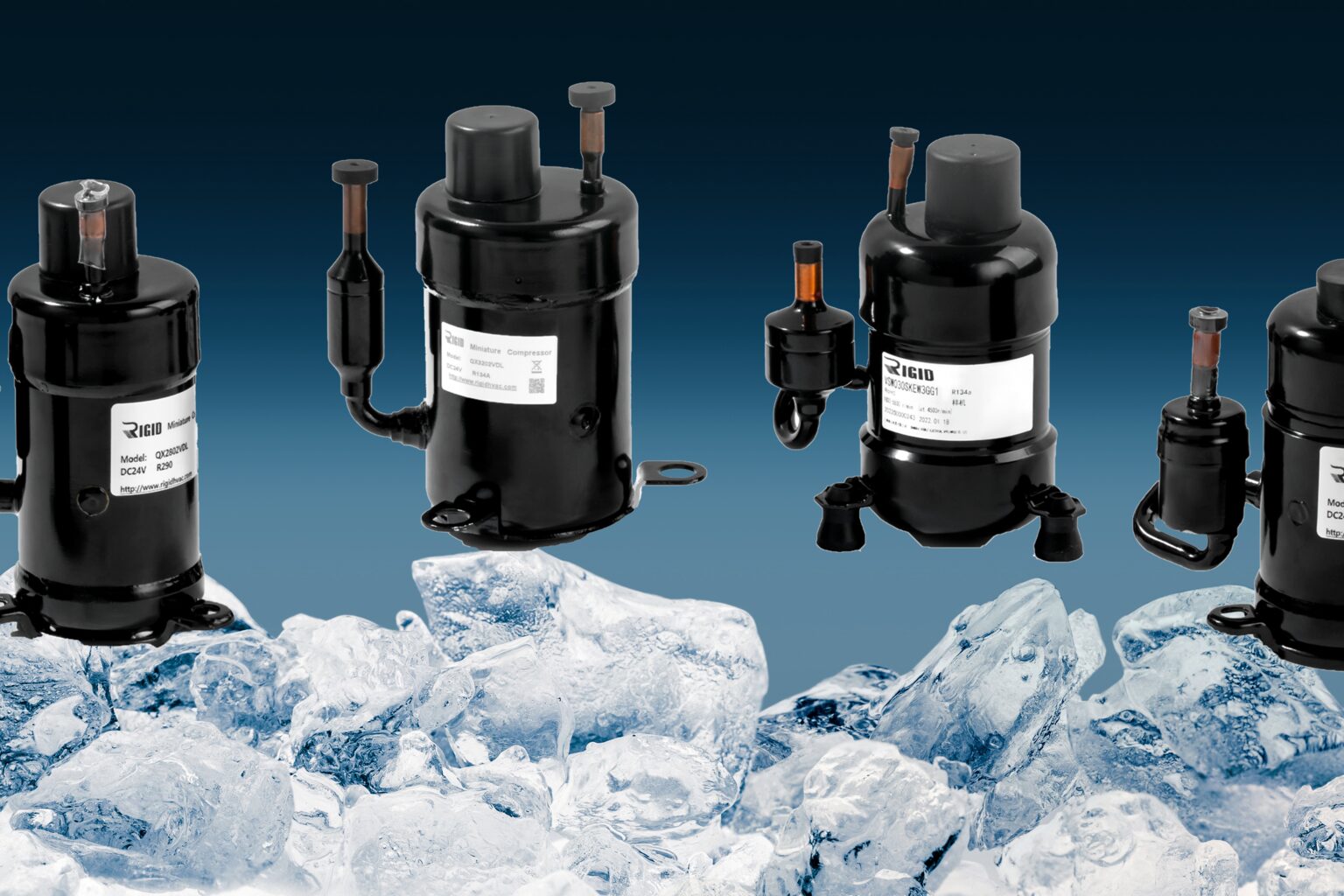
RIGID offers R290 variants of their popular compressor models for applications requiring low-GWP refrigerants:
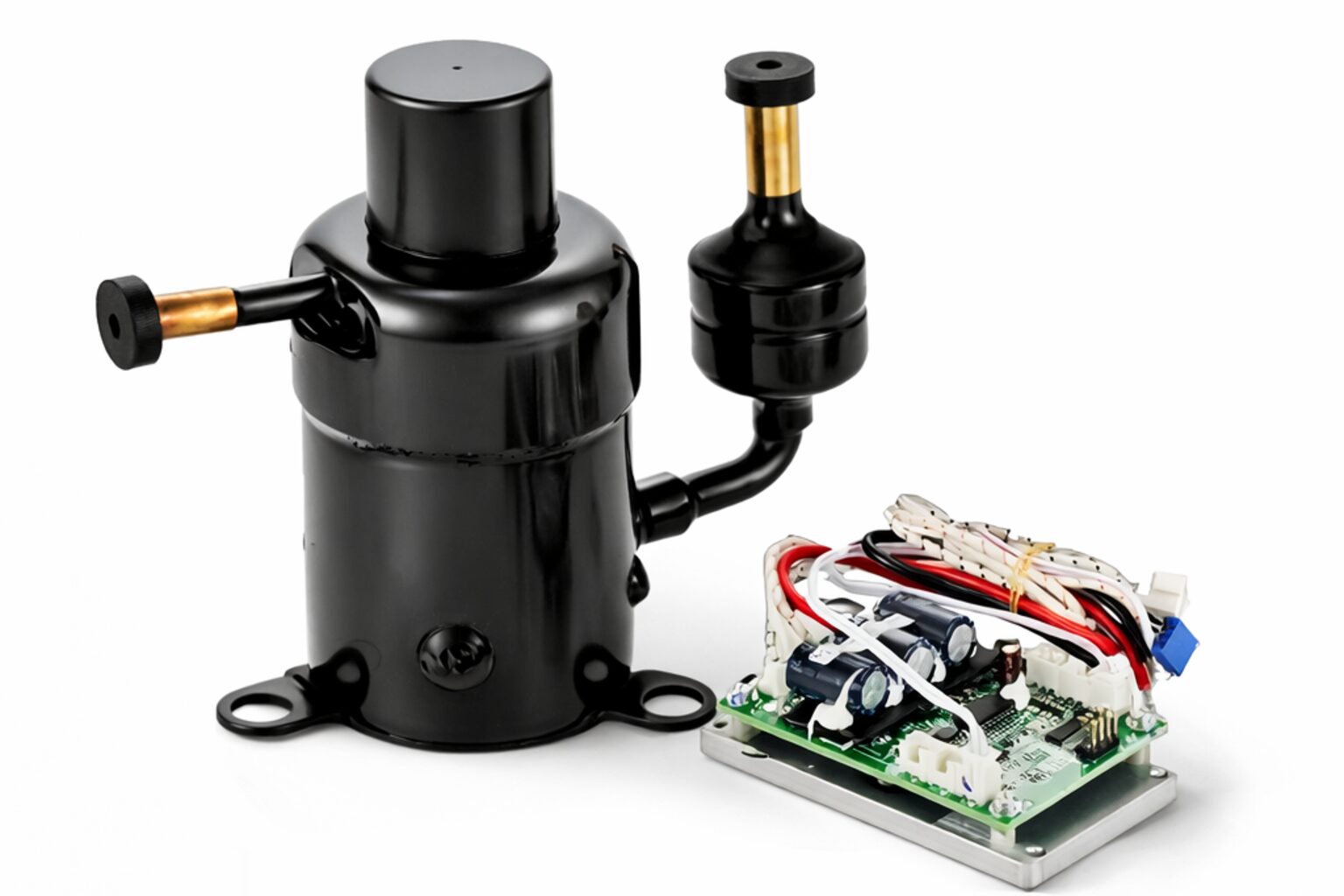
- QX2802VDL-T ($320): 24V DC, twin-cylinder, 550W cooling capacity with R290. The twin-cylinder design provides smooth, low-vibration operation. Suitable for portable cooling equipment, enclosure cooling, and small heat pump applications.
- DV2820E-AC-T: Complete micro DC aircon module using R290. 24V, 700W cooling capacity. Pre-assembled with evaporator and condenser, ready for integration into cooling products. Ideal for applications where the complete air conditioning function is needed rather than just the compressor.
These units are mechanically and electrically compatible with their R134a counterparts (QX2802VDL and DV2820E-AC), making it straightforward for manufacturers to offer both refrigerant options from the same platform design.
R290 vs R134a: Direct Performance Comparison
For buyers deciding between the two refrigerant options in otherwise identical hardware:
| Parameter | R134a System | R290 System |
|---|---|---|
| GWP | 1,430 | 3 |
| COP (typical operating conditions) | 2.3-2.8 | 2.5-3.0 |
| Cooling capacity (same displacement) | Baseline | Similar or slightly higher |
| Discharge temperature | Higher | Lower (better for compressor life) |
| Flammability classification | A1 (non-flammable) | A3 (flammable) |
| Charge amount (typical mini system) | 100-150g | 50-80g |
| Lubricant compatibility | POE oil | POE or PAG oil |
| Regulatory trend | Phasedown in progress | Preferred long-term |
For most portable and off-grid applications, R290 is the superior technical choice. The only scenarios where R134a remains preferable are: applications where any flammability classification is prohibited by applicable codes (certain medical devices, some aerospace applications), or where existing service infrastructure is built entirely around R134a and switching creates logistical challenges.
Heat Pump Applications: Cooling and Heating with R290
Propane heat pump systems provide both cooling and heating by reversing the refrigeration cycle. The R290 COP advantage applies in heating mode as well — making battery-powered or solar-powered heat pump operation more practical:
- Off-grid cabins: A reversible R290 heat pump provides both summer cooling and shoulder-season heating from the same unit, running from solar panels or battery bank. The higher COP means smaller solar array needed for the same comfort level.
- Vehicle climate control: Electric vehicles and hybrid trucks need efficient climate control that does not drain the traction battery. R290 heat pumps extract more heating/cooling per watt of battery energy consumed, directly increasing driving range in extreme temperatures.
- Portable worker shelters: Construction sites, remote work camps, and emergency shelters benefit from compact heat pump units that provide both cooling and heating with minimal power infrastructure. R290 efficiency reduces generator fuel consumption at remote sites.
The RIGID DV2820E-AC-T micro aircon module can operate in both cooling and heating modes when paired with a reversing valve, making it suitable for year-round climate control applications from a single compact unit.
For the full range of R290 compressors and cooling modules, including specifications and OEM integration support, see the RIGID R290 Mini Compressor product page.
Common Questions About Propane Heat Pumps
Can I use propane in my existing R134a system?
No. R290 and R134a require different charge amounts, different capillary tube sizing, and different safety engineering. Dropping propane into an R134a system creates incorrect performance (wrong superheat, wrong subcooling) and potential safety issues (system not designed for flammable refrigerant containment). Always use equipment specifically designed and factory-charged for R290.
Is R290 more expensive than R134a?
The refrigerant itself is significantly cheaper — propane is a commodity gas available globally at low cost. The compressor may have a small price premium (the QX2802VDL-T at $320 vs QX2802VDL at $290) reflecting additional engineering for R290 compatibility and safety certification. Total system cost is typically similar or slightly lower for R290 due to smaller charge quantity and lower refrigerant cost.
How long does an R290 system last?
Identical to R134a systems in the same compressor platform. The R290 does not degrade the compressor any faster — in fact, the lower discharge temperatures may slightly extend compressor life. Expected lifespan: 50,000+ hours, same as the R134a variant.
What happens if the R290 system leaks?
In a properly designed system with quality joints and sealed construction, leaks are extremely unlikely during the product lifetime. If a leak does occur from physical damage, the small charge (50-80g) disperses rapidly in any ventilated space without creating hazardous concentrations. This is why charge limits exist — they ensure that even complete release does not create dangerous conditions in realistic room sizes.
 Can R290 systems be used indoors?
Yes. Millions of R290 refrigerators, freezers, and dehumidifiers operate indoors worldwide. The charge limits in international standards are specifically calculated for indoor use. Modern R290 appliances carry the same safety certifications (CE, UL) as their R134a equivalents.
Installation and Maintenance Considerations
For end users purchasing R290/propane heat pump equipment:
Installation: Factory-sealed systems require no refrigerant handling during installation. You install the physical unit (mounting, electrical connection, ductwork if applicable) exactly as you would an R134a unit. No special tools, certifications, or procedures for the end user.
Maintenance: Routine maintenance (filter cleaning, condenser cleaning, inspection) is identical to any cooling system. If the sealed refrigerant system ever requires service (extremely rare during product life), it must be performed by a technician certified to handle flammable refrigerants. This is the only operational difference from R134a — service technicians need appropriate training.
End of life: When the equipment is eventually decommissioned, the refrigerant should ideally be recovered by a qualified technician. However, the environmental impact of releasing 50-80g of propane is negligible (GWP 3 × 0.08 kg = 0.24 kg CO₂ equivalent — less than driving a car one kilometer). Compare this to releasing 150g of R134a (GWP 1,430 × 0.15 kg = 214.5 kg CO₂ equivalent — the same climate impact as driving 900+ kilometers).
Who Should Choose R290 Over R134a Today?
Based on the current market state, R290 is the better choice for:
- New product designs: Any manufacturer starting a new cooling product design should default to R290 unless specific regulations or certifications in their target market prohibit it. The regulatory trajectory is clear — investing in R134a product development is investing in a shrinking market.
- Off-grid and solar-powered systems: The efficiency advantage of R290 directly extends battery/solar runtime. Every percentage point of COP improvement matters when power is limited.
- European market products: EU regulations make R290 the economically rational choice today due to R134a quota costs and regulatory compliance requirements.
- Environmentally conscious buyers: For consumers who prioritize environmental impact, R290 provides genuine (not greenwashed) climate benefit without compromising performance.
R134a remains appropriate for: retrofit/replacement in existing R134a systems, applications where certification bodies explicitly require A1 (non-flammable) refrigerants, and markets where R290 appliance safety standards have not yet been adopted.
For the complete range of R290 compressors and cooling modules, see the RIGID R290 Mini Compressor product page.
Comparing R290 Models: Twin-Cylinder vs Single-Cylinder
RIGID’s R290 lineup includes both single-cylinder and twin-cylinder designs. The difference matters for specific applications:
Twin-cylinder (QX2802VDL-T): Two opposed pistons cancel much of the reciprocating vibration. This produces smoother operation with less transmitted vibration to the mounting structure. Benefits: lower noise, less stress on refrigerant connections, better for consumer-facing products where vibration and noise matter (heat pumps in living spaces, portable coolers near people). The trade-off is slightly larger physical size and marginally higher cost ($320 vs $290 for single-cylinder R134a equivalent).
Single-cylinder (standard QX series in R290 where available): More compact, slightly simpler, adequate for applications where vibration isolation handles the mechanical output (industrial enclosures, equipment with existing vibration dampening). When the compressor is mounted on rubber isolators inside an enclosure away from people, the vibration difference between single and twin cylinder becomes irrelevant.
For propane heat pump applications in residential settings — where the unit operates near occupied spaces for extended periods — the twin-cylinder design is strongly preferred. The noise and vibration reduction is perceptible and affects user satisfaction directly.