
What Is a Propane Heat Pump and Why It Matters Now
A propane heat pump is a vapor-compression heating and cooling system that uses R290 (propane) as its working refrigerant. Unlike conventional residential heat pumps that rely on synthetic fluorocarbon refrigerants, a propane-based system leverages a naturally occurring hydrocarbon with thermodynamic properties that are exceptionally well-suited for the vapor-compression cycle. The result is a system that can deliver both cooling and heating with a higher coefficient of performance (COP) than many comparable designs.
The growing interest in propane heat pump technology is driven by a convergence of regulatory pressure, environmental awareness, and genuine engineering advantages. Global regulations—most notably the EU F-Gas Regulation (Regulation No. 517/2014) and the U.S. EPA’s SNAP Rule 20—are systematically restricting the use of high global warming potential (GWP) refrigerants. These policies are not mandating a single replacement path, but they are unmistakably pushing the HVAC industry toward lower-GWP options. R290, with a GWP of just 3, sits at the extreme low end of that scale, making it one of the most future-proof refrigerant choices available to system designers today.
For engineers working on compact, DC-powered thermal management systems—electronics enclosures, battery packs, mobile platforms, and telecom infrastructure—the propane heat pump represents a particularly compelling option. It combines environmental compliance with superior thermodynamic performance in a package that can be engineered to meet even the most demanding safety standards. This guide examines the technical merits, the engineering challenges, and the practical considerations of designing with R290.
R290 vs. Traditional Refrigerants: A Technical Comparison
To evaluate R290 as a refrigerant for a propane heat pump, it helps to compare it directly against the two most common alternatives in compact cooling systems: R134a and R410A. The comparison reveals meaningful differences across environmental impact, thermodynamic performance, and regulatory trajectory.
Global Warming Potential (GWP)
The most frequently cited advantage of R290 is its environmental profile. GWP is measured on a 100-year time horizon, with CO₂ serving as the baseline at a GWP of 1. Here is how the three refrigerants compare:
- R290 (Propane): GWP = 3
- R134a: GWP = 1,430
- R410A: GWP = 2,088
The difference is not incremental—it is orders of magnitude. A system leak or end-of-life refrigerant release from an R290 unit has a negligible direct climate impact compared to the same event with R134a or R410A. For organizations reporting Scope 1 emissions or complying with carbon disclosure frameworks, the choice of refrigerant directly affects their environmental accounting.
Thermodynamic Performance
R290 has favorable thermodynamic characteristics for the vapor-compression cycle. Its latent heat of vaporization is high relative to its molecular weight, which means a smaller mass of refrigerant can move the same amount of thermal energy. This translates into higher volumetric cooling capacity per unit of compressor displacement. In practical terms, an R290 system can often achieve a COP that is 5–10% higher than a comparable R134a system operating under the same conditions, though actual performance depends heavily on the specific system design, heat exchanger sizing, and operating temperature range.
R290 also has a lower liquid density than R134a (approximately 490 kg/m³ vs. 1,206 kg/m³ at 25°C), which means systems require a significantly smaller refrigerant charge by mass. This is an important advantage for miniature and portable applications where system weight is a constraint.
Regulatory Trajectory
The regulatory landscape is evolving rapidly, and it consistently favors lower-GWP refrigerants. The EU F-Gas Regulation established a phase-down schedule that progressively reduces the total quantity of high-GWP fluorinated gases placed on the EU market, measured in CO₂ equivalents. This mechanism does not ban any specific refrigerant outright, but it makes high-GWP options increasingly expensive and difficult to source over time. The Kigali Amendment to the Montreal Protocol extends this approach globally, committing signatory nations to an 80–85% reduction in HFC consumption over the coming decades.
In the United States, the EPA’s SNAP Rule 20 has specifically listed R290 as acceptable for use in certain categories of refrigeration and air conditioning equipment, subject to charge limits and safety requirements. The direction is clear: regulations are pushing toward lower-GWP options across all major markets, and R290 is consistently recognized as a compliant pathway.
It is worth noting that the transition is not a simple one-for-one substitution. Different applications and system architectures may find their optimal path through R290, R32, R454B, CO₂ (R744), or other alternatives. R290 is one of several viable directions—but for compact, low-charge systems, it is among the strongest candidates.
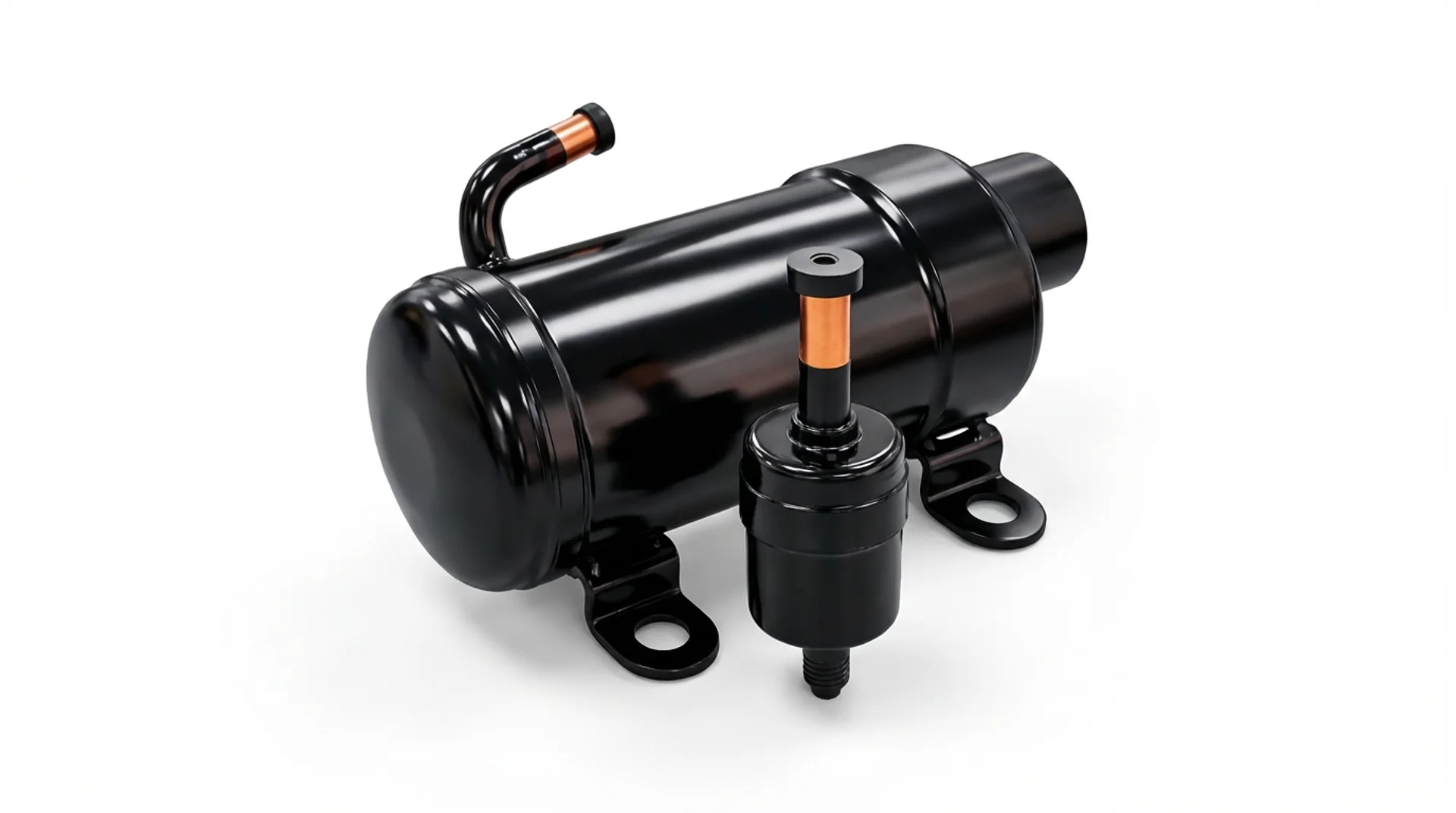
Technical Advantages of R290 in Heat Pump Applications
Beyond the environmental narrative, R290 offers genuine engineering benefits that make it a strong refrigerant choice for propane heat pump designs, particularly in compact and DC-powered systems.
Higher Energy Efficiency (COP)
R290 has a steep pressure-enthalpy curve and a high latent heat of vaporization, which together mean that each compression cycle moves a large quantity of thermal energy relative to the work input. The practical effect is a higher COP compared to R134a at the same evaporator and condenser temperatures. For battery-powered or solar-powered applications where every watt of electrical input matters, this efficiency advantage directly translates to longer run times, smaller battery packs, or reduced solar panel area.
Excellent Heat Transfer Properties
R290 has a thermal conductivity approximately 60% higher than R134a and a lower liquid viscosity. These properties mean that heat transfer in both the evaporator and condenser is more efficient per unit of surface area. In practice, this allows engineers to design more compact heat exchangers without sacrificing performance—a critical advantage in miniature air conditioning systems where physical space is at a premium.
Material Compatibility
R290 is compatible with the same copper tubing, aluminum fins, and common elastomeric seals used with conventional HFC refrigerants. Unlike some alternative refrigerants (notably CO₂/R744, which requires high-pressure stainless steel components), R290 does not demand a fundamental redesign of system materials. This compatibility simplifies the transition for manufacturers already producing R134a-based systems, as much of the existing component supply chain can be leveraged.
Low Refrigerant Charge
Because of R290’s low liquid density and high volumetric capacity, systems require a much smaller charge by mass than their R134a equivalents. A compact DC air conditioner that might require 150–200 grams of R134a could operate on as little as 50–80 grams of R290. This reduced charge has two important consequences: it minimizes the total volume of flammable material in the system, and it reduces the raw material cost of the refrigerant itself.
Wide Operating Temperature Range
R290 maintains effective vapor-compression performance across a broad ambient temperature range. Its critical temperature is approximately 96.7°C, which is comfortably above typical condenser operating temperatures even in extreme environments. This gives R290 systems a performance advantage in high-ambient conditions—precisely the scenarios where many deployed cooling systems are most stressed.
Engineering Challenges: Safety and Compliance with R290
R290 is classified as an A3 refrigerant under ASHRAE Standard 34, meaning it has low toxicity but higher flammability. This classification requires careful engineering attention, but it does not make R290 impractical. Thousands of R290 systems are deployed globally in commercial refrigeration, domestic heat pumps, and industrial cooling. The key is understanding and designing for the specific safety requirements.
Flammability (A3 Classification)
Propane is flammable in air at concentrations between approximately 2.1% and 9.5% by volume (its lower flammability limit, or LFL, is roughly 38 g/m³). For a propane heat pump system to present a flammable mixture risk, the entire refrigerant charge would need to leak into a confined, unventilated space small enough to reach this concentration. In a well-designed miniature system with a charge of under 150 grams, the volume of space required for this concentration to occur is extremely small. Nonetheless, proper system design must account for worst-case leak scenarios.
Charge Limits (IEC 60335-2-89 and IEC 60335-2-40)
International safety standards impose strict limits on the maximum allowable R290 charge based on the room size and ventilation conditions where the system is installed. IEC 60335-2-89 (for commercial refrigeration) limits R290 charge to 150 grams for equipment in occupied spaces, though this limit has been revised upward in some editions for specific configurations with additional safety measures such as leak detection and forced ventilation. IEC 60335-2-40 covers air conditioning and heat pump equipment and applies similar charge-limit frameworks.
For compact DC-powered air conditioning units operating in enclosed equipment cabinets, telecom shelters, or vehicle compartments, the small system volumes and low refrigerant charges typically fall well within these regulatory limits. This is a natural alignment: miniature systems inherently carry less refrigerant, which simplifies compliance with flammability-based charge restrictions.
Ventilation and Leak Detection
Best engineering practice for any R290 installation includes ensuring adequate ventilation around the condenser and, where the charge exceeds certain thresholds, incorporating a refrigerant leak sensor. In many compact applications, the condenser is already vented to the external environment by design (to reject heat), which provides inherent ventilation for leaked refrigerant dispersal. For sealed indoor installations, a simple semiconductor gas sensor connected to the system’s control board can provide an additional layer of safety by triggering an alarm or shutting down the compressor if propane is detected.
Electrical Safety
Because R290 is flammable, all electrical components within the refrigerant circuit or in areas where a leak could produce a flammable concentration must be designed to avoid ignition sources. This means using brushless DC motors (which are inherently spark-free), sealed relay contacts, and appropriately rated wiring and connectors. For systems already engineered with BLDC compressors and solid-state speed controllers—as is common in modern variable-speed DC designs—this requirement is typically already met by the base architecture.
Propane Heat Pump Applications: Where R290 Excels
The combination of high efficiency, low GWP, small charge requirements, and compact system architecture makes the propane heat pump particularly well-suited to a specific set of application categories. These are not theoretical use cases—they represent active deployment scenarios where R290 systems are already operating in the field.
Electronics Enclosure Thermal Management
Sealed electronics enclosures—housing PLCs, power supplies, signal processing equipment, or computing hardware—generate significant internal heat loads that must be removed without breaking the enclosure’s NEMA or IP seal. A compact R290-based air conditioning module can be integrated directly into the enclosure wall, operating as a closed-loop system that cools the internal air while rejecting heat to the ambient environment. The inherent efficiency of R290 means lower power draw from the system’s DC bus, extending the operational envelope of battery-backed or solar-powered installations.
Battery Thermal Management Systems (BTMS)
Lithium-ion battery packs in electric vehicles, energy storage systems, and portable power stations require precise temperature control to maintain performance, safety, and cycle life. Both overheating and excessive cold degrade battery performance. A propane heat pump with reversible heating and cooling capability can maintain a battery pack within its optimal temperature window (typically 20–35°C) across a wide range of ambient conditions. The low refrigerant charge and compact form factor of R290 systems make them suitable for integration into the tight spaces typical of battery pack housings.
Telecom and Off-Grid Infrastructure
Remote telecom cabinets, weather stations, and monitoring equipment often operate on DC power—12V, 24V, or 48V—supplied by batteries and solar panels. These installations need reliable, autonomous thermal management that can operate year-round without human intervention. An R290 DC air conditioner that can both cool in summer and provide supplemental heating in winter is ideal for this application. The all-DC architecture eliminates the need for power inverters, reducing system complexity, cost, and potential failure points.
Mobile and Vehicle-Mounted Systems
Vehicles, boats, construction equipment, and mobile medical units all present cooling challenges characterized by limited space, DC power availability, vibration exposure, and variable ambient conditions. Miniature propane heat pump systems, designed to operate directly from a vehicle’s 12V or 24V electrical system, can provide effective cabin or equipment cooling without idling the engine. The weight savings from R290’s low charge mass is a meaningful advantage in mobile applications where every kilogram matters.
Laboratory and Medical Equipment
Precision instruments, analytical devices, and medical equipment often require temperature control within narrow tolerances. R290’s stable thermodynamic behavior across its operating range, combined with variable-speed compressor control, allows for fine-grained temperature regulation. The low GWP also aligns with the sustainability commitments increasingly required by institutional procurement policies in the research and healthcare sectors.
Selection and System Integration Considerations
Choosing a propane heat pump for a specific application involves several engineering decisions beyond simply selecting a refrigerant. Here are the critical factors that determine whether an R290 system will perform reliably in a given deployment.
Cooling and Heating Capacity Matching
The fundamental sizing question is whether the system’s cooling capacity (and, for heat pump models, heating capacity) matches the total thermal load of the application. This load calculation must include internal heat dissipation from the payload, solar heat gain on the enclosure, and any conductive or convective heat transfer through the enclosure walls. It is important to size based on the system’s performance at the worst-case ambient temperature, not its nominal rating. A unit rated at 700W of cooling at 25°C ambient may deliver substantially less at 45°C or 50°C ambient.
For applications requiring both heating and cooling, the heating capacity is equally important. Many compact DC air conditioning systems provide heating via integrated PTC (Positive Temperature Coefficient) heaters, which offer reliable, controllable heat output without the complexity of reverse-cycle operation. PTC heaters in the 300W to 400W range are typical for miniature systems, providing enough supplemental heat for enclosure freeze protection or mild-condition space heating.
DC Power Architecture Advantages
One of the most significant advantages of integrating a compact propane heat pump into a DC-powered system is the elimination of power conversion losses. In applications running on 12V, 24V, or 48V DC—from solar panels, batteries, or vehicle electrical systems—a native DC air conditioner draws power directly from the bus without requiring an inverter. This provides several benefits:
- Higher system efficiency: No inverter losses (typically 5–15% of total power throughput).
- Reduced component count: Fewer parts mean fewer potential failure points and a simpler system architecture.
- Lower system cost: Inverters for handling compressor inrush currents can be expensive, heavy, and physically large.
- Improved reliability: Solid-state BLDC motor drives tolerate voltage fluctuations common in battery and solar systems better than AC induction motors.
Variable Speed Compressor Control
Variable-speed operation is essential for maximizing the efficiency of a propane heat pump. A compressor that can modulate its speed—typically across a range such as 2,000 to 6,500 RPM—can closely match its cooling output to the instantaneous thermal load. This avoids the short-cycling problem that plagues fixed-speed systems, where the compressor repeatedly starts and stops as it overshoots and undershoots the target temperature. Short-cycling wastes energy on each startup, fails to adequately dehumidify the air, and accelerates mechanical wear on the compressor.
Modern speed control interfaces for miniature compressors include potentiometer adjustment (for simple manual control), 0–5V analog signals, PWM (pulse-width modulation) inputs, and TTL serial communication. The TTL interface is particularly valuable for automated systems, as it allows a supervisory controller to dynamically adjust compressor speed based on real-time temperature sensor feedback, implementing true closed-loop thermal regulation.
Safety Design Integration
Integrating an R290 system safely is primarily a matter of following established engineering practices rather than inventing new ones. Key design considerations include:
- Charge verification: Confirm the total R290 charge is within the limits specified by applicable standards (IEC 60335-2-40, UL 60335-2-40) for the installation space volume.
- Condenser ventilation: Ensure the condenser side of the unit has unobstructed airflow to the external environment. This serves the dual purpose of efficient heat rejection and safe dispersal of any leaked refrigerant.
- Spark-free components: Verify that all electrical components in potential leak zones are rated for use with flammable refrigerants. BLDC compressors and solid-state controllers inherently meet this requirement.
- Leak detection (where required): For installations in occupied or poorly ventilated spaces, consider integrating a semiconductor or catalytic gas sensor connected to the system’s control logic.
RIGID Micro DC Aircon Cool & Heat Series
For engineers evaluating compact propane heat pump solutions, the RIGID Micro DC Aircon Cool & Heat series offers a range of DC-powered air conditioning modules with both cooling and heating capability. The series includes models operating on 12V, 24V, and 48V DC power, with cooling capacities from 450W (1,535 BTU) to 550W (1,876 BTU) and PTC heating outputs of 300W to 400W. Available in both R134a and R290 refrigerant configurations, the series features brushless DC compressors with variable speed control from 2,000 to 6,500 RPM, adjustable via potentiometer, 0–5V, PWM, or TTL interfaces. With a footprint as compact as 355 × 170 × 356 mm (14 × 7 × 14 inches), these units are engineered as sub-systems designed for direct integration into OEM equipment, enclosed cabinets, and mobile platforms.
Conclusion: The Engineering Case for R290
The propane heat pump is not a speculative technology—it is a proven, commercially available approach to thermal management that addresses the dual demands of regulatory compliance and engineering performance. R290 offers a GWP of 3 (compared to 1,430 for R134a), higher energy efficiency, excellent heat transfer characteristics, and compatibility with existing manufacturing processes and materials.
The engineering challenges associated with R290’s flammability are real but manageable. Decades of safe deployment in commercial refrigeration have established a robust body of standards, design practices, and component ecosystems that make R290 systems safe and practical for a wide range of applications. For compact, DC-powered systems—where refrigerant charges are inherently small and BLDC motor drives are already the norm—the transition to R290 is particularly straightforward.
Whether you are designing thermal management for electronics enclosures, battery systems, telecom infrastructure, or mobile platforms, R290 deserves serious consideration as your refrigerant of choice. The regulatory environment will only continue to favor lower-GWP options, and early adoption positions your product line ahead of tightening compliance requirements. The engineering advantages are immediate; the environmental benefits are lasting.