
Recirculating Chiller vs Dry Ice vs Ice Bath: Comparing the True Cost of Lab Cooling
Every laboratory that runs rotary evaporators, condensers, or jacketed reactors needs a reliable way to cool equipment below ambient temperature. Three methods dominate: ice baths prepared manually, dry ice purchased and replenished regularly, and recirculating chillers that provide closed-loop cooling on demand. Each method works — but they differ dramatically in annual cost, temperature stability, safety profile, and operational convenience.
This comparison strips away assumptions and lays out the real numbers. For labs spending $50–$200 per week on dry ice or dedicating technician time to preparing ice baths, the question is not whether a recirculating chiller is better — it is how quickly it pays for itself.
Ice Baths: Low Entry Cost, High Hidden Labor
An ice bath is the simplest cooling method: fill an insulated container with ice and water, submerge a coil or flask, and let thermal equilibrium do the work. The equipment cost is minimal — a Dewar flask or insulated bucket, some tubing, and access to an ice machine.
The problems emerge in practice:
- Temperature drifts as ice melts. A fresh ice bath starts near 0°C but warms to 5–10°C within 30–60 minutes depending on heat load and insulation. Maintaining a stable setpoint requires frequent ice additions.
- The lowest practical temperature is 0°C with water ice, or approximately -20°C with salt/ice mixtures. Reaching -40°C requires dry ice or mechanical refrigeration.
- Technician time is the real cost. Preparing, monitoring, and replenishing ice baths consumes 15–30 minutes per session. At 2–3 sessions per day, that adds up to 1–2 hours of skilled labor daily.
- Water spillage and condensation create slip hazards and can damage nearby equipment or electronics.
Estimated Annual Cost: Ice Bath
| Cost Component | Estimate | Annual Total |
|---|---|---|
| Ice (commercial ice machine or purchased bags) | $5–$15/day | $1,250–$3,750 |
| Technician labor (1–2 hrs/day at $25–$40/hr) | $25–$80/day | $6,250–$20,000 |
| Equipment (Dewar, tubing, insulation) | One-time $100–$300 | $100–$300 (Year 1) |
| Total Year 1 | $7,600–$24,050 | |
| Total Year 2+ | $7,500–$23,750 |
The labor cost is the dominant factor — and it is often invisible in lab budgets because technician time is not itemized per task. But every hour spent on ice preparation is an hour not spent on research.
Dry Ice: Reliable Cold, Unreliable Supply and Rising Costs
Dry ice (solid CO₂, -78.5°C) provides much colder temperatures than water ice and is widely used for cold traps, low-temperature condensation, and sample transport. It is effective, familiar, and requires no electricity.
The disadvantages are significant:
- Cost per kilogram has increased substantially in recent years. Depending on region and supplier, dry ice costs $1.50–$4.00 per kg. A lab using 5–15 kg per day spends $7.50–$60 daily — and prices spike during supply shortages.
- CO₂ sublimation is a safety hazard. In enclosed or poorly ventilated spaces, sublimating dry ice displaces oxygen. OSHA requires monitoring when CO₂ concentrations may exceed 5,000 ppm (0.5%).
- Supply chain disruptions are common. Dry ice availability depends on CO₂ production, which fluctuates with industrial demand. Many labs have experienced weeks-long shortages in recent years.
- Dry ice sublimates whether you use it or not. Typical storage losses are 5–15% per day, meaning weekend purchases lose 10–30% before Monday morning.
- Handling requires insulated gloves and safety training. Skin contact causes frostbite burns within seconds.
Estimated Annual Cost: Dry Ice
| Cost Component | Estimate | Annual Total |
|---|---|---|
| Dry ice purchase (5–15 kg/day at $2–$4/kg) | $10–$60/day | $2,500–$15,000 |
| Storage losses (10–15% of purchase) | $1–$9/day | $250–$2,250 |
| Delivery fees | $20–$50/delivery, 1–2x/week | $1,040–$5,200 |
| Safety equipment (gloves, ventilation monitoring) | One-time $200–$500 | $200–$500 (Year 1) |
| Technician time (handling, preparation, 30 min/day) | $12–$20/day | $3,000–$5,000 |
| Total Year 1 | $6,990–$27,950 | |
| Total Year 2+ | $6,790–$27,450 |
For high-consumption labs (pharmaceutical process development, natural products extraction), dry ice bills alone can exceed $10,000 per year before accounting for labor and delivery costs.
Recirculating Chiller: Higher Upfront Cost, Lower Lifetime Cost
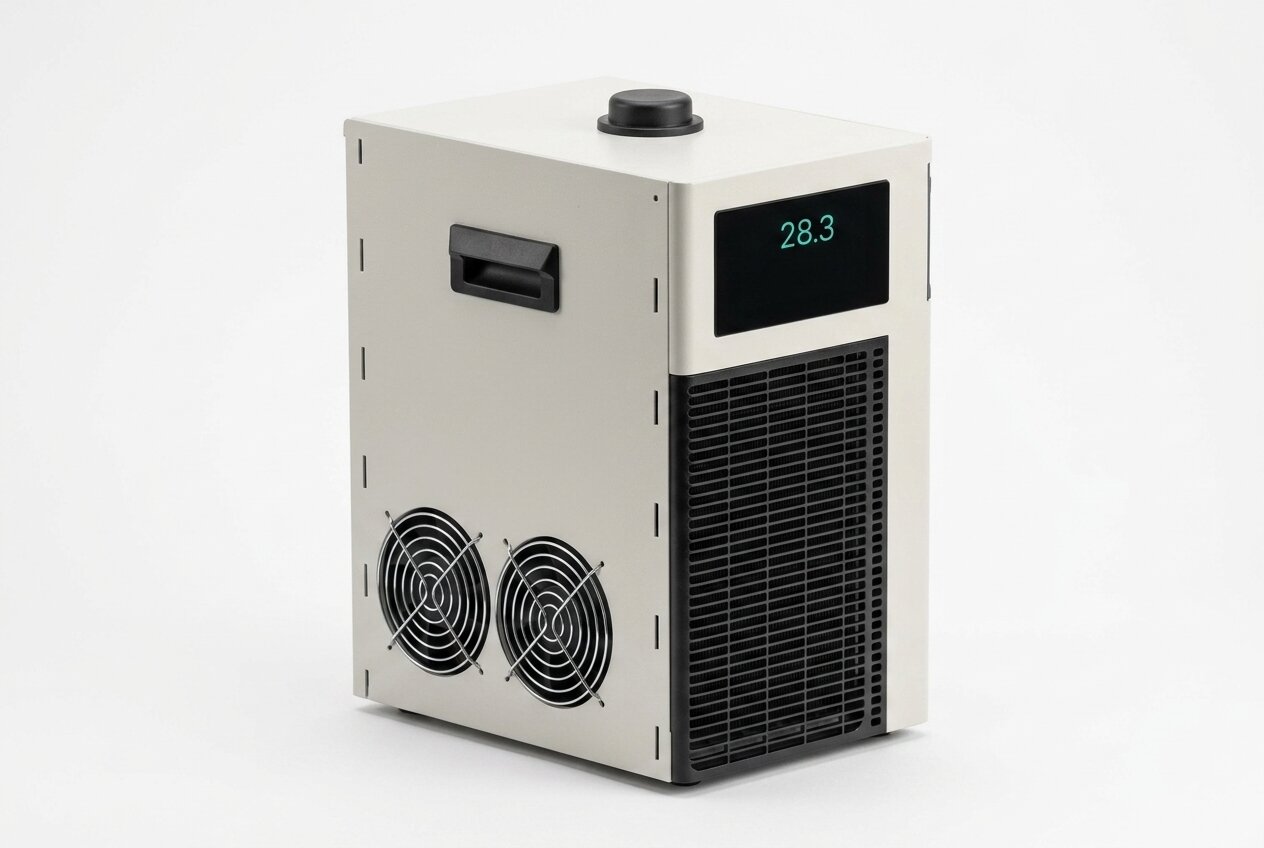
A recirculating chiller is a closed-loop refrigeration system that circulates temperature-controlled coolant through laboratory equipment. Once installed, it provides cooling on demand with no consumables, no supply chain dependency, and no safety hazards beyond standard electrical equipment.
Estimated Annual Cost: Recirculating Chiller
| Cost Component | Estimate | Annual Total |
|---|---|---|
| Equipment purchase (one-time) | $1,500–$3,600 | $1,500–$3,600 (Year 1) |
| Electricity (0.3–1.5 kW, 8 hrs/day, $0.12/kWh) | $0.29–$1.44/day | $73–$360 |
| Coolant (water/glycol, annual replacement) | $20–$50/year | $20–$50 |
| Maintenance (filter cleaning, annual inspection) | $50–$100/year | $50–$100 |
| Technician time (setup: 15 min, then unattended) | Negligible | ~$0 |
| Total Year 1 | $1,643–$4,110 | |
| Total Year 2+ | $143–$510 |
After the first year, a recirculating chiller costs $143–$510 annually to operate. Compare this to $6,790–$27,450 for dry ice or $7,500–$23,750 for ice baths (labor-inclusive). The chiller pays for itself within 3–12 months depending on usage intensity.
Five-Year Total Cost Comparison
| Method | Year 1 | Year 2 | Year 3 | Year 4 | Year 5 | 5-Year Total |
|---|---|---|---|---|---|---|
| Ice Bath (mid-range) | $15,800 | $15,600 | $15,600 | $15,600 | $15,600 | $78,200 |
| Dry Ice (mid-range) | $17,500 | $17,100 | $17,100 | $17,100 | $17,100 | $85,900 |
| Recirculating Chiller | $2,900 | $330 | $330 | $330 | $330 | $4,220 |
Over five years, a recirculating chiller saves approximately $74,000–$82,000 compared to consumable cooling methods — even using conservative mid-range estimates.
Beyond Cost: Temperature Stability and Reproducibility
- Ice baths drift 5–10°C per hour as ice melts. No active temperature control means no reproducibility between runs.
- Dry ice baths (dry ice in acetone or isopropanol) provide lower temperatures but with poor control. Typical stability is ±3–5°C at best.
- Recirculating chillers use PID-controlled compressor cycles to maintain setpoint within ±0.1–0.5°C continuously. This precision directly improves experimental reproducibility.
For regulated environments (GLP, GMP, ISO 17025), the ability to document and verify cooling temperature with ±0.1°C precision is often a compliance requirement — not optional.
Safety and Compliance Considerations
- Dry ice requires ventilation monitoring for CO₂ displacement, insulated handling gloves, and documented safety training. Many universities now mandate CO₂ monitors in rooms where dry ice is used regularly.
- Ice baths create water spillage and slip hazards. Salt/ice mixtures are corrosive to metal surfaces.
- Recirculating chillers are standard electrical equipment with no special handling requirements. Closed-loop systems contain coolant within sealed circuits. No toxic gases, no burn hazards, no spill risks.
When Each Method Still Makes Sense
Despite the clear cost and performance advantages of recirculating chillers, there are specific situations where the other methods remain practical:
Ice Baths Are Still Appropriate When:
- Cooling is needed only a few times per month — the labor cost is too small to justify equipment purchase
- Teaching laboratories need students to learn fundamental thermodynamic concepts through hands-on experience
- Field work or remote locations lack reliable electrical power
- The application requires only brief cooling (under 30 minutes) and does not need precise temperature control
Dry Ice Remains Necessary When:
- Temperatures below -40°C are required — cold traps at -78°C, cryogenic sample preservation, and certain organic reactions involving low-temperature lithiation or metal-halogen exchange
- Sample transport and shipping require portable cooling without electrical connections
- Emergency backup cooling is needed when a chiller fails and repairs will take days
- Very small quantities are used infrequently (under 1 kg per week), making the cost too low to justify chiller purchase
Recirculating Chillers Are the Clear Choice When:
- Daily cooling is required at any temperature between 0°C and -40°C
- Precise, reproducible temperature control matters for data quality or regulatory compliance
- Unattended operation is needed (overnight reactions, automated workflows)
- Multiple instruments share one cooling source via manifold connections
- The laboratory has sustainability targets for water conservation or carbon footprint reduction
- Safety officers want to reduce or eliminate hazardous material handling in the lab
For most laboratories running daily evaporation, distillation, or reaction cooling, the recirculating chiller is the clear choice on cost, performance, safety, and environmental grounds.
Multi-Instrument Labs: Multiplied Savings
The cost comparison above models a single instrument station. Labs running 3–5 rotary evaporators, multiple reactors, or parallel analytical instruments multiply both the consumable costs and the savings from switching to chillers. A single higher-capacity chiller can often serve 2–3 instruments through a manifold system, meaning the per-instrument cost of chiller cooling drops further. For a 5-instrument lab spending $50,000 per year on dry ice across all stations, replacing with 2–3 appropriately sized chillers ($4,400–$10,800 total investment) yields payback in under 3 months and five-year savings exceeding $200,000.
Choosing the Right Chiller for Your Lab
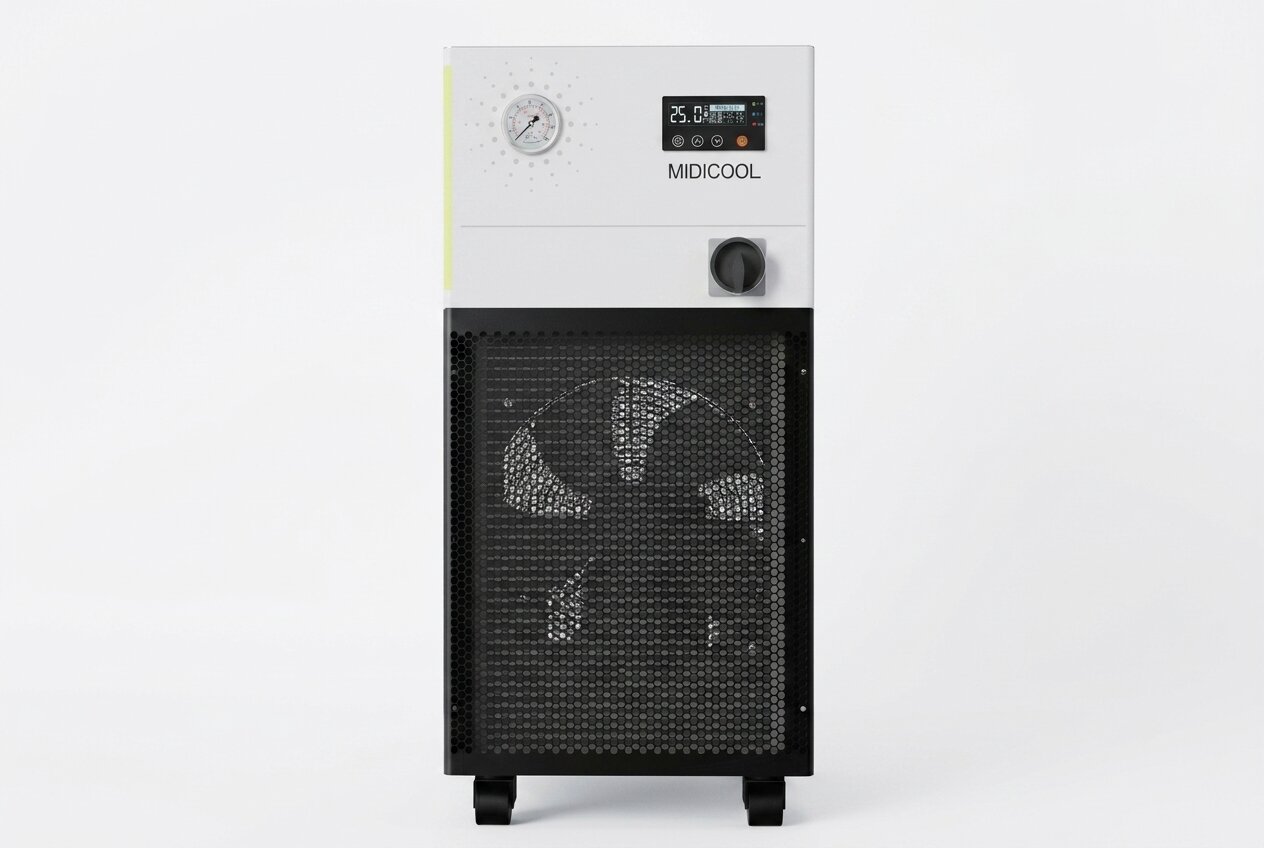
When replacing dry ice or ice baths with a recirculating chiller, match the chiller to your application requirements. The RIGID MiniCool™ series (450W–1kW+, 0°C to -40°C, ±0.1°C, from $1,500) covers small to mid-size instruments, while the MidiCool™ series (1,300W–4.6kW, 0°C to -40°C, ±0.1°C, from $2,200) handles larger rotary evaporators, reactors, and multi-instrument setups. Both series deliver closed-loop precision cooling with minimal operating cost and zero consumable dependency.
Environmental Impact: Water, Carbon, and Waste
Beyond direct cost savings, recirculating chillers offer measurable environmental benefits that align with institutional sustainability goals:
Water conservation: Laboratories using tap water for condenser cooling consume enormous volumes. A single rotary evaporator running 8 hours daily at 3 L/min uses approximately 1,440 liters of water per day — over 360,000 liters per year. A recirculating chiller operates as a closed loop, using the same 5–15 liters of coolant indefinitely (with periodic top-offs for evaporation losses). For institutions tracking water footprint metrics, switching from tap water to a chiller can reduce laboratory water consumption by over 99%.
Carbon footprint: Dry ice production, packaging, and delivery generate greenhouse gas emissions beyond the CO₂ content of the dry ice itself. Production energy, insulated packaging waste (typically single-use polystyrene), and diesel-powered delivery vehicles all contribute. A recirculating chiller running on grid electricity in the United States generates approximately 0.4–0.6 kg CO₂ per kWh consumed — at 1 kW average draw over 2,000 hours per year, that totals roughly 800–1,200 kg CO₂ annually. Compare this to the embedded emissions in producing and delivering 1,250–3,750 kg of dry ice per year (at 5–15 kg/day, 250 days), plus packaging and transportation — the chiller typically has a lower total carbon footprint.
Waste reduction: Every dry ice delivery generates waste packaging. Most suppliers deliver in expanded polystyrene (EPS) coolers or cardboard boxes with EPS liners. At 1–3 deliveries per week, a single lab generates 50–150 waste containers per year. Recirculating chillers produce no routine consumable waste.
Making the Business Case: ROI Spreadsheet Framework
When presenting the case for chiller procurement to a lab manager, department head, or grants administrator, the following framework structures the ROI calculation clearly:
- Document current consumable spending: Gather 6–12 months of purchase orders for dry ice, ice machine maintenance, and related safety supplies. Include delivery charges, which are often on separate invoices.
- Quantify labor costs: Estimate the daily time spent by technicians or researchers on ice/dry ice preparation, monitoring, and cleanup. Multiply by the fully loaded labor rate (salary + benefits + overhead, typically $35–$65/hr for PhD-level researchers).
- Calculate total annual cooling cost: Sum consumable + labor + safety equipment + waste disposal costs.
- Compare against chiller ownership cost: Equipment purchase (one-time) + annual electricity + annual coolant/maintenance. Use manufacturer specifications for power consumption at your typical operating temperature.
- Compute payback period: Divide chiller purchase price by (annual consumable cost minus annual chiller operating cost). Most labs see payback in 3–12 months.
- Project five-year savings: Multiply annual net savings by 4 (years 2–5, since year 1 includes the equipment purchase). Add any avoided costs for safety monitoring equipment or ventilation upgrades.
For grant-funded labs, note that equipment purchases are typically allowable on federal grants as direct costs, while consumables (dry ice) are often harder to justify at high volumes. A chiller purchase can actually simplify budget reporting and auditing.
Frequently Asked Questions
How long does it take for a recirculating chiller to pay for itself compared to dry ice?
For a lab spending $50–$100 per week on dry ice (including delivery fees and storage losses), a $1,500–$2,200 chiller pays for itself in approximately 4–10 months. After payback, the annual savings accumulate — a single chiller can save $15,000–$25,000 over five years compared to continued dry ice use.
Can a recirculating chiller replace dry ice for cold traps?
Chillers with a range to -40°C (such as MiniCool™ and MidiCool™) can replace dry ice for traps that do not require temperatures below -40°C. For deeper cold trap duty at -78°C, dry ice remains necessary — or a specialized cascade chiller system can be considered.
What about tap water cooling — is that cheaper than all three methods?
Tap water has zero equipment cost but significant ongoing expense: a rotary evaporator running 8 hours daily at 2–4 L/min consumes 960–1,920 liters per day. At typical municipal rates ($3–$8 per 1,000 liters), annual water cost reaches $720–$3,840 — plus sewer charges. Tap water also provides unstable temperatures that vary with season and causes mineral buildup in condensers. A recirculating chiller eliminates water waste entirely.