
R290 Charge Limit: the Gram Budget Behind the Green Refrigerant
Propane earns its place in modern refrigeration on merit: excellent thermodynamics, tiny climate impact, and broad, inexpensive availability worldwide. What it carries alongside those virtues is flammability — it is classed as an A3 flammable refrigerant — and the entire regulatory architecture around it reduces to one engineering currency: grams of charge. How many grams a circuit may hold, in what kind of appliance, in what kind of space, decides whether an R290 design is routine, conditional, or entirely off the table for that product.
For the compact end of refrigeration — miniature DC condensing units, small liquid chillers, embedded cooling in products — the R290 charge limit is less a constraint than a description of what these systems already are: circuits holding tens of grams, far inside every threshold. But the integrator inherits duties the gram count alone does not discharge, and the comparison against R134a still has two honest sides. This guide covers where the limits come from, what enclosure integration must respect, and how the route decision actually falls for small systems.
One boundary up front: charge limits and installation rules are jurisdiction- and category-dependent, and they have been moving. Figures below describe the standards landscape in general terms — the binding numbers for a product are the ones in the current standard applying to its category and market, checked at design time against the current edition, not inherited from an article written earlier.
Where the Numbers Come From
The framework is safety standards rather than refrigeration performance. The widely cited figure for self-contained commercial appliances was a 150 g ceiling per circuit; a 2019 revision of the governing IEC standard raised the ceiling for A3 refrigerants toward 500 g for qualifying categories, with national adoptions following on their own calendars. Around those headline numbers sit the conditioning rules: room-size dependencies for occupied spaces, larger allowances for sealed systems in unoccupied or outdoor locations, and construction requirements — spark-free or sealed electrical components in the refrigerant’s potential path among them.
The logic underneath is worth internalizing because it transfers to every design review: the standards bound the consequence of a full-charge leak. A charge small enough that complete release into the worst-case room stays far below the flammable concentration is the design condition the gram limits encode. Everything else — ventilation, component ratings, labeling — manages the same scenario by other means. Read this way, the rules stop being an obstacle course and become a checklist of one question asked five ways: where would the gas go, and what would it meet when it got there?
Why Small Systems Live Comfortably Inside the Limits
A miniature vapor-compression circuit needs remarkably little refrigerant. Short lines, compact heat exchangers and small compressors put typical charges for the class in the tens of grams (assumed, model-dependent) — an order of magnitude inside even the historical 150 g figure. That arithmetic has three consequences for the compact class:
- The headline limits are rarely the binding constraint — a 40 g circuit does not negotiate with a 150 g ceiling. The binding items are the conditioning rules: component ratings, enclosure behavior, labeling and service practice.
- The leak consequence scenario shrinks with the charge. Tens of grams released into any plausible room volume dilutes far below concern; the design attention moves to enclosed pockets — the inside of a cabinet, a sealed machine bay — where a small charge can still locally linger.
- R290’s thermodynamic advantages arrive at full strength: favorable capacity per displacement and good efficiency in exactly the small-compressor sizes where every watt of input matters. The efficiency case for propane in this class is covered from the compressor side in our R290 compressor guide — the QX2802VDL-class miniature rotaries at the heart of these circuits are offered in R290 variants for exactly this trajectory, with the family details on the 12V compressor page.
The Comparison That Matters
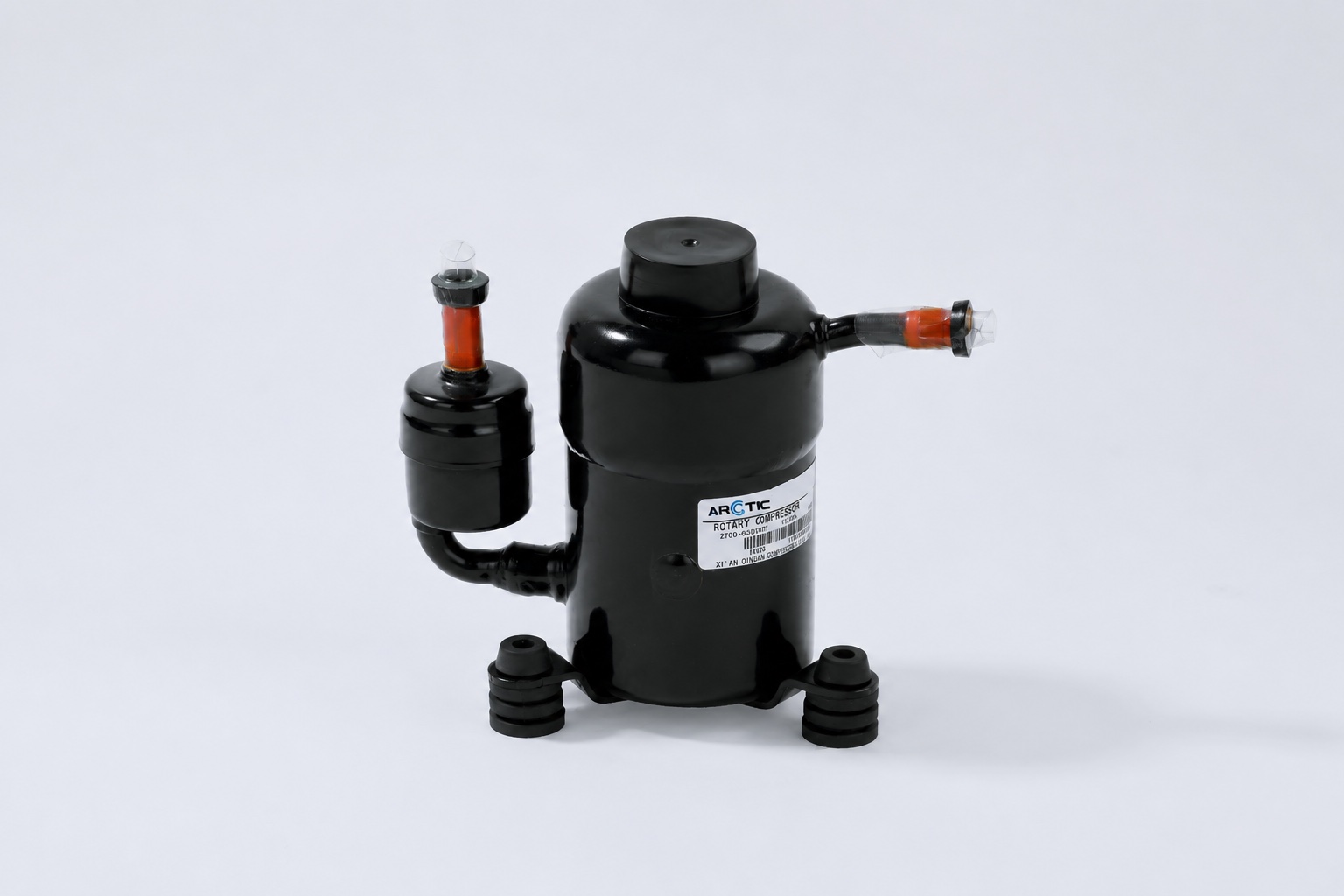 The comparison that matters to an integrator is not abstract chemistry but the route decision on a real product:
| Factor | R290 | R134a |
|---|---|---|
| Flammability class | A3 — the whole subject of this article | A1, non-flammable |
| Climate profile | GWP ~3 | High GWP, under phase-down pressure |
| Regulatory direction | Doors opening (limits raised) | Doors closing (phase-downs tightening) |
| Design duties | Enclosure, component and labeling rules | Conventional practice |
| Servicing | Trained handling, no open flames, marked circuits | Established infrastructure |
| Future-proofing a product line | Aligned with the trajectory | Riding a shrinking allowance |
Neither column is a straw man; both routes ship in volume today. For a new compact product with a multi-year life, the last two rows increasingly decide it: designing into a refrigerant whose regulatory space is expanding beats designing into one whose space is scheduled to contract. The A1 route retains its place where site rules categorically exclude flammables — some medical, marine and mining contexts — and where the service network’s capabilities are fixed. Both refrigerants appear across the DC condensing unit range for exactly this reason: the route decision belongs to the product, not the catalog.
Enclosure Integration: the Integrator’s Duties
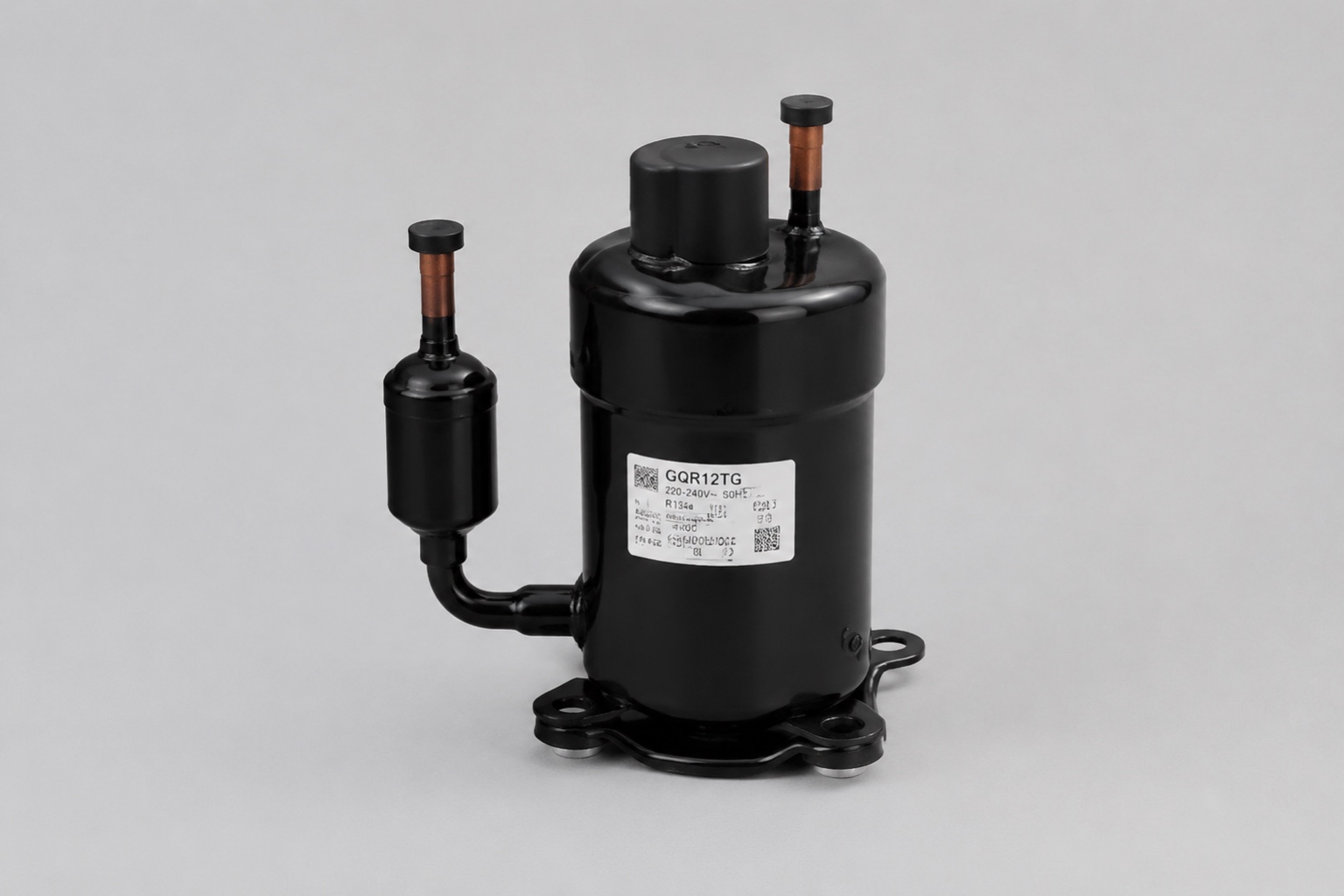 Enclosure practice follows three principles, all downstream of the same leak scenario:
- No trapped pockets. Propane is denser than air; a leak inside a cabinet settles low. Ventilation openings at the enclosure’s low points — sized and placed so a full-charge release disperses rather than pools — are the first drawing-stage duty. A sealed, unventilated machine bay is the configuration the rules exist to prevent.
- Nothing sparky in the pocket. Components that can arc in normal operation — bare relays, brushed motors, unsealed switches — either leave the potential leak zone, or arrive in sealed/spark-free versions. Modern BLDC drives and sealed controllers make this cheaper than it once was, but it is a component-selection duty, not an assumption.
- Label and document. Marked circuits, service warnings, and assembly documentation that tells the next technician what refrigerant lives inside — inexpensive at build time, and part of the standards’ conditions rather than decoration.
None of this is exotic; it is the ordinary discipline of designing for a flammable working fluid at small scale. The engineering effort is measured in drawing-review hours, and it buys access to the refrigerant the regulatory trajectory favors. The R290 charge limit conversation, in other words, is mostly had at the CAD stage — by the time a product ships, the questions are already answered in metal.
A Worked Sanity Check: the Leak Scenario at Small Scale
The R290 charge limit logic becomes concrete with one worked example (all values assumed). Take a compact circuit charged with 40 g of propane, installed in a cabinet of 200 liters, in a room of 30 cubic meters. Full release into the room alone dilutes to roughly 1.3 g per cubic meter — far below the lower flammability limit, which sits around 38 g per cubic meter for propane. The room scenario is comfortable by an order of magnitude, which is exactly what the standards intend charges of this size to achieve.
The cabinet is the honest part of the exercise: 40 g released entirely into 200 unventilated liters would exceed flammable concentration locally — which is why the low-point ventilation duty exists. Openings that let the dense gas drain and dilute convert the pocket scenario into the room scenario, and the room scenario is benign. The gram budget and the ventilation rule are two halves of one design; the R290 charge limit does its work only when the enclosure does its share. Run this same two-line arithmetic on your own product’s charge, cabinet and room, and most integration anxieties resolve into either a comfortable margin or a specific vent to cut.
Service and Lifecycle Realities
The R290 charge limit shapes the workshop as much as the drawing office, and the lifecycle items below are where integrators most often discover duties late:
- Service practice changes more than design practice. No open flames, no unsealed recovery into arbitrary containers, leak checks with appropriate detectors — trained-handling items that a service manual must say out loud.
- Charge integrity is a quality item: a circuit specified at tens of grams performs on exactly those grams, so factory charging accuracy and field recharge discipline carry both performance and compliance weight — a few grams of drift is a meaningful fraction of the whole charge at this scale.
- Transport and storage of charged units follow dangerous-goods rules that vary by mode and quantity — a logistics conversation to have before the first pallet ships, not after, and one where the small per-unit charge again works in the compact class’s favor.
- End-of-life recovery is gentler than for high-GWP fluids — the climate stakes of a released charge are small — but venting indoors remains a flammability question, and the service rules apply to the last day as to the first. A product whose documentation says how to decommission it is rarer than it should be, and cheap to be the exception on.
One more lifecycle note: replacement and recharge must match the original refrigerant and charge as labeled — a technician topping an R290 circuit by R134a habits, or the reverse, creates exactly the undocumented machine the marking rules exist to prevent. The condensing-unit behaviors that surround all of this — capacity versus ambient, derating in hot enclosures — are refrigerant-independent and covered in our condensing unit derating guide; propane changes the fire rules, not the thermodynamics of a starved condenser.
If you are weighing R290 against R134a for a compact product, send the following and our engineers will advise: application and mounting environment, whether the unit sits in an enclosure and its ventilation, target market and applicable standard if known, capacity and temperature requirements, and any site rules on flammables. Send your integration details to our engineering team.
Frequently Asked Questions
What is the R290 charge limit?
Category- and jurisdiction-dependent. The widely cited ceiling for self-contained commercial appliances was 150 g per circuit; the 2019 revision of the governing IEC standard opened a path toward 500 g for qualifying categories, with national adoption timelines varying. Occupied-space, room-size and construction conditions attach to the numbers — the binding figure for a product is the current standard for its category and market.
Why does the R290 charge limit exist at all?
Propane is flammable (class A3), and the limits bound the consequence of a worst-case full-charge leak: a charge small enough that complete release into the design room stays far below flammable concentration. Ventilation rules, spark-free component requirements and labeling all manage the same scenario by complementary means.
Do miniature DC refrigeration systems hit the limit?
Rarely — compact circuits typically hold tens of grams (model-dependent), an order of magnitude inside even the historical ceiling. For this class the binding duties are the conditioning rules instead: low-point ventilation of enclosures, sealed or spark-free components in the potential leak zone, and labeling. The gram budget is spent by big-box refrigeration, not by miniature circuits.
Is R290 better than R134a for a compact product?
Thermodynamically excellent and regulatorily favored — the limits are loosening for propane while high-GWP fluids ride phase-downs. The R134a route remains right where site rules exclude flammables outright or the service environment cannot adopt hydrocarbon practice. For new multi-year product lines, the trajectory argument increasingly decides in propane’s favor.
What does an enclosure need for an R290 unit inside?
Three things: ventilation openings at low points so a leak disperses instead of pooling (propane settles), no normally-arcing components in the potential leak zone — or sealed versions of them — and the labeling and documentation the standards condition their allowances on. A sealed, unventilated machine bay is precisely the configuration to avoid.
Does servicing R290 equipment need special practice?
Yes, in handling rather than in refrigeration skill: no open flames, appropriate leak detectors, correct recovery practice, and respect for the circuit markings. The refrigeration diagnostics are unchanged. Service documentation that states the refrigerant and its rules plainly is part of the integrator’s deliverable, not an optional extra.