
Field research environments are the antithesis of the lab. While lab environments offer stable AC power, climate control, and vibration isolation, field sites are characterized by power volatility, extreme ambient temperature fluctuations, and the physical stresses of constant transport. For analytical instrumentation that depends on deep cryogenic cooling, this instability is not just an inconvenience — it is a data quality risk. A rugged portable cryocooler is the necessary bridge between lab-grade performance and field-ready durability.
Rugged Portable Cryocooler Field Research: Engineering for Real-World Conditions
The core challenge in field-deployable cryogenic systems is maintaining a stable cold-end temperature despite unstable power and environment. A standard cryocooler designed for a lab freezer might perform flawlessly indoors but fail to synchronize or even shut down when exposed to the voltage swings of a portable generator or the rapid ambient shifts of an outdoor site. A rugged portable cryocooler is specifically engineered to handle these transient disturbances, ensuring the analytical instrument maintains its sensitivity throughout the field experiment.
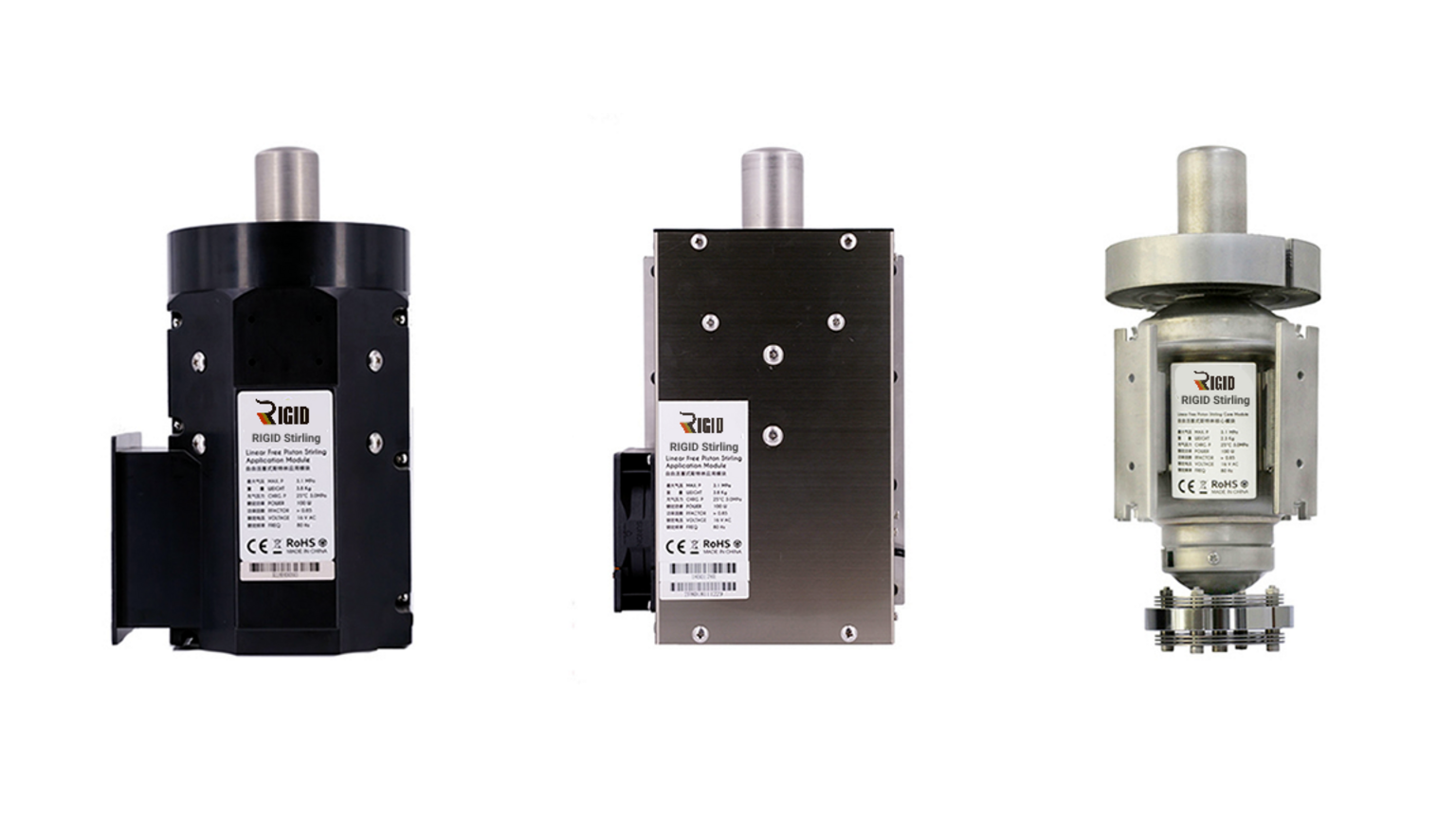
Addressing Power Volatility
Field research often relies on portable power stations, solar arrays, or small gasoline generators. These sources do not offer the clean, regulated 24V bus found in a lab. Voltage ripples and harmonic distortion from cheap inverters can cause resonant-drive cryocoolers (FPSC) to lose frequency lock, leading to intermittent alarms or degraded cooling capacity. A rugged portable cryocooler system must include input stage filtering and an adaptive drive logic that can “ride through” transient voltage disturbances. The controller should monitor the resonant frequency of the piston system and adjust the PWM drive frequency in real-time, compensating for input power fluctuations before they manifest as cold-end temperature drift. By effectively decoupling the cryocooler drive from the input power source, the system maintains performance stability even when the power quality is poor. This resilience is vital in remote locations where power conditioning infrastructure is non-existent.
Thermal Reliability in Extreme Environments
Analytical instruments often need to stay at -80°C or colder, even when the ambient field temperature reaches +40°C in direct sunlight. This temperature gradient requires high-efficiency thermal management. Standard cryogenic containers may perform well in a lab but fail in the field due to heat soak. Rugged portable cryocooler systems use vacuum insulation panels (VIP) to minimize passive heat leak, ensuring that the cryocooler’s cooling capacity is dedicated to the instrument payload, not to fighting ambient thermal intrusion. Furthermore, rugged systems often employ integrated thermal management (like forced-air or liquid-loop heat rejection) that is rated for high-ambient operation. If the cryocooler’s internal electronics overheat, the controller will automatically throttle performance to prevent thermal damage, leading to instrument drift. A field-ready unit must be rated for +45°C ambient operation, providing the necessary thermal headroom to stay cold when the field environment gets hot. This combination of VIP insulation and high-ambient-rated active cooling creates a thermal barrier that isolates the instrument from the field site’s environmental extremes.
Vibration Isolation and Data Integrity
Vibration is the enemy of high-sensitivity analytical instrumentation. Whether it is a mass spectrometer, a Raman spectrometer, or a laser sensor, the mechanical vibration of the cryocooler can couple directly into the optical path and introduce noise into the measurements. In a lab, you might build a massive optical table to dampen vibration. In the field, you need the vibration dampening built into the cryocooler mount. Rugged portable cryocooler systems feature active or passive vibration isolation between the cryocooler piston and the housing. By using elastomer mounts or counter-balanced drive systems, the vibration transmitted to the sample or sensor is minimized. For field research data integrity, reducing this mechanical noise floor is as critical as maintaining the cryogenic temperature itself. Field experiments often require long-duration measurements where small drift or noise can accumulate into significant errors. Rugged mounts ensure the cryocooler can operate for 10+ hours per day without causing mechanical fatigue on the analytical instrument.
Expanding Field Capability: A Case Study in Remote Sensor Deployment
A recent project in an Arctic research outpost required deploying a field-based Raman spectrometer for mineral analysis. The site relied on a solar/battery hybrid system with a 24V DC output that was notoriously noisy due to inverter spikes. The standard lab-grade cryocooler failed to maintain cold-end stability, causing frequent instrument calibration failures. Upon switching to a ruggedized FPSC unit with an adaptive drive frequency control, the system successfully navigated the power noise floor. The data quality remained consistent over a 3-week deployment, despite ambient temperature swings from -10°C at night to +15°C during the day. This case highlights how integrating a ruggedized cryocooler shifts the reliability burden from the analytical instrument back to the infrastructure, ensuring that the experiment collects valid data even in the most unforgiving field environments.
Frequently Asked Questions
How do I choose the right rugged portable cryocooler for my field site?
Consider the instrument’s cooling demand (W at setpoint), the ambient temperature range, and the available power (12V/24V DC). For most analytical field instruments, an RS100-series FPSC unit provides the required capacity, vibration isolation, and ruggedness.
Can I use a portable inverter for field cooling?
While possible, inverters often add harmonic distortion that can affect controller stability. A direct-DC power solution, using a portable battery pack connected to the cryocooler’s DC input, is preferred for field applications.
What maintenance is required in remote field locations?
Rigid FPSC units are sealed systems. They require no refrigerant topping up and have no mechanical seals to wear out, making them ideal for long-term deployments in remote field locations with zero maintenance requirements.
For more on integrating FPSC-based cooling into rugged analytical platforms, visit: RIGID FPSC Stirling Cooler.