
The telemetry doesn’t lie, but it can be misleading. It is 03:00 hours. The ambient temperature outside the vehicle has dropped, yet the cabin temperature is climbing. The battery bank monitoring system reports 60% State of Charge (SoC). Voltage at the busbar is stable. Yet, the cooling unit has cycled off, or worse, is running continuously without achieving the setpoint, destined to drain the remaining reserves before sunrise. This is the classic “phantom failure” of mobile cooling: the energy source is sufficient, but the thermal rejection strategy has failed.
For fleet operators, upfitters, and system integrators deploying auxiliary cooling in expedition vehicles, mobile medical units, or sleeper cabs, this scenario represents a critical integration error. It is rarely a failure of the hardware itself but rather a misalignment between the thermal load profile and the integration environment. Achieving reliable overnight cooling is not simply a function of buying more lithium-ion capacity; it is an engineering challenge involving duty cycle management, parasitic thermal loads, and DC distribution integrity.
Analyzing RV portable DC air conditioner overnight runtime
When an integrator specifies an RV portable DC air conditioner overnight runtime requirement, the calculation often stops at a simple division: Battery Capacity (Amp-hours) divided by Compressor Current Draw (Amps). If the result exceeds the required sleep duration (typically 7–9 hours), the design is approved. In the field, however, this linear equation fails because it assumes a static load and perfect efficiency.
The reality of mobile thermal dynamics is non-linear. The runtime is governed by the duty cycle—the percentage of time the compressor must run to maintain the setpoint. If the duty cycle approaches 100% due to thermal bridging or poor airflow management, the runtime is effectively halved compared to a system cycling at 50%. The focus for technical buyers must shift from “How big is the battery?” to “How do we reduce the duty cycle?”
The Duty Cycle Equation
The compressor is the primary consumer of energy in any DC air conditioning system. In a properly sized application, the compressor should run hard to pull down the temperature and then cycle on and off (or modulate speed in variable-speed inverter models) to maintain it. If the unit is undersized for the heat gain of the shell, or if the shell is poorly insulated, the compressor never cycles off. It enters a state of saturation.
Consider the variables that force a 100% duty cycle:
- Radiant Heat Soak: Vehicles parked in direct sunlight during the day absorb massive amounts of thermal energy into the chassis, cabinetry, and upholstery. This “thermal mass” continues to radiate heat into the cabin long after the sun goes down. The A/C unit is not just fighting the air temperature; it is fighting the heat stored in the vehicle’s structure.
- Infiltration Rates: Unlike stationary buildings, mobile platforms are dynamic. Seals age, vents remain open, and slide-outs create gaps. Every cubic foot of unconditioned, humid air that enters the cabin adds latent load (humidity) that the A/C must remove before it can tackle the sensible load (temperature).
- Condenser Recirculation: This is a specific failure mode for portable units. If the hot air exhausted by the unit is allowed to recirculate back into the condenser intake—common in tight quarters or when exhaust ducting is restrictive—the head pressure rises. The compressor draws more amps to do the same amount of work, and cooling capacity drops, extending the run time required to cool the space.
Voltage Drop: The Silent Killer of Runtime
A frequent cause of premature shutdown—where the A/C cuts out despite the battery showing charge—is voltage drop across the DC distribution network. DC compressors are protected by low-voltage disconnect (LVD) circuits to prevent battery damage. These thresholds are often set at the unit level.
If the wiring gauge is undersized for the length of the run, or if there is high resistance at crimps, fuse blocks, or busbars, the voltage at the A/C unit terminals will be significantly lower than the voltage at the battery terminals. Under compressor startup load (inrush current), this drop spikes. The unit sees a voltage below its LVD threshold and shuts down to protect itself, even if the battery bank is sitting at a healthy voltage. The user perceives this as “running out of power,” but it is actually a distribution failure.
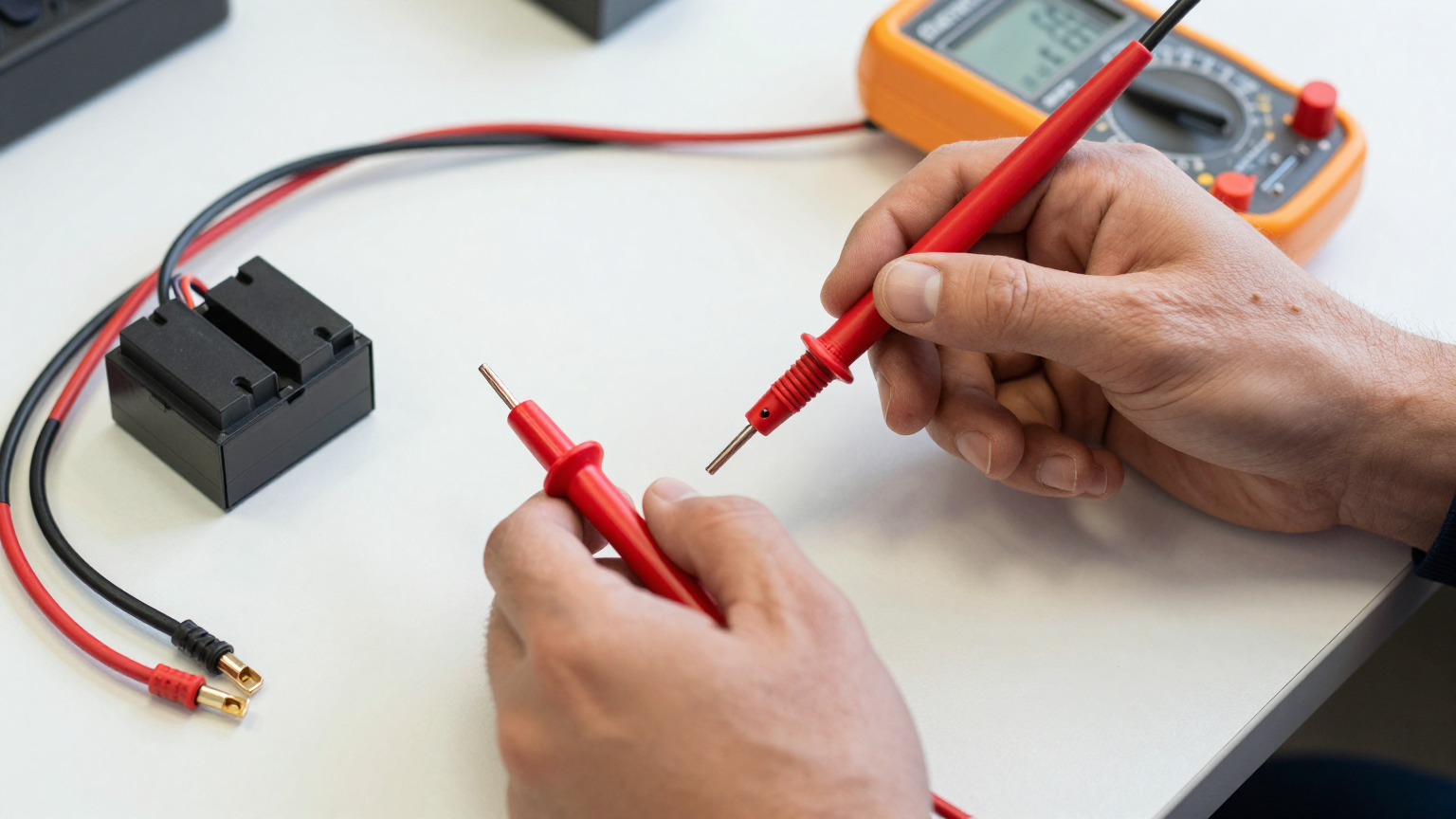
Diagnostic Check: Measure voltage at the battery terminals and simultaneously at the A/C input terminals while the compressor is running at max speed. A significant delta indicates that energy is being dissipated as heat in the wiring, reducing system efficiency and triggering nuisance faults.
The Negative Pressure Penalty
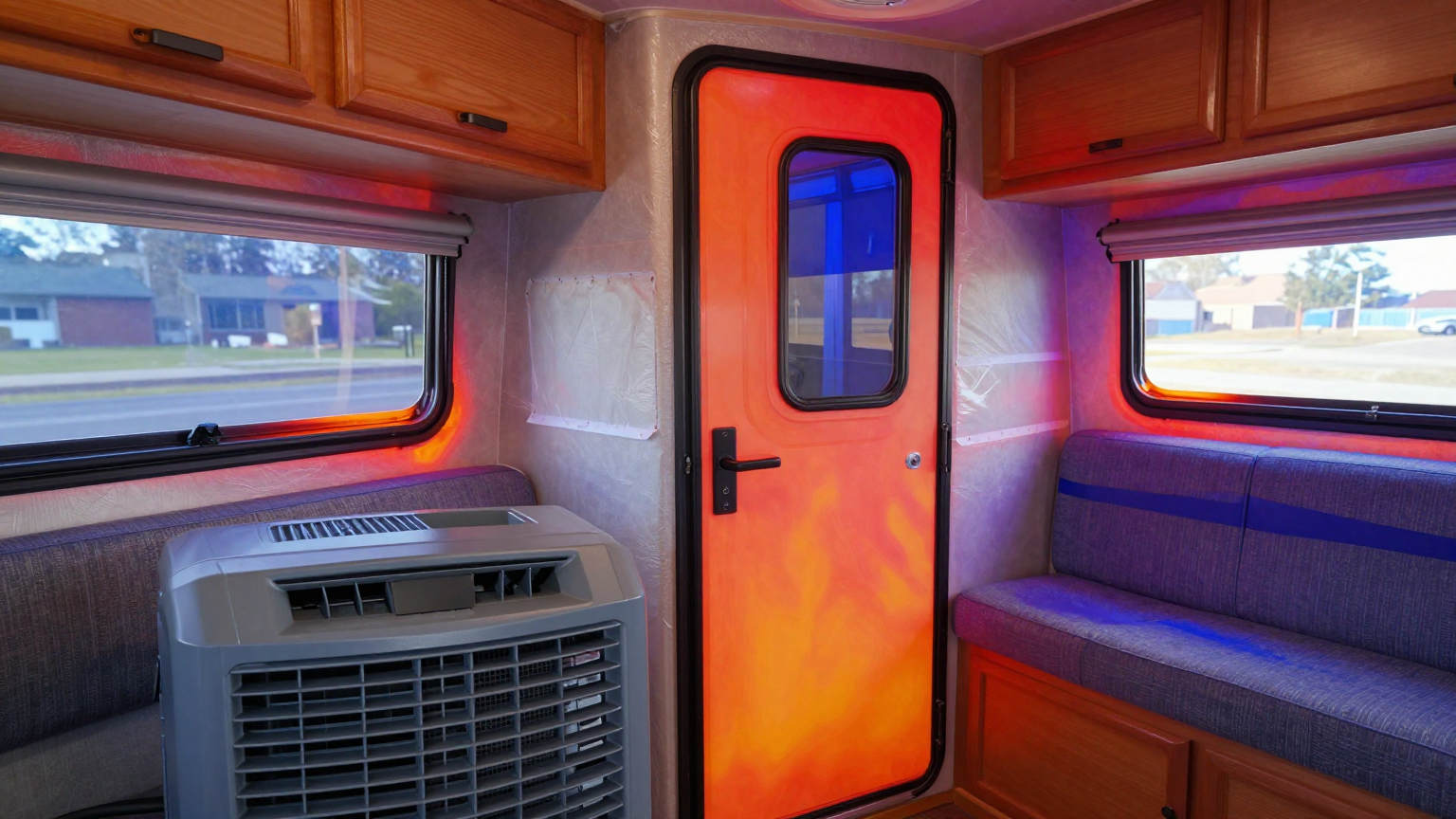
Many portable cooling solutions utilize a single-hose exhaust configuration. While convenient for retrofits, this architecture introduces a severe penalty on RV portable DC air conditioner overnight runtime. The unit expels hot air from the condenser out of the vehicle. To replace that displaced air, an equal volume of outside air must be pulled into the vehicle through cracks, vents, and seals.
This creates a negative pressure environment. You are effectively conditioning the air, exhausting some of it, and sucking in hot, humid outside air to replace it. This continuous introduction of unconditioned air keeps the thermal load high, forcing the compressor to run continuously. For maximum efficiency and runtime, dual-hose systems or split systems that recirculate internal air while rejecting heat externally are superior, as they maintain a neutral pressure balance.
Thermal Bridging and Insulation Integrity
In fleet upfitting, the insulation strategy is often finalized before the HVAC selection. However, the two are inextricably linked. A “four-season” insulation package is not just about keeping warm in winter; it is critical for keeping cool in summer without draining the battery bank.
Thermal bridges—conductive pathways where insulation is bypassed, such as metal ribs, window frames, and uninsulated floor sections—act as continuous heat pumps moving thermal energy into the cabin. In a DC-limited environment, every BTU of heat gain represents Amp-hours lost. Upfitters should prioritize window shades, thermal breaks on structural members, and minimizing glass exposure to reduce the baseline load the A/C must overcome.
Sizing for the “Sleep Zone” vs. Whole Cabin
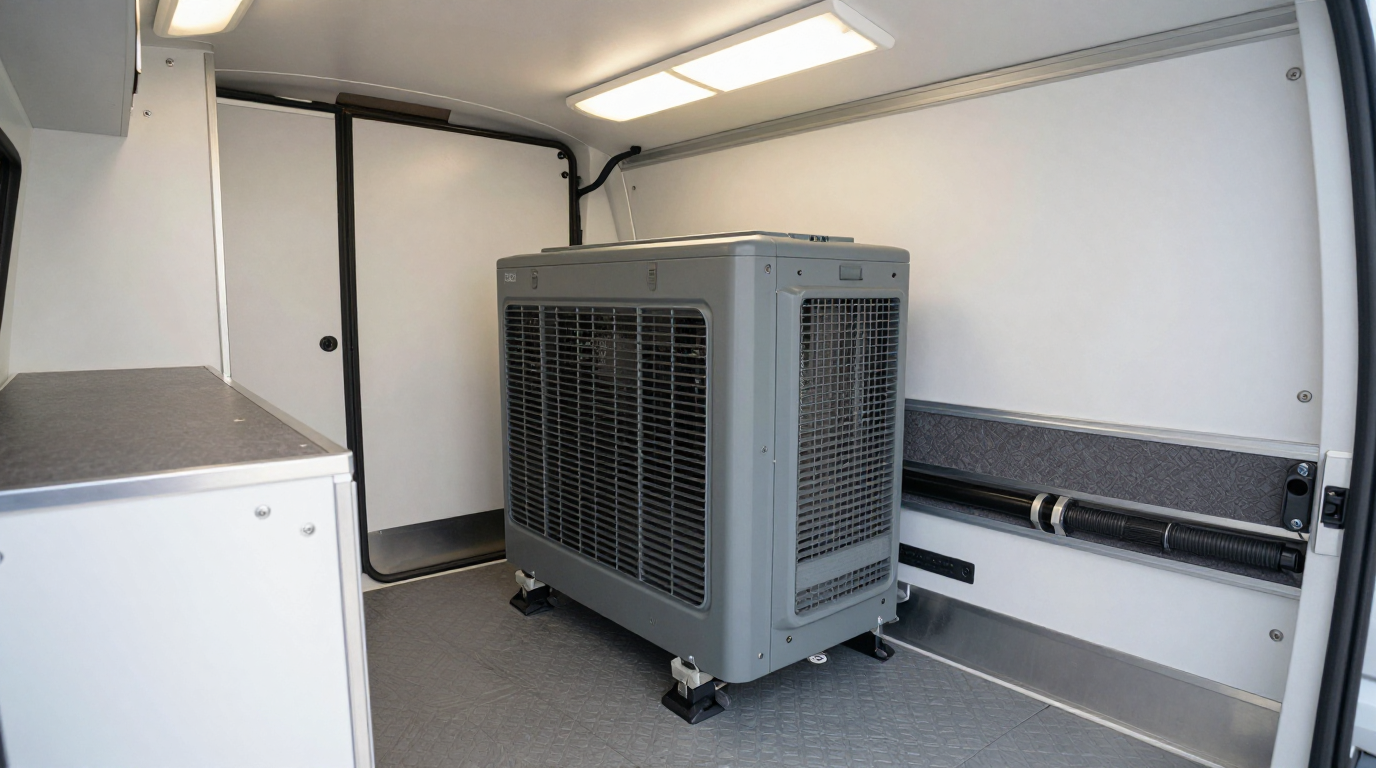
A common error in specifying portable DC A/C units is expecting a compact, battery-driven unit to cool an entire 30-foot trailer or a large expedition truck box. The physics of battery density and compressor size impose limits. To extend overnight runtime, the strategy should often shift to “spot cooling” or “zonal cooling.”
Instead of attempting to bring the entire interior volume to 68°F (20°C), the system should be directed or ducted to cool the sleeping area specifically. By reducing the volume of air being treated, the system can cycle off more frequently, drastically reducing energy consumption. This approach aligns the cooling capacity with the critical requirement (sleeping comfort) rather than a generalized and energy-intensive goal (whole-vehicle cooling).
Battery Chemistry and Discharge Curves
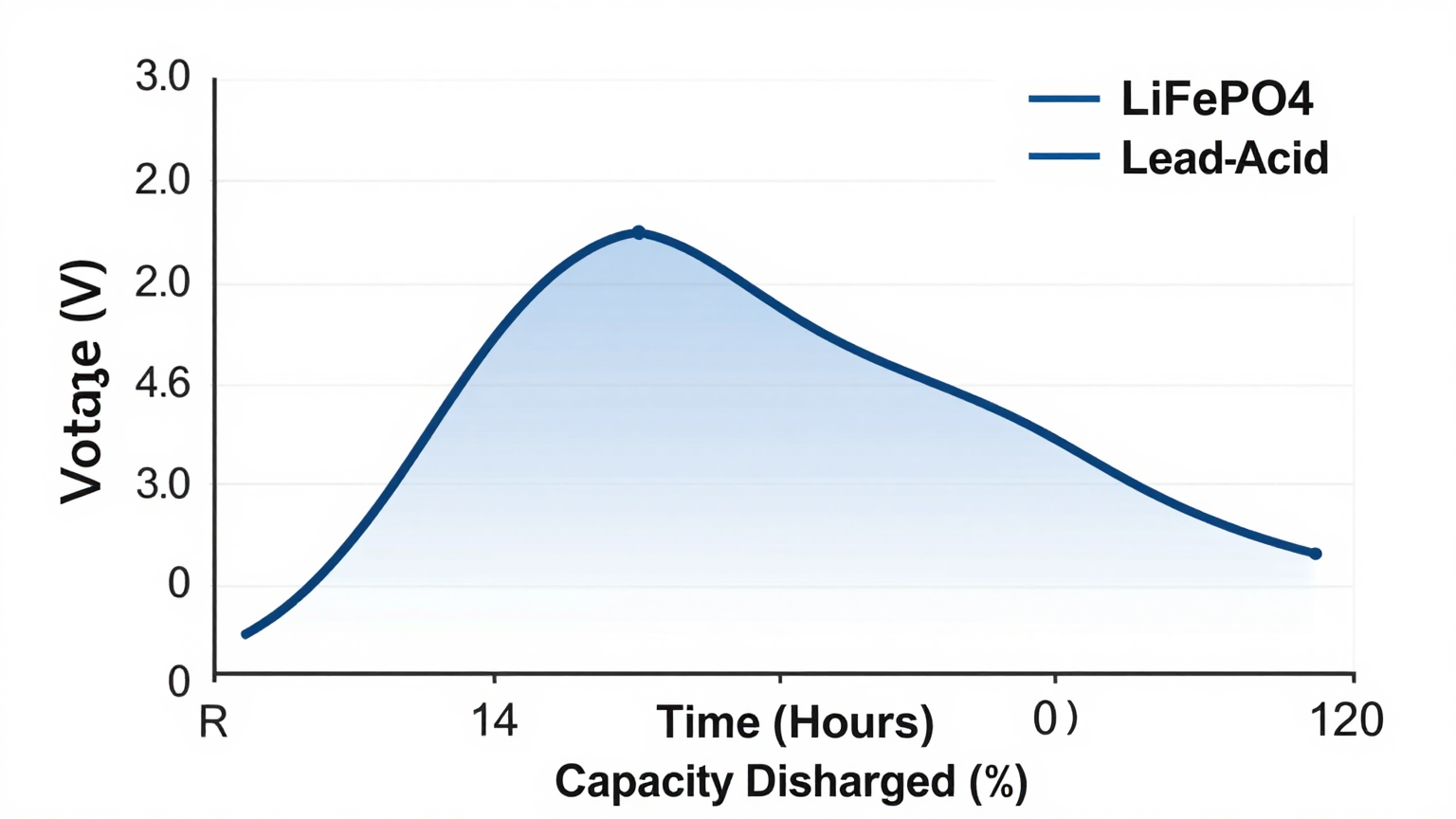
While this post focuses on the A/C side, the power source interaction is relevant. Lead-acid (AGM/Gel) batteries suffer from Peukert’s Law—as the discharge rate increases, the effective capacity decreases. A high-draw DC air conditioner will deplete a lead-acid bank much faster than the rated Amp-hour capacity suggests. Furthermore, the voltage sag of lead-acid under load can trigger the A/C’s low-voltage cutoff prematurely.
Lithium Iron Phosphate (LiFePO4) batteries are the standard for these applications because they maintain a flatter voltage curve during discharge and are less affected by high current draw. If a fleet is experiencing runtime issues with lead-acid architectures, switching to lithium is often the most direct way to align the power source with the demands of DC air conditioning.
Integration Support
Achieving reliable overnight cooling in off-grid mobile applications requires a holistic view of the thermal and electrical systems. If your fleet is struggling with runtime limitations or integration constraints, we can review your load calculations and installation parameters. We can assist in defining the optimal DC cabling architecture and ducting strategies to maximize efficiency.
For technical specifications on our dedicated mobile cooling solutions, please review the Portable DC Air Conditioner product page.