
Choose a Chiller for the Water-Cooled Scientific Camera You Actually Own
A water-cooled scientific camera needs a cooling loop matched to its liquid-cooled heat sink: supply temperature, heat rejection, flow, pressure, and coolant chemistry all matter. The sensor’s operating temperature is a separate requirement. A sensor running below freezing does not, by itself, call for sub-zero water. Start with the instructions for the exact water-cooled camera variant, then select an external cooler capable of meeting those conditions at the camera connections.
This distinction changes the purchase decision. A laboratory may need an assembled recirculator with a pump and reservoir, while an instrument manufacturer may need a compact refrigeration module to integrate into an existing circuit. Both remove heat, but the delivered equipment and engineering responsibilities differ. Define the camera-side liquid requirements before comparing chillers.
Use three immediate selection outcomes. If the camera has no manufacturer-supported liquid interface, exclude an external-water retrofit. If the required supply would violate the camera’s dew-point restriction, resolve that condition rather than choosing a colder chiller. If the supply conditions are acceptable but a quotation covers refrigeration only, keep pump and reservoir integration open until the complete loop is specified. A sensor-temperature target alone clears none of these checks.
Confirm the Camera Has an External Liquid Interface
Check the complete model designation and cooling option on the camera order. An air-cooled model and a water-cooled version may share a product family name, yet their connections and installation requirements can differ. Do not assume that a camera with a thermoelectric cooler can accept an external water loop. Look for the manufacturer’s designated coolant inlet and outlet, approved connection hardware, and installation instructions.
Also establish who supplied the original cooling equipment. If the camera came with a matched circulator, obtain the requirements for a replacement before changing it. A connector that appears to fit does not establish equivalent pressure, fluid compatibility, or protection. Keep the camera serial number and relevant manual revision in the cooling specification so that a later purchasing change does not silently substitute a different configuration.
Separate Sensor Temperature from Coolant Temperature
In a thermoelectrically cooled camera, the sensor is on the cold side of the thermal system and the heat sink is on the hot side. External liquid carries heat away from that heat sink. Andor’s Zyla cooling documentation explains this arrangement. The coolant inlet temperature, sensor temperature, and room temperature therefore describe different locations.
A useful cooling specification gives each temperature its own line. Identify the sensor target required by the imaging application, the camera manufacturer’s permitted coolant conditions, and the room conditions expected at the installation. Leave missing values open for clarification. Writing one negative temperature against the whole system can lead a buyer to request a colder supply than the camera permits or needs.
A cold sensor is not a coolant setpoint. Likewise, an external chiller’s temperature display does not establish the sensor temperature. A water-cooled scientific camera still depends on its internal control system. Treat the external loop as a heat-rejection interface and verify the camera’s response through its own approved operating checks.
Build a Camera-Side Selection Table
The table below separates requirements from the evidence needed to select equipment. Complete it for the ordered camera, rather than copying values from a related model. It is a procurement worksheet, not a list of universal camera specifications.
| Requirement | Information to obtain | Why it changes the choice |
|---|---|---|
| Cooling interface | Water-cooled variant, inlet and outlet hardware | Establishes whether external cooling is supported |
| Coolant supply | Permitted temperature interval and operating conditions | Defines the cooler’s required duty |
| Heat rejection | Camera heat rejected to liquid in the intended operating mode | Prevents sizing from sensor temperature alone |
| Hydraulic conditions | Required flow and camera pressure limits | Determines pump and protection requirements |
| Liquid compatibility | Approved fluid, additives, tubing, and wetted materials | Limits allowable circuit configurations |
| Environment | Room temperature, humidity, and equipment placement | Supports condensation and heat-rejection review |
| Supply scope | Pump, reservoir, sensors, controls, hoses, and power supply | Distinguishes a module from an assembled recirculator |
If the camera documentation gives flow or pressure conditions without a liquid heat load, request the missing thermal requirement. If the cooling supplier gives nominal capacity without an operating point, request performance at the proposed coolant and room conditions. These are different gaps; one cannot be filled by making an assumption about the other.
Keep Condensation in the Selection Decision
A low coolant temperature can create an additional problem when exposed surfaces become colder than the surrounding air’s dew point. The ZL41 Cell cooling-system instructions explicitly require coolant above the applicable dew point. Follow the environmental restrictions for the actual camera; this example does not establish requirements for every scientific camera.
For a proposed installation, document where ambient conditions are measured and which liquid lines or fittings are exposed. A reading taken elsewhere in the laboratory may not describe conditions around an enclosed instrument. Ask the camera supplier how changes in room humidity affect the permitted operating conditions before selecting a fixed supply temperature.
Lower temperature is not automatically the better choice. Insulation around an external hose does not establish that internal camera components are protected. A dry room during initial commissioning also does not establish that the same supply conditions remain acceptable after seasonal changes. Include the manufacturer’s environmental conditions in the operating specification.
Match Cooling Capacity to the Heat Rejected into Liquid
The cooling supplier needs the thermal load entering the liquid circuit. Camera electrical input can help describe the system, but it is not automatically the heat load at the water interface. Other parts of the camera may reject heat directly to the room. Obtain the camera manufacturer’s figure or an approved characterization of the intended configuration.
Separate steady operation from initial temperature pull-down and changes in camera operating mode. Specify which condition sets the capacity requirement and which sets the acceptable response time. This prevents a purchasing comparison from treating a fast initial cool-down and stable sustained imaging as interchangeable performance claims.
A water-cooled scientific camera should be assessed against cooling performance at the proposed supply temperature and ambient conditions. A larger nominal wattage is not evidence of a better match if it was measured at a different operating point. When a performance curve is unavailable, identify that gap in the quotation rather than presenting the catalogue value as confirmed capacity at the camera’s duty.
Check Flow and Pressure at the Camera Connections
Use the camera’s hydraulic limits to assess the complete liquid circuit. Hose length, fittings, valves, and the cooler’s own heat exchanger affect the operating flow. A pump’s maximum advertised flow is not necessarily the flow delivered through the connected camera. Obtain a pump curve or configuration-specific flow evidence before treating the pump as suitable.
The camera pressure limit and the cooler pressure rating belong to different components. Check the most restrictive applicable limit and identify how it will be respected, including the conditions specified by the equipment suppliers. Do not copy a camera manual’s pressure value into a RIGID module specification. Matching a connection size does not establish a hydraulic match.
For a loop that needs separate flow protection, the RIGID discussion of chiller low-flow protection explains the distinction between circulation and protection. Apply any instrumentation only within the actual camera and coolant requirements; a supporting guide does not replace the camera’s installation instructions.
Approve the Liquid and the Wetted Materials Together
List the liquid allowed by the camera manufacturer, then verify its compatibility with every wetted component in the proposed cooler and external loop. Include additives if used. A label such as “water cooling” is too broad to specify fluid chemistry, concentration, service practice, or material compatibility.
Ask which coolant properties the supplier used when assessing pump performance. Changing fluid after commissioning can change the conditions under which the original selection was reviewed. Keep the approved fluid designation with the equipment record and define how replenishment or maintenance will preserve it.
This article addresses the camera’s external cooling interface, rather than recommending a general-purpose laboratory fluid. Avoid choosing a liquid simply because another instrument in the laboratory uses it. Where the camera and cooler instructions disagree, obtain a documented resolution for the proposed combination before connection.
Screen Compact RIGID Modules Within Their Published Range
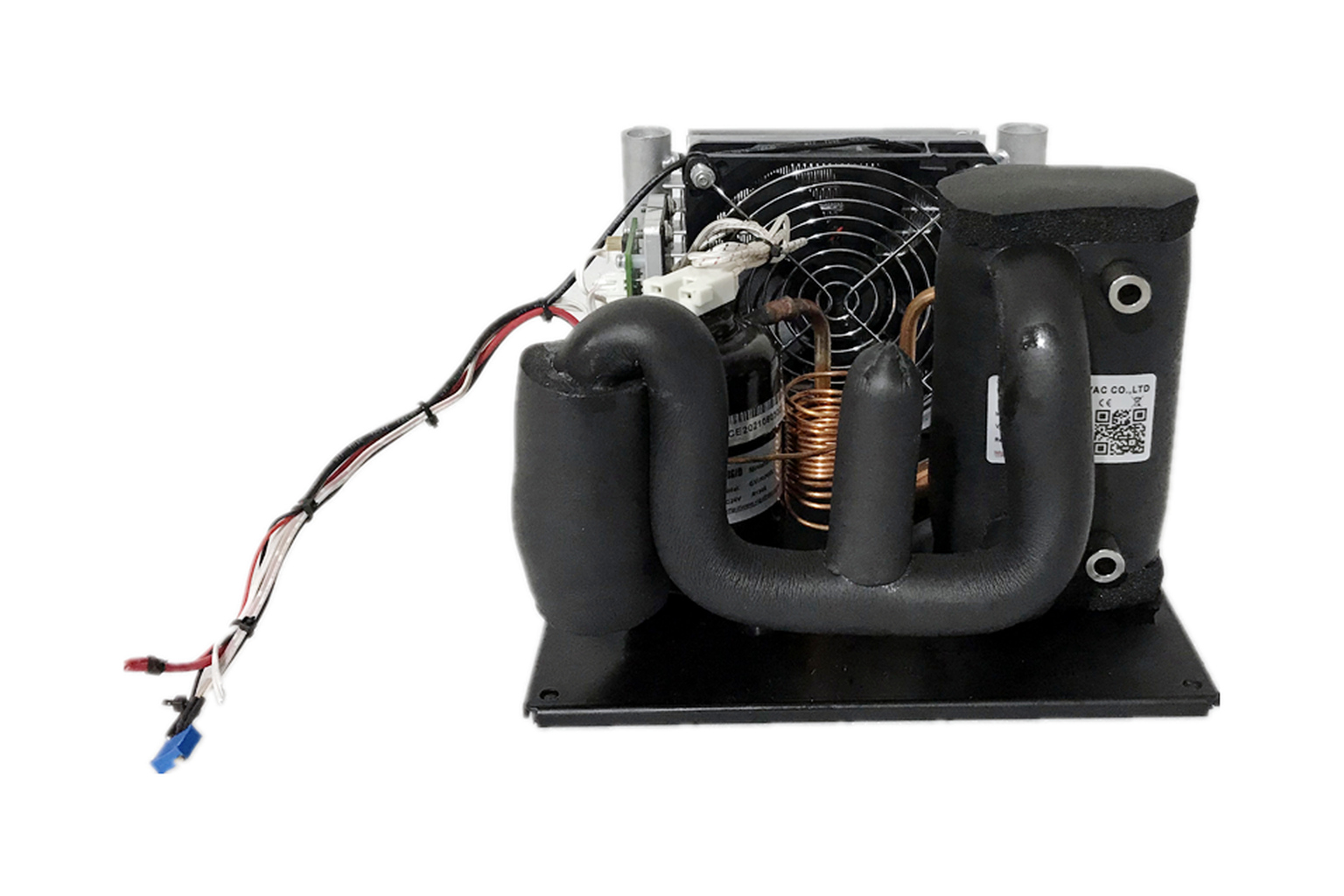
The RIGID compact liquid chiller series publishes a coolant-temperature range of −20 to +20°C and a series capacity range of 100–550 W. It includes several heat-exchanger configurations. These catalogue boundaries identify a potential candidate family; they do not establish compatibility with a particular camera.
For example, DV1920E-P is a listed plate-type model. Its selection still requires the ordered configuration, cooling performance at the intended duty, and the liquid-side requirements. Public series information does not state a complete pump curve, reservoir volume, or capacity test conditions. Do not assume that those items are supplied or that one series-wide value describes every model.
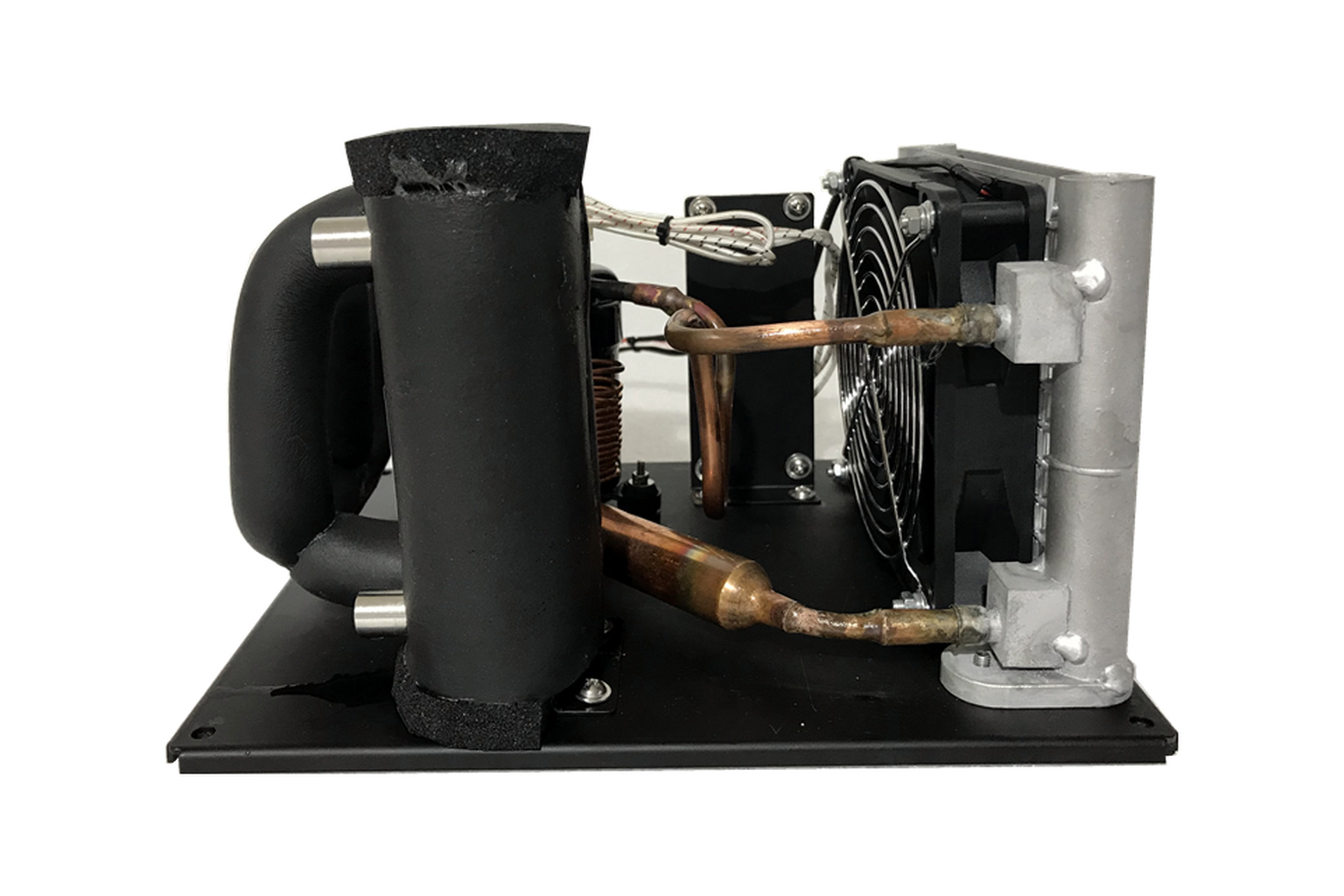
Temperature overlap is a screening result, not a compatibility result. A camera requiring a supply outside the published range needs a different or specifically confirmed solution. Within the range, load, flow, pressure, fluid, controls, and power must still agree. Representative module photos show physical product examples; they do not document a camera connection or the exact configuration quoted.
Define What the Cooling Supplier Will Deliver
A laboratory user may expect a ready-to-connect recirculator. An OEM may already have a pump, reservoir, and instrument controller and need only the refrigeration section. Make that distinction explicit when requesting a water-cooled scientific camera cooling solution. Otherwise two apparently similar quotes can exclude very different parts of the working loop.
Assign responsibility for the pump, reservoir or expansion arrangement, temperature measurement, camera-side flow verification, leak management, and electrical supply. Specify who confirms hose fittings and who performs the final instrument checks. The point is to establish a complete interface agreement, not to imply that every listed item is a feature of the cooling module.
Record the measurement location used for temperature acceptance. A control sensor inside the cooler and a sensor at the camera inlet answer different questions. Agree which reading controls the equipment and which reading verifies delivery to the camera. This makes later troubleshooting more useful than comparing displays without knowing what each one measures.
Verify the Installed Interface Before Routine Imaging
Plan commissioning around the selected camera variant and its approved procedure. Establish baseline coolant conditions, instrument settings, and room conditions. Confirm that the supplier-approved connection arrangement is in place and that the specified measurements can be taken without modifying the camera.
For a water-cooled scientific camera, an acceptance record should connect the external loop readings to the intended camera operating mode. A brief period with the camera idle is not equivalent to the required imaging condition. Define the relevant operating case and acceptance criteria with the instrument supplier instead of inventing a universal test duration.
Keep unresolved requirements visible. If the ordered module lacks confirmed pump performance, record that as an integration task. If camera heat rejection has not been provided, retain it as a sizing gap. These statements make the next decision precise and prevent an incomplete configuration from becoming an assumed reference design.
Frequently Asked Questions
Does a sensor below freezing require sub-zero coolant?
No. A thermoelectric camera can cool its sensor below the liquid supply temperature. Select coolant conditions from the instructions for the actual water-cooled scientific camera, rather than copying the sensor target into the chiller settings.
Can an external chiller be added to an air-cooled camera?
Only if the camera manufacturer supports that configuration and provides the required liquid interface. The presence of an internal thermoelectric cooler does not establish permission to add external water cooling.
Does the DV temperature range prove a camera is compatible?
No. It identifies a possible candidate family. Confirm heat rejection, performance at the proposed duty, pump scope, flow, pressure, liquid chemistry, controls, and environmental restrictions for the ordered equipment.
Is the cooling module automatically a complete laboratory recirculator?
No. Confirm the delivered configuration. Pump, reservoir, power supply, sensing, hose connections, and control responsibilities must be stated in the quotation and integration documents.
What should be sent with a camera-cooling inquiry?
Send the camera variant and manual, required coolant conditions, liquid heat load, hydraulic limits, approved fluid, room conditions, and the intended division of equipment supply. Mark unavailable values as unresolved.
Request a Camera-Specific Cooling Review
Prepare the camera-side selection table and identify whether you need an integrated refrigeration module or an assembled liquid loop. Then ask RIGID to review the proposed cooling configuration. The review should establish the model and interface requirements before a module is treated as ready to connect.