
Optimizing Reliability: The Critical Choice of Enclosure Cooling Mounting Position
In the world of industrial automation and telecommunications, the premature failure of sensitive electronics can lead to costly downtime. Often, the culprit is not the electronic component itself, but the thermal management system designed to protect it. An engineer might specify an enclosure air conditioner with the perfect cooling capacity, only to see it underperform or fail. The overlooked variable? The enclosure cooling mounting position. The decision to install a unit on the side versus the roof of a cabinet is far from a simple matter of convenience; it is a critical engineering choice with profound implications for performance, reliability, and long-term cost of ownership.
Many system designers treat mounting as an afterthought, dictated solely by available space. This approach ignores fundamental physics related to heat stratification, condensate management, and environmental exposure. A cooling unit that performs flawlessly in a lab can fail rapidly in the field if its mounting position makes it susceptible to clogged drains, solar heat gain, or obstructed airflow.
By the end of this article, you will have a comprehensive framework for evaluating the trade-offs between side-mount and roof-mount installations. We will explore the common failure modes associated with each position, delve into the engineering principles that govern performance, and provide a step-by-step process to help you select the most reliable mounting strategy for your specific application.
Where Mounting Decisions Matter Most
The strategic importance of the mounting position becomes clear when we examine real-world deployment scenarios where environmental stressors are high and reliability is non-negotiable.
Scenario 1: Outdoor Telecommunications Cabinets
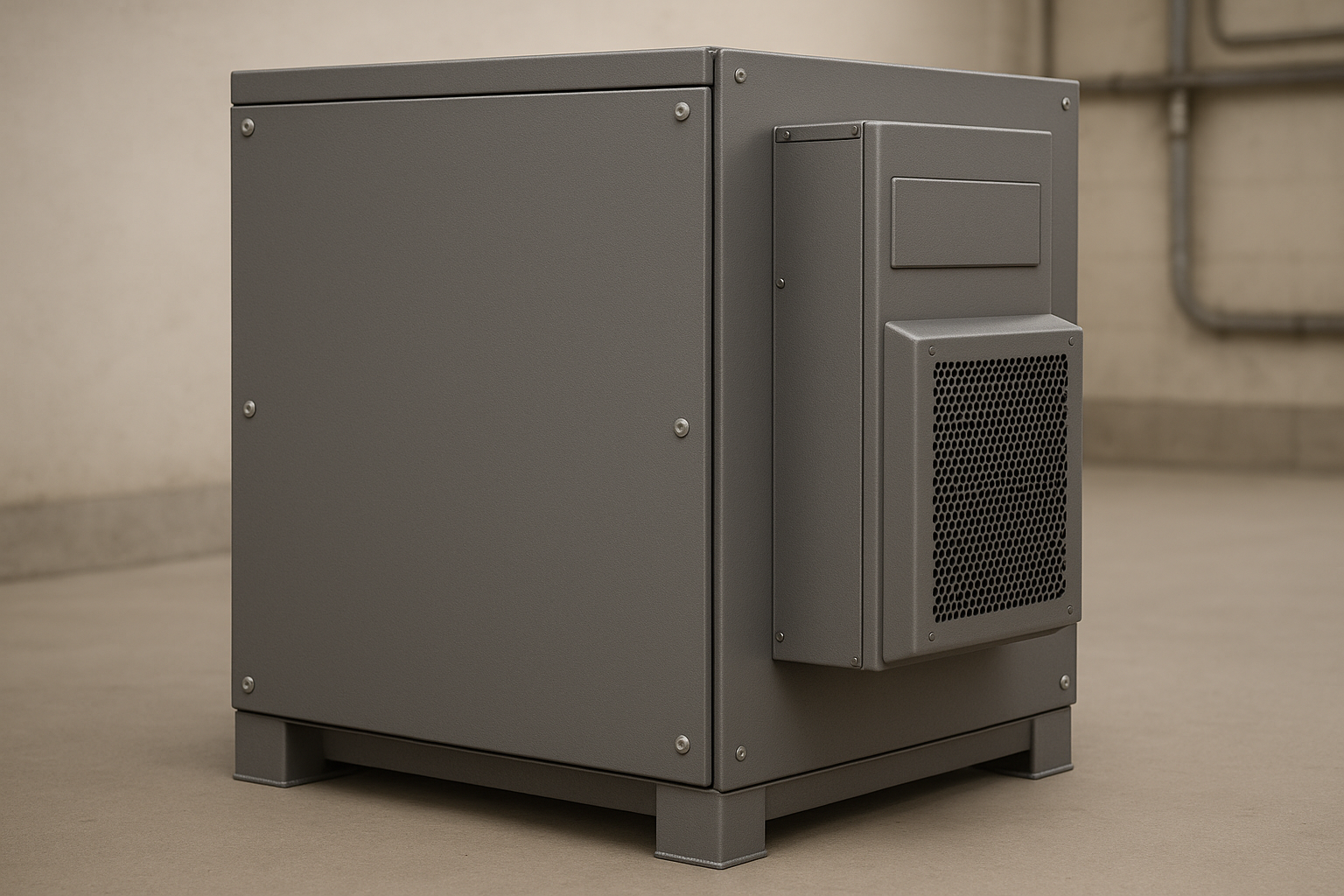
Consider a remote 5G telecom cabinet located in an open field. This enclosure is exposed to the full force of the elements: direct solar radiation, driving rain, dust, and extreme ambient temperature swings. A common instinct is to use a roof mount enclosure air conditioner to save lateral space in dense cell sites. However, this places the unit in the most vulnerable position. The flat roof absorbs maximum solar energy, adding a significant thermal load. It also bears the direct impact of rain, increasing the risk of water ingress if seals or gaskets degrade over time. Furthermore, any failure in the condensate drain system means water is likely to leak directly down onto the sensitive radio equipment inside. A side mount enclosure cooling unit, by contrast, can be positioned on the north-facing side of the cabinet to minimize direct sun exposure. Its vertical orientation naturally sheds rain, and any potential condensate leak occurs outside and away from the internal electronics, providing a fundamentally safer failure mode.
Get A sample Online


Scenario 2: Indoor Factory Floor Control Panels
Now, imagine a critical control panel for a CNC machine on a busy factory floor. Space is at a premium, and the cabinet is surrounded by other machinery and high-traffic pathways. A roof mount seems like an elegant solution to avoid interference. However, factory environments often exhibit significant thermal stratification—the air near the ceiling can be 5-10°C hotter than the air at waist level due to waste heat rising from surrounding equipment. A roof-mounted unit must ingest this super-heated ambient air, forcing its compressor and fans to work much harder, consuming more energy and reducing its effective cooling capacity. A side-mounted unit, positioned lower on the cabinet, draws in cooler ambient air, allowing it to operate more efficiently and with less strain. While a side mount might be more exposed to physical impacts from carts or personnel, this risk can often be mitigated with protective guards—a solution that is often simpler than compensating for a massive thermal derating.
Key Failure Modes Influenced by Mounting Position
The choice between side and roof mounting directly influences the system’s vulnerability to several common failure modes. Understanding these risks is the first step toward making a more informed decision.
- Condensate Management Failure: This is arguably the most critical differentiator. All refrigerated air conditioners produce condensation. A roof-mounted unit positions this water directly above your electronics. If a drain line clogs with dust or algae, the drip pan will overflow, causing a catastrophic internal leak. A side-mounted unit’s drain path is external. If it clogs, water will spill down the outside of the enclosure, which is messy but rarely destructive to the cabinet’s contents.
- Airflow Obstruction: Both mounting positions have unique obstruction risks. Roof mounts can be blocked by overhead cable trays, low ceilings, or the accumulation of debris and leaves. Side mounts can be obstructed by placing cabinets too close together or by pushing them against a wall, preventing the ambient air loop from breathing.
- Accelerated Component Wear from Heat: As noted in the factory scenario, a roof mount is more susceptible to thermal stratification. Forcing a unit to run constantly with high-temperature intake air accelerates wear on the compressor, fan motors, and electronics, leading to a shorter operational lifespan.
- Ingress of Contaminants: The location determines the type of contaminants. A side mount near the floor may be more prone to ingesting fine dust kicked up by foot traffic. A roof mount is more likely to collect larger debris like leaves or nesting material from birds, which can cause catastrophic fan failure. It’s also more exposed to washdown procedures where high-pressure water could compromise seals.
- Vibration and Mechanical Stress: Mounting a cooling unit on a cabinet door is a common type of side mount. However, the repeated shock and vibration from opening and closing the door can stress refrigerant lines, electrical connections, and mounting hardware, leading to fatigue failures over time.
- Difficult or Unsafe Service Access: Maintenance is often deferred or done poorly when it is difficult to perform. Roof-mounted units may require a ladder or lift for access, increasing service time and safety risks. This can lead to neglected filter changes and coil cleanings, which are the leading causes of performance degradation and failure. A side mount enclosure cooling unit is typically at an ergonomic height, encouraging regular and proper maintenance.
The Physics of Enclosure Cooling: Airflow, Heat Paths, and Condensation
To properly evaluate mounting options, it’s essential to understand the core engineering principles at play. An enclosure air conditioner is not just a box that makes cold air; it’s a system that manages heat transfer and air quality through carefully controlled processes.
Closed-Loop Cooling
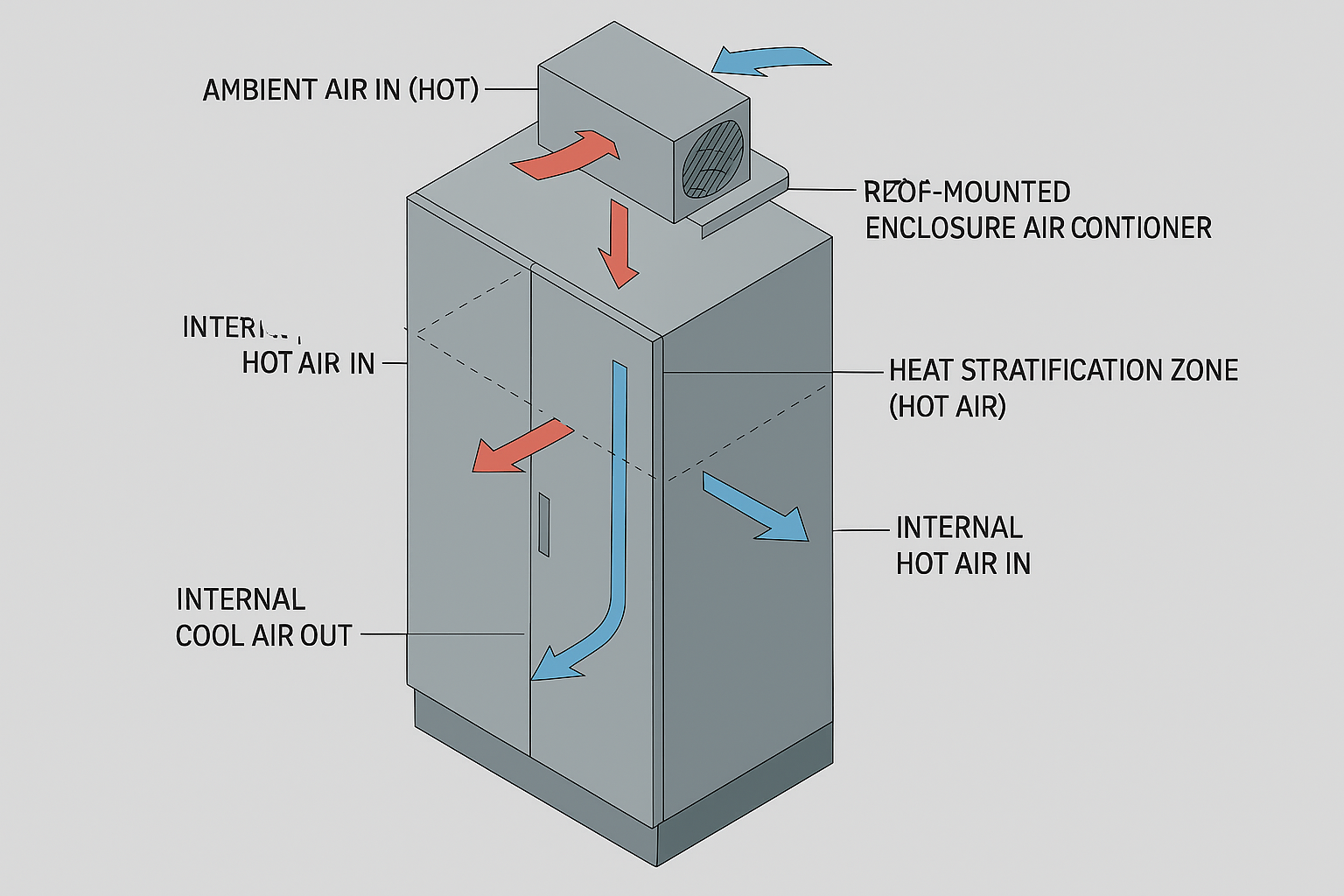
A key feature of an enclosure air conditioner is its closed-loop design. It creates two completely separate air circuits. The internal loop draws hot air from inside the cabinet, cools and dehumidifies it by passing it over a cold evaporator coil, and returns it to the cabinet. This process keeps the internal electronics clean and dry. The external loop pulls in ambient air from the surrounding environment, passes it over a hot condenser coil to expel the collected heat, and exhausts it back to the environment. The mounting position determines the quality of the air entering that crucial external loop, directly impacting the unit’s efficiency.
Thermal Stratification and Solar Load
Heat rises. This simple principle has a major impact on the performance of a roof mount enclosure air conditioner. In any environment with heat-producing equipment, the air near the ceiling will be the hottest. By placing the cooling unit’s ambient intake at the highest point, you are forcing it to operate in the worst possible thermal conditions, leading to significant derating of its nominal cooling capacity. Furthermore, a flat roof presents the maximum surface area to direct overhead sunlight. This solar load is absorbed as heat and must be removed by the air conditioner, effectively reducing the capacity available to cool the internal electronics. A side mount, especially one not in direct sunlight, faces a much lower ambient temperature and less direct solar load, allowing it to perform closer to its nameplate rating.
Condensate Management and Dew Point
When the air conditioner cools the internal cabinet air, it often lowers the air temperature below its dew point. At this point, water vapor in the air condenses into liquid water on the evaporator coil. This water is collected in a drip pan and removed through a drain tube. The physics of gravity make this process inherently risky for a roof mount. The entire system relies on a small, clear tube to safely channel water away. For a side mount, gravity is an ally—the water is already outside the protected space of the enclosure.
Matching the Cooling Unit to the Mounting Strategy
The mounting decision should be made in concert with the selection of the cooling unit itself. Certain specifications become more or less critical depending on the intended installation.
While specific ratings vary by model, here are the key parameters to consider for any enclosure cooling mounting position:
- Cooling Capacity (Watts or BTU/hr): This is the baseline specification. However, you must apply a derating factor based on the maximum ambient temperature at the unit’s intake. For a roof mount in a hot factory, this derating can be substantial. You may need to oversize the unit to achieve the required net cooling effect. Product lines like the Rigid Micro DC Aircon series offer a range of capacities, typically from 100W to 900W, allowing for precise matching once environmental factors are calculated.
- Operating Voltage (DC): For applications in telecom, mobile robotics, or off-grid installations, DC-powered units are essential. The Micro DC Aircon series, for example, is available in 12V, 24V, and 48V configurations. This electrical requirement is independent of mounting but is a primary selection criterion.
- Physical Dimensions & Weight: A compact, lightweight design is advantageous for all applications, but especially for door mounting, where excess weight can cause hinge sag, or for retrofitting into tight spaces. Always verify that the cabinet’s structure can support the unit’s weight at the intended mounting point.
- Ingress Protection (IP/NEMA Rating): These ratings define a unit’s resistance to dust and water. A roof mount on an outdoor cabinet demands a high rating (e.g., NEMA 4X) to withstand rain and hose-directed water. An indoor side mount may only require a lower rating (e.g., NEMA 12) to protect against dripping non-corrosive liquids and circulating dust. The installation itself—especially the gasket seal—is as important as the unit’s rating.
- Condensate Management System: Scrutinize the design of the drain system. Are the drain ports large and easily accessible? Is there an active evaporation system for the condensate? For roof-mount applications, a unit with a more robust and redundant drainage design is a wise investment.

A 4-Step Decision Framework for Your Enclosure Cooling Mounting Position
Instead of defaulting to the most convenient space, use a structured process to determine the optimal mounting location.
- Analyze the Operating Environment:
- Inputs: Document the maximum expected ambient temperature at both waist height and ceiling height. Quantify solar exposure (e.g., direct sun, partial shade). Assess the type and amount of airborne contaminants (dust, oil mist, moisture).
- Output: An environmental risk profile. A high thermal stratification or high solar load score would strongly favor a side-mount position.
- Define Physical and Access Constraints:
- Inputs: Measure the available surface area on the roof, sides, and door. Note any clearance requirements for airflow (typically 12-24 inches for intake and exhaust). Evaluate the safety and ergonomics of accessing each potential location for maintenance.
- Output: A map of viable mounting locations. This step may immediately eliminate the roof or a specific side due to physical impossibility.
- Evaluate Thermal and Reliability Trade-offs:
- Inputs: Using the data from Step 1, estimate the thermal penalty for a roof mount. Compare the condensate failure risk (high for roof, low for side). Consider the vibration risk if door mounting is an option.
- Output: A weighted comparison. Unless there is an overriding space constraint, the analysis will often show that a side mount enclosure cooling solution offers higher efficiency and lower risk.
- Validate with a Total Cost of Ownership (TCO) Assessment:
- Inputs: Factor in the initial cost, potential need for a larger unit for roof mounting, energy consumption (higher for a roof mount in a hot environment), and expected maintenance costs (higher for difficult-to-access units).
- Output: A final decision that balances upfront cost with long-term operational reliability and expense.
Installation Best Practices for Side and Roof Mounts
Proper installation is critical to realizing the benefits of your chosen mounting position. A poor seal or a kinked drain line can defeat even the best-laid plans.
- Mechanical Preparation:
- Verify Structural Integrity: Ensure the cabinet panel (roof or side) is rigid and can support the unit’s weight without flexing. Add stiffeners if necessary, especially for door mounts.
- Use the Correct Gasket: The gasket is the primary seal against contaminants. Ensure it is continuous, properly seated, and compressed evenly by tightening mounting bolts in a star pattern.
- Ensure Surface is Flat and Clean: Any debris or warping on the mounting surface will compromise the seal.
- Electrical Connection:
- Use Correct Wire Gauge: For DC-powered units, voltage drop is a concern. Use the recommended wire gauge for the specific voltage and distance from the power supply.
- Ensure Stable Power: Use a dedicated, regulated power supply. Unstable power can damage the sensitive control electronics in modern, variable-speed cooling units.
- Thermal & Airflow Verification:
- Confirm Clearances: After installation, double-check that airflow paths for both the ambient and internal loops are completely unobstructed.
- Optimize Internal Circulation: Position the cold air discharge to promote a circular flow path within the cabinet, ensuring all components are cooled and eliminating hot spots.
- Condensate Management:
- Ensure Downward Slope: The drain tube must have a continuous downward slope with no loops or kinks where water can pool.
- Test the Drain Path: Before commissioning, pour a small amount of clean water into the drip pan to verify it flows freely out the drain tube. This simple test can prevent a major failure.
Frequently Asked Questions About Enclosure Cooling Mounting
Can I mount a unit designed for side mounting on the roof?
No. A unit designated as a side mount is engineered with a condensate drain system that relies on a specific vertical orientation. Mounting it horizontally on a roof will almost certainly cause the drip pan to overflow and leak into the cabinet.
How much does ambient temperature really affect a roof-mounted cooler?
Significantly. A general rule of thumb is that for every 10°C rise in ambient temperature above the unit’s test rating point (e.g., 35°C), the cooling capacity can decrease by as much as 10-15%. Since a roof can be 10-20°C hotter than the surrounding air due to solar gain and stratification, the performance drop can be substantial.
What is the single biggest risk with a roof mount enclosure air conditioner?
Condensate leakage. While other issues affect performance, a clogged drain on a roof-mounted unit is the failure mode most likely to cause direct and catastrophic damage to the electronics the unit is supposed to protect.
Is a door mount considered a side mount?
Yes, it is a subset of side mounting. It offers the same thermal and drainage advantages but adds unique mechanical challenges, including stress on door hinges from the added weight and fatigue on power/drain lines from repeated flexing.
How do I account for solar load on a roof-mounted unit?
You must calculate the solar heat gain (in Watts) based on the surface area, color, and location, and add this value to your total internal heat load. Alternatively, installing a physical sun shield or solar cover over the unit can dramatically reduce this effect.
Does the mounting position affect the unit’s IP or NEMA rating?
The rating applies to the unit as manufactured. However, an improper installation, particularly a poor gasket seal, can compromise the integrity of the entire enclosure, effectively voiding its system-level NEMA rating.
What is the best enclosure cooling mounting position for very dusty environments?
This is a trade-off. A high roof mount may be above the worst of the floor-level dust, but its filters will be harder to service. A side mount may ingest more dust but allows for easy and frequent filter cleaning. In this case, the ease of maintenance offered by a side mount often makes it the more reliable long-term choice.
Are there solutions for cooling small, compact enclosures?
Yes, for smaller enclosures where traditional air conditioners may not fit, compact DC-powered thermoelectric coolers or miniature vapor-compression systems like those used in telecom components cooling can be effective. The same mounting principles regarding heat and condensation still apply.
Conclusion: A Strategic Decision, Not an Afterthought
The choice between a side mount enclosure cooling unit and a roof mount enclosure air conditioner is not merely about finding available space. It is a fundamental design decision that directly impacts thermal efficiency, system reliability, and total cost of ownership. While roof mounts offer a solution for space-constrained applications, they introduce significant risks related to heat stratification, solar load, and catastrophic condensate leakage.
For most applications, a side-mount position provides a more robust and reliable solution. It operates in a cooler ambient environment, has an inherently safer failure mode for condensation, and is significantly easier to service. By moving this decision from the end of your design process to the beginning, you can avoid common failure modes and ensure the long-term integrity of the critical electronics within your enclosures.
Customized Cooling for Unique Enclosure Challenges
We understand that standard, off-the-shelf cooling units cannot address every unique design constraint. Sometimes, a cabinet’s geometry, heat load, or operating environment demands a specialized solution. Rigid’s engineering team excels at developing customized and semi-customized cooling systems to meet these challenges.
Whether you require a modified mounting footprint, a specialized ducting arrangement for optimized airflow, or a completely new form factor for a high-density application, we can help. We encourage you to contact our team to discuss your specific project requirements. Let us partner with you to develop the ideal thermal management solution that ensures performance and reliability, regardless of the mounting constraints.