
When a laboratory instrument, laser module, or analytical device generates heat, the cooling method you choose determines everything — from measurement accuracy to water consumption to daily convenience. A small recirculating chiller solves all three problems at once by circulating the same coolant through a sealed loop, rejecting heat through an integrated refrigeration cycle, and sitting right on your benchtop ready to work.
This guide explains exactly what makes recirculating chillers different from other small-scale cooling methods, walks you through the selection criteria that matter most, and shows you how a countertop design turns a traditionally complex installation into a plug-and-play operation. Whether you are outfitting a new analytical lab, upgrading a legacy once-through line, or adding thermal management to a prototype station, the information here will help you make a confident, well-informed purchase decision.
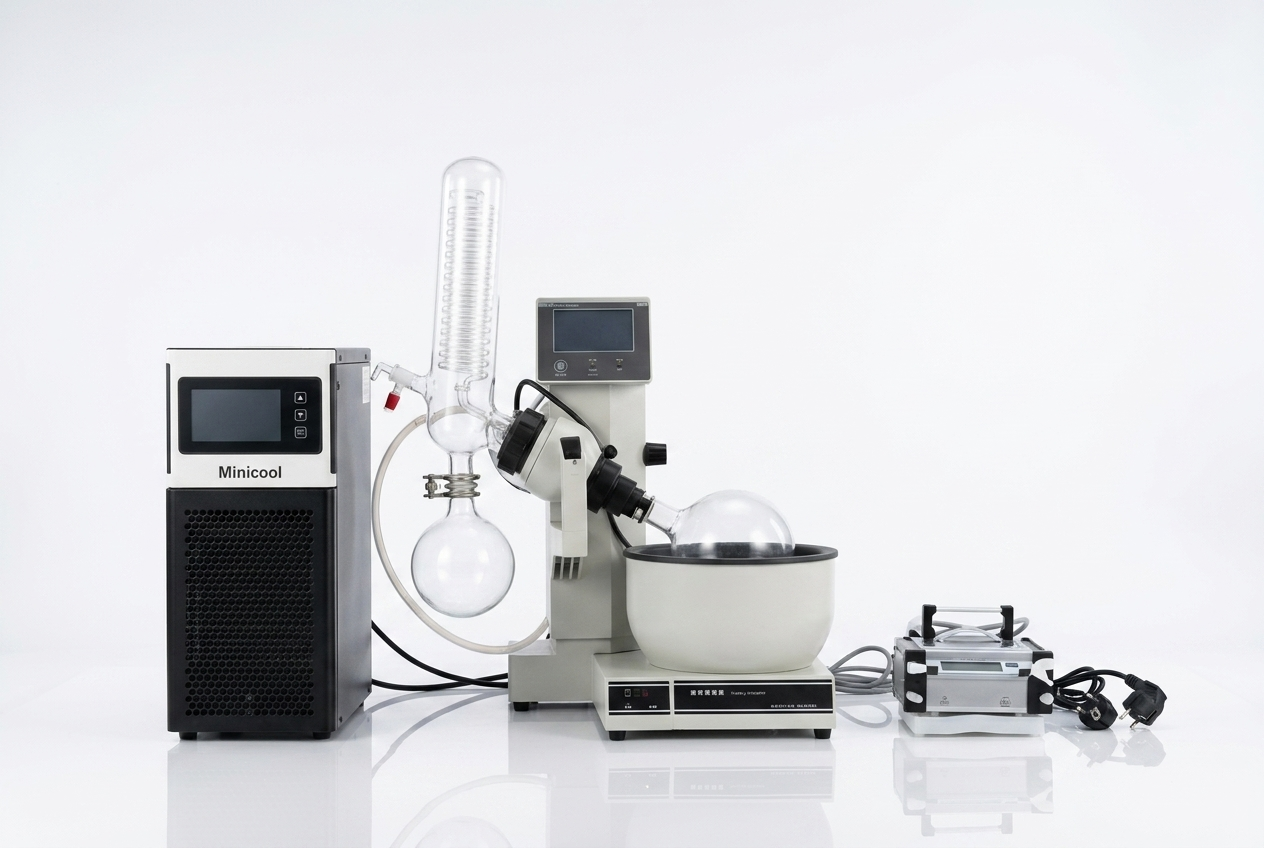
What Makes a Small Recirculating Chiller Different
The word “recirculating” is the key. Unlike once-through cooling — where tap water flows past a heat source and drains away — a recirculating chiller pumps the same fluid in a continuous closed loop. A built-in compressor and heat exchanger remove absorbed heat, and the coolant returns to your equipment at a precisely controlled temperature. The process repeats continuously without consuming fresh water or generating wastewater.
This architecture creates three immediate advantages over open or once-through systems:
Zero water waste. A once-through setup can consume hundreds of liters per day. A recirculating chiller reuses the same coolant volume indefinitely, cutting water costs and eliminating the need for a constant supply line. Over a year of daily operation, the savings are substantial — both in utility bills and in reduced demand on building water infrastructure.
Temperature precision. Tap-water temperature fluctuates with the seasons, the time of day, and municipal supply conditions. In many regions, inlet water can swing by 10 °C or more between winter and summer. A recirculating chiller holds a setpoint within ±0.1 °C regardless of ambient conditions, which is essential for spectroscopy, chromatography, and other techniques where even minor thermal drift compromises data quality.
Contamination control. In a sealed loop, the coolant never contacts the open atmosphere. There is no mineral buildup from hard water, no biological growth, and no particulate risk to sensitive flow paths. This keeps your equipment’s internal channels clean and reduces maintenance intervals significantly compared to open-water systems.
For any application where thermal stability, water conservation, or coolant purity matters, the recirculating design is not just convenient — it is technically superior to every alternative at this scale.
Recirculating vs. Once-Through vs. Open-Bath Cooling
Understanding the three common approaches to small-scale cooling helps clarify why recirculating systems dominate modern lab and industrial environments. Each method has a distinct operating principle, and the differences affect cost, precision, maintenance burden, and environmental compliance.
Once-through cooling, also called single-pass cooling, connects a tap-water line to your equipment. Water absorbs heat as it flows through the device and then exits to the drain. The approach is simple to set up — often requiring nothing more than a hose connection — but it is wasteful and imprecise. Temperature depends entirely on inlet water conditions, which change constantly and unpredictably. In many facilities, local regulations now restrict or discourage once-through cooling due to water-conservation mandates and wastewater-discharge limits. Labs that rely on municipal water for cooling often find themselves facing compliance pressure as environmental standards tighten.
Open-bath cooling places equipment in or above a temperature-controlled reservoir that is exposed to the room. While an open bath offers decent temperature control through a thermostat and heating or cooling element, the exposed surface loses coolant to evaporation, absorbs airborne contaminants, and requires frequent fluid top-ups. The reservoir also demands significant bench space, and the coolant must be monitored for bacterial or algal growth. For applications that require sub-ambient temperatures, the exposed surface can cause condensation problems in humid environments.
A small recirculating chiller combines the precision of an active refrigeration system with the efficiency of a closed loop. Because the coolant path is sealed, you avoid both the waste of once-through systems and the maintenance headaches of open baths. The coolant stays clean, the temperature stays stable, and the water bill stays low. For most benchtop applications — laser diode cooling, rotary evaporator condensation, small reactor jacketing, and analytical instrument thermal management — a recirculating chiller is the cleanest, most practical choice available today.
Key Selection Criteria for a Compact Recirculating Chiller
Choosing the right unit means matching a few critical specifications to your application. Overlooking any one of these parameters can result in a chiller that underperforms, overheats, or simply does not fit your workspace. Here is what to evaluate before you purchase.
Cooling Capacity
Cooling capacity, measured in watts, must exceed the heat load your equipment generates. A laser diode module might dissipate 200 W, while a rotary evaporator condenser could demand 600 W or more. Always add a 20–30 percent margin above your calculated heat load to ensure the chiller maintains setpoint without running at full capacity continuously. Continuous full-load operation shortens compressor life and increases noise. Units in the 450 W to 1 kW range cover the vast majority of benchtop applications, from small analytical instruments to medium-power laser systems.
Temperature Range and Stability
Consider both the lowest temperature you need and the stability at that setpoint. Applications like PCR thermal cycling or chromatography column conditioning may require sub-zero temperatures. A chiller with a range from 0 °C down to −40 °C gives you broad flexibility across protocols and future applications you may not have planned for yet. Stability of ±0.1 °C ensures your results are repeatable from run to run and from day to day, which is critical for method validation and regulatory compliance in pharmaceutical and clinical labs.
Footprint and Mounting
Lab bench space is always at a premium. A countertop recirculating chiller that measures roughly the size of a desktop printer can sit beside your instrument, under a fume hood, or on a shelf without displacing other equipment. Look for a vertical, space-saving form factor that keeps hose runs short — short tubing means faster thermal response and less heat gain from the environment. Also verify that the chiller has adequate clearance for airflow around its condenser; restricted airflow reduces cooling efficiency and can trigger thermal shutdowns.
Flow Rate and Pressure
Your chiller’s pump must deliver enough flow and pressure to circulate coolant through your equipment’s internal channels without cavitation or starvation. Most small lab instruments require 2–5 L/min at moderate back-pressure. Verify that the chiller’s pump specification exceeds your equipment’s minimum flow requirement, especially if tubing runs are long, routed vertically, or include tight bends that add resistance to the circuit.
Noise Level
In shared laboratory spaces, acoustic output matters more than most buyers realize until the chiller is running beside them for hours. A well-engineered compact chiller uses variable-speed compressors and optimized fan designs to keep noise below conversational levels. If the unit sits on the bench next to you for an entire workday, every decibel counts — ask for actual dB ratings measured at one meter, not marketing claims.
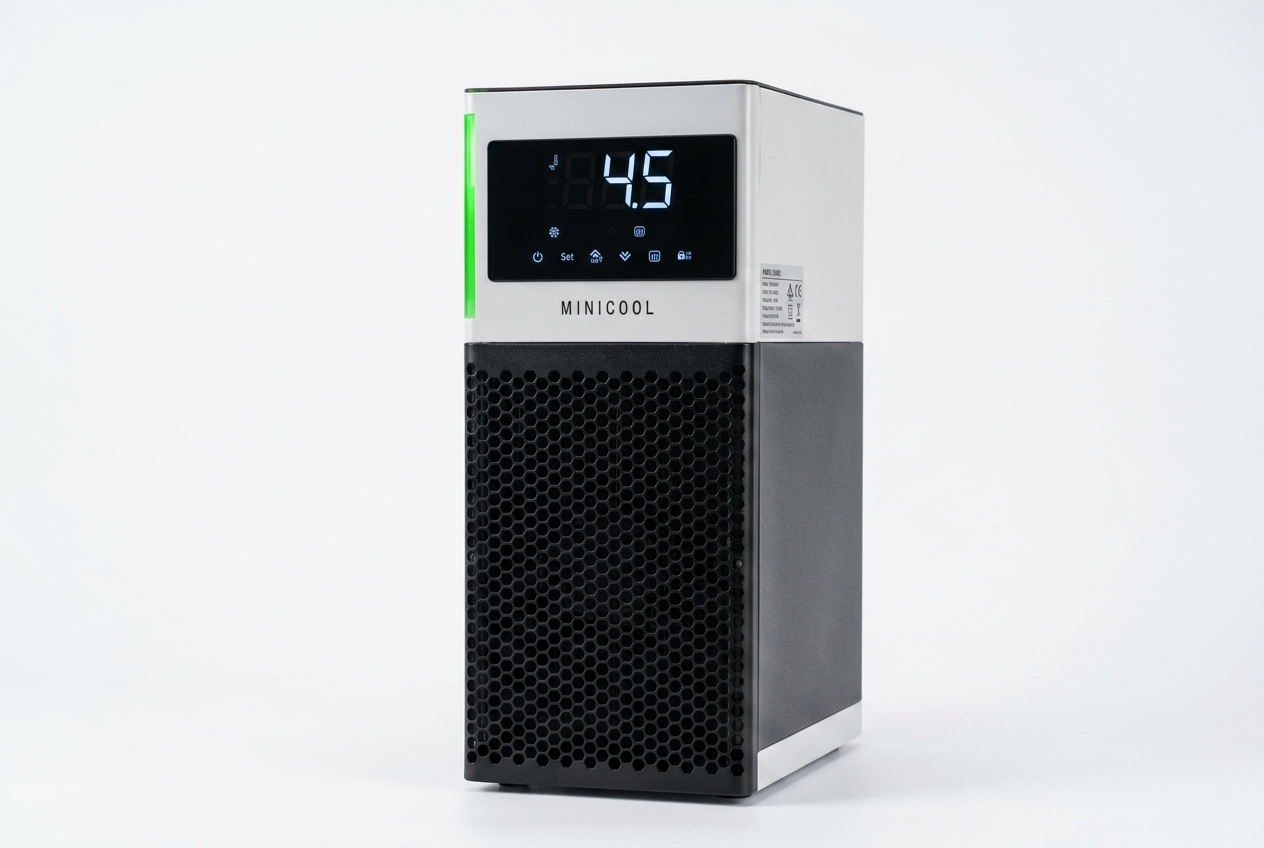
The Countertop Advantage: Plug-and-Play Simplicity
Traditional lab chillers often require plumbing connections, external water lines, floor space, and dedicated installation time. A countertop recirculating chiller eliminates all of that complexity. The entire refrigeration system — compressor, condenser, evaporator, pump, reservoir, and controller — lives inside a single enclosure that you place on any flat, stable surface.
Setup is genuinely simple: connect two hoses to your equipment, fill the reservoir with the recommended coolant, plug the power cord into a standard outlet, and set your target temperature. The chiller begins circulating cooled fluid within minutes. There is no plumber, no facilities request, and no downtime waiting for infrastructure modifications. A researcher can unbox the unit in the morning and have it running a temperature-controlled experiment by lunchtime.
This plug-and-play design also means the chiller is portable. Moving to a different bench, a different lab, or even a field location takes minutes, not days. For research groups that reconfigure setups frequently, share cooling resources across instruments, or need to transport equipment to off-site testing locations, portability is a major practical benefit that traditional floor-standing chillers simply cannot match.
Power flexibility further extends the countertop advantage. Units that accept both AC and DC input can operate from standard wall outlets in any country, from vehicle power systems in mobile laboratories, and from battery or solar setups in remote field stations. This versatility makes a single chiller useful across multiple deployment scenarios without any electrical modifications.
Where Small Recirculating Chillers Excel
The combination of closed-loop efficiency, benchtop form factor, and precise temperature control makes these chillers ideal for a wide range of applications that span research, manufacturing, and clinical environments.
Laser systems. Diode lasers and fiber lasers generate concentrated heat that degrades beam quality and shortens component life if not managed actively. A recirculating chiller holds the laser at its optimal operating temperature, stabilizing output power and wavelength consistency across extended run times. This is especially important for laser engraving, cutting, and scientific measurement applications where beam stability directly affects output quality.
Analytical instruments. ICP-OES torches, X-ray tube anodes, and mass spectrometer interfaces all require active cooling to operate within specification. A benchtop chiller delivers clean, temperature-stable coolant without monopolizing floor space or requiring a dedicated utility connection.
Medical and diagnostic devices. CT scanner components, blood analyzers, and imaging systems demand quiet, precise cooling that fits inside equipment enclosures or sits on a nearby shelf. The low noise profile of a well-designed recirculating chiller is particularly valuable in clinical environments where patient comfort matters.
Electronics and semiconductor testing. Burn-in ovens, thermal chambers, and device characterization stations use recirculating chillers to maintain exact junction temperatures during extended test cycles. Thermal stability at the ±0.1 °C level ensures that test results reflect genuine device performance rather than environmental variation.
Small-scale manufacturing. CNC spindle cooling, 3D-printer hotend management, and micro-injection mold temperature control all benefit from a compact, self-contained cooling loop that does not require facility-level plumbing or a dedicated equipment room.
Maintenance Tips for Long-Term Reliability
A recirculating chiller is inherently low-maintenance because the sealed loop minimizes contamination and fluid loss. Still, a few routine practices extend service life and maintain peak performance over years of continuous use.
Check coolant level monthly and top up as needed. Even sealed systems lose small amounts of fluid over time through microscopic permeation at fittings and evaporation during reservoir access for inspection or fluid changes.
Replace coolant every 6–12 months depending on usage intensity and the specific fluid chemistry. Fresh coolant maintains proper thermal conductivity and heat-transfer efficiency, and prevents biological growth that can clog narrow flow passages in your equipment.
Clean or replace the air-side filter on the condenser quarterly. Dust and lint buildup on condenser fins reduces heat rejection efficiency and forces the compressor to work harder, increasing energy consumption and shortening compressor life.
Inspect hose connections for leaks or kinks at every coolant change. A restricted or leaking hose raises system pressure, reduces flow to your equipment, and can cause the chiller to cycle erratically as it struggles to maintain setpoint.
These steps take only a few minutes each and prevent the kind of gradual, invisible performance degradation that eventually leads to unexpected downtime or, worse, compromised experimental results that you do not notice until after the data has been published.
RIGID MiniCool: A Purpose-Built Countertop Recirculating Chiller
The RIGID MiniCool series was designed from the ground up as a compact, closed-loop recirculating chiller for laboratory and precision-industrial use. It delivers 450 W to over 1 kW of cooling capacity in a countertop-friendly enclosure, with a temperature range spanning 0 °C to −40 °C and stability of ±0.1 °C.
MiniCool supports both AC and DC power inputs, which means it works in standard lab outlets, mobile platforms, and remote field installations alike. Its vertical, space-saving design fits on a bench, under a fume hood, or inside an equipment cabinet — wherever your workflow demands. The closed-loop system type means coolant stays clean and contained, with no waste and no external water supply required.
With closed-loop recirculating architecture, ultra-quiet operation for noise-sensitive environments, and a true plug-and-play setup process that requires no plumbing or electrical modifications, MiniCool represents exactly what a modern small recirculating chiller should be: powerful enough for demanding thermal loads, precise enough for sensitive instruments, and simple enough to deploy in minutes rather than days.
Choosing the Right Small Recirculating Chiller: A Quick Checklist
Before you finalize your purchase, run through these five essential checkpoints to confirm the chiller you are considering will perform reliably in your specific application:
- Heat load. Calculate your equipment’s thermal output in watts and select a chiller with at least 20 percent excess capacity to avoid continuous full-load operation.
- Temperature range. Ensure the chiller reaches the lowest setpoint your application requires, with adequate margin for elevated ambient conditions during summer months or in warm facilities.
- Footprint. Measure your available bench space and verify the chiller fits with proper clearance for airflow around the condenser and convenient access for hose routing and coolant filling.
- Coolant compatibility. Confirm the chiller works with the fluid your equipment specifies — whether that is distilled water, a water-glycol mixture for sub-zero operation, or a specialty dielectric coolant for electronics applications.
- Noise and vibration. If the chiller operates in a shared or noise-sensitive space, check the manufacturer’s acoustic specifications and verify they are measured under realistic operating conditions, not just at idle.
A small recirculating chiller is one of the most cost-effective upgrades a lab or production line can make. It saves water, protects sensitive equipment, delivers repeatable thermal performance, and takes up barely more space than a coffee maker. When you choose a countertop model with true closed-loop design, you get all of that with zero infrastructure changes — just plug in and start cooling.