
How Small Water Chillers Solve Equipment-Level Cooling Challenges
A small water chiller is a self-contained refrigeration unit that cools recirculating water or water-glycol mixtures for individual pieces of equipment, typically delivering 130W to 550W of cooling capacity in a footprint smaller than a shoebox. Unlike building-level chilled water systems that serve entire facilities, small water chillers provide dedicated thermal control for a single instrument or process—ensuring stable temperatures regardless of what other equipment shares the space.
The demand for equipment-level cooling continues to grow as instruments and processes become more thermally sensitive. A rotary evaporator needs coolant at precisely 15°C to maintain consistent solvent recovery. A fiber laser requires water temperature held within ±0.5°C to prevent wavelength drift. An analytical mass spectrometer generates 400-600W of waste heat that must be removed without introducing vibration. In each case, the cooling system must fit beside or beneath the equipment it serves, operate quietly enough for occupied spaces, and maintain tight temperature tolerances that facility-wide systems rarely achieve.
Small water chillers address these requirements through vapor compression refrigeration scaled down to equipment-appropriate sizes. The smallest units—built around DC compressors producing 130W cooling capacity—measure roughly the size of a paperback book. Mid-range models delivering 200-550W fit within a standard laboratory bench space, with the entire mini range staying compact enough to mount beside or beneath the instruments they serve. When heat loads exceed the mini range, higher-capacity liquid chiller platforms (850W and above) are available but occupy a different product tier and physical footprint.
Cooling Capacity and Model Selection
Selecting the right small water chiller requires matching cooling capacity to equipment heat load with an appropriate safety margin:
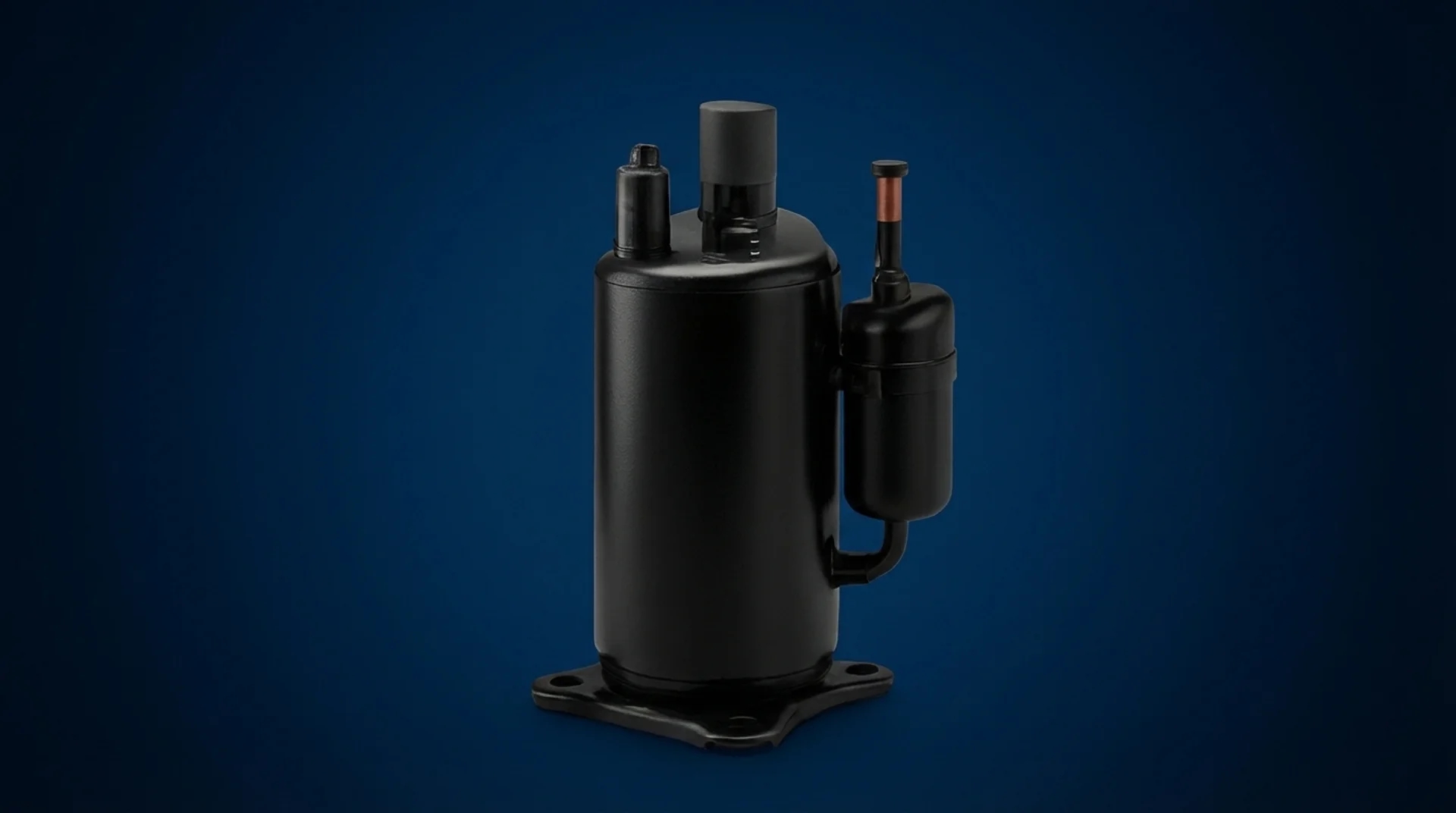
Ultra-Small Chillers (130W / 443 BTU): RIGID’s DV1910E-P (12V), DV1920E-P (24V), and DV1930E-P (48V) series deliver 130W cooling capacity in the most compact form factor available. These units suit applications generating less than 120W of waste heat—small analytical instruments, LED curing systems, thermoelectric device cooling, and benchtop reactor temperature control. At 12V DC operation, they integrate directly with battery systems or vehicle power without inverters. Price range: $460-$480.
Mid-Range Chillers (200-550W / 682-1,876 BTU): The DV3220E-P (24V, 200W) and DV2820E-P (24V, 230W) models handle moderate heat loads from rotary evaporators, small laser systems, medical diagnostic equipment, and 3D printer cooling. The DV2820E-P-T variant uses R290 refrigerant with 250W capacity for applications requiring lower global warming potential. These units balance cooling performance against size and power consumption. Price range: $530-$590.
Large Capacity Chillers (850-1,800W / 2,898-6,138 BTU): For higher heat loads, the XB075Z (12V/24V, 850W), KVB096Z (24V/48V, 1,200W), and KVB150Z (24V/48V, 1,800W) deliver substantial cooling in still-compact packages. These suit high-power laser systems, multi-zone cooling applications, server rack cooling, and industrial process equipment. Price range: $980-$1,080.
Heat Exchanger Types: Choosing the Right Configuration
Small water chillers use different heat exchanger designs, each suited to specific applications:
Plate Heat Exchangers (DV-P Series): Brazed plate designs offer high heat transfer efficiency in minimal volume. Stainless steel plates resist corrosion from treated water and mild glycol solutions. Plate chillers suit applications requiring high thermal efficiency and compact dimensions—laboratory instruments, medical devices, and electronics cooling. The thin plate stack enables rapid temperature response to changing heat loads.
Coaxial Heat Exchangers (DV-C Series): Tube-in-tube construction provides reliable performance with lower pressure drop than plate designs. Coaxial chillers tolerate particles in coolant better than plate types, making them suitable for open-loop systems or applications where water quality varies. The simple flow path resists fouling and simplifies cleaning. Slightly larger than equivalent plate models but more forgiving of operating conditions.
Stainless Steel Coil (DV-S Series): Immersion-style coil heat exchangers suit applications requiring the chiller to cool an existing reservoir or tank. The stainless steel construction resists corrosion from acidic or alkaline solutions, making these chillers appropriate for chemical processing, electroplating baths, and photographic processing. The coil design accommodates varying reservoir sizes and shapes.
Copper Coil (DV-E Series): Similar immersion design using copper coils for maximum heat transfer coefficient. Copper provides approximately 20% higher thermal conductivity than stainless steel, enabling faster cooling response. Best suited for clean water applications where copper compatibility is not a concern—aquarium cooling, hydronic heating, and general-purpose process cooling.
DC Power Advantage for Small Water Chillers
Unlike conventional AC-powered chillers, RIGID’s small water chillers operate natively on DC power—12V, 24V, or 48V depending on the model. This DC-native design provides several practical advantages:
Elimination of Conversion Losses: AC-powered chillers in DC environments (solar installations, battery systems, vehicles) require DC-to-AC inverters that waste 10-15% of input power as heat. DC-native chillers connect directly to DC power sources, converting all available power into cooling. For battery-powered applications, this efficiency difference translates directly into longer runtime between charges.
Variable Speed Operation: DC compressors adjust speed continuously based on cooling demand rather than cycling on and off. This modulation provides tighter temperature control (±0.5°C versus ±2-3°C for on-off cycling), reduces compressor wear from start-stop cycling, and lowers average power consumption during partial load operation. Equipment that generates variable heat loads benefits significantly from proportional cooling response.
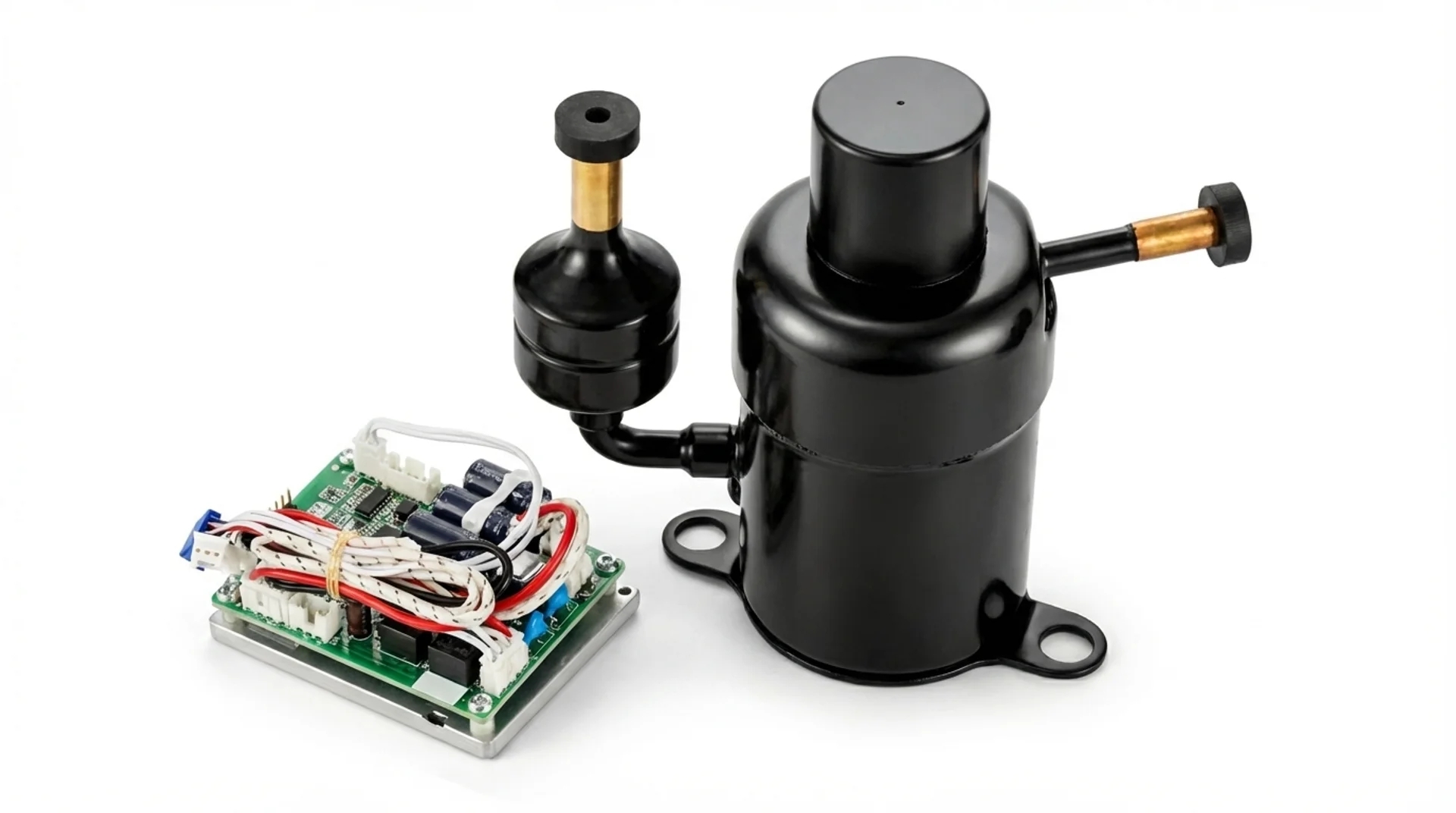
Simplified Integration: Equipment manufacturers embedding cooling into their products can power the chiller from the same DC bus that powers other electronics—eliminating separate AC power connections, reducing wire gauge requirements, and simplifying safety compliance. A 24V DC chiller integrates into 24V equipment without additional power conversion hardware.
Mobile and Off-Grid Capability: Battery-powered and solar-powered applications require DC-compatible components. Small DC chillers enable portable cooling for field analytical instruments, mobile medical equipment, remote environmental monitoring stations, and vehicle-mounted scientific instruments. No generator or AC power infrastructure needed.
Installation and Coolant Circuit Design
Proper installation maximizes cooling performance and system reliability:
Mounting Position: Install the chiller on a level surface with adequate ventilation clearance—300mm minimum on the condenser air discharge side. Ensure the mounting surface can support the chiller weight plus coolant volume. Vibration isolation pads prevent compressor vibration from transmitting to sensitive equipment. For benchtop installations, rubber feet or vibration-dampening mats provide sufficient isolation.
Coolant Selection: Pure distilled water provides maximum heat transfer efficiency for indoor applications above 5°C ambient. Add corrosion inhibitors when mixing metals exist in the cooling loop (copper chiller with aluminum heat sinks, for example). For sub-ambient or outdoor applications, use 30-50% propylene glycol mixture for freeze protection—note that glycol reduces heat transfer capacity by 10-20% compared to pure water.
Flow Rate Requirements: Match the circulation pump to your system’s flow and pressure requirements. RIGID’s optional P-67D pump-reservoir combinations provide 7.5 L/min maximum flow at up to 11 meters of head pressure—sufficient for most small water chiller applications. Available in 65mm, 130mm, and 190mm reservoir heights ($85-$105) to match system coolant volume requirements.
Piping Best Practices: Use flexible tubing for vibration isolation. Insulate all piping operating below ambient temperature to prevent condensation. Slope piping upward toward the reservoir to enable air purging. Minimize total piping length to reduce pressure drop and ambient heat gain. Quick-disconnect fittings simplify maintenance but add pressure drop—use only where regular disconnection is required.
Sizing Calculations: Getting the Right Capacity
Oversizing wastes energy and causes temperature instability from short-cycling. Undersizing fails to maintain setpoint during peak loads. Proper sizing balances these concerns:
Step 1 — Equipment Heat Load: Identify waste heat from equipment manufacturer specifications. When specifications are unavailable, measure coolant inlet and outlet temperatures at known flow rate: Q = Flow (L/min) × 69.7 × ΔT (°C) gives heat load in watts for water coolant.
Step 2 — Ambient Heat Gain: Piping and reservoir absorb heat from surroundings. Insulated piping gains approximately 10-20W per meter in 25°C ambient. Uninsulated piping gains 50-100W/m. Add reservoir heat gain based on surface area and insulation quality. For well-insulated systems in controlled environments, ambient gain typically represents 5-10% of equipment heat load.
Step 3 — Safety Factor: Apply 1.15× for well-characterized loads in controlled environments. Apply 1.25× for variable loads, high-ambient conditions, or uncertain heat generation. Avoid exceeding 1.3× safety factor—excessive oversizing causes compressor short-cycling and temperature instability.
Example: A fiber laser generates 300W of waste heat. Insulated piping (2m) adds 30W, and reservoir gain adds 15W, for a total of 345W. Applying a 1.15 safety factor gives 397W required capacity. In this case, 130W–250W mini chiller modules would be undersized. The application sits above the practical mini range and should move to a higher-capacity liquid chiller platform, especially if ambient temperature is elevated or tight temperature stability is required.
Maintenance and Troubleshooting
Regular maintenance prevents performance degradation and extends equipment life:
Monthly: Check coolant level and top off as needed. Inspect for leaks at fittings and connections. Clean condenser air intake if operating in dusty environments. Verify temperature display matches an independent reference thermometer.
Quarterly: Replace or clean inline coolant filter. Check coolant clarity—cloudiness or discoloration indicates contamination or biological growth requiring coolant replacement. Inspect flexible tubing for cracking or hardening. Verify pump flow rate has not decreased (indicating wear or partial blockage).
Annually: Replace coolant with fresh mixture. Clean condenser coils thoroughly. Verify all electrical connections remain tight. Test alarm functions if equipped. Review operating log for trends indicating developing issues.
Common Issues: Gradually increasing coolant temperature usually indicates condenser fouling (clean coils) or low refrigerant (requires service). Sudden temperature rise suggests pump failure or coolant leak. Temperature oscillation around setpoint may indicate PID tuning issues or excessive system volume relative to chiller capacity. Unusual noise from the compressor warrants immediate investigation to prevent catastrophic failure.
For detailed specifications and application engineering support on small water chiller solutions, explore RIGID’s compact liquid chiller product line offering plate, coaxial, stainless steel, and copper coil configurations from 130W to 1,800W cooling capacity.