
为什么大多数“便携式空调”在40°C时会失效
搜索最小的便携式空调,你会发现几十种小巧的设备都号称能随时随地提供凉爽空气。它们大多采用两种技术之一:热电(珀尔帖)模块或蒸发冷却。这两种技术都存在一个物理缺陷,一旦环境温度超过35°C,这个缺陷就会变得显而易见。
基于珀尔帖效应的冷却器利用热电效应散热。其冷却能力会随着冷热端温差的增大而下降。在40°C的环境温度下,热端散热能力有限,而冷端温度几乎不会低于环境温度。因此,这种设备耗电量巨大,但几乎没有明显的冷却效果。
蒸发式冷却器依靠水的蒸发来吸收空气中的热量。在干燥气候和适中温度下,它们的效果相当不错,但其输出量与湿球温度差(干球温度和湿球温度之差)密切相关。在湿度高于 35°C 的环境下,这个差值会缩小,冷却器实际上就变成了一台吹送潮湿空气的风扇。
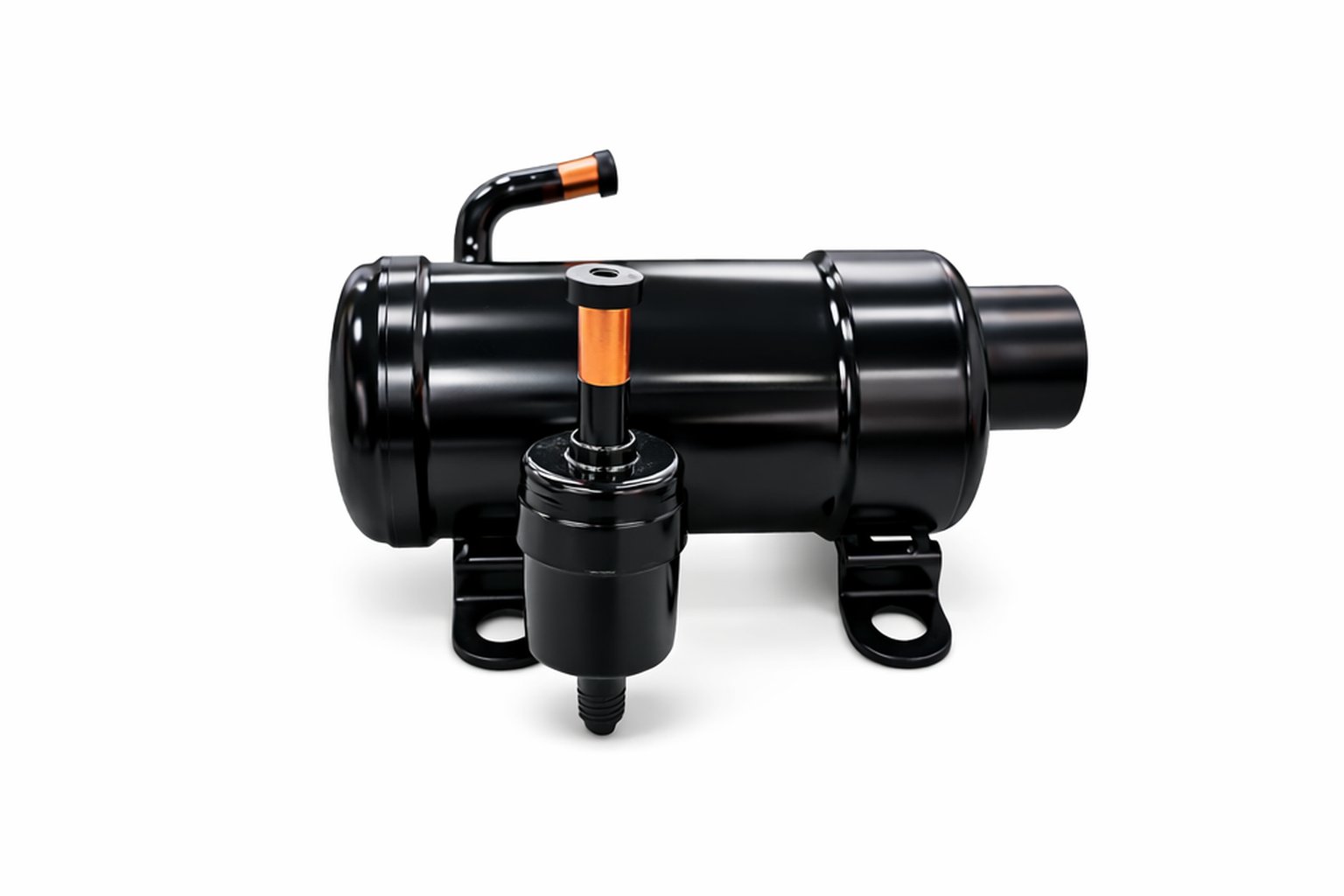
A true vapor-compression system — the same thermodynamic cycle used in household refrigerators and building HVAC — operates differently. It uses a compressor to pressurize refrigerant, forcing a phase change that moves heat against the temperature gradient. This is why vapor compression can still produce meaningfully cold air even when the outside temperature is extreme. The question is whether this technology can be packaged small enough and light enough to qualify as genuinely portable.
What Makes a Compressor-Based Unit “True” Portable
The word “portable” gets stretched thin in product marketing. A 30 kg split unit on wheels is technically movable, but it is not something you carry to a job site or strap onto a vehicle roof. For a smallest portable air conditioner to earn that label in a field context, it needs to meet several practical thresholds:
- Weight under 6 kg — one person can carry it with one hand
- Dimensions that fit inside a standard equipment case or mount in a confined space
- DC voltage input (12V, 24V, or 48V) compatible with vehicle batteries, solar systems, or portable power stations
- No requirement for an external inverter or AC mains connection
- Self-contained refrigerant circuit — no field charging or line sets
The RIGID Micro DC Aircon series meets these criteria. The cooling-only models weigh approximately 5 kg (11 lbs), measure 350×260×180 mm, and run on 12V, 24V, or 48V DC. They use R134a or R290 refrigerant in a sealed circuit with a BLDC variable-speed compressor. Cooling capacity across the range spans 450W to 900W (roughly 1,535 to 3,069 BTU/h). The variable-speed drive board adjusts compressor speed between approximately 2,000 and 6,500 rpm, allowing the unit to modulate output rather than cycling on and off.
This matters for field use because modulation means steadier temperatures and lower peak current draw — both important when running from a battery bank with limited capacity.
Field Test Framework: Evaluating Performance at 40°C Ambient
Testing a smallest portable air conditioner in controlled lab conditions at 25°C tells you very little about how it will behave on a construction site in summer or inside a parked vehicle in direct sun. A meaningful field evaluation requires a structured approach that accounts for the variables real users face.
Test Methodology Overview
The framework we use for evaluating micro DC aircon units in high-temperature environments follows these principles:
- Defined enclosure volume — testing is conducted in a sealed or semi-sealed space of known volume (typically 1–4 cubic meters), representing a vehicle cab, equipment enclosure, or small tent
- Ambient temperature recorded at the condenser inlet, not in shade 10 meters away
- Temperature sensors placed at multiple points inside the cooled space: air outlet, center of space, and furthest point from the unit
- Humidity logged alongside temperature, since latent heat load affects perceived cooling
- Power consumption measured at the DC input terminals, capturing real draw including the drive board and fans
- Run time documented from startup through steady-state, with at least 60 minutes of continuous operation
This approach avoids the common pitfall of quoting a single “outlet temperature” number without context. A unit blowing 15°C air means nothing if the space never drops below 38°C because the enclosure is poorly insulated or too large for the unit’s capacity.
Scenario 1: Enclosed Vehicle Cab — 40°C Ambient, Direct Sun
A parked truck cab or van in direct sunlight can reach internal temperatures well above 50°C before any cooling is applied. The test scenario begins with the vehicle soaked in sun for at least two hours, then activates the micro DC aircon unit running from the vehicle’s battery system.
Expected behavior pattern with a vapor-compression unit: the compressor ramps to high speed initially, pulling maximum current to overcome the large temperature differential. As the cabin air temperature drops, the variable-speed controller reduces compressor speed, lowering power draw. In a well-sealed cab of approximately 2–3 cubic meters, a unit in the 450W–550W cooling capacity range can be expected to bring the space to a noticeably more comfortable level, though reaching a 20°C setpoint from a 50°C soak temperature would require sustained operation and good insulation.
The key observation: vapor compression continues to function and move heat even when the condenser side faces 40°C+ air. The compressor works harder and efficiency decreases compared to milder conditions, but the system does not hit a thermodynamic wall the way Peltier devices do.
Scenario 2: Equipment Enclosure — Telecom Cabinet or Instrument Housing
Outdoor telecom cabinets and instrument enclosures present a different challenge: the space is small (often under 1 cubic meter), the heat load is continuous from electronics inside, and the unit must run unattended for hours or days.
In this scenario, the micro DC aircon’s variable-speed operation becomes a significant advantage. Once the enclosure reaches setpoint, the compressor slows to a maintenance speed, drawing minimal current while keeping the internal temperature stable. The sealed refrigerant circuit requires no maintenance, and the DC input means the unit can run directly from a solar-battery system without an inverter adding conversion losses and another failure point.
Scenario 3: Open-Sided Tent or Canopy — Spot Cooling
This is where honest communication about application boundaries matters. An open-sided canopy at a construction site or outdoor event is not an enclosed space. A micro DC aircon unit cannot condition the ambient air in an open environment — no portable unit of any technology can.
在这种情况下,蒸汽压缩式空调机组可以提供定向局部降温:将冷风出口对准特定的工作站或休息区。距离出口1-2米范围内的人会明显感觉到凉爽。这并非全空间空调,也不应以此作为卖点。但对于需要缓解热应激的工人来说,真正的压缩机系统吹出的定向冷风比风扇或蒸发式冷却器吹出的暖雾要有效得多。
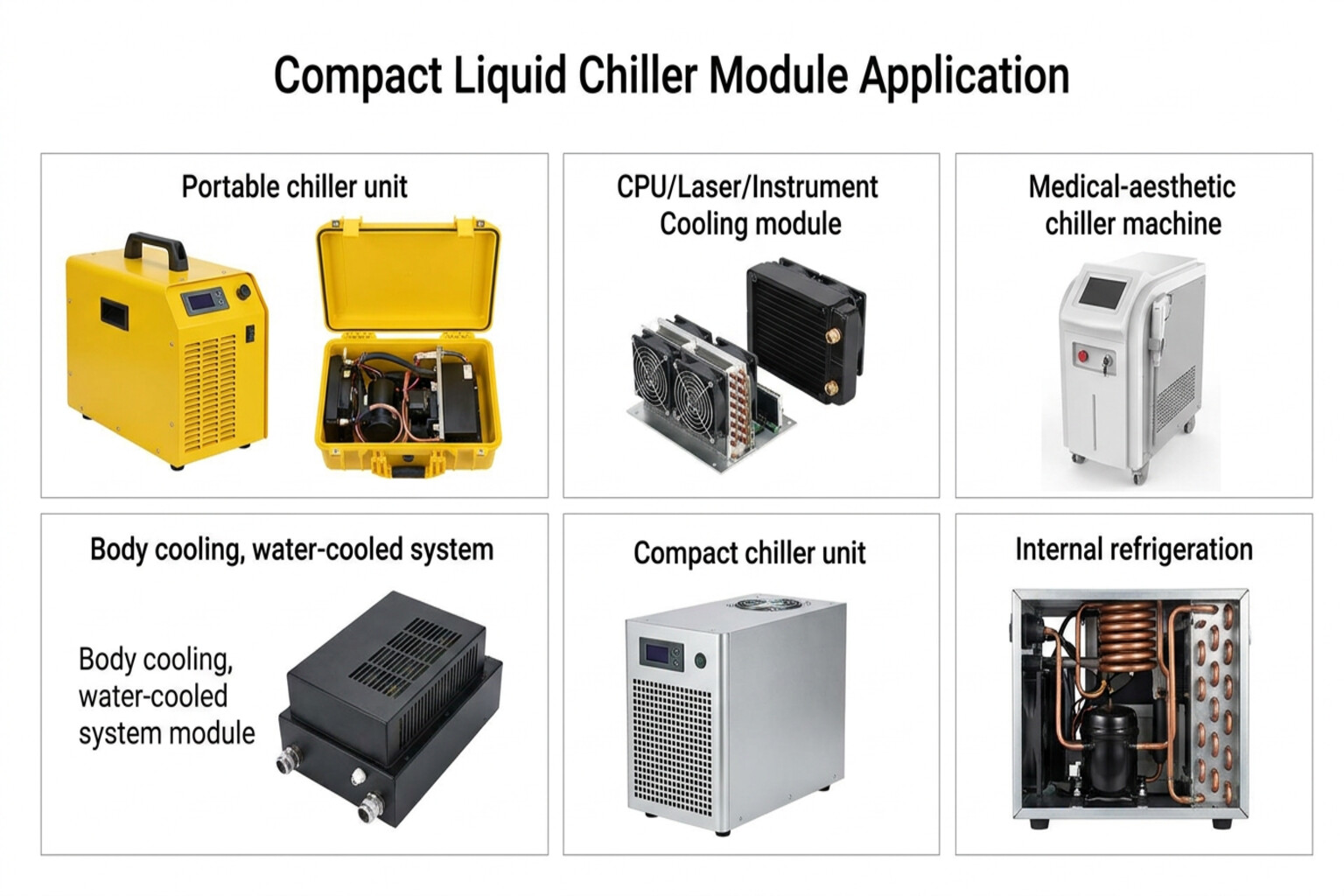
蒸汽压缩技术与其他替代技术:物理学比较
要了解为什么压缩机装置在 40°C 时仍能保持性能,而其他装置却难以做到,比较其基本热力学原理会有所帮助。
热电(珀尔帖)器件
珀尔帖模块利用流经半导体结的电流来传递热量。在空载条件下,其最大温差 (ΔT) 通常为 40–70°C,但在实际制冷负载下会急剧下降。在 40°C 的环境温度下,即使冷端仅需降低 15°C,也需要热端有效地散热——而随着环境温度的升高,散热变得越来越困难。此外,珀尔帖模块的功耗相对于制冷量而言较高,且无法有效地调节制冷量。
蒸发式冷却器
蒸发冷却的效果受湿度限制。在温度40℃、相对湿度15%的沙漠环境中,理论上蒸发式冷却器可以使气温降低15-18℃。但在温度40℃、相对湿度70%的亚热带湿润环境中,实际降温幅度可能只有3-5℃。由于许多需要便携式冷却设备的炎热环境——例如沿海地区、热带工地和夏季潮湿地区——也往往湿度较高,因此蒸发式冷却器的实际效果常常低于预期。
蒸汽压缩式(压缩机式)
蒸汽压缩循环不受环境湿度限制,可在各种条件下产生制冷输出。压缩机在较高环境温度下工作负荷更大,40°C 时的制冷量会低于 25°C 时——这是热力学规律,而非设计缺陷。但该系统仍能持续产生远低于环境温度的冷空气,这是有效制冷的基本要求。
RIGID 微型直流空调采用无刷直流变频压缩机,可根据负载自动调节转速。这意味着在温和条件下,系统可以降低制冷量以节省电能;而在极端高温环境下,系统则会提升制冷量。R134a 和 R290 两种制冷剂均具有适用于便携式制冷应用温度范围的优异热力学性能,其中 R290 的能效略胜一筹。
高温部署的实际考虑因素
在 40°C 的环境下部署最小的便携式空调,除了空调机本身之外,还需要注意几个其他因素:
冷凝器气流
冷凝器(热端)必须保持畅通无阻的空气流通。在极端高温下,冷凝器空气流通受阻会导致冷凝器头部压力升高,降低制冷能力,并可能触发高压保护装置。安装设备时,应确保冷凝器侧朝向开阔的空气,而不是墙壁或其他热源。
电源容量
在 40°C 的环境温度下,压缩机将比在 25°C 时以更高的转速运行更长时间。电池容量规划应考虑这种更高的占空比。12V/24V/48V 直流输入选项可与现有电力基础设施相匹配——相同功率下,48V 系统消耗的电流更低,从而减少电缆损耗并允许使用更细的电线。
外壳隔热
小型冷却装置能否维持舒适的温度,最关键的因素在于外壳的热阻。隔热良好的驾驶室或设备箱能让一台450瓦的冷却装置保持显著的温差。而同样的装置,如果放在阳光直射下未隔热的金属箱中,可能很难维持几度的温差。即使增加一些基本的隔热措施——例如反射屏障或泡沫板——也能显著改善冷却效果。
合理的期望
一台重5公斤的微型直流空调并不能替代3500瓦的房车顶空调。它的设计初衷是用于小空间和局部制冷应用,在这些应用中,尺寸、重量和直流电源兼容性是主要考虑因素。在这些限制条件下,它能提供真正的蒸汽压缩式制冷,这是热电式和蒸发式制冷方式在高温环境下无法比拟的。
谁最能从压缩机式便携式制冷设备中受益
真正采用压缩机的最小便携式空调的最大受益者,是那些在其他制冷技术已经失效的环境中工作的人:
- 长途卡车司机在休息期间使用电池电源,而不让发动机怠速运转
- 现场技术人员维护暴露在外的室外机柜中的电信或太阳能设备
- 需要使用 12V 或 24V 电池系统进行制冷的离网露营者和越野旅行者
- 在炎热气候下操作精密设备的移动医疗或兽医团队
- 无人机停靠站操作员需确保电子设备处于工作温度范围内
- 建筑工地主管需要在户外工作站进行局部降温
这些用户有一个共同的需求:他们需要的是真正的制冷效果,而不仅仅是空气流动,他们需要的是一款体积小巧、直流供电、无需外接电源的设备。蒸汽压缩循环是唯一能够在40°C环境温度下可靠实现这一目标的便携式制冷技术。
现场验证:需要测量什么以及预期结果如何
如果您正在评估一款适用于您特定应用的微型直流空调机组,以下是一份实用的现场验证清单:
- 测量您的围护结构容积并估算热负荷(太阳辐射热量、设备发热、居住人数)。
- 记录冷凝器所在位置的环境温度,不要在阴凉处测量。
- 在至少 60 分钟的连续运行时间内,记录多个点的内部温度。
- 测量电池端子处的直流功耗,以获取实际功耗数据。
- 请在预计遇到的最高环境温度下进行测试——25°C 下的性能并不能预测 40°C 下的性能。
- 记录空间是否达到舒适的使用温度,而不仅仅是记录出风口的空气是否冷。
这种方法可以提供针对您特定应用的数据,而不是依赖于在理想条件下测试的规格表数据。有关微型直流空调制冷系列产品的详细规格,包括可用的电压和制冷剂配置,请访问微型直流空调产品页面。
结论:体积小巧,真压缩机,性能可靠
人们往往为了寻找最小巧的便携式空调,而选择那些外观小巧、价格实惠的产品,但这些产品所依赖的制冷技术在高温环境下却无法有效工作。在40摄氏度的环境温度下——这恰恰是人们最需要制冷的时候——热电式和蒸发式制冷设备都会达到其物理极限。
像RIGID微型直流空调系列这样的蒸汽压缩式微型直流空调机组重量仅约5公斤,采用直流电池供电,并使用与全球建筑和车辆制冷相同的制冷循环。它无法为仓库或露天场地提供空调。但在其设计的应用范围内——小型封闭空间、设备柜、车辆驾驶室和局部定向冷却——它能提供可衡量的降温效果,并且在实际应用中也能保持稳定。
本文概述的现场测试框架提供了一种结构化的方法,用于验证该设备在您特定应用场景下的性能。因为在 40°C 的高温下,唯一重要的是设备是否真的能制冷——而即使在如此小的规模下,蒸汽压缩也能做到这一点。