
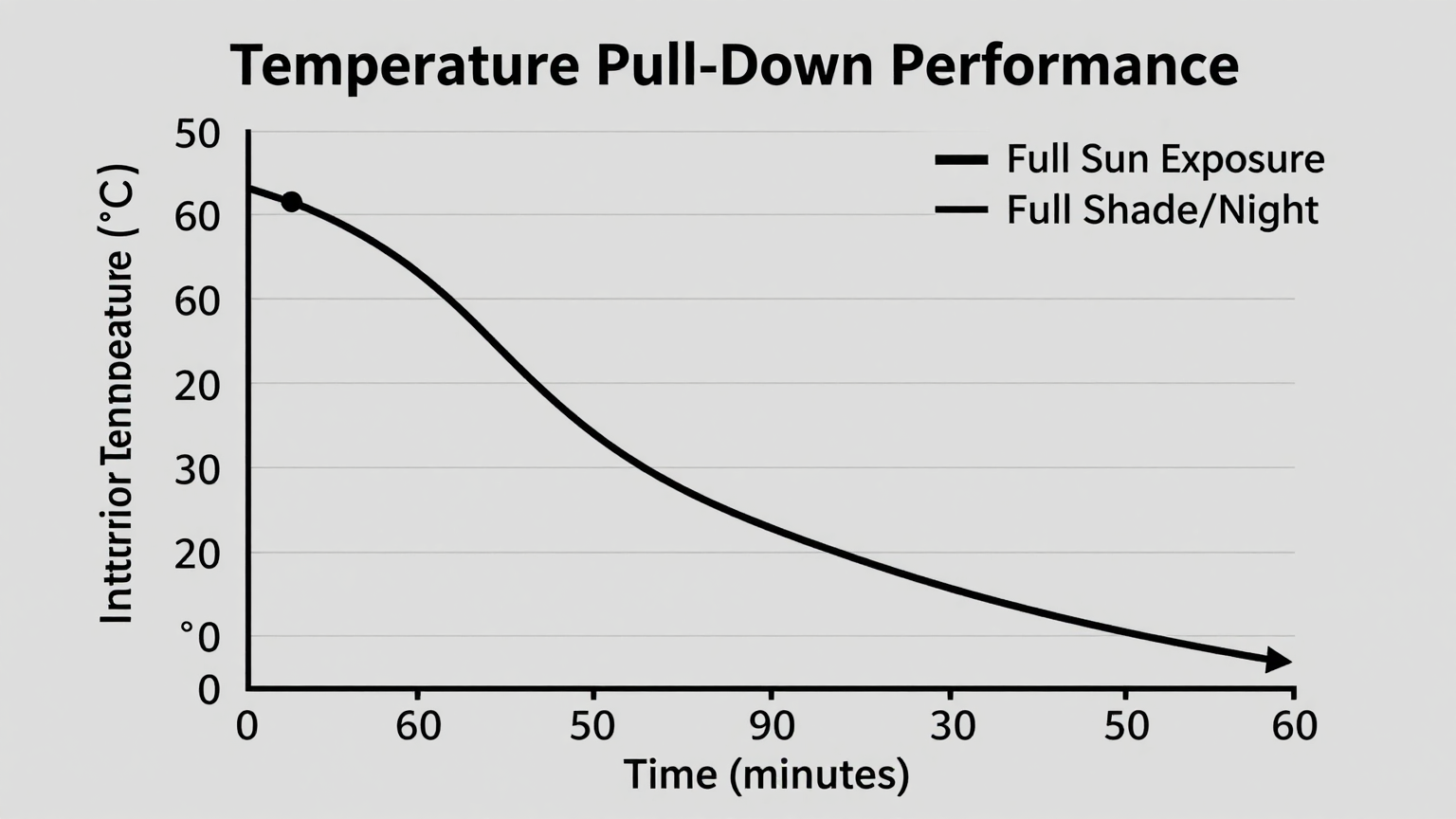
Field Snapshot: 14:00 hours. Ambient temperature 34°C (93°F). Vehicle status: Stationary, full sun exposure, engine off for 4 hours. Interior surface temperatures (dashboard, metal trim) reading >60°C. The operator activates the portable DC cooling unit. After 15 minutes, the cabin air temperature has only dropped by 2°C. The operator perceives a system failure or insufficient capacity. This is a classic “heat soak” scenario where the cooling system is fighting stored thermal energy, not just the air load.
Analyzing vanlife pull-down performance DC AC constraints
When evaluating vanlife pull-down performance DC AC systems, it is critical to distinguish between “temperature maintenance” and “temperature pull-down.” These are two distinct thermodynamic loads. Maintenance is the energy required to keep a cool space cool against heat ingress (insulation loss and solar gain). Pull-down is the energy required to remove heat that has already saturated the air, the furniture, the chassis, and the insulation itself.
In the scenario described above, the DC air conditioner is not merely cooling the air volume; it is attempting to cool the high-density materials inside the van that act as “thermal batteries.” Until these materials release their stored heat, the air temperature will remain stubbornly high, regardless of the compressor’s duty cycle. Understanding this lag is essential for managing expectations and optimizing system deployment in mobile environments.
The Physics of Heat Soak and Thermal Mass
The primary reason a powerful DC A/C might feel “weak” in the first 20 minutes of operation is the radiant heat transfer from the vehicle’s interior surfaces. A vehicle left in the sun acts as a greenhouse. Shortwave solar radiation passes through the glass, strikes the interior surfaces (dashboard, seats, floor), and is absorbed. These surfaces then re-radiate this energy as longwave infrared heat, which is trapped inside the glass.
By the time the operator enters the vehicle, the solid mass of the interior is significantly hotter than the air. When the A/C unit starts blowing cold air (typically 10°C to 15°C at the vent), that air circulates and immediately comes into contact with hot surfaces. The heat transfer is rapid: the air absorbs heat from the dashboard and walls, warming up almost instantly. The thermostat on the A/C unit might read the return air temperature, which stays high because the “cool” air is being reheated before it completes a cycle.
For technical buyers and upfitters, this means that “pull-down” is not a linear function of BTU rating. It is a function of the ratio between cooling capacity and the total thermal mass of the interior. In many deployments, the strategy must shift from “instant cooling” to “pre-cooling” or “thermal shielding” to reduce the initial load the DC system must overcome.
The Latent Heat Barrier: Humidity Removal
Another invisible factor affecting pull-down performance is humidity. If the vehicle has been sitting in a humid environment, the air inside is saturated with moisture. Before an air conditioner can effectively lower the sensible temperature (what you read on a thermometer), it must first remove the latent heat by condensing water vapor out of the air.
During the initial phase of operation, a significant portion of the compressor’s energy is consumed by the phase change of water vapor into liquid condensate on the evaporator coil. While the operator may not see the temperature drop rapidly on the display, the unit is working at maximum capacity. The “sticky” feeling disappears before the “hot” feeling does. If the user judges performance solely on the thermometer reading during this latent cooling phase, they will incorrectly diagnose the system as underpowered.
In high-humidity scenarios, we often advise operators to run the unit on high fan speed initially to maximize air turnover across the coil, acknowledging that the temperature drop will lag until the dew point is reached.
Airflow Short-Cycling and Sensor Placement
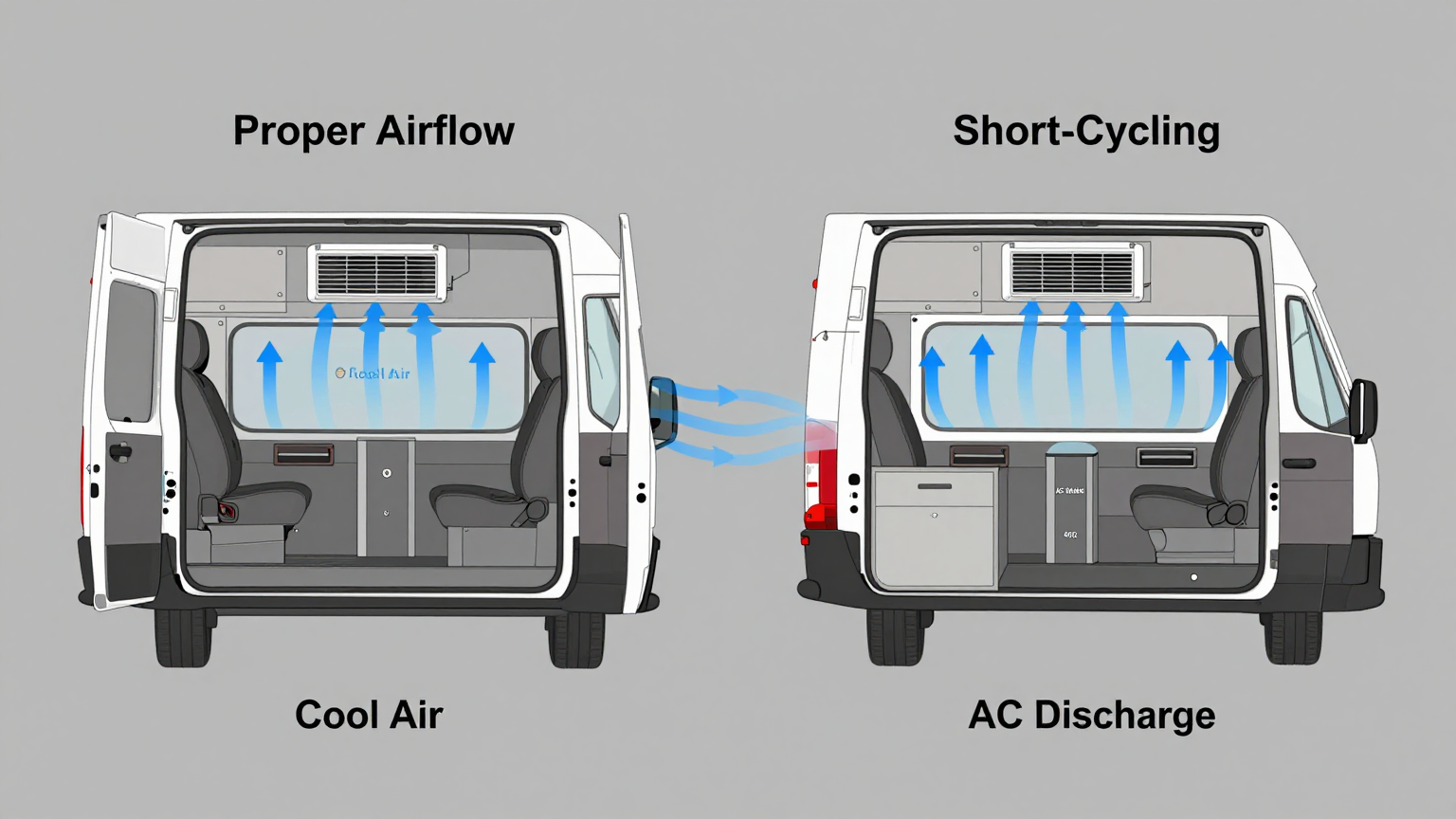
A common integration error that mimics poor performance is airflow short-cycling. Portable DC A/C units typically have an intake for cabin air and a discharge for cold air. If these two airstreams are obstructed or positioned too close to a reflective surface, the cold discharge air can bounce back into the intake.
When this happens, the unit’s internal thermostat detects the cold air and assumes the entire cabin has reached the set point. The compressor then cycles off or ramps down to a lower power state to save energy, even though the rest of the van is still sweltering. This is frequently observed in tight van builds where gear, bedding, or bulkheads block the natural circulation path.
Troubleshooting Checklist for Short-Cycling:
- Clearance: Ensure the cold air discharge has an unobstructed path to the main cabin volume.
- Direction: Aim vents away from the intake and away from immediate obstructions like walls or seat backs.
- Circulation: Use auxiliary 12V fans to mix the air in the cabin. This prevents stratification (cold air sinking, hot air trapped at the ceiling) and ensures the A/C unit samples the true average temperature of the room.
Voltage Drop and Compressor Throttling
DC air conditioners are sensitive to voltage stability. Unlike AC (grid-connected) units that have a limitless supply of consistent power, DC units rely on battery banks that sag under load. If the wiring between the battery and the A/C unit is undersized, or if there are loose connections, the voltage at the unit’s terminals will be lower than the voltage at the battery.
Many modern DC compressors feature intelligent under-voltage protection. If the voltage drops below a certain threshold (often due to resistance in long cable runs), the controller may reduce the compressor speed (RPM) to prevent a system shutdown. The unit continues to run, but at a reduced capacity. The user hears the fan running and assumes full cooling, but the compressor is actually in a “limp mode.”
To verify this, technicians should measure voltage at the unit’s input terminals while the compressor is attempting to ramp up. A significant delta between battery voltage and terminal voltage indicates a cabling issue, not a refrigeration issue.
Solar Gain vs. Insulation Quality
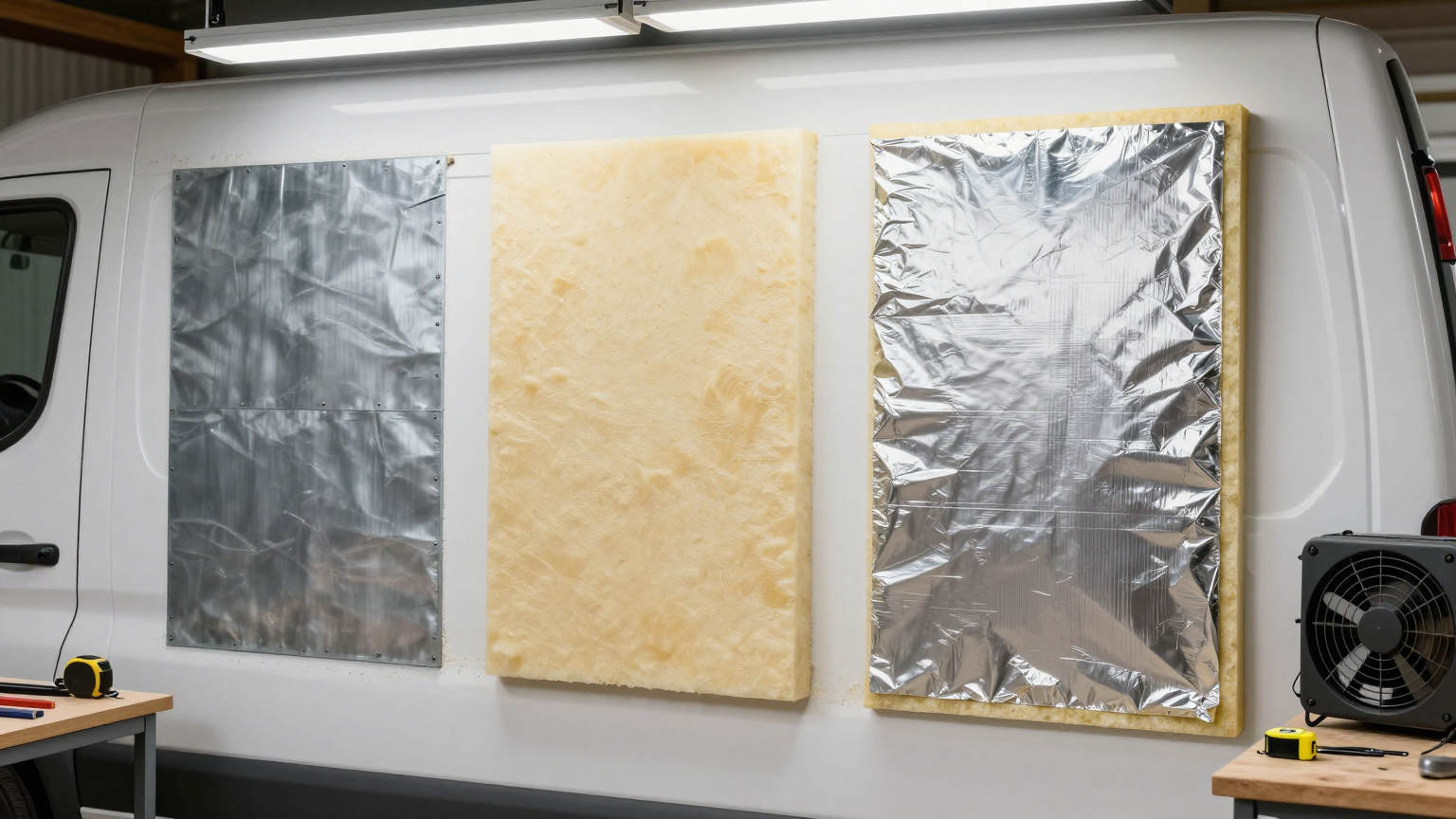
The battle for pull-down performance is often lost before the A/C is even turned on. The insulation quality of the vehicle determines the rate of heat ingress. In a van with bare metal walls or single-pane glass, the solar gain (heat entering) can nearly match the cooling capacity (heat removal) of a portable unit during peak sun.
If the heat ingress is 3000 BTUs/hr and the A/C is removing 3500 BTUs/hr, the net cooling effect is only 500 BTUs/hr. This results in an agonizingly slow temperature drop. Upfitters must prioritize window coverings (reflective shades) and insulation to reduce the solar load. Blocking the sun from the glass is far more energy-efficient than trying to cool the heat after it has entered the vehicle.
For fleet operators, we recommend establishing a “deployment protocol” that includes parking orientation (windshield away from sun), use of external window covers, and ventilation of the vehicle (opening doors to equalize with ambient) prior to activating the DC A/C.
Condenser Heat Rejection Management
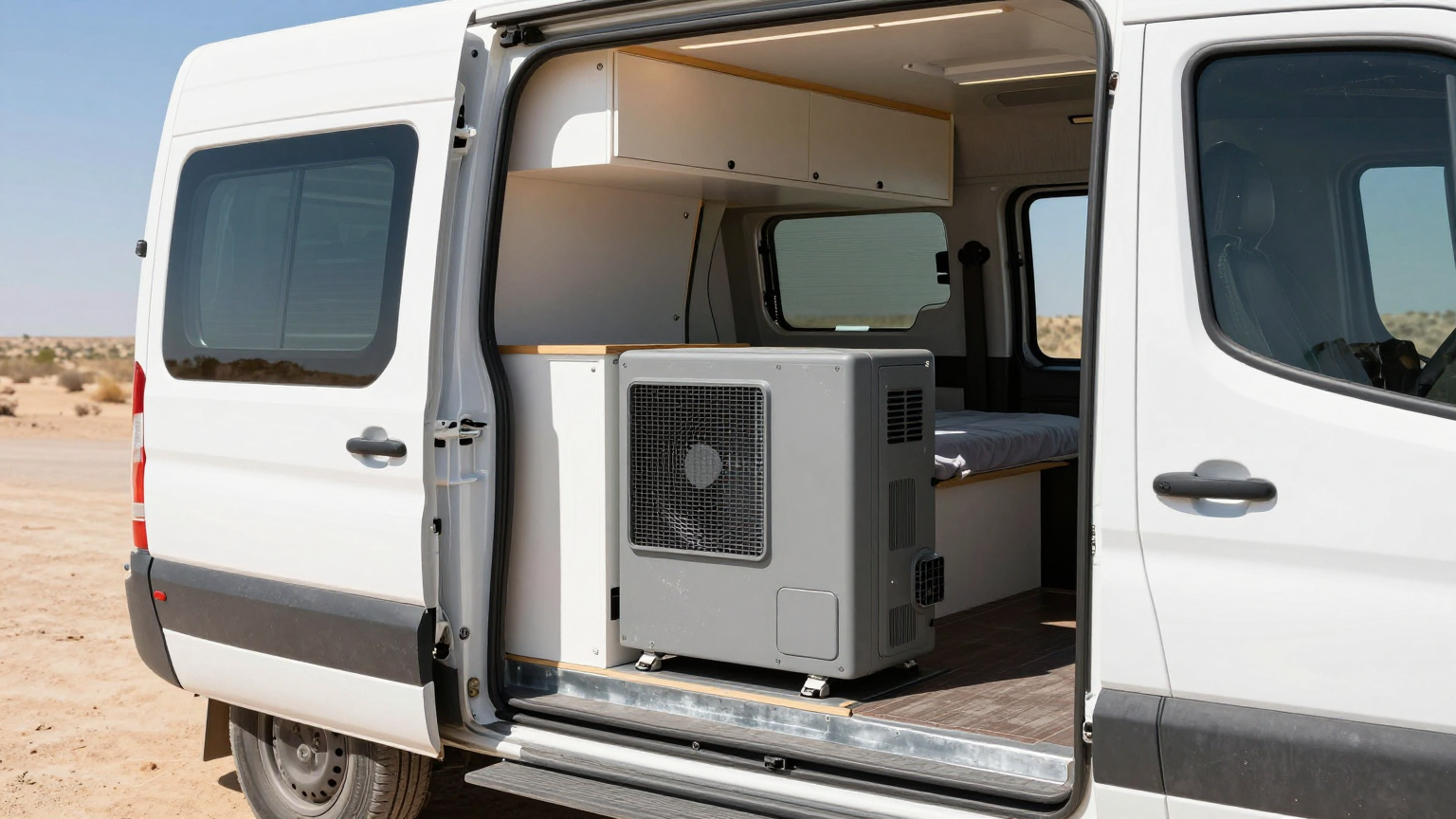
Portable DC A/C units operate by moving heat from one space (the cabin) to another (outside). This requires a discharge hose or a condenser unit that vents hot air. If this heat rejection loop is compromised, the system’s efficiency collapses.
A frequent issue in vanlife setups is a kinked, crushed, or overly long exhaust hose. If the unit cannot exhale the hot air efficiently, the backpressure rises, and the compressor current draw increases while cooling capacity decreases. Furthermore, if the hot exhaust air leaks back into the cabin (due to a poor seal at the window or vent), the unit is essentially fighting itself.
Inspection Points for Heat Rejection:
| Component | Potential Issue | Impact on Performance |
|---|---|---|
| Exhaust Hose | Kinks, sharp bends, or excessive length | High head pressure, reduced cooling, potential overheat shutdown. |
| Window Seal | Gaps or air leaks | Hot air recirculation, neutralizing cooling effort. |
| Exterior Vent | Blocked by external gear or debris | Inability to reject heat, system efficiency loss. |
Operational Expectations: The “Night vs. Day” Use Case
It is important to align user expectations with the physics of DC air conditioning. These units are often optimized for sleeping comfort—maintaining a cool environment at night or in shaded conditions—rather than rapid “blast cooling” of a heat-soaked vehicle at high noon. While they can provide relief during the day, the pull-down time will always be longer than an engine-driven dashboard A/C, which has a compressor driven by a multi-horsepower engine.
The most effective strategy for daytime use involves “maintaining” the cool. Instead of letting the vehicle heat up to 60°C and then trying to cool it, users should run the A/C earlier in the day or use passive ventilation to keep the baseline temperature lower before engaging the active cooling.
Integration Support
Achieving optimal cooling in mobile environments requires balancing power availability, insulation, and airflow. If your fleet or build requires a specific cooling profile or if you are encountering persistent pull-down challenges, we can review your installation parameters. We can assist in calculating the necessary battery reserves and airflow strategies to ensure your portable DC air conditioner performs reliably under load.