
Select the Water Cooled Resistor Chiller for the Actual Bench Duty
A water cooled resistor chiller should be selected from the dissipation produced by the complete test program and the cooling interface that receives that heat. Establish the actual electrical loading, simultaneous resistor channels, run duration, and required liquid conditions. A resistor’s rated power is a component limit under defined cooling conditions, not a statement that the bench always dissipates that power. The selected cold source must support the real duty at its own specified operating point.
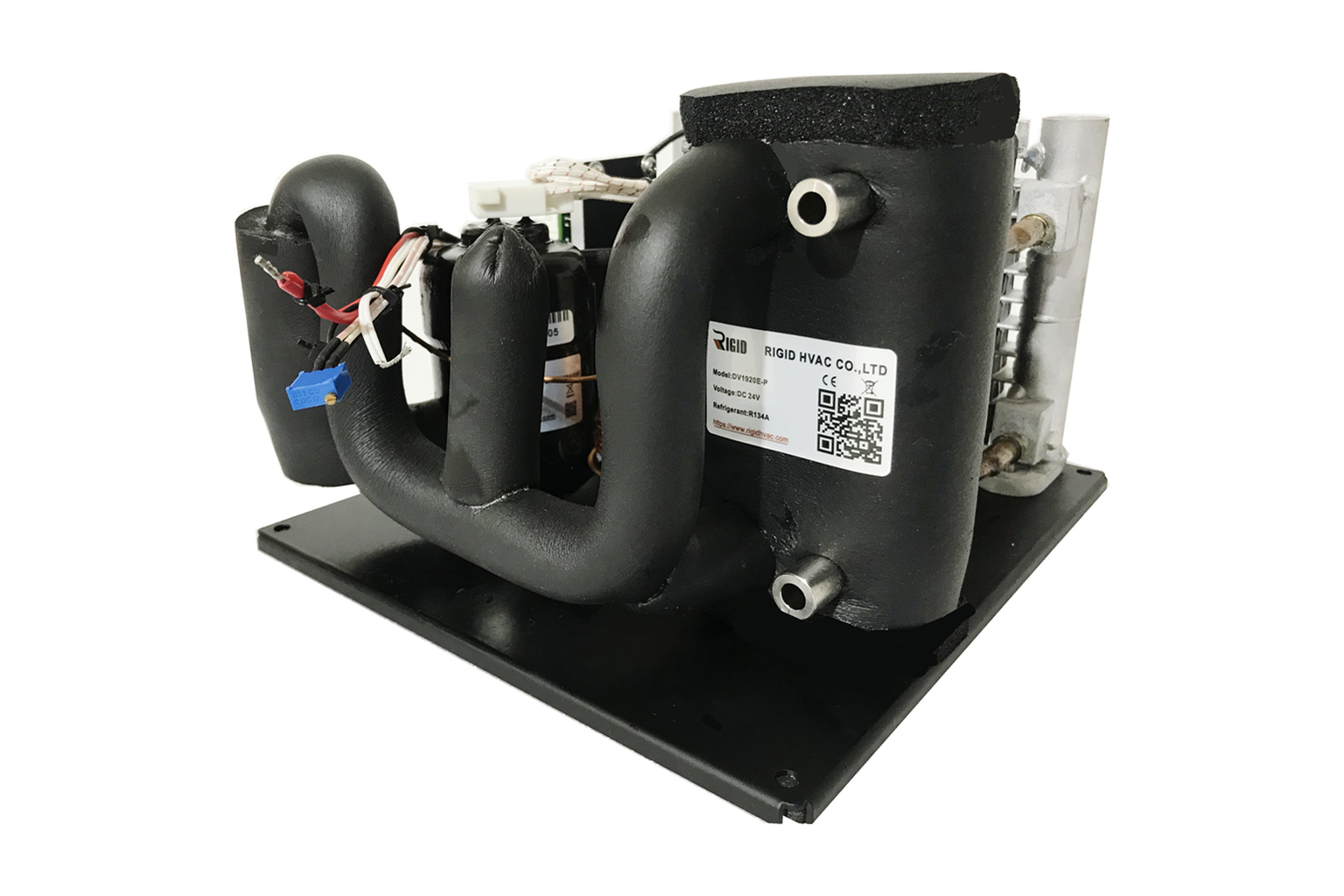
This guide concerns a laboratory or OEM resistor test fixture with an approved liquid-cooled thermal path. It does not select a utility-scale load bank or size a cooling source from resistor labels alone. Identify where the electrical energy becomes heat. Compact RIGID DV plate modules are candidates only for supported small duties with compatible temperature, fluid, circulation, and installation requirements.
Identify the Resistor and Its Approved Cooling Interface
Find the exact resistor construction and mounting instructions. Some components attach to a liquid-cooled plate, while others have a different cooling arrangement. A heat-sinkable package does not necessarily contain liquid passages, and a chiller hose should not be connected to an electrical component simply because its catalog category mentions water cooling. Describe the mechanical and liquid interfaces separately on the fixture drawing.
Ohmite’s TGHD information, for example, describes a resistor that requires a suitable heatsink or water-cooling arrangement for its specified performance. This supports the existence of a component-level thermal-interface task, without establishing a particular RIGID loop or direct liquid connection to that package. Retain the actual resistor and cold-plate identities with the fixture requirements, including the applicable temperature and electrical-isolation conditions.
Separate Electrical Dissipation From the Catalog Rating
For a resistive element, actual dissipated power can be determined from an appropriate electrical measurement or calculation with the operating values. Voltage times current describes power at a defined electrical boundary; I²R is applicable when the resistance and current used describe the actual resistive condition. State how the test team establishes the load instead of substituting the package’s maximum rating for the measured program.
Also distinguish power entering the complete test equipment from power dissipated in the resistor fixture. Drivers, wiring, control electronics, and other components can release heat elsewhere. A water cooled resistor chiller inquiry needs the thermal duty presented to its circuit. The bench’s total supply rating cannot resolve that division, and the test procedure should not increase electrical stress simply to make a cooling demonstration reach a catalog number.
Count the Channels That Operate Together
Prepare the permitted channel combinations, not only a list of installed resistors. If several devices dissipate power simultaneously, their effects on the shared plate and source must be assessed together. If the program alternates channels, record that sequence and whether earlier channels remain warm when the next one runs. An assumed one-at-a-time test can underestimate duty when the production procedure permits overlapping operation.
Include other real consumers on the same liquid circuit. A shared electronics fixture or another plate can occupy refrigeration capacity and change liquid distribution. Simultaneous operation belongs in the load definition. The source selection should retain the resistor branch’s limits even when it serves several consumers. Do not count installed nameplate capacity as continuous duty, but do not use an undocumented alternation assumption to remove a channel from the review.
Describe the Run Duration and Recovery Requirement
A brief electrical exposure and a long endurance run ask different questions of the resistor, plate, liquid inventory, and refrigeration source. The initial thermal mass can absorb energy temporarily while its temperature rises. That does not establish that the arrangement can maintain an acceptable temperature during sustained operation. Record the complete sequence, including repetitions and the required condition before the next test.
For water cooled resistor chiller selection, keep average heat rejection separate from component exposure limits. A low average duty can still exceed a resistor’s permitted pulse or flange condition. Use the component provider’s instructions for those limits. The cooling designer can then evaluate the liquid system’s response and recovery against an approved electrical program, instead of applying a universal duty-factor discount to an otherwise unsupported operating case.
Separate Resistor, Plate, and Liquid Temperatures
The resistive element, package flange, plate, and circulating liquid occupy different thermal locations. Heat crosses the interfaces between them, producing differences that depend on dissipation and the installed thermal path. A plate temperature reading therefore does not directly report element temperature, and a chiller’s reservoir reading does not automatically report the plate surface. Identify the required acceptance location with the resistor and fixture providers.
Do not convert a component’s flange-temperature rating into a supply-liquid setpoint by assuming zero thermal resistance. Obtain the thermal-interface information required for the actual construction and mounting. A temperature limit belongs to its stated location. This keeps a permissible electrical operating condition from becoming an unsupported claim that the chiller can maintain the component at that temperature under every load and mounting arrangement.
Preserve the Approved Mounting and Electrical Isolation
A resistor’s thermal path depends on its supplied mounting surface, attachment, and any approved interface material. Use the component and fixture providers’ requirements rather than borrowing torque or bond thickness from another package. Excessive force, an incorrect interface, or a changed plate flatness can alter both mechanical integrity and heat transfer. A suitable cooling supply does not eliminate the need to accept that interface.
Electrical insulation and liquid containment also need independent review. A thermal-contact arrangement is not proof of an accepted voltage boundary, while a liquid plate’s pressure rating is not a component insulation rating. This article gives no energized assembly or electrical withstand-test procedure. Qualified fixture designers should preserve the relevant component requirements and approve the complete test arrangement before cooling performance is treated as acceptance of the electrical bench.
Determine Flow at the Actual Plate Branch
Obtain the plate’s flow requirement, allowable pressure, pressure loss, and coolant restrictions. Add the installed hoses, couplings, valves, filters, and refrigeration exchanger to the hydraulic assessment. A pump’s quoted maximum flow is not its flow through that resistance. Use performance at the relevant liquid properties, rather than a water-only rating if the approved fixture will circulate another formulation.
The liquid-loop flow and pressure-drop guide provides the wider circuit context. Here the priority is flow through the resistor cooling interface. A bypass or parallel plate can leave a satisfactory total indication while changing the required branch flow. A water cooled resistor chiller proposal should identify the measurement point and branch configuration that will be used to confirm the agreed hydraulic conditions.
Select Fluid Across the Entire Fixture Circuit
The liquid must be acceptable to the plate, exchanger, pump, seals, hoses, and any measuring equipment in the path. Record the actual product and concentration where relevant. A plate described as water-cooled does not by itself approve every water source or antifreeze additive. Use the component providers’ instructions for fluid quality, corrosion control, and maintenance rather than substituting a formulation solely because it reaches a preferred setpoint.
Keep the electrical design’s fluid assumptions explicit as well. Requirements concerning isolation or leakage consequences need the responsible fixture designer’s review; a coolant conductivity claim is not a complete electrical safety argument. Fluid approval is a system interface decision. When a formulation changes, reassess the affected materials and hydraulic evidence, instead of carrying an earlier circulation result into a different liquid without checking its relevance.
Select the DV Plate Configuration by Actual Duty
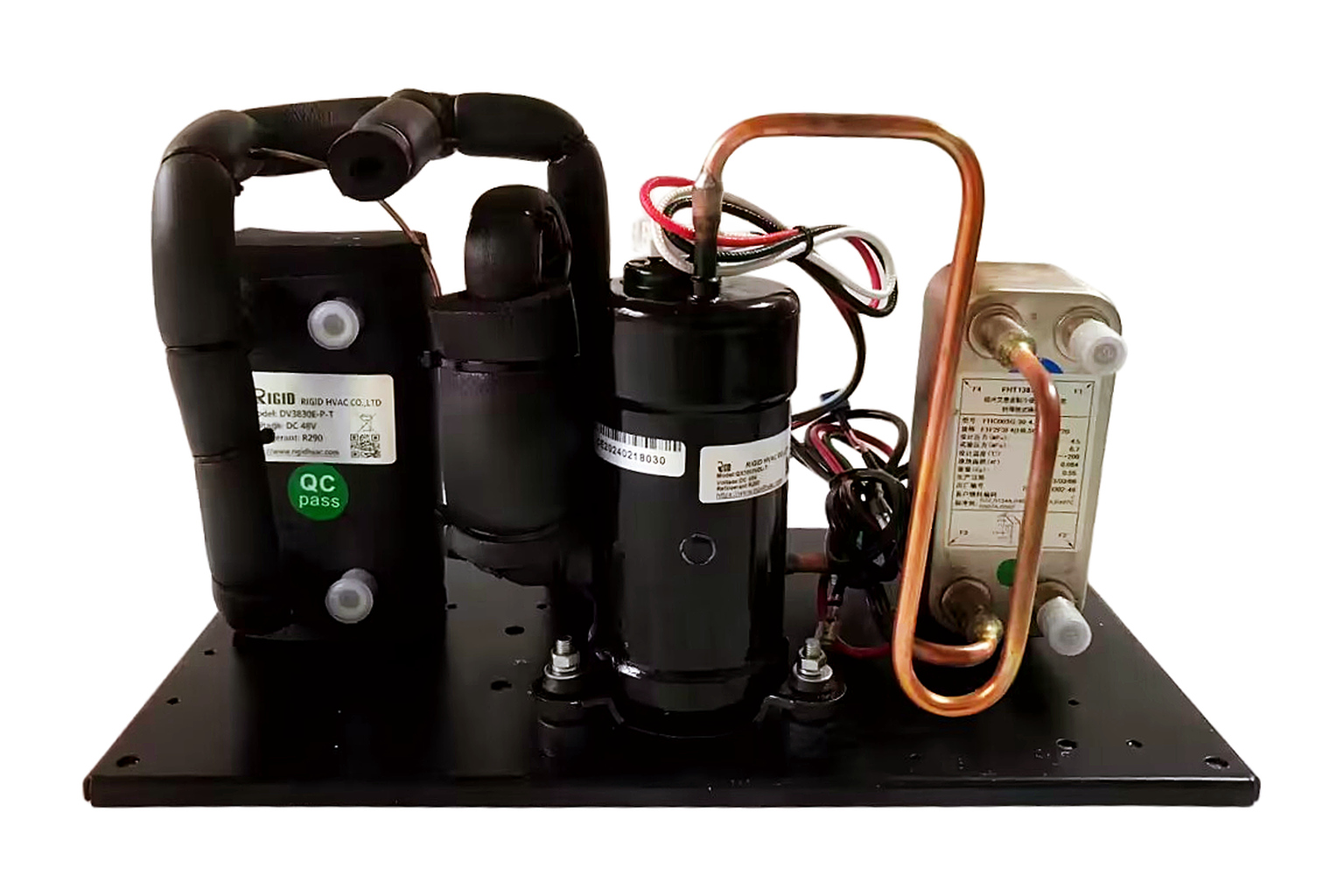
The RIGID compact liquid-chiller series lists plate configurations with a −20°C to +20°C liquid range and 100–550 W series capacities. Those data can screen a small fixture requirement. The complete test conditions behind the capacity range are not supplied on the reviewed public page, so the values do not establish performance for every inlet, ambient, or load program.
A documented model such as DV1920E-P should be evaluated with the actual absorbed duty and installation conditions. Confirm which circulation components the proposal includes. The reviewed public information does not establish a pump curve, available external head, or reservoir volume for the entire supplied arrangement. A water cooled resistor chiller must therefore be specified as a complete thermal and circulation solution, rather than assumed to be finished when the refrigeration module is selected.
Provide Heat Rejection and Control for the Installed Source
The module’s condenser must reject the removed heat and the cooling system’s energy input to an appropriate environment. Identify the available air intake and discharge paths around the test fixture. A successful demonstration with an uncovered module does not establish its behavior in an enclosed production bench. Keep the installation configuration in the cooling acceptance record, including nearby heat sources and the defined ambient measurement location.
Specify which controller sets the liquid condition and where it senses temperature. The fixture may require an independent observation at the plate or another location even when the cooling source controls its own probe. Control action, measured temperature, and permissible component conditions should remain distinguishable in the record. This allows the test team to interpret a shifted reading without immediately assigning the cause to a resistor defect or a reduction in refrigeration capacity.
Define the Response When Required Cooling Is Unavailable
The bench designer should define the permitted electrical state if the specified liquid condition, branch flow, or cooling operation is unavailable. Identify supported signals and the controller that interprets them. A generic module fault indication is not automatically a complete fixture interlock, and the presence of a cold plate does not prevent every thermal excursion if electrical loading continues after circulation changes.
Obtain the approved startup, shutdown, and residual-cooling sequence for the fixture. Removing electrical load and stopping cooling are different actions. The required relationship depends on the component and the system, so this guide supplies no universal pump-stop sequence or deliberate loss-of-cooling test. Agree the complete response and its verification method with the responsible providers before using the cooling source in the intended resistor program.
Prepare a Traceable Bench Acceptance Record
Use the table to connect the actual electrical test program to the cooling evidence needed for approval. Preserve instrument identities and measurement locations with each result. This is a framework for a small fixture’s requirements, not a claim that a DV module fits every resistor product or that a rated component wattage identifies the final liquid load.
| Field | Fixture requirement | Cooling evidence |
|---|---|---|
| Dissipation | Actual channel loading and simultaneity | Supported duty at stated conditions |
| Timing | Exposure, repetition and recovery state | Temperature history for the required program |
| Interface | Resistor mounting and plate construction | Accepted thermal path and observation location |
| Hydraulics | Plate branch flow and pressure limits | Complete pump operating point and measured branch |
| Fluid | Approved formulation and material limits | Compatibility across supplied components |
| Response | Permitted loading when cooling changes | Approved signals and complete-system behavior |
Accept sustained operation and recovery using the test program that actually governs the order. An easier loading condition can confirm plumbing while leaving the production endurance duty unresolved. If the measured plate temperature changes unexpectedly, retain the electrical history, liquid conditions, mounting identity, and timing together. This creates evidence that the component and cooling providers can interpret at their respective boundaries.
Submit the Resistor Fixture Rather Than a Wattage Alone
For a water cooled resistor chiller inquiry, send RIGID the electrical program and cooling-interface requirements. Include the resistor and plate identities, actual dissipation basis, simultaneous channels, timing, temperature locations, fluid, branch hydraulics, environmental conditions, and electrical supply. Mark which pump, reservoir, controller, and protective functions remain with the OEM. That supports a specific source review without converting a catalog rating into an unsupported bench acceptance.
Frequently Asked Questions
Does a resistor’s rated power equal its continuous test load?
Not automatically. The rating states permitted component operation under specified conditions. Establish the actual electrical dissipation, channel combinations, and timing used by the bench before defining the cooling duty.
Can the chiller setpoint be used as the resistor temperature?
No. The liquid, plate, package, and resistive element are different locations connected by thermal paths. Identify the component limit and required measurement point rather than assigning one reading to all of them.
Can average power alone select a water cooled resistor chiller?
It can help describe long-term heat rejection, but peak component exposure and thermal recovery still require evidence. Provide the complete approved sequence and the resistor provider’s limits.
Does every water-cooled resistor have liquid ports?
No. A heat-sinkable component may transfer heat through an externally supplied liquid plate. Confirm the actual construction and mounting instructions before defining hoses or liquid connections.
Does a matching DV wattage establish fixture compatibility?
No. Confirm capacity at the relevant conditions, the temperature range, fluid approval, branch flow and pressure, mounting interfaces, and the complete OEM control arrangement. Nominal capacity is only an initial screening value.