
Xenon Arc Lamp Cooling Starts With the Existing Liquid Loop
Xenon arc lamp cooling does not automatically require a refrigerated water chiller. A closed liquid circuit can reject heat through a fan-cooled radiator while a pump keeps coolant moving through the lamp housing. Determine what the original cooling assembly supplies, the housing’s permitted inlet conditions, and the local air temperature before considering a replacement. Active refrigeration becomes a candidate when the documented operating requirement cannot be met by the permitted radiator arrangement.
This guide addresses continuous laboratory xenon arc lamps with a water-cooled housing. It does not size pulsed flashlamp systems or the sample-temperature bath of a spectrometer. A closed loop describes circulation, not refrigeration. A compact RIGID DV plate module should enter the discussion only after the lamp provider confirms the actual thermal duty and the proposed integration preserves required cooling and protective functions.
Keep Lamp-Housing Cooling Separate From Sample Control
The light source, its electrical supply, and the sample accessory can need different thermal arrangements. A lamp-housing loop removes heat from the source assembly; a sample bath establishes an experimental temperature. Connecting both to one cooling supply creates additional requirements that are absent from a lamp-only quotation. Identify the served component before using a spectrometer’s general water-cooling description as the selection basis.
Retain the housing and cooling-box part numbers with their documentation. A lamp’s electrical rating, a cuvette’s temperature program, and an optical filter’s thermal limit are not equivalent specifications. For xenon arc lamp cooling, obtain the housing provider’s inlet-temperature, flow, pressure, fluid, and operating-sequence requirements. This makes the proposal specific to the light-source loop without claiming to redesign the whole analytical instrument.
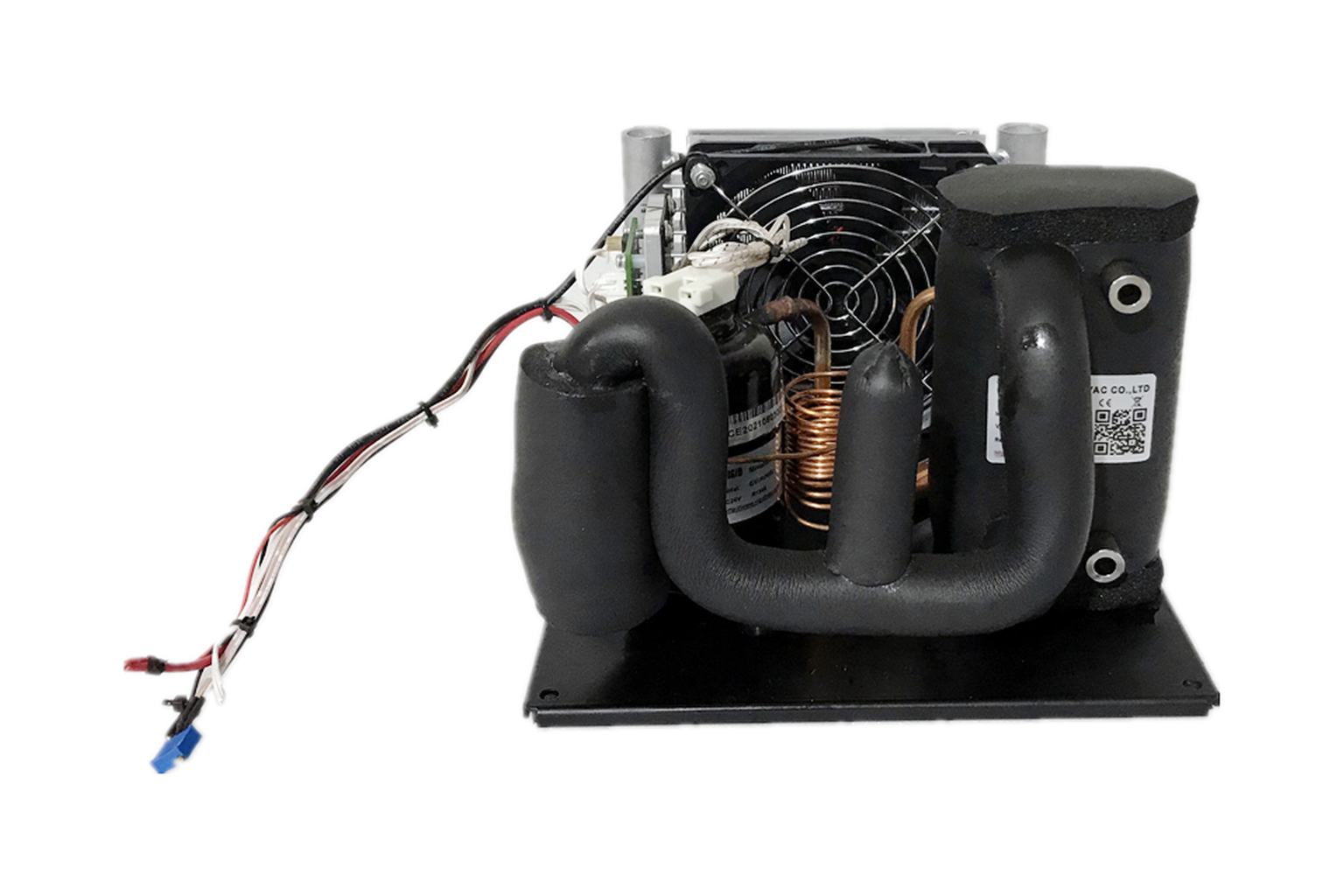
Identify What the Existing Cooling Box Actually Does
An original OLIS hardware handbook describes a lamp-cooling box containing a pump, heat-exchange coil, and fans. Its practical CD guide separately describes liquid circulation through a continuous xenon lamp housing and a flow-related lamp cutoff. These documents establish that a circulating cooling box can include a specific protective arrangement; they do not approve replacing that arrangement with an unrelated refrigerated module.
Check the actual supplied revision rather than assuming a historical example describes every current instrument. List the circulating pump, heat-rejection component, reservoir if present, control elements, and connections to the lamp supply. Keep the original supply scope visible. A new refrigeration module may add heat removal while omitting several of these functions, so comparing cooling-box names or outside dimensions is not sufficient to establish an equivalent replacement.
Compare Radiator Operation With the Available Ambient Air
A radiator rejects heat from the liquid to the air passing through it. Its ability to support the required inlet condition depends on air temperature, airflow, the exchanger, and the load. It is not a source of refrigeration below that incoming air temperature. If the installation moves into warmer air, the same radiator and pump may no longer produce the earlier liquid condition even though both are running normally.
Assess the actual air reaching the radiator, including warmed room air, blocked discharge, and nearby equipment. An ambient measurement elsewhere in the laboratory may not represent that intake. Obtain the provider’s performance evidence for the required conditions and preserve its placement requirements. Xenon arc lamp cooling should be evaluated during the intended operating state, rather than accepted from a cold-start observation before the liquid and enclosure have warmed.
Decide Whether Refrigeration Solves the Required Problem
Active refrigeration can maintain a liquid condition that a permitted ambient radiator cannot achieve, within its own operating envelope. That is a selection reason only when the housing genuinely needs that condition. If the approved radiator already keeps the inlet and housing within their limits, adding a compressor is not automatically a performance improvement. It adds another component, control arrangement, electrical demand, and heat-rejection duty to review.
Before changing cooling technology, resolve installation faults such as an obstructed air path, an incorrect fluid, or restricted circulation using the lamp provider’s procedure. Separate an installation defect from a cooling-source limit. A refrigeration source cannot compensate for every hydraulic or protective-function problem. If the documented limitation is thermal, define that limitation clearly so the proposal can be assessed against a measurable requirement instead of a general desire for colder water.
Do Not Use Lamp Input Power as the Coolant Heat Load
The lamp’s electrical input describes power entering that component. Some energy leaves through optical and other thermal paths; the fraction reaching the coolant depends on the assembly. A catalog description of a 150 W or 450 W lamp therefore does not directly establish the continuous load on its liquid circuit. Use the housing provider’s information or a suitable approved measurement basis for the required heat-removal duty.
Also include any additional component actually served by the loop. An optical heat filter, a shared branch, or another water-cooled element changes the source requirement if it operates simultaneously. Do not silently count every item in the instrument, or omit a real shared consumer. Record which parts transfer heat into this circuit, which run together, and which operating state determines the cooling-source duty.
Obtain Flow and Pressure Requirements at the Housing
The source must deliver the permitted liquid conditions through the installed circuit. Obtain the housing’s required flow, allowable pressure, and relevant restrictions from its provider. A maximum working-pressure value does not specify the pump operating point, and a pump’s unrestricted flow is not the flow through hoses and a restrictive housing. Keep those numbers attached to their proper physical boundaries.
The liquid chiller loop design guide explains the wider resistance and circulation assessment. In xenon arc lamp cooling, the acceptance point is the lamp branch. Include the proposed module’s exchanger, service connections, and any filter in the pressure-loss review. If several consumers share circulation, confirm how the branch meets its requirement rather than accepting a total-flow reading as proof of flow through the housing.
Preserve the Lamp Provider’s Fluid and Service Requirements
Different assemblies can specify different coolants and maintenance arrangements. Follow the actual housing and cooling-system documentation for fluid quality, formulation, compatibility, and service. A historical handbook and another instrument’s recommendation may not agree because they describe different configurations. Do not resolve that difference by declaring one fluid or replacement interval universal for all xenon sources.
Review the proposed fluid across every wetted component, including a new plate heat exchanger and circulation pump. A change of formulation can alter hydraulic performance as well as material compatibility. Water-cooled does not mean any water is approved. Keep the lamp supplier’s requirements in the purchase specification, and require a documented resolution if the refrigeration provider’s proposed circuit uses a fluid incompatible with the original housing.
Retain the Approved Cooling Interlock and Operating Sequence
An original cooling assembly may provide a signal or electrical relationship needed to permit lamp operation. Identify that function and its owner before replacing any component. A refrigerator running successfully does not prove that the lamp’s required circulation-monitoring function exists. The light-source provider should approve the complete cooling-state indication and response for the revised arrangement.
This article does not provide bypass wiring, restart timing, or a procedure for deliberately operating a lamp without its required cooling. Preserve the documented start, stop, and residual-cooling obligations. In xenon arc lamp cooling, a new device’s generic alarm is not automatically equivalent to the original interlock. The commissioning plan should verify the approved complete-system response using the provider’s method, not infer protection from the presence of an additional controller.
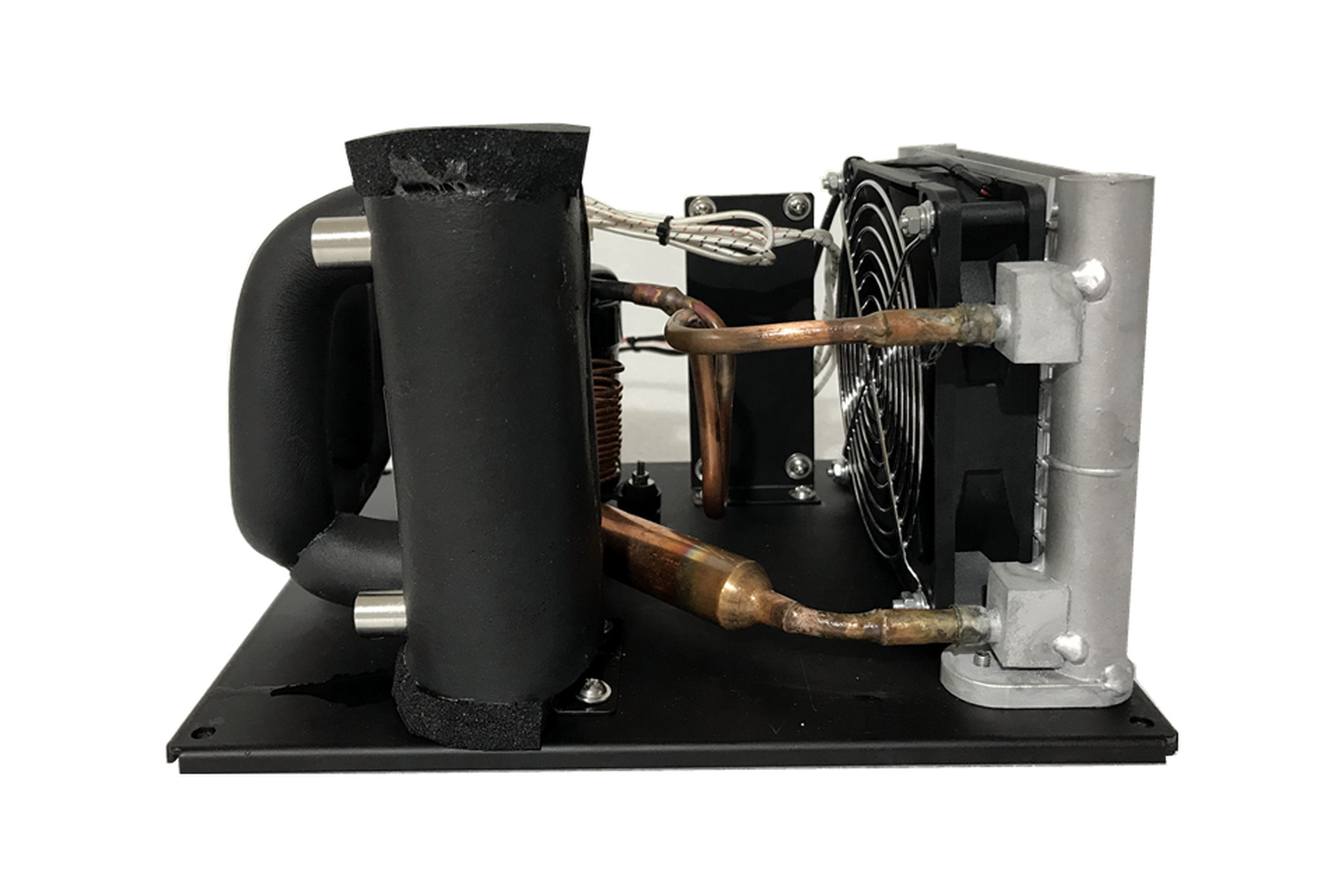
Evaluate a Compact DV Module at the Required Conditions
The RIGID compact liquid-chiller family includes plate modules with a published liquid-temperature range of −20°C to +20°C and series capacities of 100–550 W. These data allow initial screening. They do not establish the selected module’s capacity at every condenser and liquid condition, or compatibility with a particular lamp housing. A supply requirement above the documented range needs a different reviewed solution or specific engineering confirmation.
A plate-series example such as DV1920E-P can be reviewed against the lamp duty, installation environment, and available electrical supply. Confirm the external circulation and liquid-inventory scope rather than assuming they arrive with the refrigeration module. Select against the operating point, not the series headline. Obtain performance information and the complete proposed circuit before treating a compact open module as a replacement for an integrated lamp-cooling box.
Keep Condenser Discharge Out of the Cooling Intake
Refrigeration transfers the removed heat to its condenser and adds the energy consumed by the cooling system to the rejected heat. The installation must provide an appropriate air path for that rejection. A compact module enclosed near the instrument can warm its own inlet air or the remaining radiator’s surroundings if discharge is poorly routed. Review the installed space, not only the module’s footprint on a drawing.
Also consider the planned supply temperature and surrounding moisture conditions. A colder liquid route can require insulation and condensate management around hoses and fittings. Follow the instrument provider’s restrictions around optical, electrical, and service areas. The purpose is to maintain the housing’s approved inlet condition without creating an unreviewed installation problem; there is no benefit in choosing the lowest available setpoint merely because the refrigeration system can reach it.
Compare the Two Cooling Routes With Application Evidence
Use the comparison below to decide which proposal has evidence for the real installation. The table separates heat rejection from circulation and protective functions. It does not declare one route always superior, and it does not establish compatibility with a named lamp simply because a temperature range or nominal capacity overlaps.
| Decision | Fan-cooled radiator loop | Refrigerated liquid arrangement |
|---|---|---|
| Thermal basis | Load rejected to available intake air | Capacity at specified liquid and condenser conditions |
| Inlet temperature | Evidence at the required ambient and duty | Supported operating range and actual supply behavior |
| Circulation | Original pump and installed branch performance | Defined pump scope and complete circuit resistance |
| Fluid | Housing and original assembly requirements | Approval across housing and added components |
| Protective response | Original documented arrangement retained | Revised arrangement approved by light-source provider |
| Installation | Unobstructed radiator intake and discharge | Condenser rejection and moisture management resolved |
Agree the acceptance observations before procurement: branch flow, housing inlet and return conditions, ambient at the heat-rejection intake, and performance during the intended lamp run. Record the hardware and fluid revisions with the result. A brief no-load refrigeration demonstration or a successful lamp start is useful preliminary information, but neither proves that the complete operating duty meets the agreed cooling requirements.
Request a Lamp-Specific Cooling Review
For xenon arc lamp cooling, send RIGID the housing and existing cooling-box requirements. Include the actual component identities, permitted fluid and inlet conditions, branch hydraulics, heat-load basis, operating sequence, required protective functions, and installation air conditions. Identify which original parts remain. This supports a conditional cooling-source review without assuming that active refrigeration is necessary or that the complete lamp system has already been approved.
Frequently Asked Questions
Does a closed water loop necessarily contain a compressor?
No. A pump and fan-cooled radiator can circulate liquid and reject heat to ambient air. Identify the actual cooling hardware and its performance conditions before selecting a refrigerated replacement.
Is lamp input wattage the required chiller capacity?
Not automatically. Determine the heat transferred into the served liquid circuit, including any simultaneous shared consumers. The lamp’s input rating does not identify that thermal boundary by itself.
When should xenon arc lamp cooling use refrigeration?
When a permitted radiator arrangement cannot satisfy the documented housing inlet conditions at the intended ambient and duty, and a complete refrigerated proposal can demonstrate that it can. Resolve installation defects separately.
Can a DV module replace an entire lamp-cooling box directly?
Do not assume that. Confirm the refrigeration performance, pump and reservoir responsibilities, fluid approval, connections, and preservation of the light-source provider’s required interlock and operating behavior.
Does this guide approve an OLIS instrument modification?
No. The original documentation illustrates cooling arrangements and their functions. Any proposed change needs the relevant instrument provider’s approval and application-specific acceptance evidence.